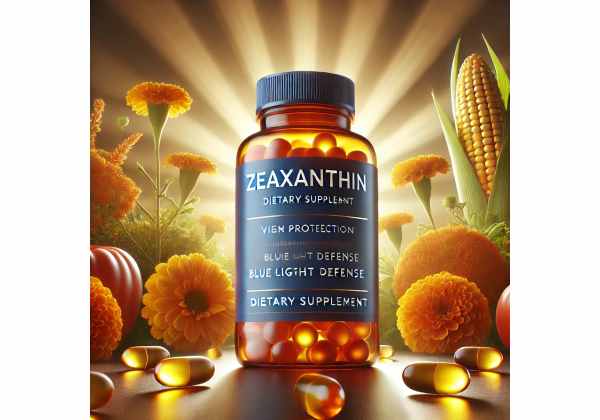
Zeaxanthin is best known as an eye-health carotenoid, but that narrow label misses why it has become interesting in brain and mental wellness research. This yellow-orange pigment does not just collect in the retina. It is also found in brain tissue, where researchers think it may help protect vulnerable cells from oxidative stress, support membrane stability, and relate to aspects of attention, processing speed, and healthy cognitive aging. That makes zeaxanthin one of the more intriguing examples of a nutrient that links vision and brain function rather than fitting neatly into only one category.
At the same time, the science requires restraint. Zeaxanthin is rarely studied alone. Most human trials examine it together with lutein, and sometimes meso-zeaxanthin, so its specific independent effects are not always easy to isolate. This guide explains what zeaxanthin is, how it may work, where the strongest evidence sits, how to use it sensibly, and what safety details deserve attention.
Table of Contents
- What Zeaxanthin Is and Why It Matters
- How Zeaxanthin May Protect the Brain
- Why Vision and Cognition Overlap
- What Benefits Look Most Plausible
- Forms, Dosage, and Bioavailability
- Safety, Side Effects, and Precautions
What Zeaxanthin Is and Why It Matters
Zeaxanthin is a xanthophyll carotenoid, a plant pigment responsible for yellow to orange coloration in foods such as corn, orange peppers, egg yolks, and goji berries. Unlike stimulants or classic nootropics, zeaxanthin does not work by pushing the brain harder. It is better understood as a protective nutrient that accumulates in specific tissues and may help them tolerate light, oxidation, and inflammatory stress more effectively over time.
Most people first hear about zeaxanthin in the context of the macula, the central part of the retina that supports sharp vision. There, zeaxanthin works with lutein and meso-zeaxanthin to form macular pigment, which filters high-energy blue light and helps limit oxidative damage. That eye-health role is well established and is still the main reason zeaxanthin appears in supplements.
The brain connection is what makes it especially interesting for mental wellness. Zeaxanthin is one of the relatively few dietary carotenoids found in human brain tissue. Researchers have linked higher levels of macular pigment and higher blood carotenoid status with better performance in areas such as processing speed, attention, and memory. This does not prove direct cause and effect in every case, but it does suggest zeaxanthin belongs in a bigger conversation about nutrition, neural resilience, and healthy aging.
A key complication is that zeaxanthin is usually studied together with lutein. In human trials, the classic combination is 10 mg lutein plus 2 mg zeaxanthin daily. Some products also include meso-zeaxanthin. Because of that, articles that promise “zeaxanthin alone boosts cognition” are usually oversimplifying the evidence. The better question is whether zeaxanthin, as part of the macular carotenoid family, supports brain health in a meaningful way.
That answer is cautiously encouraging. Zeaxanthin appears most relevant in contexts such as:
- healthy aging and cognitive maintenance
- visual processing and eye-brain performance
- oxidative stress protection
- support for people with low dietary carotenoid intake
It is much less convincing as a fast-acting mood or productivity supplement. Someone looking for immediate mental stimulation is likely to misunderstand what zeaxanthin is built to do.
This is why zeaxanthin makes more sense in a broad nutritional framework than in a hype-driven supplement stack. It belongs closer to the logic of long-term brain nourishment than to the promise of instant focus. Readers thinking about that wider picture may also benefit from exploring foods that support brain health, because zeaxanthin is one of the clearest examples of a food-derived compound whose value starts with a consistent dietary pattern.
How Zeaxanthin May Protect the Brain
Zeaxanthin’s likely value for the brain comes from protection more than stimulation. It appears to work through antioxidant, anti-inflammatory, and structural effects that may help preserve function rather than create an obvious short-term “boost.”
One of the main mechanisms involves oxidative stress. The brain is metabolically active, rich in easily oxidized fats, and sensitive to cumulative damage from reactive oxygen species. Zeaxanthin’s chemical structure allows it to quench singlet oxygen and neutralize free radicals in lipid-rich environments. This matters because neuronal membranes depend on stability. Over time, oxidative damage can affect signaling, energy use, and cell survival.
A second mechanism involves inflammation. Chronic neuroinflammation is now linked with many forms of mental and cognitive decline, including slower processing, fatigue, and neurodegenerative disease. Zeaxanthin appears to help reduce oxidative and inflammatory stress in experimental models, including models relevant to neuronal injury. It is not an anti-inflammatory drug, but it may help create a less hostile environment for healthy neural function.
A third piece is tissue localization. Zeaxanthin is not distributed evenly in the body. It accumulates selectively in the retina and is also present in brain tissue. That selective deposition helps explain why researchers take it seriously. The body seems to retain it in tissues where light exposure, oxidative burden, and delicate signaling all matter.
Researchers are also interested in how zeaxanthin relates to:
- membrane protection in neural tissue
- visual processing speed
- brain-derived neurotrophic signaling in some intervention studies
- healthy vascular and metabolic function indirectly linked to cognition
This does not mean zeaxanthin is a cure for brain fog or a treatment for depression. It means its biological role fits a pattern often seen in foundational nutrients: modest direct effects, but potentially meaningful support over time when used consistently.
Another important point is that zeaxanthin appears to work best as part of a system. It often travels with other carotenoids, dietary fats, and supportive nutrients. In real life, its effects may depend on whether the person absorbs it well, has a low baseline intake, or is under enough oxidative strain to notice the difference. Someone already eating a carotenoid-rich diet may experience less dramatic change than someone with a poorer nutritional foundation.
That pattern makes zeaxanthin especially relevant for prevention and maintenance rather than rescue. It may help protect the conditions needed for mental clarity, but it is not likely to override sleep deprivation, heavy stress, or major nutritional imbalance. This is why it pairs naturally with the broader idea of supporting neuroplasticity and brain resilience rather than with the idea of a quick mental performance hack.
Why Vision and Cognition Overlap
One of the most distinctive things about zeaxanthin is that its brain-health story cannot be separated from its eye-health story. That is not a side detail. It is one of the central reasons researchers think it matters.
The retina is technically part of the central nervous system, and the macula is one of the most metabolically active tissues in the body. Zeaxanthin’s role in the macular pigment gives scientists a useful window into the brain because retinal carotenoid status often tracks with broader neural carotenoid status. This is why studies frequently measure macular pigment optical density, or MPOD, as a marker associated with lutein and zeaxanthin accumulation.
Higher MPOD has been linked in some studies to better performance in areas such as attention, memory, visual processing, and academic or cognitive outcomes. That does not mean the retina causes cognition. It means the retina may reflect a shared nutritional and physiological state that also matters for the brain.
There are several reasons this overlap makes sense:
- both the eye and brain are vulnerable to oxidative stress
- both rely on finely tuned neural signaling
- both are rich in lipid membranes that benefit from antioxidant protection
- both are affected by aging, inflammation, and metabolic strain
Zeaxanthin’s ability to filter blue light is also relevant. For people with high screen exposure or visually demanding work, part of the “mental” benefit may actually come from reducing visual fatigue. Less visual stress can mean better comfort, steadier attention, and fewer of the symptoms people loosely describe as mental exhaustion. In that setting, the brain benefit is partly downstream of better visual performance.
This is also why some zeaxanthin studies show improvements in measures that sit between eye and brain function, such as critical flicker fusion, processing speed, visuospatial working memory, and visual learning. These outcomes are real, but they should be interpreted carefully. They do not prove zeaxanthin is a general-purpose cognitive enhancer. They suggest it may support the sensory and neural systems that make efficient cognition easier.
The eye-brain link is especially useful for people who spend long hours on computers, bright displays, or visually intense tasks. Those individuals may not think of visual strain as a brain issue, but in practice the two can blur together. Tired eyes, slow visual processing, and reduced attention often travel together. That is why this topic sits naturally alongside digital eye strain and visual fatigue rather than in a silo.
The key takeaway is that zeaxanthin’s mental wellness role may be more integrated than dramatic. It helps support the visual-neural system as a whole. For many people, that is likely to matter more than any promise of a quick change in mood or raw intelligence.
What Benefits Look Most Plausible
The most credible benefits of zeaxanthin for brain health are not broad claims about feeling smarter. They are narrower, more realistic outcomes tied to visual-cognitive performance, cognitive maintenance, and healthy aging.
In children and adults, lutein-zeaxanthin interventions have shown encouraging results in selected measures such as attention, visual memory, learning, visuospatial working memory, cognitive flexibility, and processing speed. These are meaningful findings, especially because they appear in randomized controlled trials rather than only in observational research. But there are limits. The benefits are not universal across every domain tested, and they are not always dramatic.
The strongest way to interpret the evidence is this:
- zeaxanthin is most likely to help when cognitive function overlaps with visual processing, oxidative stress, or low carotenoid status
- it is more plausible as a maintenance nutrient than as an acute enhancer
- it is better supported for healthy aging and performance support than for mood treatment
Mood claims deserve special caution. There is very little direct evidence that zeaxanthin by itself treats anxiety, depression, or emotional instability. Better visual comfort, better sleep hygiene through lower eye strain, or less inflammatory stress may indirectly help how a person feels, but that is not the same as a clear psychiatric effect. Anyone selling zeaxanthin as a mood supplement first is stretching the evidence.
For cognition, the most plausible benefits include:
- attention and complex attention
- visual learning and visual memory
- processing speed
- support for cognitive aging
- possible association with reduced risk of decline when carotenoid status is low
That last point is important. Observational and meta-analytic work suggests lower blood carotenoid status, including lower zeaxanthin, is associated with dementia or cognitive impairment. Association does not prove supplementation prevents disease, but it does strengthen the case that zeaxanthin status matters.
This makes zeaxanthin especially interesting for people in a few specific groups:
- older adults focused on long-term brain health
- adults with low vegetable and egg intake
- people with heavy screen exposure and visual fatigue
- individuals interested in nutrition-based support for attention and processing
It is probably less useful for someone expecting a strong same-day effect. Zeaxanthin is not caffeine, and it is not a direct cholinergic compound. If the problem is immediate underarousal, other strategies may fit better. Readers thinking about that difference often do well to compare nutrients like zeaxanthin with broader articles on why mental slowness happens, because the underlying cause often determines whether a carotenoid supplement is relevant at all.
Overall, zeaxanthin looks most credible as a protective and supportive nutrient with cognitive spillover, not as a dramatic mental performance shortcut.
Forms, Dosage, and Bioavailability
Zeaxanthin dosing is straightforward in one sense and tricky in another. The straightforward part is that most commercial and clinical use follows familiar combination patterns. The tricky part is that zeaxanthin is usually not taken alone, and absorption can vary a great deal depending on the formulation.
In many human studies, the common evidence-backed combination is:
- 10 mg lutein plus 2 mg zeaxanthin daily
Some formulations add meso-zeaxanthin, especially in eye-health products, while others use higher total carotenoid amounts. Because of this, zeaxanthin-specific dosing is less standardized than people may expect. A label may mention 2 mg zeaxanthin, but the intended effect often depends on the whole carotenoid blend rather than on zeaxanthin acting alone.
For practical use, several points matter:
- oil-based or lipid-containing formulas often absorb better than dry powders
- taking zeaxanthin with a meal that contains fat can improve uptake
- consistency matters more than timing by the hour
- benefits, when they appear, usually develop over weeks to months rather than days
Bioavailability is a real issue because zeaxanthin is fat-soluble and vulnerable to oxidation. Formulation quality can influence how much actually reaches the bloodstream. This is one reason better products often emphasize oil suspensions, phospholipid-based delivery, or carefully stabilized softgels rather than loose powders.
A sensible approach looks like this:
- Choose a product that clearly lists lutein and zeaxanthin amounts.
- Prefer formulas with transparent sourcing and stability information.
- Take the supplement with a meal containing some fat.
- Stay consistent for at least two to three months before judging.
- Match the goal to the product. Eye-only formulas and broader cognitive formulas are not always the same.
Food still matters, even if you supplement. Zeaxanthin-rich foods such as corn, orange peppers, egg yolks, and goji berries can support baseline intake, while leafy greens often contribute more lutein. A supplement can help close gaps, but it works best when it builds on a decent diet rather than replacing one.
It is also worth being realistic about outcomes. If your goal is long-term cognitive support, a daily carotenoid supplement may make sense. If your goal is immediate concentration for work, something like citicoline for cognitive enhancement targets a more direct cognitive pathway than a macular carotenoid does.
The bottom line is that zeaxanthin supplementation is usually more about steady accumulation than about immediate sensation. Product quality, fat intake, and patience matter more than chasing unusually high doses.
Safety, Side Effects, and Precautions
Zeaxanthin appears to be well tolerated at the doses commonly used in supplements, especially when taken as part of lutein-zeaxanthin combinations similar to those used in clinical trials. Compared with many compounds sold for brain health, it has a reassuring safety profile. That said, “generally safe” is not the same as “automatically safe in any dose or formulation.”
Most people who take standard amounts are unlikely to notice clear side effects. When issues do occur, they are usually mild and may include:
- stomach upset
- nausea
- digestive discomfort
- headache
- dislike of the oil-based carrier
Because zeaxanthin is fat-soluble, some people tolerate it better when taken with food. That is usually a practical improvement rather than a safety issue.
The bigger caution is not toxicity so much as overinterpretation. Many eye and brain products combine zeaxanthin with lutein, meso-zeaxanthin, omega-3 fats, vitamin E, zinc, or other nutrients. If you react poorly to a formula, zeaxanthin may not be the actual cause. This is another reason transparent labels matter.
There are a few situations where added caution makes sense:
- pregnancy and breastfeeding, because product quality and dose variation matter
- people with chronic digestive disorders that reduce fat absorption
- anyone using high-dose multi-ingredient eye formulas without medical guidance
- individuals relying on supplementation while ignoring significant visual or cognitive symptoms
Unlike beta-carotene, zeaxanthin has not raised the same smoking-related lung cancer concerns. Even so, that does not mean unlimited intake is a smart idea. Long-term very high-dose zeaxanthin alone is less studied than the standard moderate-dose combinations used in trials.
It is also important not to confuse support with treatment. Zeaxanthin may contribute to healthy aging and cognitive maintenance, but it should not delay evaluation of warning signs such as rapidly worsening memory, major mood changes, persistent confusion, or serious visual decline. Those symptoms deserve proper medical attention.
A careful framework keeps use simple:
- stay near studied doses rather than experimenting aggressively
- choose reputable products
- take it with food for tolerance and absorption
- give it time before deciding whether it helps
- seek medical advice for significant eye or cognitive symptoms
This perspective matters because zeaxanthin is a long-game nutrient. People looking for a safe, food-like support for eye-brain health may find it appealing. People looking for a dramatic change in energy, mood, or focus may end up disappointed and would do better first addressing bigger issues such as sleep deprivation and its effects on the brain.
References
- A critical insight into the physicochemical stability of macular carotenoids with respect to their industrial production, safety profile, targeted tissue delivery, and bioavailability 2025 (Review)
- Lutein and Zeaxanthin Supplementation Improves Dynamic Visual and Cognitive Performance in Children: A Randomized, Double-Blind, Parallel, Placebo-Controlled Study 2024 (RCT)
- Low blood carotenoid status in dementia and mild cognitive impairment: A systematic review and meta-analysis 2023 (Systematic Review and Meta-Analysis)
- The Effects of Lutein and Zeaxanthin Supplementation on Cognitive Function in Adults With Self-Reported Mild Cognitive Complaints: A Randomized, Double-Blind, Placebo-Controlled Study 2022 (RCT)
- Lutein and Zeaxanthin Influence Brain Function in Older Adults: A Randomized Controlled Trial 2018 (RCT)
Disclaimer
This article is for educational purposes only and is not medical advice. Zeaxanthin supplements are not approved to diagnose, treat, cure, or prevent depression, anxiety disorders, dementia, or other medical conditions. Research on zeaxanthin and brain health is promising, but most human trials study it alongside lutein, so the independent effects of zeaxanthin are not always clear. Speak with a qualified healthcare professional before using zeaxanthin supplements if you are pregnant, breastfeeding, have a medical condition, or use multi-ingredient eye-health products regularly. Seek prompt medical care for worsening vision, marked memory decline, confusion, or major mood changes.
If you found this article useful, consider sharing it on Facebook, X, or another platform you prefer so others can find clearer information about zeaxanthin.