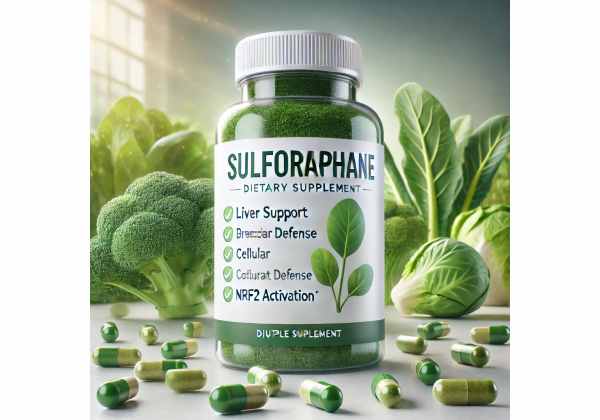
Sulforaphane has become one of the more intriguing compounds in brain-health nutrition because it connects food, cellular defense, and mental wellness in a way few supplements do. Found in broccoli sprouts and other cruciferous vegetables, sulforaphane is not a stimulant and not a classic calming herb. Its appeal is more foundational. It appears to activate protective pathways linked to oxidative stress, inflammation, detoxification, mitochondrial function, and cellular resilience. Those mechanisms matter because many brain and mental health conditions share the same underlying stresses.
That does not mean sulforaphane is a proven cure for depression, anxiety, or cognitive decline. The science is promising, especially in areas such as autism research, neuroprotection, and inflammation-related brain stress, but the evidence is still mixed and highly dependent on the condition being studied. This guide explains how sulforaphane works, what benefits are realistic, who may consider it, how to use it, and where safety and product quality matter most.
Table of Contents
- How Sulforaphane Affects the Brain
- What Benefits Look Most Plausible
- Mental Health and Clinical Research
- Who May Consider Sulforaphane
- Dosage, Forms, and Bioavailability
- Safety, Side Effects, and Cautions
How Sulforaphane Affects the Brain
Sulforaphane is an isothiocyanate generated from glucoraphanin, a compound found in broccoli sprouts, broccoli, and other cruciferous vegetables. It becomes especially relevant to brain health because it appears to activate the Nrf2 pathway, one of the body’s central systems for antioxidant and cytoprotective defense. That pathway helps regulate genes involved in detoxification, glutathione production, inflammatory control, and resilience against oxidative damage.
For the brain, that is a meaningful set of actions. Brain tissue is metabolically active, rich in lipids, and unusually vulnerable to oxidative stress and inflammation. It also depends heavily on mitochondrial performance. A compound that may support antioxidant defenses, reduce inflammatory signaling, and help protect mitochondrial function naturally draws attention in mental wellness research.
Sulforaphane also seems capable of crossing the blood-brain barrier, which makes the conversation more compelling than it would be for a compound that works only peripherally. This has led researchers to examine it in several areas:
- neuroinflammation
- oxidative stress
- traumatic and developmental brain vulnerability
- autism spectrum disorder
- schizophrenia
- age-related cognitive decline
- mood-related pathways linked to inflammatory stress
That does not mean sulforaphane acts like a direct neurotransmitter supplement. Its role is more indirect and systems-based. It does not boost dopamine the way a stimulant might, and it does not create calm the way a sedating herb can. Instead, it may improve the biological environment in which brain cells operate.
This difference matters because it shapes expectations. Sulforaphane is usually not the kind of supplement that produces an obvious same-day effect. People who expect a quick surge in focus or a dramatic mood lift may be disappointed. The more credible way to think about it is as a resilience-oriented compound. It may help the brain cope better with inflammatory, metabolic, and oxidative challenges over time.
That broader lens also explains why sulforaphane often shows up in conversations about nutrition patterns, not just pills. It fits naturally with a food-first model of brain support, much like discussions of brain-supportive foods more broadly. Even when used as a supplement, its rationale remains nutritional and protective rather than pharmacologically stimulating.
So the core mechanism story is strong. Sulforaphane has credible biological relevance to brain health. The harder question is whether that relevance turns into noticeable benefits for mood, cognition, or psychiatric symptoms in humans. That is where the evidence becomes more nuanced.
What Benefits Look Most Plausible
The strongest case for sulforaphane is not that it clearly improves memory or mood in everyone who takes it. The strongest case is that it targets pathways that matter in many brain-related conditions. Oxidative stress, mitochondrial strain, chronic inflammation, impaired detoxification, and blood-brain barrier stress appear in research across aging, neurodevelopmental disorders, depression, and neurodegeneration. Sulforaphane is interesting because it may touch several of those pathways at once.
From a practical standpoint, the most plausible benefits fall into four buckets.
1. Neuroprotection and brain resilience
Sulforaphane may help protect neurons from oxidative and inflammatory injury. This is why it is often discussed in the context of long-term brain health rather than short-term performance. That makes it conceptually closer to compounds used for cellular support, such as N-acetylcysteine and antioxidant brain support, than to acute focus enhancers.
2. Support for inflammation-related mood and cognitive stress
Inflammation is not the whole story behind depression, brain fog, or low motivation, but for some people it appears to be part of the picture. Sulforaphane’s anti-inflammatory and antioxidant actions make it a reasonable candidate for this kind of stress pattern, even though human proof remains limited.
3. Potential benefit in selected neuropsychiatric conditions
Autism spectrum disorder has attracted the most attention, with several trials and recent meta-analytic work suggesting possible improvements in some symptom domains. Schizophrenia research is more mixed. Some analyses suggest small benefits in negative or general psychopathology measures, but not strong cognitive benefits.
4. Cognitive support under long-range health strategies
Sulforaphane may fit best as part of a broader prevention-minded routine rather than as a stand-alone nootropic. Its value may be less about feeling “smarter” today and more about supporting a healthier cellular environment over time.
That said, it is just as important to define what sulforaphane probably does not do well. It is not an established treatment for depression. It is not clearly proven to improve attention in healthy adults. It is not a reliable anti-anxiety supplement in the way some people hope. And it is not a substitute for sleep, exercise, psychiatric care, or metabolic health.
This is where a lot of supplement hype goes wrong. A good mechanism is not the same as a clinically meaningful effect. Sulforaphane has enough mechanistic credibility to be worth serious attention, but not enough consistent human outcome data to justify broad claims. The right conclusion is neither dismissal nor overconfidence. It is measured interest.
For most readers, the smartest framing is this: sulforaphane looks more convincing as a brain-protective and systems-support compound than as a direct mood or cognition booster. That is still useful. It just places it in the right lane.
Mental Health and Clinical Research
Sulforaphane has entered mental health research through a few specific doors rather than through broad wellness claims. The most studied area is autism spectrum disorder. Multiple randomized controlled trials and recent meta-analyses suggest that sulforaphane may improve some total symptom and behavior measures in children or young adults with autism, though not every outcome improves and results still need cautious interpretation. This is encouraging, but it does not mean sulforaphane is a universal treatment for autism or for social difficulties more generally.
Schizophrenia research is another area of interest. Recent meta-analytic work suggests sulforaphane may produce modest improvements in some negative or general psychopathology measures, while cognitive benefits have not been consistently shown. This is an important distinction because sulforaphane is sometimes marketed as though it clearly improves cognition in psychiatric illness. At this point, that claim goes too far.
Depression research is even more preliminary. There has been at least one randomized clinical trial showing improvement in depressive symptoms in a specific medical population with a history of cardiac intervention, and broader review articles describe sulforaphane as a promising candidate for inflammation-related mood disorders. But the field is still early. The current evidence supports interest, not certainty.
This is where clinical context matters. Sulforaphane seems most plausible when mental health symptoms are tied to broader biological stressors such as inflammation, oxidative burden, metabolic dysfunction, or developmental vulnerability. That makes it a very different kind of supplement from something used for fast calm, such as passionflower for anxiety relief. Passionflower aims at symptoms. Sulforaphane aims more at the underlying terrain.
A useful summary of the clinical picture looks like this:
- Autism research is the most developed and the most promising.
- Schizophrenia findings are mixed and modest.
- Depression data are preliminary.
- Broad claims about anxiety, memory, and focus are ahead of the evidence.
- Sulforaphane may work better as an adjunct than as a stand-alone intervention.
That last point is worth emphasizing. Sulforaphane is not a replacement for psychiatric treatment, sleep treatment, educational support, or medical care. In the best-case interpretation, it may become a useful add-on in selected cases where oxidative stress and inflammation are part of the pathophysiology.
For readers thinking about mental wellness in everyday terms, this means sulforaphane is more compelling when the goal is strategic support than when the goal is a dramatic emotional change. It may be part of a smart long-range plan. It is much less likely to feel like a “noticeable” mood supplement in the first few days or weeks unless the person taking it fits a very specific profile.
Who May Consider Sulforaphane
Sulforaphane is not a supplement for everyone, but it may make sense for people who are especially interested in long-term brain resilience, inflammatory stress, or carefully selected neuropsychiatric support. The strongest candidates are usually not people looking for a quick fix. They are people looking for a plausible biological tool that may support a broader health plan.
This can include:
- people focused on preventive brain health
- people interested in oxidative stress and inflammatory pathways
- adults with high cardiometabolic stress who also notice mental fatigue
- families discussing adjunctive options in autism with a clinician
- people seeking a food-derived compound rather than a stimulant-based nootropic
It may also appeal to readers whose symptoms are part of a broader inflammatory picture. For example, someone dealing with low energy, sluggish recovery, poor metabolic health, and brain fog may find sulforaphane more relevant than someone who simply wants stronger concentration during work. In that sense, sulforaphane often fits better in a whole-body discussion of inflammation, brain fog, and mood fatigue than in a narrow “study supplement” conversation.
Who may be less likely to benefit?
- healthy adults expecting a strong same-day cognitive effect
- people hoping for rapid relief from anxiety or insomnia
- those already taking multiple supplements without a clear reason
- people who are unwilling to use a product consistently over time
This does not mean sulforaphane has no value in healthy adults. It may. But the likely payoff is subtler and more preventive than dramatic. Someone already eating well, sleeping well, and managing stress well may not notice much, even if the compound is doing something useful at a cellular level.
There is also an important mindset issue. Sulforaphane works best as part of a thoughtful routine, not as a rescue supplement. That routine usually includes sleep, exercise, blood sugar control, and a generally nutrient-dense diet. Without those foundations, even a biologically impressive supplement tends to underperform.
This is especially relevant for people with persistent mental slowing or concentration problems. Those symptoms can come from many causes, including sleep debt, thyroid dysfunction, low iron, depression, burnout, and medication effects. In that context, exploring why mental slowing happens is often more useful than assuming a single phytonutrient is the answer.
The bottom line is that sulforaphane is best suited to people who understand its strengths: cellular protection, inflammation-related support, and strategic long-range use. It is least suited to people looking for rapid, obvious psychological effects.
Dosage, Forms, and Bioavailability
One of the biggest practical problems with sulforaphane is that product labels can be confusing. Some products contain sulforaphane itself, while many others contain glucoraphanin, the precursor that must be converted into sulforaphane. That conversion depends partly on the enzyme myrosinase. Without active myrosinase, the amount of sulforaphane actually produced may be much lower and more variable.
This is why bioavailability matters so much. A product that lists a large amount of glucoraphanin may not deliver a large amount of sulforaphane unless it also includes active myrosinase or is formulated in a way that supports conversion. Broccoli sprout preparations are popular largely because sprouts can be especially rich in glucoraphanin, but the exact usable dose still depends on formulation and handling.
In practice, sulforaphane products tend to fall into three categories:
- broccoli sprout powders or capsules
- glucoraphanin products with added myrosinase
- stabilized sulforaphane or specialty extract products
Clinical trials have used varying protocols, often expressed in micromoles rather than milligrams, which makes direct comparison with supplement labels harder. That is one reason broad consumer dose advice tends to be approximate. The product form and its conversion efficiency may matter as much as the number printed on the bottle.
A sensible real-world approach is:
- Choose a product that clearly explains whether it provides sulforaphane or glucoraphanin.
- Prefer formulas that address myrosinase and conversion.
- Avoid assuming that all broccoli sprout supplements are equivalent.
- Stay consistent rather than constantly changing products.
Timing is usually flexible. Sulforaphane is not a stimulant, so there is no special benefit to taking it in the morning for focus. Many people simply take it with food for tolerance and routine. What matters more is regular use over time.
Because sulforaphane acts more like a protective compound than an acute mental enhancer, the best dosing mindset is similar to how people think about some long-range brain support tools such as omega-3s for brain health. The question is not “Do I feel it today?” but “Does this belong in a longer-term strategy I can actually maintain?”
Food also deserves a place here. Fresh broccoli sprouts and lightly prepared cruciferous vegetables can contribute meaningful precursor compounds, though the exact sulforaphane yield is variable. For some people, a food-first approach plus occasional supplementation is more realistic than relying entirely on pills. For others, a standardized product may be more practical.
The main message is that sulforaphane is one of those supplements where formulation quality matters enormously. Two products can look similar and behave very differently. That makes transparency, standardization, and manufacturer credibility unusually important.
Safety, Side Effects, and Cautions
Sulforaphane is generally considered reasonably well tolerated in research settings, especially at the doses used in food-based or supplement-based trials, but “well tolerated” does not mean free of downsides. The most common side effects are gastrointestinal and usually mild. These can include:
- bloating
- gas
- stomach discomfort
- nausea
- changes in bowel habits
That pattern makes sense because many sulforaphane products come from broccoli sprout preparations or related cruciferous sources, which can be irritating for sensitive digestive systems.
A second issue is product variability. Safety depends not only on sulforaphane itself but also on what else is in the formula, how concentrated it is, and how predictable the conversion is. Poor-quality products may be less effective, more irritating, or simply harder to evaluate.
There are also a few practical cautions:
- people with very sensitive digestion may need to start low
- individuals with thyroid concerns may want to be careful with large amounts of concentrated cruciferous products
- those taking multiple supplements for detoxification or inflammation should avoid building overly complicated stacks
- people using sulforaphane for psychiatric conditions should treat it as adjunctive, not primary therapy
It is also worth saying clearly that sulforaphane is not interchangeable with “more broccoli.” Whole foods are generally safe, but concentrated supplements can deliver a different and more variable exposure. That does not make supplements unsafe by default. It just means they should be used more intentionally.
For most adults, the bigger risk is not toxicity. It is misplaced expectation. A supplement with a good mechanistic story can lead people to overlook more basic drivers of poor mental health such as sleep disruption, social isolation, chronic stress, low activity, or inadequate overall nutrition. Sulforaphane can be a smart addition, but it cannot compensate for those foundations. Broader habits linked to daily mental health support still do more of the heavy lifting.
Pregnancy and breastfeeding data are not strong enough to justify casual supplementation without clinical guidance. The same goes for children, unless use is being discussed in a structured medical context.
The best safety summary is fairly straightforward: sulforaphane appears low risk for many adults when taken in sensible amounts from a credible product, but it is not a magic bullet and not a reason to ignore basics or medical care. The more targeted the reason for taking it, and the simpler the routine around it, the safer and more useful it is likely to be.
References
- Sulforaphane and Brain Health: From Pathways of Action to Effects on Specific Disorders 2025 (Review)
- The effect of sulforaphane on autism spectrum disorder: systematic review and meta-analysis 2025 (Systematic Review and Meta-Analysis)
- Efficacy and safety of sulforaphane in schizophrenia: a systematic review and meta-analysis of randomized controlled trials 2025 (Systematic Review and Meta-Analysis)
- Efficacy and safety of sulforaphane for treatment of mild to moderate depression in patients with history of cardiac interventions: A randomized, double-blind, placebo-controlled clinical trial 2021 (RCT)
- Sulforaphane Treatment in Children with Autism: A Prospective Randomized Double-Blind Study 2023 (RCT)
Disclaimer
This article is for educational purposes only and is not medical advice. Sulforaphane may be a promising adjunct for brain health and selected mental health applications, but it is not a substitute for diagnosis, psychiatric treatment, therapy, or medical care. People who are pregnant, breastfeeding, managing a chronic illness, taking psychiatric medication, or considering sulforaphane for a child should speak with a qualified clinician before using a supplement regularly. If you have persistent depression, anxiety, sleep problems, cognitive decline, or developmental concerns, seek professional evaluation rather than relying on supplements alone.
If you found this article helpful, please share it on Facebook, X (formerly Twitter), or any platform where it may help others.