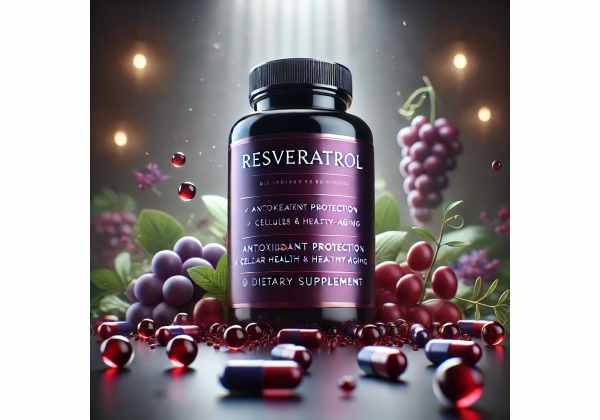
Resveratrol is one of those compounds that seems to sit halfway between nutrition and neuroscience. Found in grapes, berries, peanuts, and red wine, it has been studied for years because it appears to influence inflammation, oxidative stress, vascular function, and cellular aging pathways that also matter to the brain. That has made it especially appealing to people interested in memory, cognitive aging, mood resilience, and long-term brain protection. Still, resveratrol is easy to oversell. It has strong mechanistic appeal, but human evidence is more mixed than headlines often suggest. Some studies point to benefits in cerebral blood flow, cardiometabolic health, and selected cognitive outcomes, while others show small or inconsistent effects. The real value of resveratrol may be less about creating an immediate mental boost and more about supporting the conditions that help the brain stay healthier over time. This guide explains how it works, where the evidence looks strongest, how to use it realistically, and what safety issues matter before supplementing.
Table of Contents
- How Resveratrol May Support the Brain
- What Human Studies Actually Show
- Mood Stress and Mental Wellness
- Who May Benefit Most
- Dosage Forms and Bioavailability
- Safety Side Effects and Interactions
How Resveratrol May Support the Brain
Resveratrol is a polyphenol, not a stimulant and not a classic nootropic. That difference matters. It does not work like caffeine, and it does not usually produce a sharp same-day sense of mental activation. Its appeal comes from a broader set of biological effects that may help protect brain tissue and the blood vessels that feed it.
Researchers have focused on resveratrol because it appears to act on several pathways tied to aging and neurodegeneration. These include oxidative stress, inflammation, mitochondrial function, endothelial health, and signaling systems involving SIRT1, AMPK, and nitric oxide. Each of those matters for the brain because the brain is metabolically demanding, highly sensitive to impaired blood flow, and vulnerable to chronic inflammatory strain.
In practical terms, resveratrol is most often discussed for five reasons:
- It may reduce oxidative damage in cells.
- It appears to modulate inflammatory signaling.
- It may support endothelial function and blood flow.
- It has been studied for effects on mitochondrial efficiency and cellular stress responses.
- It is relevant to conditions associated with age-related cognitive decline.
This makes resveratrol especially interesting from a “brain environment” perspective. Good cognition depends on more than neurotransmitters alone. It also depends on steady cerebral perfusion, lower inflammatory burden, healthy insulin signaling, and resilience against cumulative stress. A compound that supports several of those systems at once is worth studying even if it does not feel dramatic subjectively.
There is an important limit, though. Strong mechanism does not equal strong clinical effect. Resveratrol looks impressive in cell culture and animal models, but translation into human benefit has been uneven. One major reason is bioavailability. The body absorbs resveratrol, but it is also metabolized quickly, which may limit how much active compound reaches target tissues in a sustained way. Another reason is that many trials use different doses, different populations, and different formulations, making direct comparison difficult.
This is why resveratrol fits better into a preventive or supportive framework than into a quick-fix one. A person who eats poorly, sleeps badly, and lives under constant high stress is unlikely to transform cognition through one polyphenol alone. But in someone who is already building a brain-supportive routine, resveratrol may help reinforce the same systems that matter for healthy aging, including those tied to inflammation and brain fog.
The most realistic expectation is that resveratrol may help support brain health through vascular, metabolic, and neuroprotective pathways over time. That is meaningful, but it is not the same as instant mental enhancement.
What Human Studies Actually Show
Human evidence on resveratrol is more nuanced than its reputation suggests. The broad literature includes many clinical trials across cardiometabolic, vascular, menopausal, inflammatory, and cognitive settings. When those trials are looked at together, the pattern is not “resveratrol clearly improves cognition in everyone.” It is closer to “resveratrol shows interesting signals in selected groups, but the results are mixed and not yet definitive.”
The clearest human findings tend to cluster in areas that indirectly matter to the brain:
- Cerebrovascular responsiveness
- Endothelial function
- Selected cardiometabolic markers
- Inflammation-related measures
- Specific cognitive outcomes in targeted groups
One of the better-known research lines involves postmenopausal women. In that setting, some trials have found improvements in cerebrovascular function and overall cognitive performance with regular trans-resveratrol supplementation over months, suggesting that vascular mechanisms may be one path through which resveratrol helps the brain. That is encouraging because reduced vascular responsiveness is a plausible driver of age-related cognitive change.
At the same time, the full human evidence base remains inconsistent. Some trials report positive effects, while others show little to no meaningful improvement. Several reasons likely explain this:
- Different formulations: purified trans-resveratrol, mixed extracts, and food-based sources are not identical.
- Different doses: studies have used everything from modest daily doses to much higher intakes.
- Different populations: healthy young adults, postmenopausal women, people with diabetes, and older adults with vascular risk are not the same target group.
- Different endpoints: a study can improve blood flow without clearly improving memory tests, or improve one cognitive domain without changing broad global scores.
- Bioavailability problems: rapid metabolism may blunt real-world effects.
This leads to a careful but useful conclusion. Resveratrol looks more promising for long-term support of brain-relevant systems than for dramatic short-term enhancement in healthy adults. It may have the most practical value in people who have some room for improvement in vascular, inflammatory, or age-related pathways rather than in younger users chasing a stronger workday “edge.”
It is also worth separating resveratrol from the image of red wine as a brain-health shortcut. Wine contains resveratrol, but not in the controlled, supplement-style amounts used in most studies, and alcohol has its own cognitive and mental health tradeoffs. For that reason, it makes much more sense to discuss resveratrol as a supplement or a food-derived polyphenol than as a reason to drink more wine.
For readers interested in cognitive aging, the best way to view the current evidence is this: resveratrol may support the systems that help protect cognition, but it is not established as a stand-alone treatment for memory decline or dementia. It fits best beside other evidence-based habits for protecting cognition over time, not in place of them.
Mood Stress and Mental Wellness
Resveratrol is often marketed for mood, calm, and emotional resilience, but this is one of the areas where users need the most realism. There is a plausible biological case for why resveratrol could matter to mental wellness. It influences inflammatory pathways, oxidative stress, vascular function, and cellular signaling systems that are relevant to depression, stress reactivity, and neurodegenerative change. That is enough to justify research interest. It is not enough to present resveratrol as a proven antidepressant or anxiolytic.
The evidence for mood benefits in humans is still limited. Some trials suggest improvements in well-being or cognitive-affective measures in specific populations, but there is not strong, consistent human evidence that resveratrol reliably treats depression or anxiety in routine use. Most of the more impressive mood-related findings still come from animal and mechanistic studies.
That does not make it irrelevant. It means the likely role is supportive and indirect rather than symptom-targeted.
Resveratrol may be most relevant to mental wellness in situations like these:
- A broader anti-inflammatory dietary approach
- Cognitive aging with vascular or metabolic strain
- Midlife changes linked to endothelial function and cerebral blood flow
- Mental fatigue tied to poor cardiometabolic health
- Long-term brain-health routines rather than acute symptom relief
A useful way to think about it is that resveratrol may help the terrain more than the moment. It may support the biological background in which steadier mood and cognition become easier to maintain, especially when brain and vascular health are closely linked. That is a meaningful role, but it is different from taking something for a panic spike, insomnia, or a depressive episode.
This is why it is not an ideal first-line supplement when the main complaint is acute anxiety, racing thoughts, or stress-triggered sleep disruption. In those cases, a person may gain more from interventions that directly target arousal, sleep quality, or cognitive overload. Someone looking for gentler evidence-based support for mental tension may be better served by options such as L-theanine for anxiety and sleep or by fixing the actual drivers of nervous-system strain.
Resveratrol’s mental-wellness value is probably strongest in people who are thinking long term. It may have a place in a plan focused on healthy aging, lower inflammatory burden, and vascular support. It may be much less useful for people expecting a clear mood lift or fast improvement in motivation.
So the balanced conclusion is this: resveratrol is relevant to mental wellness because brain health, blood vessels, inflammation, and stress biology overlap. But current human evidence supports a cautious, supportive role rather than a direct treatment role. That distinction keeps expectations grounded and prevents a promising compound from being asked to do too much.
Who May Benefit Most
Resveratrol is not a universal supplement. Its best use case depends on the person, the goal, and the context. In general, it makes the most sense for people thinking about long-range brain support rather than immediate stimulation.
The groups most likely to find resveratrol worth considering include:
- Adults interested in healthy cognitive aging
- Postmenopausal women, especially where vascular support is part of the goal
- People with cardiometabolic risk factors that overlap with brain-health concerns
- Those following or building a Mediterranean-style dietary pattern
- People who prefer non-stimulant, polyphenol-based support
Postmenopausal women stand out because some of the clearest human cognitive and cerebrovascular findings have come from that population. Estrogen decline can affect vascular responsiveness and cerebral perfusion, so a polyphenol with vascular and phytoactive properties is especially interesting there. That does not mean every midlife woman needs resveratrol, but it is one of the groups in which the human evidence is less abstract and more practical.
Aging adults with prevention in mind are another sensible group. If the goal is not a “brain boost” but better support for vascular function, inflammation balance, and cognitive resilience, resveratrol fits the question more naturally. It may also be appealing to people who are already doing the big things right and want a modest, biologically plausible addition.
People who may be disappointed include:
- Healthy younger adults wanting a dramatic productivity effect
- Anyone expecting same-day memory improvement
- People trying to self-treat major depression or anxiety
- Those with worsening cognitive symptoms who need evaluation rather than supplements
That last group deserves emphasis. If someone is increasingly forgetful, mentally slowed, or struggling with day-to-day attention, the issue may not be a missing polyphenol. It may be sleep apnea, depression, medication effects, thyroid disease, ADHD, menopause, alcohol, or early neurologic change. In that case, a supplement can delay the more useful question of why forgetfulness is happening.
Diet also changes the value proposition. A person who already eats a plant-rich, olive-oil-forward diet and has strong cardiometabolic health may have less room to benefit than someone whose diet is low in protective polyphenols. That is one reason resveratrol should be framed as part of a broader pattern rather than as a stand-alone solution.
The ideal user is usually thoughtful, prevention-minded, and patient enough to value subtle long-term support over dramatic short-term effects. Resveratrol is most likely to help people who understand what it is for and what it is not.
Dosage Forms and Bioavailability
If there is one practical issue that shapes almost every resveratrol discussion, it is bioavailability. Resveratrol is absorbed, but it is also rapidly metabolized. That means the amount on the label does not translate neatly into how much active compound remains available to tissues over time. This is one reason studies can show promising mechanisms alongside uneven real-world results.
Supplement products vary widely. Common forms include:
- Trans-resveratrol capsules
- Mixed resveratrol and polyphenol blends
- Grape or knotweed-derived extracts
- Multi-ingredient “longevity” formulas
The most studied form in clinical trials is usually trans-resveratrol, and that is the form most people should look for if they want the product to resemble the research as closely as possible.
In human trials, resveratrol doses have ranged widely, but several practical patterns show up:
- Around 75 mg twice daily in some longer-term cognition and vascular studies
- 100 to 300 mg daily in many general supplement products
- 500 mg to 1 g daily in higher-dose clinical work
- Sometimes more than 1 g daily, though higher intakes do not necessarily produce better outcomes
The key lesson is that higher is not always better. In fact, some reviews suggest there is no clean dose-response pattern for many outcomes, and extreme doses may add side effects without adding meaningful benefit.
A sensible approach looks like this:
- Choose a product that clearly states trans-resveratrol content.
- Avoid assuming that large capsule size means better quality.
- Start in a modest range rather than jumping to high-dose use.
- Take it consistently for weeks or months if the goal is long-term support.
- Judge it by real function, not by whether it produces a noticeable “feeling.”
Timing is less important than consistency. Because resveratrol is not a stimulant, it does not need to be taken before work sessions. Many people simply take it with food, often once or twice daily depending on the product. Taking it with meals may also help tolerability.
People should also remember that resveratrol is best understood as an adjunct, not an anchor. It may fit a broader nutrition strategy that includes olive oil, berries, legumes, nuts, and other polyphenol-rich foods rather than replacing them. That is one reason it aligns so naturally with Mediterranean-style eating for brain health.
The most practical dose is usually the smallest one that fits the evidence-informed use case and can be taken consistently. Chasing very high amounts in hopes of stronger brain effects is usually less convincing than using a moderate, well-formulated product within a broader health plan.
Safety Side Effects and Interactions
Resveratrol is often described as generally well tolerated, and that is broadly fair at common supplemental doses. But “well tolerated” should not be confused with “risk free.” Like many bioactive compounds, it sits in a middle zone: promising enough to be useful, active enough to deserve caution.
The most commonly discussed side effects are gastrointestinal and dose related. These may include:
- Nausea
- Loose stools
- Abdominal discomfort
- Bloating
- Headache in some users
At more moderate doses, many people tolerate resveratrol without major problems. In broader clinical reviews, purified resveratrol has generally been reported as tolerable in human studies, including at fairly substantial intakes. Still, higher doses are more likely to cause digestive side effects, and there is not enough evidence to treat long-term high-dose use as routine or consequence-free.
A few practical precautions matter more than the side effect list itself.
First, resveratrol may interact with medications or conditions related to bleeding and clotting. Because it has been discussed for effects on platelet function and inflammatory pathways, extra caution is sensible with anticoagulants, antiplatelet drugs, and regular NSAID use.
Second, people with hormone-sensitive conditions should not assume that “natural” means neutral. Resveratrol has complex biological activity, including phytoactive properties that may be relevant in certain contexts, especially when high doses are used regularly.
Third, bioactive supplements can complicate self-treatment. If a person is already using multiple compounds for focus, mood, aging, or “longevity,” adding resveratrol makes it harder to know what is helping and what is causing side effects. This is especially true in nootropic-style stacks. A cleaner, safer strategy is to test one variable at a time, especially if the broader concern is the risks and limits of nootropics.
Certain groups should be more careful or seek medical guidance first:
- Pregnant or breastfeeding people
- People with bleeding disorders
- Those taking anticoagulants or antiplatelet drugs
- People with complex medical conditions
- Anyone considering high-dose long-term use
It is also important not to let resveratrol distract from more basic care. If cognitive symptoms are worsening, if mood is persistently low, or if brain fog is interfering with daily life, a supplement should not delay evaluation. Brain health supplements can support a plan, but they are poor substitutes for understanding what is really driving symptoms.
For most healthy adults, the safest use pattern is straightforward: choose a reputable product, stay in a moderate range, be cautious with medications, and avoid turning resveratrol into a high-dose experiment simply because it sounds sophisticated.
References
- Resveratrol for the Management of Human Health: How Far Have We Come? A Systematic Review of Resveratrol Clinical Trials to Highlight Gaps and Opportunities 2024 (Systematic Review)
- Bridging the molecular and clinical aspects of resveratrol in Alzheimer’s disease: a review 2025 (Review)
- Resveratrol and vascular health: evidence from clinical studies and mechanisms of actions related to its metabolites produced by gut microbiota 2024 (Review)
- Sustained Cerebrovascular and Cognitive Benefits of Resveratrol in Postmenopausal Women 2020 (RCT)
- Potential Adverse Effects of Resveratrol: A Literature Review 2020 (Literature Review)
Disclaimer
This article is for educational purposes only and is not medical advice. Resveratrol supplements are not a treatment for depression, anxiety, dementia, or any other medical condition, and they should not replace professional evaluation for worsening memory, mood, or cognitive symptoms. If you are pregnant, breastfeeding, have a bleeding disorder, take blood thinners, or use prescription medications regularly, speak with a qualified clinician before starting resveratrol.
If you found this article helpful, consider sharing it on Facebook, X, or another platform where it may help someone make a more informed decision.