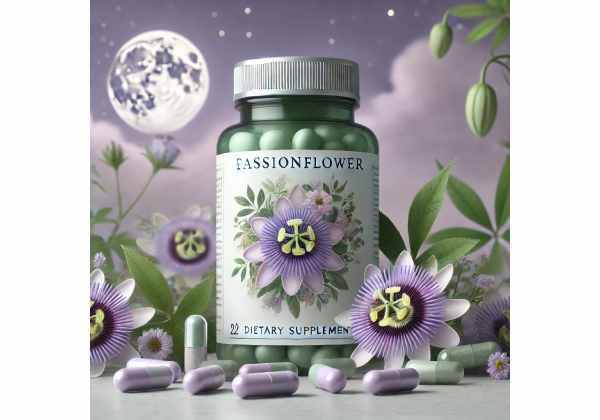
Passionflower has a calm reputation that makes intuitive sense the moment you hear its name, but the herb is more interesting than its image suggests. Traditionally used for nervousness, restlessness, and sleep complaints, passionflower is now studied mainly for anxiety, stress, and insomnia-related symptoms. That puts it in a useful middle ground. It is not a stimulant, not a conventional nootropic, and not a substitute for psychiatric treatment. Instead, it appears to act more like a gentle nervous-system support herb that may help some people feel less keyed up and sleep a little more easily.
That does not mean the evidence is stronger than it is. The research is promising in places, but it is still limited, product quality varies, and not every study shows a clear effect. This article explains how passionflower may work, what benefits are realistic, who may be most likely to use it, how to dose it, and where caution matters.
Table of Contents
- How Passionflower May Work
- Benefits for Anxiety and Stress
- Sleep, Mental Calm, and Next-Day Function
- Who Might Use Passionflower
- Dosage, Forms, and How to Take It
- Safety, Side Effects, and Interactions
How Passionflower May Work
Passionflower usually refers to Passiflora incarnata, a climbing vine whose aerial parts are used in herbal preparations. Its brain-health relevance comes mostly from its calming and anxiolytic profile rather than from direct memory or focus enhancement. Researchers have explored several possible mechanisms, but the one that appears most often is interaction with the GABA system. GABA is the brain’s main inhibitory neurotransmitter, and it helps regulate excitability, tension, and the transition into calmer states. That is one reason passionflower is frequently discussed alongside other supplements used for nervous tension, including L-theanine for anxiety and focus.
A GABA-related mechanism would fit the real-world effects most people are looking for. Passionflower is usually not taken to feel energized. It is taken when the problem is racing thoughts, stress-related restlessness, bedtime unease, or situational anxiety. Some preclinical work also suggests antioxidant, anti-inflammatory, and receptor-modulating effects, but these findings are still secondary to the simpler clinical question: does it help people feel calmer or sleep better?
The most useful answer is that it may, but probably in a modest and context-dependent way. This is not a heavy sedative in the way prescription anxiolytics can be. Many people describe herbs like passionflower as “taking the edge off” rather than creating a dramatic emotional shift. That softer profile can be an advantage for people who want calm without marked impairment, but it also means the effect can feel subtle.
One reason the evidence is hard to interpret is that passionflower products vary so much. Studies have used teas, tinctures, standardized extracts, tablets, and combination formulas. Doses differ, outcome measures differ, and some trials are quite small. So while the herb has a plausible mechanism and a long tradition of use, the science is not uniform enough to support sweeping claims.
Still, the underlying picture is coherent. Passionflower seems best suited to symptoms tied to excess nervous-system activation:
- mental restlessness
- stress-related sleep problems
- situational anxiety
- mild tension with difficulty winding down
That profile matters because it places passionflower in the right category. It is less a “brain booster” than a nervous-system settling herb. For mental wellness, that can still be meaningful. A calmer baseline can improve concentration, emotional control, sleep onset, and tolerance for daily stress even when the herb is not directly sharpening cognition. This is part of why calming supplements can indirectly support brain function: the mind often works better when it is less overactivated.
Benefits for Anxiety and Stress
The strongest search interest around passionflower is usually anxiety, and that is also where the best-known human research sits. The evidence does not show that passionflower is a proven treatment for generalized anxiety disorder in the same way a first-line medication or structured therapy is. What it does suggest is that passionflower may help reduce mild anxiety symptoms or situational anxiety in some people.
This distinction matters. A person with everyday nervous tension, stress-related unease, or pre-procedure anxiety is asking a different question from someone dealing with panic disorder, major insomnia, or severe generalized anxiety. Passionflower is more plausible for the first situation than the second.
Several clinical studies and reviews suggest potential anxiolytic effects, but the literature also has clear limitations. Some studies are small. Some use unclear extract details. Some test passionflower in combinations rather than alone. And while results are often encouraging, they are not always consistent enough to support a strong, universal recommendation.
A realistic summary of the anxiety evidence looks like this:
- Passionflower may reduce mild anxiety or situational anxiety in some people.
- The evidence is suggestive rather than definitive.
- It may be especially useful where nervousness and sleep disturbance overlap.
- It should not be treated as a replacement for evidence-based care in severe anxiety.
This is an important place to keep expectations honest. Passionflower is unlikely to act like a rescue medication during an intense panic attack. It is also unlikely to transform chronic anxiety on its own if the underlying drivers include trauma, depression, health anxiety, or persistent rumination. In those cases, broader strategies described in resources on anxiety symptoms and triggers are far more central than any single herb.
Where passionflower may fit well is in the gray zone that a lot of people actually live in: stress that is not mild enough to ignore, but not severe enough to require strong sedation. Examples include:
- tension before travel, presentations, or appointments
- “tired but wired” evenings
- stress-related muscle tightness and mental overactivity
- feeling too keyed up to unwind
In those settings, subtle can be useful. A supplement does not need to be dramatic to be worthwhile. For some people, even a modest drop in nervous-system intensity can make it easier to sleep, think clearly, or stay emotionally steady. That may be the most practical mental-health role for passionflower.
The main caution is not to confuse promising herbal support with proven psychiatric treatment. Passionflower may help some people feel calmer. It is not a stand-alone answer to chronic high-distress anxiety, and its value is strongest when matched to the right level of symptom severity and the right expectations.
Sleep, Mental Calm, and Next-Day Function
Passionflower is often used for sleep, but its sleep role is best understood as a calming aid rather than a strong hypnotic. That difference is useful. Many people do not need to be knocked out. They need help stepping down from a tense mental state that makes sleep feel harder than it should. Passionflower seems more relevant to that transition than to deep sedation.
This is one reason it often appears in bedtime teas and nighttime herbal blends. The theory is simple: if you reduce mental restlessness and physical tension, sleep may come more easily. Human research gives this idea some support, though not enough to say that passionflower reliably treats insomnia across the board.
The most encouraging pattern is that passionflower may help with:
- subjective sleep quality
- total sleep time in some adults
- sleep complaints linked to stress or nervous tension
- the sense of mental settling before bed
That pattern fits real life. Poor sleep is often not just about the mechanics of sleep. It is about an overactive nervous system, a mind that keeps replaying the day, or stress that lingers into the evening. In that setting, the herb’s mild calming profile can be appealing.
This also explains why passionflower may fit people who dislike stronger sleep aids. Some supplements can improve sleep at the cost of next-day heaviness. Passionflower’s gentler profile may reduce that risk for some users, though sensitivity varies and some people still feel drowsy. Someone comparing options for sleep support may also look at alternatives such as glycine for sleep and next-day clarity, especially if the goal is a clearer morning rather than sedation alone.
Still, this is not a cure for chronic insomnia. If the real problem is sleep apnea, circadian disruption, depression, alcohol use, restless legs, medication side effects, or severe sleep anxiety, passionflower is unlikely to solve it. It may help at the edges, but it is not a substitute for identifying the reason sleep is disrupted in the first place.
A practical way to frame its sleep benefit is this: passionflower seems better at helping the mind and body settle than at forcing sleep. That makes it a good fit for the person who feels overstimulated at night, but a weaker fit for the person whose insomnia has a more medical or entrenched cause.
That calmer evening effect can matter beyond sleep itself. Better sleep onset and a less agitated bedtime state can lead to better next-day patience, steadier concentration, and less irritability. In that sense, passionflower may support brain and mental wellness indirectly. The herb does not need to improve cognition directly to be helpful. Sometimes the most meaningful brain-health support comes from improving the conditions that let the brain recover at night.
Who Might Use Passionflower
Passionflower is most likely to be useful for people whose mental wellness challenges are tied to mild or moderate nervous-system overactivation. That includes people who feel stressed, keyed up, restless, or unable to wind down, especially in the evening. It is less convincing for people seeking stronger effects or those dealing with severe psychiatric symptoms.
The best candidates often include people who recognize themselves in patterns like these:
- evening anxiety that makes it hard to relax
- stress-related sleep complaints
- situational nervousness before appointments or travel
- mild daytime tension without wanting a heavy sedative
- sensitivity to stimulating “focus” supplements
This profile makes passionflower especially relevant for people whose sleep and anxiety feed each other. The more your problem looks like nervous tension spilling into bedtime, the more passionflower makes sense. The more your problem looks like major depression, panic attacks, trauma symptoms, or profound insomnia, the less likely it is to be enough on its own.
It may also appeal to people who want a plant-based option with a relatively gentle reputation. Some people are not looking for the strongest possible effect. They are looking for something that helps reduce background agitation without making them feel detached or dulled. Passionflower may fit that preference better than harsher or more sedating options.
That said, there are people for whom caution is more important than curiosity. These include:
- people taking sedating medications
- those with complicated sleep disorders
- pregnant people
- those with significant depression or suicidal thinking
- people with a history of reacting strongly to calming herbs
It is also worth being careful with self-treatment when the real issue may not be anxiety at all. For example, low mood, hormonal changes, overwork, poor sleep, or medical problems can all look like “stress.” Someone with emotional exhaustion and cognitive overload may need to think more broadly about burnout and emotional exhaustion rather than assuming a calming herb is the missing piece.
A useful question to ask is: what exactly am I trying to improve? If the answer is “I want less nervous tension and easier unwinding,” passionflower is a reasonable supplement to consider. If the answer is “I want to treat severe anxiety, fix chronic insomnia, or improve my memory,” it is probably not the most direct match.
This is part of what makes passionflower a good but narrow tool. It may be quite reasonable for mild nervous tension, stress-related sleep difficulty, and situational anxiety. It is much less persuasive as a broad solution for every mental-health complaint. The better the match between the symptom pattern and the herb’s actual strengths, the more likely the experience will feel worthwhile.
Dosage, Forms, and How to Take It
One challenge with passionflower is that the product landscape is messy. Teas, capsules, tinctures, and standardized extracts can all be called “passionflower,” but they are not necessarily comparable. The amount of herb, the extract ratio, the plant part used, and the standardization markers may all differ. That makes dose discussions less precise than they are for simple nutrients.
The most common forms are:
- tea or infusion
- liquid tincture
- capsules or tablets
- standardized extract products
For gentle evening use, tea is often the simplest entry point. It suits the kind of mild bedtime nervous tension many people are trying to address, and the ritual itself may support winding down. Tinctures and extracts are more concentrated and may be easier to dose consistently. Capsules are often chosen for convenience.
Because products vary, the smartest dosing advice is to follow the specific label of a reputable product rather than assuming all passionflower supplements are interchangeable. In studies, daily use has ranged from teas used over several nights to extract-based products taken for weeks. Many commercial products recommend one or two doses per day, with nighttime use common when the goal is sleep support.
A practical way to use passionflower is:
- Choose one form rather than stacking several at once.
- Start with the lower end of the labeled dose.
- Use it for a defined purpose, such as evening calm or bedtime support.
- Reassess after several days or weeks instead of escalating quickly.
Timing depends on the goal. For sleep, it is often used in the evening or 30 to 60 minutes before bed. For situational stress, some people use it earlier in the day, but daytime use is more likely to reveal whether drowsiness is a problem.
It also helps to compare passionflower honestly with similar supplements. If the main goal is sleep, some people may compare it with melatonin or magnesium. If the goal is daytime calm, it may be compared with gentler options such as lavender for mental health support. Passionflower fits best when the target is tension, restlessness, and stress-related sleep difficulty, not raw daytime energy or strong antidepressant effect.
The more standardized the product, the easier it is to judge. This matters because passionflower’s evidence is already limited enough without adding poor product quality to the equation. A simple, clearly labeled supplement from a reputable company is more useful than a “night blend” that hides ingredient amounts in a proprietary formula.
The main dosing principle is modesty. Passionflower is usually best approached as a gentle support herb. Starting low, using one product at a time, and matching timing to the symptom pattern are the most sensible ways to use it.
Safety, Side Effects, and Interactions
Passionflower is generally considered reasonably well tolerated for short-term oral use in many adults, but safety still deserves real attention. The same calming properties that make it appealing can also create unwanted effects in some people, especially when combined with other substances that slow the nervous system.
The most commonly discussed side effects include:
- drowsiness
- dizziness
- confusion or mental fogginess
- nausea in some users
- reduced alertness, especially at higher doses or when combined with other sedatives
These side effects help explain one of the core safety messages: passionflower may be gentle, but it is not automatically neutral. A product that helps with sleep or anxiety can still impair alertness, which matters for driving, work, and multitasking.
Interactions are a bigger concern than side effects alone. Passionflower may add to the effects of sedating medications, alcohol, antihistamines, or other calming supplements. This means extra caution is sensible with:
- prescription sleep aids
- benzodiazepines
- sedating antidepressants
- antihistamines used for sleep or anxiety
- alcohol
- multi-herb sleep blends
There is also a specific surgical caution. Because passionflower may interact with anesthesia or perioperative sedatives, it is usually best avoided before surgery unless a clinician explicitly advises otherwise.
Pregnancy is another important caution. Passionflower should generally be avoided during pregnancy because of concerns about uterine stimulation and insufficient safety data. Breastfeeding safety is also not well established.
One more practical point is that “natural” does not mean ideal for everyone. A person who already feels mentally slowed, groggy, or emotionally flat may not respond well to something further calming. In that situation, the better question may not be “Which sedating herb should I add?” but “Why do I already feel this slowed down?” Sometimes the answer has more to do with sleep loss, depression, or broader nervous-system dysregulation than with a need for another calming supplement. That broader picture is often better captured in discussions of nervous-system dysregulation symptoms than in supplement marketing.
The bottom line on safety is balanced. Passionflower is not one of the most alarming herbs in the supplement world, and short-term use appears reasonably tolerated in many adults. But it still deserves respect, especially around sedation, medication interactions, pregnancy, and surgery. The safest way to use it is with one clear goal, one product at a time, and enough self-awareness to stop if it causes too much drowsiness, confusion, or daytime sluggishness.
References
- Passionflower: Usefulness and Safety 2025 (Government Fact Sheet)
- Passiflora incarnata in Neuropsychiatric Disorders—A Systematic Review 2020 (Systematic Review)
- Randomized, Double-Blind, Placebo-Controlled, Clinical Study of Passiflora incarnata in Participants With Stress and Sleep Problems 2024 (RCT)
- Passiflora incarnata L.: ethnopharmacology, clinical application, safety and evaluation of clinical trials 2013 (Review)
- A double-blind, placebo-controlled investigation of the effects of Passiflora incarnata (passionflower) herbal tea on subjective sleep quality 2011 (RCT)
Disclaimer
This article is for educational purposes only and is not medical advice. Passionflower may help some people with mild anxiety, stress-related restlessness, or sleep complaints, but it is not a substitute for diagnosis or treatment of anxiety disorders, insomnia, depression, or other mental health conditions. Because passionflower can cause drowsiness and may interact with medications, alcohol, and anesthesia, people who are pregnant, breastfeeding, preparing for surgery, or taking sedating medicines should speak with a qualified clinician before using it.
If you found this article helpful, please share it on Facebook, X (formerly Twitter), or any platform where it may help someone else.