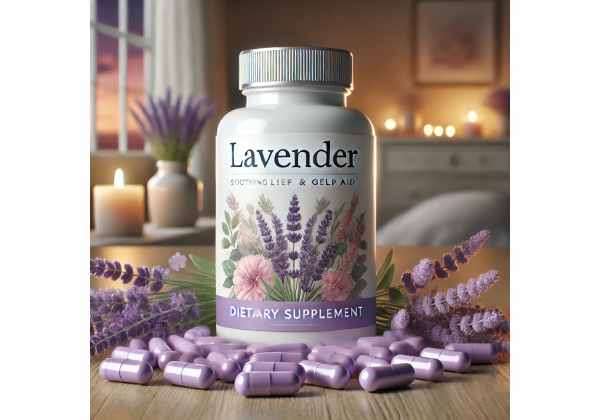
Lavender is often treated like a simple scent for relaxation, but the research around it is more substantial than many people realize. Certain lavender preparations, especially standardized oral lavender oil, have been studied for anxiety, stress-related symptoms, sleep quality, and emotional tension in ways that go beyond folk use or spa culture. At the same time, not every lavender product works the same way. A capsule, an inhaled essential oil, and a pillow spray may all feel related, yet they do not have the same evidence, dose, or safety profile.
That difference matters if you are thinking about lavender for brain health or mental wellness. The best-supported uses tend to involve anxiety and sleep-related problems, while claims about memory, focus, or depression need more nuance. This guide explains how lavender may affect the nervous system, what human studies actually show, which forms make the most sense, how dosing is usually approached, and what to know about side effects, interactions, and practical use.
Table of Contents
- How lavender affects the nervous system
- Where lavender helps most
- Oral lavender vs aromatherapy
- Who might benefit from lavender
- Dosage timing and best use
- Safety side effects and interactions
Lavender has a distinctive place in mental wellness because it sits between herbal medicine and sensory therapy. For some people, it is a mild ritual that supports calmer evenings. For others, especially those using a standardized oral preparation, it may be a more structured option for anxiety symptoms. That range is both a strength and a source of confusion. When people say “lavender works,” they may be referring to a prescription-style oral oil, an inhaled essential oil, a massage blend, or simply the emotional comfort of a familiar scent. This article separates those uses so you can match the evidence to the actual product in front of you.
How lavender affects the nervous system
Lavender is not a stimulant, and it is not a classic sedative in the way prescription sleep medicines are. Its mental-health appeal comes from gentler effects on the nervous system that may reduce anxious tension, support relaxation, and improve the internal conditions that make sleep and emotional regulation easier. This is one reason lavender remains popular even among people who want to avoid feeling drugged or slowed down.
Much of the mechanistic discussion centers on lavender essential oil constituents such as linalool and linalyl acetate. These compounds appear to interact with pathways involved in anxiety, stress, arousal, and neuronal signaling. Researchers have proposed several possible actions:
- modulation of calcium channels involved in neuronal excitability
- effects on glutamatergic and GABA-related signaling
- influence on serotonin-related pathways
- reduction of autonomic overactivation associated with stress
- possible anti-inflammatory and antioxidant effects in preclinical models
The practical point is not that lavender works like several psychiatric drugs at once. It is that lavender appears to act on a few systems that matter for anxious arousal and mental overactivation. That makes it especially relevant for people who do not necessarily have severe psychiatric illness but still feel chronically keyed up, restless, tense, or mentally “on edge.”
This is also why lavender’s benefits often cluster around symptoms rather than diagnoses alone. A person may not say, “I need help with neurotransmission.” They may say:
- I feel wired but tired
- my body will not settle at night
- stress keeps showing up as stomach tension or shallow breathing
- I am not panicking, but I never feel fully calm
Lavender tends to fit that kind of experience better than the goal of creating sharper concentration or faster thinking. In fact, its value may partly come from reducing the background mental noise that interferes with rest, attention, and emotional steadiness. Someone whose focus is undermined by chronic tension may benefit more from calming the nervous system than from adding stimulation. That is part of the same logic behind broader work on nervous system regulation.
Another useful distinction is that lavender’s effect depends on the route of use. Oral lavender oil is meant to create a systemic effect through standardized dosing. Inhaled lavender likely works through a mix of sensory, emotional, and autonomic pathways, which can still be meaningful but may be less predictable and harder to standardize. A pleasant scent can absolutely affect mood and perceived stress, but that is not the same as saying every lavender diffuser setup is an evidence-based treatment.
So how does lavender affect the brain and nervous system? Most likely by lowering anxious arousal, easing internal tension, and helping the system shift away from overactivation. That is a real and useful effect, but it is best understood as calming support, not cognitive acceleration.
Where lavender helps most
The strongest case for lavender in mental wellness is anxiety. That does not mean every lavender product is equally effective, and it does not mean lavender replaces professional care when anxiety is severe. But among herbal options, lavender has one of the more substantial research bases for reducing anxious symptoms, especially when used as a standardized oral oil preparation.
Human trials of oral lavender oil, often under the name Silexan, have shown benefits in generalized anxiety, subthreshold anxiety, mixed anxiety and depressive symptoms, and anxiety-related restlessness with disturbed sleep. Meta-analytic work suggests that the anxiolytic effect is clinically meaningful, and that is one reason lavender is treated more seriously than many “calming” supplements sold on broad wellness claims alone.
Sleep is another area where lavender has a decent, though less uniform, evidence base. The strongest sleep benefits often appear in people whose poor sleep is linked to stress, tension, or anxious activation rather than purely circadian problems. In other words, lavender may help because it makes it easier to settle, not because it acts like a strong hypnotic. This is an important distinction for readers trying to decide whether lavender belongs alongside approaches to sleep anxiety and nighttime worry.
Lavender may also help in related areas such as:
- stress-related physical tension
- subjective restlessness
- mild low mood that travels with anxiety
- situational distress in medical or procedural settings
- emotional unease that interferes with daily comfort
Where the evidence becomes weaker is in claims about direct cognitive enhancement. Lavender is not mainly studied as a memory booster or a focus supplement. Some small studies suggest that certain lavender exposures may affect attention or mental calm in ways that could indirectly support performance, but this is not the core use case. It would be misleading to present lavender as a primary nootropic for memory, reaction time, or executive function in healthy adults.
Depression also needs careful phrasing. There is emerging evidence that oral lavender oil may help in people with depression, especially when anxiety is also present, and a newer randomized trial adds weight to that possibility. Still, lavender should not be framed as a stand-alone treatment for major depressive disorder, especially not in people with more severe symptoms or suicidal thinking.
The most accurate summary is this:
- Lavender is best supported for anxiety-related symptoms.
- It may help sleep quality, especially when stress or restlessness is part of the problem.
- It may have supportive value in mixed anxiety and low mood.
- It is not a proven primary treatment for memory problems or major psychiatric illness on its own.
That balanced view keeps lavender useful without overselling it. It is strongest where calm, tension, and anxious activation are the main targets.
Oral lavender vs aromatherapy
One of the biggest sources of confusion around lavender is that people often talk about it as if all lavender products are interchangeable. They are not. A standardized oral lavender oil capsule, an inhaled essential oil, and a lavender-scented room spray can all smell similar while having very different evidence and practical effects.
Oral lavender oil has the stronger clinical research base for anxiety. This is especially true for standardized preparations studied in doses such as 80 mg daily. These products are designed to deliver a consistent chemical profile, which is one reason trials can evaluate them more seriously. In anxiety studies, oral lavender has shown reductions in psychic and somatic symptoms without the same dependence concerns associated with some sedative medications.
Aromatherapy is more variable. Inhaled lavender essential oil may still help people feel calmer, and recent reviews suggest it can reduce anxiety in diverse settings. There is also growing evidence that lavender essential oil may improve sleep quality in adults. But inhalation studies are harder to standardize because they vary by concentration, duration, delivery method, timing, and participant expectations. Some effects may come from sensory and contextual factors rather than from a consistent pharmacologic dose.
That does not make aromatherapy “fake.” It simply places it in a different evidence tier. A useful way to think about it is:
- oral lavender is more medicine-like
- inhaled lavender is more context-sensitive
- massage or bath use may combine scent, touch, warmth, and ritual
- cosmetic lavender products should not be assumed to have therapeutic dosing
This distinction matters when people ask whether lavender can help during a stressful day, before bed, or in periods of burnout. If the goal is structured symptom relief, oral preparations usually make more sense. If the goal is a calming environment, a transition ritual, or support for pre-sleep winding down, inhaled lavender may still be worthwhile. That is especially true for people trying to reduce sensory overstimulation and evening stress rather than treat a formal disorder.
In practice, aromatherapy may fit well into routines such as:
- using lavender during evening reading or stretching
- pairing it with breathwork or gentle wind-down habits
- creating a stronger sensory cue for bedtime
- using it during stressful but brief situations such as travel or medical appointments
That makes aromatherapy more of a behavioral support tool than a direct psychiatric supplement. It can be part of a calming routine in the same way that sound, light, and environment shape rest. Readers thinking about those factors more broadly may also relate lavender to topics like scent and nervous system regulation.
The key takeaway is simple: oral lavender and aromatherapy should not be judged by the same standard. Both can be useful, but they serve different purposes and have different levels of evidence.
Who might benefit from lavender
Lavender is most likely to help people whose main problem is not severe psychiatric instability, but chronic tension, anxious activation, unsettled sleep, or a body that has trouble switching out of stress mode. That makes it a good fit for a fairly specific group of users.
Lavender may be worth considering for:
- adults with mild to moderate anxiety symptoms
- people with persistent restlessness or nervous tension
- those who feel mentally tired but physically overactivated at night
- adults with stress-related sleep disruption
- people who want a non-stimulant, generally gentle option
- individuals who prefer a lower-risk adjunct before escalating to stronger treatments
It may also fit people whose symptoms are mixed rather than neatly labeled. For example, some people do not describe themselves as “anxious” but instead report chest tightness, irritability, racing thoughts at bedtime, shallow breathing, or a sense that their body never fully powers down. Lavender often makes more sense for this pattern than for classic concentration problems or severe mood disorder.
The supplement may be a weaker fit for:
- someone seeking a fast, energizing boost in focus
- someone with severe insomnia that is unrelated to stress or anxiety
- anyone trying to self-treat panic disorder, obsessive symptoms, bipolar disorder, or major depression without professional care
- people who are very scent-sensitive or easily nauseated by essential oils
- those expecting a dramatic effect after one dose or one night
That last point matters. Lavender is often most useful when expectations are modest and specific. A good goal might be “less evening tension,” “fewer anxious body symptoms,” or “easier transition into sleep.” A poor goal might be “erase all anxiety” or “fix my concentration by tomorrow.” When the expectations are wrong, even a useful supplement can feel disappointing.
Lavender may also appeal to people who want a bridge between lifestyle strategies and more formal treatment. For instance, someone already working on exercise, therapy, sleep timing, and overstimulation may find that lavender complements those efforts rather than trying to replace them. It can be especially helpful in routines meant to reduce the bodily side of stress, alongside strategies such as evidence-based stress management techniques.
In short, lavender is best for people who need help with calm, not intensity. It suits stress-loaded nervous systems better than underpowered ones. If your main problem is feeling too activated, wound up, or unable to settle, lavender may be a better fit than many more aggressive or stimulating supplements.
Dosage timing and best use
Lavender dosing depends heavily on the form you choose. This is one of the few supplements where the route of use changes the practical advice almost completely. Oral lavender oil is dosed like a supplement or herbal medicine. Aromatherapy is dosed more loosely, through amount, timing, and exposure pattern.
For standardized oral lavender oil, the most studied dose in anxiety research is 80 mg once daily. Some trials and analyses have also examined higher amounts, but 80 mg is the clearest starting point because it is the best established in the clinical literature. If you are using a standardized oral product, taking it daily and consistently matters more than taking it at a precise minute of the day.
Aromatherapy is different. There is no single universal dose because delivery varies so much. Instead, practical use usually depends on:
- the concentration of the essential oil
- whether it is inhaled directly or diffused
- how long the exposure lasts
- whether it is used during the day or near bedtime
- whether it is part of a routine such as massage, a bath, or breathing practice
For sleep support, timing often matters more than quantity. Lavender works best when it becomes part of a predictable pre-sleep wind-down, not when it is added randomly after two hours of doomscrolling. The most helpful routine often looks like this:
- Start reducing stimulation 30 to 60 minutes before bed.
- Use lavender in one consistent way, such as diffusion or pillow-adjacent inhalation.
- Pair it with the same calming steps each evening.
- Give the routine at least one to two weeks before judging it.
This is important because lavender is partly about state conditioning. The scent can become associated with rest, which may strengthen its benefit over time. That makes it especially useful for people rebuilding healthier bedtime patterns, including those working on a more stable sleep schedule.
A few practical dosing notes help keep expectations realistic:
- oral lavender is usually for daily symptom support, not emergency relief
- aromatherapy is best treated as a calming aid, not a tightly measured drug
- more scent is not always better, especially if it becomes irritating
- mixing lavender with many other sedating herbs makes it harder to judge what is helping
The smartest way to use lavender is to match the form to the goal. If you want structured support for anxiety symptoms, use a well-studied oral product. If you want bedtime relaxation or a calmer sensory environment, aromatherapy may be enough. In both cases, consistency matters more than intensity.
Safety side effects and interactions
Lavender is often described as gentle, and for many adults that is true. But gentle does not mean risk-free, and the safety profile changes depending on whether lavender is taken orally, inhaled, or applied to the skin.
For oral lavender products, the most commonly reported side effects are usually mild and may include:
- nausea
- diarrhea
- headache
- burping or belching
- stomach discomfort
These effects are not severe for most users, but they are common enough to matter. Some people stop oral lavender simply because they dislike the digestive side effects, not because the product is unsafe. Taking the supplement consistently, using a reputable formulation, and avoiding unnecessary stacking with many other calming products may improve tolerability.
Aromatherapy has a somewhat different risk pattern. Inhaled lavender is generally considered low risk, but some people experience:
- headache
- coughing
- sensory irritation
- nausea from strong scent exposure
Topical use adds the possibility of skin irritation or allergy. Essential oils should also be used carefully around pets, children, and poorly ventilated spaces.
Drug interactions are another area where common-sense caution matters. Lavender may have additive effects with sedatives, sleep medicines, anti-anxiety drugs, or other calming herbs. That does not mean the combination is always dangerous, but it does mean people should be more careful if they already use prescription medicines that affect alertness, breathing, or coordination. This is especially relevant before surgery or when combining lavender with other agents used for sleep, such as melatonin timing and dosing.
Special caution is sensible for:
- pregnancy and breastfeeding, because data remain limited
- children, especially with routine topical use of concentrated products
- people with asthma or fragrance sensitivity
- anyone taking multiple sedating medicines
- people with significant psychiatric symptoms who may need formal treatment, not self-experimentation
Another important point is product quality. Not all lavender oils are equivalent. Some are cosmetic-grade, heavily fragranced, diluted, or poorly standardized. If the goal is mental wellness rather than room scent, the quality and intended route of use matter a great deal.
The bottom line is reassuring but not careless. Lavender is usually well tolerated, especially in studied oral forms and reasonable aromatherapy use. Still, it should be treated like a real active product, not just a pleasant smell. Start with clear goals, choose the right form, watch for side effects, and do not assume that “natural” means “automatically safe in any amount.”
References
- Efficacy of Silexan in patients with anxiety disorders: a meta-analysis of randomized, placebo-controlled trials 2023 (Meta-Analysis)
- Silexan in anxiety, depression, and related disorders: pharmacological background and clinical data 2024 (Review)
- Lavender oil preparation Silexan is effective in mild-to-moderate major depression: a randomized, placebo- and reference-controlled trial 2024 (RCT)
- The Sleep-Enhancing Effect of Lavender Essential Oil in Adults 2025 (Systematic Review and Meta-Analysis)
- Lavender: Usefulness and Safety 2024 (NCCIH Overview)
Disclaimer
This article is for educational purposes only and is not medical advice, diagnosis, or treatment. Lavender is not a substitute for professional care for anxiety disorders, depression, insomnia, or other mental health conditions. If you are pregnant, breastfeeding, take sedating medications, have severe symptoms, or are considering oral lavender alongside prescription treatment, speak with a qualified clinician before use.
If you found this article helpful, please consider sharing it on Facebook, X, or your preferred platform.