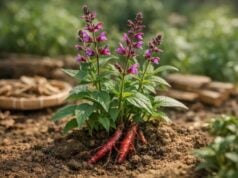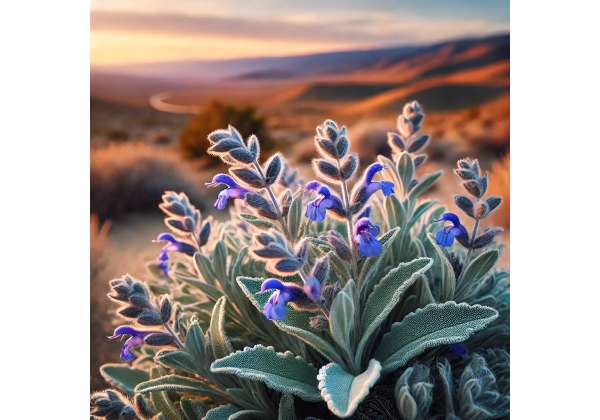
Desert sage (Salvia dorrii) is a hardy, aromatic shrub native to the dry landscapes of the western United States. Its silver-gray leaves and purple blooms make it easy to recognize in season, but its value has never been purely ornamental. Indigenous communities have long used desert sage as a practical plant for daily life, especially for respiratory comfort and general cleansing traditions. Modern interest centers on its fragrant essential oils and the broader Salvia family’s reputation for antioxidant and anti-inflammatory activity.
Desert sage is not the same as culinary garden sage, and it is also different from “sagebrush” (Artemisia species), which many people casually call sage in desert regions. Those distinctions matter for safe use, because chemistry can vary widely between species. This guide explains what desert sage contains, what benefits are realistic, how people use it at home, and how to think about dosage and safety—especially if you are sensitive to essential oils, pregnant, managing chronic illness, or taking medications.
Core Points
- May support breathing comfort when used as a mild tea, steam, or aromatic preparation.
- Essential oils may offer antimicrobial and anti-inflammatory effects, but concentrated forms can be irritating.
- Typical tea range: 1–2 g dried leaf per cup (200–250 mL), up to 2–3 cups daily for short periods.
- Avoid ingesting essential oil, and stop use if dizziness, nausea, rash, or breathing symptoms occur.
- Avoid if pregnant or breastfeeding, seizure-prone, or using anticoagulants without clinician guidance.
Table of Contents
- What is desert sage
- Key compounds in Salvia dorrii
- Potential health benefits
- How to use desert sage
- How much desert sage per day
- Desert sage safety and interactions
- Research summary and limitations
What is desert sage
Desert sage (Salvia dorrii) is a perennial shrub in the mint family (Lamiaceae). Like many mints, it carries aromatic compounds in tiny leaf glands that release a strong, clean scent when crushed. It typically grows in dry, rocky environments where summers are hot, soils are lean, and moisture is limited. That harsh setting shapes its chemistry: plants in arid climates often produce more concentrated protective compounds, especially volatile oils that help deter herbivores, reduce microbial pressure, and buffer environmental stress.
One of the most important clarifications is name confusion. In many regions, “desert sage” may be used informally for different aromatic plants. Three common mix-ups are:
- Garden sage (Salvia officinalis): a culinary and medicinal staple with well-established monographs and standardized products.
- White sage (Salvia apiana): culturally sensitive and widely traded for smudging, with different ecology and chemistry.
- Sagebrush (Artemisia species): not a Salvia at all, often more bitter and chemically distinct.
If a label only says “sage,” you cannot assume it is Salvia dorrii. For health use, species identity matters because essential-oil profiles differ and safety guidance is not interchangeable.
Traditionally, desert sage has been used in practical ways that fit desert living: as an aromatic plant for the home, as a leaf infusion, and as a topical preparation. Many people describe its sensory profile as sharper and more resinous than culinary sage, which is one reason it is less common in cooking. In modern use, desert sage appears most often in three categories:
- A mild tea or decoction for short-term comfort, especially during seasonal challenges.
- Aromatic use (steam, room scenting, traditional cleansing) for its strong volatile profile.
- Topical wash or compress for localized comfort.
Because desert sage is not widely standardized as a medicinal herb, quality control is a real concern. Wild-harvested plant material can be excellent when identified and handled properly, but it can also be contaminated by roadside pollutants or misidentified. If you plan to ingest it, choose clean sourcing, confirm species, and start with conservative amounts.
Key compounds in Salvia dorrii
Desert sage chemistry is dominated by aromatic compounds, but the plant also contains non-volatile constituents that shape its “medicinal feel.” The most useful way to understand the plant is to separate what you smell (volatile oils) from what you do not smell (polyphenols and larger molecules).
Essential oils (volatile fraction)
The leaf and flowering tops contain essential oils rich in monoterpenes and sesquiterpenes. Analyses of Salvia dorrii show a profile that commonly includes compounds such as 1,8-cineole, camphor-related molecules, pinene-type terpenes, and other aromatic constituents. These are not “just fragrance.” Many have documented biological actions in preclinical research, especially in antimicrobial activity and inflammation signaling.
Volatile compounds are one reason desert sage is often used aromatically. Inhaled aromas interact with nasal and airway tissues differently from swallowed herbs, and that route can feel more immediate. Still, “immediate” does not mean “strong enough to treat disease.” It means the sensory pathway is direct, which may support comfort while the body does its work.
If you want a broader context for how essential-oil-rich herbs are typically approached, compare desert sage’s aromatic style with other terpene-heavy botanicals such as thyme essential oil applications, while keeping in mind that desert sage has its own distinct profile and should not be substituted one-to-one.
Phenolic acids and polyphenols (non-volatile fraction)
Like many Salvia species, desert sage likely contains phenolic acids (often including rosmarinic-acid-type compounds) and flavonoids. These molecules are associated with antioxidant capacity and may help explain why sage-family plants are often described as “clearing” or “strengthening” in traditional systems. In practical terms, polyphenols are more likely to contribute to longer-term resilience than to rapid symptom changes.
Diterpenes and specialized compounds
A hallmark of many Salvia plants is the presence of diterpenes. Desert sage has been studied for distinctive diterpene structures, which are part of why researchers consider it “chemically interesting.” Diterpenes are a diverse class: some are strongly bioactive, some are mild, and many are not well-characterized in humans. Their presence supports the idea that desert sage is more than a scented shrub, but it does not automatically justify bold therapeutic claims.
Tannins and soothing fractions
Depending on plant part and preparation, desert sage may provide mild astringent support. Astringency is the “tightening” sensation you might notice in the mouth with certain teas. For some people, that quality is useful for throat comfort or as a rinse. For others, it can feel drying.
In summary, desert sage’s signature is its aromatic oil chemistry, but its deeper “herbal personality” comes from the combination of volatile terpenes and non-volatile polyphenols. Preparation method decides which side you emphasize: steam and aroma highlight volatile oils, while tea and topical infusions pull a broader set of constituents.
Potential health benefits
Desert sage is best viewed as a supportive herb with traditional uses and emerging research interest, not as a clinically proven treatment. The most realistic benefits align with what its volatile oils and polyphenols tend to do in the body: support comfort in irritated tissues, encourage a balanced inflammatory response, and provide mild antimicrobial pressure in topical or rinsing contexts.
Respiratory comfort and seasonal support
One of the most common traditional themes for desert sage is breathing comfort. People have used crushed leaves as a poultice-like preparation, and leaf infusions have been taken during colds in some traditions. This matches what you would expect from a plant high in aromatic terpenes: the sensory experience can feel “opening,” and warm fluids add hydration to a dry or irritated throat.
A practical approach is to think in layers: warm tea for hydration and throat comfort, steam for aromatic exposure, and rest as the foundation. If you are comparing herbs for seasonal routines, see how desert sage’s aromatic style differs from eucalyptus applications for breathing comfort, which is also terpene-forward but comes from a different plant family and is typically used with different preparations.
Antimicrobial and cleansing support (topical or rinse use)
Essential oils from Salvia species often show antimicrobial effects in lab testing. In real life, that does not mean “kills infection,” but it does support traditional uses such as rinses or topical washes for minor issues. The key word is minor: a gentle infusion can support hygiene and comfort, but it should not replace medical evaluation for fever, worsening pain, pus, or spreading redness.
Anti-inflammatory and antioxidant potential
Terpenes and polyphenols are frequently studied for their effects on inflammatory signaling pathways and oxidative stress markers. Desert sage’s chemical profile makes this a reasonable area of interest. Practically, what people often notice is not a dramatic “anti-inflammatory effect,” but a mild shift in comfort when the herb is used consistently for a short period.
Traditional pain and body-comfort themes
Some ethnobotanical sources describe desert sage in the context of general pain or discomfort. That does not equal proven analgesia, but it suggests the plant has been valued for more than scent. If pain is persistent, severe, or unexplained, desert sage should be considered only an adjunct, not the plan.
Emotional and mental clarity (aromatic effect)
Aromatic herbs can influence perceived mood and clarity through sensory pathways, ritual, and breath. This is less about pharmacology and more about the whole experience: scent, heat, and quiet time. Many people find that a steam bowl or a warm cup of tea becomes a structured pause, which can be genuinely helpful even when the chemistry is mild.
Overall, desert sage’s benefits are most plausible in short-term, supportive contexts: breathing comfort, gentle cleansing routines, and mild soothing effects. The more specific the claim, the more cautious you should be.
How to use desert sage
Desert sage is versatile, but the safest preparations are the simplest: tea, steam, and topical infusions. Because the plant is aromatic, many people are tempted to jump straight to concentrated essential oil. For most home users, that is not necessary and can increase risk.
1) Tea (infusion) for gentle support
A tea emphasizes hydration plus a moderate pull of water-soluble compounds, with some aromatic carryover.
Basic method:
- Add dried leaves (or a leaf-and-flower mix) to a cup.
- Pour hot water over the herb.
- Cover and steep 10–15 minutes.
- Strain and sip warm.
Covering matters because it helps retain volatile compounds that would otherwise evaporate quickly.
2) Steam inhalation for aromatic exposure
This method highlights volatile oils without ingesting them in concentrated form.
- Place herb in a bowl, pour hot water, and let it sit 1–2 minutes.
- Lean over the bowl at a comfortable distance, breathe gently for 5–10 minutes.
- Keep eyes closed if you are sensitive, and stop if you feel irritation or dizziness.
Steam is not recommended for young children, and it should be avoided if heat worsens asthma symptoms for you.
3) Gargle or mouth rinse
A stronger tea can be used warm (not hot) as a gargle for throat comfort. This is a traditional “astringent-herb” strategy: soothing, cleansing, and supportive. Do not swallow large volumes of a strong gargle if you are sensitive to bitter or drying herbs.
4) Topical wash or compress
A cooled infusion can be used on intact skin as a compress for localized comfort. Patch test first. Many plant reactions are dose-related and show up quickly on sensitive skin.
If your goal is topical astringent support and you want a well-known reference point, compare your approach with witch hazel topical uses, and keep desert sage as a gentle, limited-area trial rather than an all-over application.
5) Blending with other herbs
Desert sage can be blended for flavor and function. If you want a more digestive-friendly tea profile, small amounts of mint-family herbs may improve palatability. For example, pairing it with peppermint for digestive and respiratory comfort can make a blend feel smoother and less resinous.
Quality and sourcing notes
- Confirm the species as Salvia dorrii, not sagebrush or another sage.
- Avoid roadside harvests and unknown garden sprays.
- Start with small amounts to learn your tolerance.
Used thoughtfully, desert sage is best as a supportive plant: simple preparations, short courses, and respect for its aromatic strength.
How much desert sage per day
There are no universal clinical dosing standards for Salvia dorrii. The safest approach is to use conservative, tea-based ranges and treat concentrated preparations (especially essential oil) as specialized products that require more caution. Dosage also depends on your goal: a light daily cup is different from a short-term, stronger routine during seasonal discomfort.
Tea dosing (most common)
For adults, a conservative starting range is:
- 1 g dried leaf per cup (200–250 mL), once daily for 2 days
- If tolerated, increase to 1–2 g per cup, up to 2–3 cups daily
- Steep 10–15 minutes, covered
If you are sensitive to drying herbs, stay closer to 1 g per cup and do not push steeping time too long.
Gargle dosing (throat comfort)
For a gargle-style infusion:
- 2–2.5 g dried herb in 100–150 mL hot water
- Cool to warm, then gargle 2–3 times daily
- Use for up to 1 week, then reassess
Because gargles can be drying, it is reasonable to alternate with plain warm salt water or simple warm tea.
Steam dosing (aromatic use)
For steam:
- 1–2 teaspoons dried herb (or a small handful fresh if clean and identified)
- In a bowl of hot water
- 5–10 minutes, once daily as needed
Stop if steam irritates eyes, triggers coughing, or causes lightheadedness.
Tinctures and extracts
Commercial tinctures of desert sage are less common than general “sage” products, and mislabeling is possible. If you do use a tincture:
- Choose one that states Salvia dorrii and the plant part used
- Follow label instructions
- Start with the lowest suggested dose for 2–3 days
Avoid combining multiple desert-sage products (tea plus tincture plus aromatics) until you know your response.
Duration and cycling
- For short-term comfort: 3–7 days is a reasonable trial window.
- For ongoing use: consider occasional or seasonal routines rather than continuous daily use.
If you want a gentle benchmark for what “mild tea use” feels like in the body, compare your experience to commonly used calming or supportive teas such as chamomile infusion habits, recognizing that desert sage is typically more aromatic and can feel more stimulating or drying for some people.
Dose is only one part of the equation. Hydration, rest, and avoiding irritants often determine whether an herbal routine feels helpful or disappointing.
Desert sage safety and interactions
Desert sage is often well tolerated as a mild tea or aromatic herb, but “natural” does not mean risk-free. Most safety concerns come from two areas: sensitivity to aromatic compounds and overuse of concentrated products.
Common side effects
At typical tea doses, side effects are usually mild:
- Stomach upset, nausea, or reflux (more likely with strong tea on an empty stomach)
- Headache or lightheadedness in scent-sensitive individuals
- Dry mouth or throat irritation if used too strong or too often as a gargle
If side effects occur, lower the dose, shorten steep time, or switch from internal use to a lighter aromatic routine.
Essential oil caution
Desert sage’s essential oil is concentrated chemistry. Ingesting essential oils is not recommended for casual home use, especially without professional guidance. Even when a plant is safe as a tea, its essential oil can be irritating or toxic at surprisingly small amounts. Skin exposure also requires dilution and patch testing.
A safer approach is to get the aromatic benefit through tea steam or low-intensity scenting rather than direct essential-oil dosing.
Who should avoid desert sage
Avoid internal use, and use extra caution with any aromatic exposure, if you are:
- Pregnant or breastfeeding
- Managing seizure disorders or strong neurological sensitivity to essential oils
- Allergic to mint-family plants
- A child or adolescent (especially for internal use or steam routines)
- Dealing with chronic GI inflammation that worsens with aromatic or bitter herbs
Medication interactions
Direct evidence on Salvia dorrii interactions is limited, so safety is guided by conservative principles:
- If you take anticoagulants or antiplatelet drugs, use caution with any herb used for inflammation or pain themes, and keep dosing conservative.
- If you take sedatives or have strong sensitivity to aromatics, monitor for dizziness with steam or scent exposure.
- If you take multiple herbs or supplements, introduce desert sage alone first so you can identify what is causing benefits or side effects.
When to seek medical care
Use desert sage only as supportive care. Seek help promptly if you have:
- Shortness of breath, chest pain, or wheezing
- High fever, confusion, or worsening symptoms after several days
- Spreading rash, facial swelling, or breathing symptoms after exposure
- Signs of skin infection (heat, pus, rapidly spreading redness)
For topical goals, it is often safer to rely on simpler, well-tolerated approaches rather than layering multiple new herbs at once. If you are building a topical routine, keep it minimal and patch tested, and consider well-known gentle options such as aloe vera for skin comfort instead of experimenting broadly.
The simplest safety rule is also the most effective: use low doses, short courses, and stop quickly when your body says no.
Research summary and limitations
Desert sage sits in an “interesting but incomplete” evidence category. Its traditional use is meaningful, and modern chemistry confirms it contains bioactive compounds, but robust human clinical trials on Salvia dorrii are limited. To use it responsibly, it helps to understand what the research can and cannot tell you.
What research supports reasonably well
Recent analytical work has mapped desert sage essential-oil profiles and identified major terpenes that are also studied in other aromatic plants. This supports traditional practices that emphasize aroma and respiratory comfort. It also provides practical safety insights: when a plant’s oil contains potent terpenes, concentrated use deserves caution even if tea use is mild.
Older phytochemical work has also identified distinctive diterpenes in Salvia dorrii, reinforcing that the plant is chemically specific rather than simply “another sage.” That chemical uniqueness is one reason you should not assume culinary sage dosing or essential-oil habits apply directly.
What remains uncertain
For most “health benefit” questions—pain relief, antimicrobial treatment, metabolic effects—human evidence is sparse. Much of what people say about sage comes from other Salvia species or from in vitro studies using extracts that do not resemble a household tea. That does not make desert sage useless, but it does mean benefits should be framed as supportive and modest.
There is also variation within the species. Desert sage has regional forms and subspecies, and essential-oil composition can vary with geography, season, and plant part. Two jars labeled “desert sage” might behave differently in the body even if both are authentic.
How to use evidence wisely
A practical evidence-based approach looks like this:
- Use desert sage for what it is best suited for: aroma-based comfort, gentle teas, and short supportive routines.
- Keep goals realistic: “comfort and support” rather than “treat and cure.”
- Prefer low-risk forms (tea, steam, topical infusion) over high-risk forms (ingested essential oil).
- Track response for 3–7 days, then decide whether it earns a place in your routine.
If your interest is largely antioxidant support, remember that many herbs with polyphenols have overlapping roles, and lifestyle patterns tend to matter more than any single plant. For a broader antioxidant-herb perspective, you might compare your expectations with familiar culinary herbs such as rosemary antioxidant and cognitive benefits, while treating desert sage as a specialized, aromatic desert plant rather than a daily culinary staple.
The bottom line: desert sage is promising and culturally significant, but the strongest evidence currently supports careful, traditional-style use—not high-dose experimentation.
References
- Essential oil composition of Salvia dorrii var. incana from southeastern Oregon 2025 (Open Access Study)
- Ethnobotanical diversity of the genus Salvia L. (Lamiaceae): From medicinal and culinary applications to cultural importance of sage species across the globe 2025 (Review)
- An Update on Recent Studies Focusing on the Antioxidant Properties of Salvia Species 2023 (Review)
- European Union herbal monograph on Salvia officinalis L., folium 2016 (Guideline)
- Salvidorol, a nor-abietane diterpene with a rare carbon skeleton and two abietane diterpene derivatives from Salvia dorrii 2006 (Study)
Disclaimer
This article is for educational purposes only and does not provide medical advice, diagnosis, or treatment. Desert sage (Salvia dorrii) is not a standardized medicinal product, and evidence for many uses is limited or based on traditional practice and early research. Herbal products can vary in identity, strength, and purity, especially when wild-harvested. If you are pregnant or breastfeeding, have a seizure disorder, have chronic medical conditions, or take prescription medications (especially those affecting bleeding), consult a qualified healthcare professional before using desert sage. Stop use and seek urgent care if you develop signs of an allergic reaction such as hives, swelling, wheezing, or difficulty breathing.
If you found this guide useful, consider sharing it on Facebook, X (formerly Twitter), or your preferred platform to help others make safer, better-informed choices.