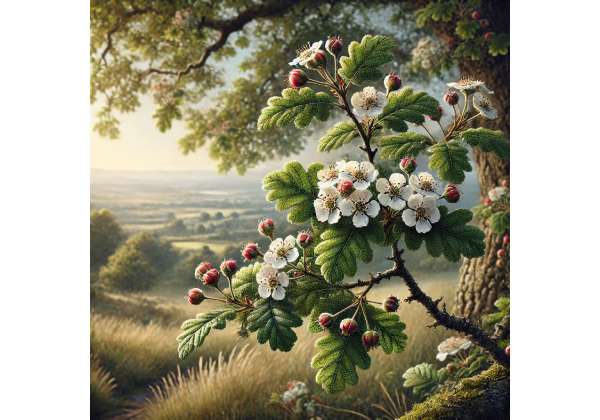
English hawthorn, or Crataegus monogyna, is a thorny shrub or small tree in the rose family that has been used for centuries in European herbal practice. Its leaves, flowers, and bright red berries, often called haws, are valued for gentle cardiovascular support, antioxidant activity, and traditional use in nervous palpitations and stress-related tension. Modern interest in hawthorn is driven less by folklore alone and more by its dense mix of flavonoids, oligomeric procyanidins, and phenolic acids that appear to influence blood vessel tone, circulation, and oxidative stress.
For most readers, the practical question is not whether hawthorn is “powerful,” but whether it is appropriate, safe, and realistic for their situation. That is where nuance matters. English hawthorn may offer mild support for blood pressure or subjective heart-related discomfort in some settings, especially when used as a standardized extract, but it is not a substitute for urgent cardiac care or prescribed treatment. Understanding the plant part, preparation, dose, and safety profile makes all the difference.
Key Insights
- Standardized hawthorn extracts may modestly support blood pressure and mild cardiovascular strain in some adults.
- Leaves, flowers, and berries contain flavonoids and oligomeric procyanidins linked to antioxidant and vessel-supporting effects.
- A practical adult range for many standardized extracts is about 500 to 1800 mg daily, depending on the product.
- Do not use hawthorn to self-treat chest pain, shortness of breath, fainting, or a new irregular heartbeat.
- People taking heart or blood pressure medicine, pregnant or breastfeeding adults, children, and anyone awaiting surgery should avoid unsupervised use.
Table of Contents
- What is English hawthorn and what is in it
- Does English hawthorn help the heart
- Other uses and daily applications
- How to use English hawthorn
- How much English hawthorn per day
- Safety, interactions, and who should avoid it
- What the research actually says
What is English hawthorn and what is in it
English hawthorn is one of the best-known hawthorn species in Europe. Botanically, it is a hedgerow tree or shrub with deeply lobed leaves, white spring flowers, sharp thorns, and clusters of small red fruits. In herbal medicine, the most commonly used parts are the flowering tops, leaves, and flowers, while the berries are also used in food preparations, powders, syrups, and some extracts.
That difference in plant part matters more than many labels suggest. Traditional European medicinal products often rely on leaf-and-flower material, especially in teas and standardized extracts. Berry products are common too, but they may not behave the same way as leaf-and-flower extracts because the chemical profile shifts with the plant part used. This is one reason two products both labeled “hawthorn” can feel very different in practice.
English hawthorn is rich in polyphenols, especially flavonoids and oligomeric procyanidins. Readers often see names such as hyperoside, rutin, vitexin, vitexin rhamnosides, quercetin derivatives, chlorogenic acid, and caffeoylquinic acids. These compounds are studied because they may help explain hawthorn’s antioxidant, vessel-supportive, and mild cardiotonic reputation. The fruits also contain pigments, organic acids, and smaller amounts of nutrients that add to their value as a functional food.
A useful practical point is that many commercial hawthorn products do not contain Crataegus monogyna alone. Some combine it with Crataegus laevigata or use a mixed-species extract. That is not automatically a problem, but it does mean you should not assume every study on “hawthorn” applies equally to every tea, tincture, capsule, or homemade berry preparation.
In everyday use, hawthorn sits in an in-between category: part food, part traditional herb, part standardized botanical extract. The fruits can be made into jams, syrups, and cordials, while medicinal preparations are more often designed for steady, repeated dosing. That steady use is important because hawthorn is usually approached as a gradual support herb, not a fast-acting rescue remedy.
The best way to think about English hawthorn is as a plant with broad chemical complexity and modest, preparation-dependent effects. Its value comes from the whole profile, not from one isolated compound, which is why product quality and standardization matter so much when people want predictable results.
Does English hawthorn help the heart
Heart support is the main reason most people look up English hawthorn. Traditional use centers on mild cardiovascular complaints, circulation, and the uneasy sensation of a “nervous heart,” especially palpitations associated with tension rather than structural disease. Modern research has explored whether those traditional claims translate into measurable effects on blood pressure, vascular function, exercise tolerance, rhythm stability, and symptom burden.
The most realistic answer is that hawthorn may help some people, but usually in a modest and supportive way. It is not a stand-alone fix for heart disease. Standardized hawthorn extracts appear more promising than casual culinary use, and the strongest human interest is around blood pressure support and symptom relief in selected adults. Some studies suggest mild reductions in systolic blood pressure or improved subjective comfort, but the effects are not dramatic and are not consistent across all products.
Several mechanisms are proposed. Hawthorn’s flavonoids and procyanidins may help relax blood vessels, support endothelial signaling, improve peripheral circulation, and reduce oxidative stress. Some extracts have also shown effects on heart muscle contraction, coronary blood flow, and electrical stability in laboratory settings. These mechanisms help explain why hawthorn has long been described as both a circulation herb and a gentle cardiotonic.
Still, the word “gentle” matters. Hawthorn is best viewed as an adjunct, not a replacement. If someone already has diagnosed heart failure, angina, atrial fibrillation, unexplained swelling, or shortness of breath, hawthorn should not be started casually without medical input. The same caution applies if someone is already taking multiple cardiovascular drugs. A herb that may influence vascular tone, heart rhythm, or blood pressure can become more complicated in that setting.
One practical insight that often gets missed is that older and newer studies frequently examine branded or standardized extracts, not loose dried berries from the kitchen. That means a positive study does not automatically mean hawthorn jelly, hawthorn vinegar, or a weak tea will produce the same result. Readers looking for meaningful cardiovascular support should focus less on the plant’s reputation and more on whether the product is standardized and appropriate for their health history.
Hawthorn is also not the only herb with a traditional heart-support profile. Some people compare it with motherwort’s heart-support profile, but the two are not interchangeable. Hawthorn leans more toward cardiovascular tone and vessel support, while motherwort is often framed more around tension, palpitations, and reproductive overlap. The right choice depends on the person, not just the symptom name.
For adults with mild goals, such as cautious blood pressure support or interest in a traditional cardiovascular herb, English hawthorn can be reasonable. But it works best when expectations stay grounded, the product is standardized, and red-flag symptoms are never written off as something an herb should manage alone.
Other uses and daily applications
Although heart health dominates most discussions, English hawthorn has a wider traditional footprint. In European herbal practice, it has also been used for mild mental stress, nervous tension, sleep support, and digestive heaviness. Those uses make sense when you consider how often people experience overlapping symptoms such as tension, shallow sleep, stress-related palpitations, and a sense of bodily overdrive.
One of hawthorn’s better-known traditional roles is in “nervous cardiac” discomfort. That phrase can sound old-fashioned, but it reflects a familiar modern pattern: a person feels stress in the chest before they feel it anywhere else. Hawthorn has historically been used when mild palpitations or awareness of heartbeat appear alongside anxiety, especially after more serious causes have been ruled out. In this setting, hawthorn is not really a sedative. It is better described as a steadying herb.
Some monographs also recognize hawthorn for mild mental stress and as a sleep aid. That does not mean it works like a strong sleep herb. Instead, it may be more helpful for people whose sleep is disrupted by tension, bodily restlessness, or a sense of internal overactivation. If a person’s main goal is sleep or calm rather than cardiovascular support, something like chamomile for sleep and stress may be a more obvious first-line herbal choice, while hawthorn can make sense when the stress and circulation story overlap.
The berry has its own place in daily life. Hawthorn fruits have a tart, mildly sweet flavor and can be used in preserves, syrups, oxymels, and herbal blends. In food form, the plant leans more toward nourishment and ritual than standardized medicinal effect. A cup of hawthorn tea or a spoonful of berry syrup may support consistency, relaxation, and seasonal use, but readers should avoid assuming that food-style preparations equal a clinical extract.
There is also ongoing interest in hawthorn’s broader antioxidant and anti-inflammatory profile. Laboratory and animal data suggest possible relevance for lipid metabolism, oxidative stress, vascular inflammation, and metabolic balance. That is interesting, but it should not be treated as settled proof for cholesterol control, glucose management, or inflammatory disease. For most adults, those are secondary possibilities, not the primary reason to reach for hawthorn.
In real life, the best daily applications are often simple:
- As a leaf-and-flower tea for steady, gentle use
- As a standardized extract for more predictable dosing
- As a berry preparation when the goal is food-based wellness rather than targeted supplementation
- As part of a broader routine that also includes sleep, movement, and blood pressure monitoring
English hawthorn fits daily life best when it is treated as a supportive herb with a specific lane. It may be helpful for people who want gradual support for tension-linked palpitations, mild cardiovascular strain, or a calm daily tea ritual. It is less suitable for people seeking dramatic short-term effects.
How to use English hawthorn
English hawthorn can be used in several forms, and choosing the right one matters almost as much as choosing the herb itself. The most common options are tea, tincture, liquid extract, powdered capsules, and standardized dry extract. Berries also appear in syrups and food-style preparations, but those are often less consistent as medicinal tools unless the label provides clear standardization.
Tea is the most traditional place to begin. Leaf-and-flower tea is usually preferred over berry-only tea when the goal is classical herbal support. It offers a slower, gentler experience and can fit well into evening use or a daily routine. Tinctures and liquid extracts are more concentrated and convenient for people who dislike tea or want easier dose adjustments. Capsules are often the simplest choice for adults who want consistency and do not want to taste the herb.
When shopping, look past the word “hawthorn” on the front label. The useful details are usually on the side panel:
- Which plant part is used: leaf, flower, berry, or a combination
- Whether the species is named
- Whether the product is standardized
- What the suggested serving actually delivers per day
This is one area where readers often make avoidable mistakes. A loosely labeled berry powder, a traditional tincture, and a standardized extract may all be called hawthorn, yet they are not interchangeable. If you want a product for evidence-informed use, a standardized extract is the most predictable choice. If you want a food-like herbal routine, tea or berry syrup may be enough.
Timing is usually straightforward. Hawthorn is often taken in divided doses rather than as a single large amount. Many adults tolerate it well with meals, especially if they are prone to nausea or stomach sensitivity. For blood pressure or cardiovascular goals, keeping the timing consistent from day to day is more useful than taking it only now and then.
Hawthorn also pairs naturally with other heart-healthy habits, but that does not mean it should be stacked carelessly with every circulation herb on the shelf. Even something as familiar as hibiscus infusions may overlap with a blood-pressure-support routine, so combination plans should stay simple at first. The cleanest approach is to introduce one product, monitor how you feel, and only then decide whether anything else belongs in the plan.
A practical trial window is usually several weeks, not several days. Hawthorn is not a quick stimulant or a fast sedative. If you are using it thoughtfully, the questions to ask are whether it feels well tolerated, whether your readings or symptoms are moving in the right direction, and whether the product still makes sense alongside your other care.
How much English hawthorn per day
There is no single universal hawthorn dose because the effective amount depends on the preparation, extract ratio, and what part of the plant is used. That is why one label may suggest a few milliliters of tincture while another recommends several hundred milligrams of dry extract. The safest rule is to match the dose to the form, not to the herb name alone.
For leaf-and-flower tea, a traditional adult amount is about 1 to 2 grams of dried material per cup, infused in roughly 150 mL of hot water. This may be taken several times daily depending on the product and the reason for use. In practical terms, many adults stay within a daily dried-herb total of about 3 to 6 grams unless a qualified clinician recommends otherwise.
For standardized dry extracts, everyday use often falls somewhere between about 250 and 600 mg per dose, usually split into two or three doses daily. That places many common total daily amounts in the 500 to 1800 mg range, though some monographs and studies use wider ranges. Clinical trials have also used totals around 250 to 1200 mg per day, which helps explain why broad online dose claims can look inconsistent.
Liquid extracts and tinctures vary even more because solvent strength and herb-to-solvent ratios differ. Some products deliver around 5 to 10 mL daily in divided doses, while others suggest smaller amounts because the extract is more concentrated. This is one of the few situations where “follow the specific label” is not a lazy answer. It is the most accurate one.
A few dosing habits improve safety and usefulness:
- Start at the lower end of the label range
- Divide the dose rather than taking it all at once
- Take it with food if it upsets your stomach
- Give it time before judging it, often several weeks
- Track blood pressure or symptoms if those are your reasons for using it
Children and teens should not be given hawthorn casually. In practice, most traditional and monograph-based use is directed at adults, and unsupervised pediatric use is not a good fit. Pregnancy and breastfeeding are also settings where standard self-dosing is not advised.
A final point that often helps readers: do not copy the dose of another circulation herb. A person may see familiar products in categories like blood flow or antioxidant support and assume the amounts should be similar, but each herb behaves differently. Even ginkgo’s circulation support follows its own dosing logic and safety profile.
With hawthorn, the best dose is not the highest one. It is the lowest preparation-specific amount that fits the product, the goal, and the person using it.
Safety, interactions, and who should avoid it
English hawthorn is often described as well tolerated, and for many adults that is true, especially over short-term use. Still, “natural” does not mean risk-free. The most common problems are usually mild, such as stomach upset, nausea, headache, dizziness, rash, or a sensation of palpitations. Those effects are not guaranteed, but they are possible, and they matter more in people who already have cardiovascular conditions.
The main safety issue is context. Hawthorn touches the same body systems that many prescription drugs also affect. Because of that, caution is warranted with medications used for blood pressure, heart rhythm, angina, heart failure, and circulation. Digoxin is a classic example that often appears in hawthorn discussions, but it is not the only one. Beta-blockers, nitrates, calcium channel blockers, vasodilators, and other heart medicines may also warrant extra care. The issue is not that every combination is prohibited. It is that self-directed mixing is a poor idea.
There is also reason to be cautious around surgery. Some official monographs warn that hawthorn extract may increase bleeding risk after surgery, even though the exact mechanism is not fully understood. That does not mean everyone taking hawthorn will have a bleeding complication, but it does mean surgeons and anesthetic teams should know about its use before a procedure.
Who should generally avoid unsupervised hawthorn use:
- People with chest pain, fainting, new shortness of breath, or swelling of the legs
- Anyone with diagnosed heart failure, arrhythmia, or unstable cardiovascular disease unless a clinician approves it
- People taking multiple cardiovascular medications
- Pregnant or breastfeeding adults
- Children and adolescents
- Anyone preparing for surgery
- Anyone with a known allergy to hawthorn products
It is also wise to keep “herb stacking” modest. Combining several products marketed for circulation, blood pressure, or platelet effects can muddy the picture quickly. Even common products discussed for cardiovascular wellness, such as garlic’s cardiovascular benefits, may complicate a supplement routine when layered without supervision.
Most important of all, hawthorn should never delay medical evaluation. If symptoms spread to the arm, neck, or upper abdomen, or if breathing becomes difficult, that is not a tea-and-wait situation. Hawthorn belongs in supportive care, not emergency decision-making. Used carefully, it can fit a thoughtful wellness plan. Used casually in the wrong person, it can create confusion where clarity is urgently needed.
What the research actually says
The research on hawthorn is encouraging enough to stay interesting, but not strong enough to support hype. That is the clearest bottom line. Modern studies suggest that hawthorn can produce measurable physiological effects, especially in cardiovascular settings, yet the evidence is still limited by product variability, small sample sizes, and inconsistent study design.
The best-supported modern takeaway is probably modest blood pressure support in some adults. Recent meta-analytic work suggests hawthorn can lower systolic blood pressure to a clinically meaningful degree in certain settings, but the studies behind that conclusion are small and use different doses, durations, and extracts. That makes the direction of benefit more convincing than any single “official” dose or expected result.
The evidence becomes more mixed when people ask bigger questions, such as whether hawthorn treats heart failure or protects against major cardiovascular events. Older clinical literature gave hawthorn a reputation as a supportive heart-failure herb, especially with standardized extracts. But that older promise has not translated into a role as a replacement for modern medical management. At best, hawthorn remains an adjunctive option that may deserve case-by-case discussion, not a stand-alone therapy.
Traditional uses for mild nervous palpitations, mental stress, and sleep support are recognized in some official monographs, but that recognition leans heavily on long-standing use rather than a deep bench of modern randomized trials. In other words, hawthorn’s traditional status is meaningful, but it is not the same thing as high-certainty proof.
Safety research is similarly balanced. Short-term use often looks acceptable, and many reported adverse effects are mild. At the same time, pharmacovigilance and case reporting remind us that serious events and important interactions are possible, especially in real-world users with complex medication lists or unclear product quality.
That last point may be the most important practical lesson from the literature: hawthorn is not one uniform intervention. A named, standardized extract used for twelve weeks in a trial is not equivalent to a homemade syrup, a mixed-herb capsule, or an unstandardized powder with vague labeling. When readers say “the research on hawthorn,” they are often talking about several different interventions grouped under one plant name.
So, does the evidence support English hawthorn? Yes, cautiously. It supports it as a traditional and potentially useful supportive herb, especially for mild cardiovascular goals and selected standardized products. It does not support treating hawthorn as a miracle heart remedy, a replacement for medical care, or a herb that should be improvised around prescription therapy.
References
- Hawthorn (Crataegus spp.) Clinically Significantly Reduces Blood Pressure in Hypertension: A Meta-Analysis of Randomized Placebo-Controlled Clinical Trials 2025 (Meta-Analysis). ([PMC][1])
- Analysis of Adverse Reactions Associated with the Use of Crataegus-Containing Herbal Products 2024 (Scoping Review). ([PMC][2])
- Hawthorn (Crataegus monogyna Jacq.): A Review of Therapeutic Potential and Applications 2026 (Review). ([PMC][3])
- Complementary and Alternative Medicines in the Management of Heart Failure: A Scientific Statement From the American Heart Association 2023 (Scientific Statement). ([PubMed][4])
- European Union herbal monograph on Crataegus monogyna Jacq. (Lindm.), C. laevigata (Poir.) DC. or their hybrids; C. pentagyna Waldst. et Kit. ex Willd.; C. azarolus L. 2025 (Monograph). ([European Medicines Agency (EMA)][5])
Disclaimer
This article is for educational purposes only and does not diagnose, treat, or replace medical care. English hawthorn may interact with prescription medicines, especially those used for heart rhythm, heart failure, angina, blood pressure, and surgery-related care. Seek prompt medical evaluation for chest pain, fainting, shortness of breath, swelling, or a new irregular heartbeat. Use supplements only with qualified guidance if you are pregnant, breastfeeding, managing chronic disease, or taking regular medication.
If this guide was useful, please share it on Facebook, X, or your preferred platform so others can find it.