English stonecrop, or Sedum anglicum, is a tiny, mat-forming succulent that grows on rocky coasts, walls, cliffs, and sandy soils across western Europe. It is better known as a hardy wild plant than as a mainstream medicinal herb, yet it has drawn interest because many stonecrops have a long record of topical folk use for irritated skin, minor burns, and small surface wounds. English stonecrop shares that family background, but it does not have the same level of scientific study as better-known herbal remedies.
That distinction matters. The plant likely contains protective compounds common to the wider Sedum group, including flavonoids, phenolic acids, and other antioxidant substances, and its fleshy tissues may help explain its soothing, moisture-holding character. Still, most claims for English stonecrop are best viewed as traditional and preliminary rather than proven. A practical guide, then, should focus on what is plausible, what is unproven, how it has been used, and where caution is warranted. For most people, English stonecrop is primarily a topical, short-term herb rather than an internal remedy.
Essential Insights
- English stonecrop is mainly a traditional topical herb for minor skin irritation, not a well-studied oral remedy.
- Any benefit is most likely to come from soothing, moisture-retaining, and antioxidant plant compounds rather than a strong drug-like effect.
- There is no established oral dose; cautious traditional topical use is roughly 1 to 2 g of fresh crushed herb on a small intact area 1 to 2 times daily.
- Stop use if stinging, rash, swelling, or worsening redness appears.
- Pregnant or breastfeeding people, children, and anyone planning internal use should avoid medicinal use because safety data are too limited.
Table of Contents
- What is English stonecrop
- Key ingredients and medicinal properties
- What can it realistically help with
- How English stonecrop is used
- How much English stonecrop per use
- Side effects, interactions, and who should avoid it
- What the evidence actually says
What is English stonecrop
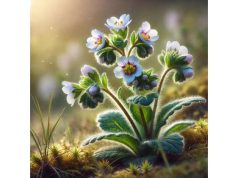
English stonecrop is a low, creeping, evergreen succulent in the Crassulaceae family. It forms small mats of fleshy stems and tiny rounded leaves, often gray-green or bluish-green, with white to faintly pink star-shaped flowers in season. In dry weather the foliage may blush red or pink, which is one reason it stands out on cliffs, walls, and exposed ground. The plant is adapted to thin soils, drought, salt spray, and wind, so it survives where many softer herbs would fail.
From a medicinal point of view, that tough ecology is interesting. Succulents often protect themselves with water-storing tissues, organic acids, waxes, and phenolic compounds that help limit dehydration, ultraviolet stress, and environmental damage. Those same protective features often lead herbalists and researchers to ask whether a plant may also have soothing, antioxidant, or skin-supportive effects for people. That is the background for English stonecrop’s reputation.
Still, English stonecrop is not one of the best documented medicinal stonecrops. In traditional herb use, the better known relatives are species such as Sedum telephium, Sedum acre, or regionally used stonecrops from Asia and the Mediterranean. English stonecrop has a lighter footprint in formal herbal literature. It appears more as a regional folk plant than as a standardized medicinal herb with recognized pharmacopoeial status.
That makes proper identification especially important. “Stonecrop” can refer to many different species, and they do not all behave the same way. Some are milder, some are more irritating, and some have a much stronger historical medicinal record than others. English stonecrop should also not be confused with ornamental sedums sold in garden centers under changing botanical names, nor with “biting stonecrop,” which is much sharper and more irritating.
In practical terms, English stonecrop is best understood as a small wild succulent with traditional topical potential, modest modern evidence by association with related species, and very limited direct clinical study. That places it in a conservative category: interesting, possibly useful in narrow situations, but not a plant to treat casually as a proven internal medicine.
People are usually interested in it for four reasons:
- Its long-standing link to the medicinal reputation of the wider stonecrop group.
- Its fleshy, cooling leaf texture, which suggests soothing topical use.
- Its likely content of antioxidant plant compounds.
- Its easy availability in some coastal and rocky regions.
The key theme for the rest of this guide is simple: English stonecrop may have gentle topical value, but it should be approached as a lightly evidenced folk herb, not as a fully established natural treatment.
Key ingredients and medicinal properties
The exact chemical profile of English stonecrop has not been mapped as thoroughly as that of some other Sedum species. That means any discussion of “active ingredients” must stay careful and realistic. What researchers do know from the wider genus is that stonecrops often contain a mix of flavonoids, phenolic acids, tannins, triterpenes, sterols, sugars, and, in some species, mucilage-like polysaccharides and other secondary metabolites. English stonecrop is likely to share at least part of that chemical pattern, but no widely used standardized extract exists to confirm a precise medicinal fingerprint.
The most plausible groups of useful compounds are these:
- Flavonoids, which may help reduce oxidative stress and support a calmer inflammatory response.
- Phenolic acids, which add antioxidant activity and may contribute to surface protection.
- Tannins, which can create a mild tightening or drying effect on tissue.
- Polysaccharides or mucilage-like substances, which may help explain the slippery, protective feel of succulent leaf material.
- Waxy and lipid-like protective compounds, which may help retain moisture on the plant surface and, by analogy, support barrier comfort on skin.
If English stonecrop offers benefit, it is unlikely to come from one “magic” molecule. More likely, the plant acts as a mild whole-herb topical material whose compounds work together. That is common in plants used traditionally for skin support. The fleshy leaf base may help hold moisture against the skin for a short time, while antioxidant and phenolic compounds may reduce some surface stress. This is much gentler than a pharmaceutical effect and should be understood that way.
Its medicinal properties are best described as possible rather than proven:
- Mild soothing action on irritated or dry skin.
- Mild antioxidant support in topical preparations.
- Mild anti-inflammatory potential suggested by related species.
- Possible support for surface repair in very minor skin injury.
- A limited protective or film-forming effect when fresh plant material is used briefly.
What English stonecrop does not seem to be is a strong antimicrobial, a reliable pain reliever, or a validated internal herb for digestion, immunity, or detox. Those claims extend far beyond what the plant can currently support.
It can help to think of English stonecrop as belonging to the same broad phytochemical world as other flavonoid-rich herbs, though with far less evidence than chamomile’s better-studied active compounds. In other words, the chemistry gives a reason for cautious interest, but not a reason for exaggerated promises.
Another point often missed is that fresh plants and extracts are not the same. A fresh crushed plant contains water, enzymes, acids, and unstable compounds that change quickly after harvesting. A dried plant may lose some of the qualities that made it useful topically in the first place. That is one reason traditional use tends to emphasize fresh application rather than long-stored powders or capsules.
So when people ask for the “key ingredients” in English stonecrop, the most honest answer is this: the plant likely owes its reputation to a combination of succulent moisture, flavonoid and phenolic antioxidants, and mild skin-active constituents, but its chemistry is not standardized enough to support exact potency claims.
What can it realistically help with
The most realistic uses for English stonecrop are narrow and topical. If used at all, it is best thought of as a mild herb for small, non-serious skin concerns. That includes minor irritation, superficial redness, rough patches from exposure, or small areas of friction-related discomfort. Traditional stonecrop use in related species also points toward burns, warts, and wounds, but for English stonecrop specifically, those uses are better treated as historical possibilities than proven indications.
A realistic benefits list would look like this:
- It may briefly cool and soften dry or irritated skin because the fresh tissue is moist and succulent.
- It may offer mild antioxidant support that helps calm surface stress after sun, wind, or friction exposure.
- It may have a modest anti-inflammatory effect similar to that seen in better studied stonecrop relatives.
- It may support comfort in very minor scrapes or shallow surface irritation when the skin is intact and clean.
That does not mean it works for eczema, infected wounds, serious burns, acne, ulcers, or chronic inflammatory skin disease. Those are much larger claims than the available evidence supports. In fact, using a wild succulent on significant skin damage can delay proper care if the person mistakes “it feels cooler” for “it is healing the problem.”
For most readers, the most useful question is not “What is this herb supposed to do?” but “What result should I reasonably expect?” The answer is modest. At best, English stonecrop may provide a short-lived soothing effect and may help a very small area feel less tight, dry, or irritated. It is not likely to transform symptoms, and it should not be used in place of proven wound care or medical treatment.
It is also worth separating benefit from myth. Many small wild herbs gain a reputation for being “good for everything” because they were easy to gather. Over time, topical use for one kind of irritation becomes a claim for all skin problems, then an oral tonic claim follows. English stonecrop does not deserve that kind of inflation. Its strongest case is still topical and conservative.
People seeking a more established herbal option for minor skin support often turn to calendula for minor skin support, which has a clearer modern herbal profile. English stonecrop sits a step behind that level of confidence. It may be locally useful, but it is not a first-choice herb when stronger evidence matters.
In practical language, English stonecrop may be reasonable for:
- A tiny patch of chafed skin.
- Mild roughness after wind or salt exposure.
- Very minor, clean, superficial irritation.
- Experimental folk use on a small intact area after patch testing.
It is not reasonable for:
- Deep cuts, punctures, or bleeding wounds.
- Burns with blistering or spreading redness.
- Infected skin.
- Moles, skin growths, or unexplained lesions.
- Any internal condition.
That distinction keeps the herb in its proper lane. English stonecrop may have a place as a cautious traditional skin herb, but only when expectations stay small and safety stays first.
How English stonecrop is used
English stonecrop is mainly used fresh, not as a polished supplement. The usual traditional idea is simple: identify the plant correctly, harvest a small amount, crush the succulent tissue, and apply it briefly to a small area of intact skin. That makes sense because the plant’s moisture, texture, and delicate compounds are probably part of what people value. Dry capsules, powders, and long-stored tinctures are not standard forms for this herb and do not have a recognized evidence base.
The safest practical approaches are topical:
- Fresh crushed herb
Wash the plant gently, pat it dry, and bruise or crush a small amount until it releases moisture. Apply only a thin layer to a very small test area first. - Short-contact poultice
The crushed herb can be placed on clean intact skin for a short period, then removed and rinsed off if any stinging or redness develops. - Diluted infusion as a wash
This is less traditional than a fresh poultice and probably less potent, but some people prefer a gentler wash over direct plant contact. Because the plant is not standardized, this remains an experimental folk method rather than a validated preparation. - Mixed topical formulas
Some herbal users combine mild succulents with other skin herbs, but this can make it harder to identify the cause of irritation if a reaction occurs.
Best practices matter more than the form itself. Use only healthy plant material from a clean location, not from roadsides, polluted walls, or chemically treated gardens. Never apply dirty wild plant material to broken skin. Wild harvesting also raises identification issues, especially when different stonecrops grow together.
For minor heat or friction discomfort, many people would be better served by a simpler, better-known option such as aloe vera gel. English stonecrop is more of a traditional or regional remedy than a modern first-line household product.
A few common mistakes are worth avoiding:
- Using too much plant material on the first try.
- Covering the area with an occlusive dressing and leaving it on for hours.
- Applying it to cracked, bleeding, or infected skin.
- Assuming that “natural” means it cannot irritate.
- Trying to make an oral tonic or home extract without any dosing standard.
A good use pattern is cautious and brief. Clean the area, patch test first, and watch the skin closely. If the goal is comfort, a light, short application is usually more sensible than aggressive repeated use.
People also sometimes ask whether the herb can be eaten, juiced, or taken as tea. Because English stonecrop lacks a standardized medicinal oral tradition and species confusion is easy, internal use is not a responsible recommendation. The plant’s practical use belongs almost entirely in the topical category, and even there it should be treated as a limited folk option rather than a staple remedy.
How much English stonecrop per use
There is no established therapeutic dose for English stonecrop in modern herbal medicine. No validated monograph sets a standard amount, and there is no widely accepted extract with known potency. That means dosage guidance has to be framed as cautious traditional use, not as a clinically proven regimen.
The most responsible position is this:
- No established oral dose exists.
- Internal use is not recommended because safety and potency are too uncertain.
- Any medicinal use should stay topical, local, and short term.
For topical use, a practical small-area range is roughly 1 to 2 g of fresh crushed herb, or just enough plant material to form a thin layer over the affected spot. That amount can be used once or twice daily on a limited area of intact skin. In most cases, use should stay brief, often 10 to 20 minutes for a test or short-contact application, rather than being left under a dressing for many hours.
A conservative schedule looks like this:
- Day 1: Patch test on a small area for 10 to 15 minutes.
- If tolerated: Apply a thin amount to the target area once daily.
- If still well tolerated and helpful: Increase to twice daily for up to 3 days.
- Stop sooner if redness, stinging, itching, or swelling appears.
If nothing improves after a short trial, more is not necessarily better. With lightly studied herbs, increasing the dose often increases irritation risk faster than benefit. This is especially true with wild succulents, where age, season, sun exposure, and growing conditions may change the plant’s chemistry.
Timing also matters. English stonecrop makes the most sense early in a minor surface problem, when the goal is to calm mild discomfort rather than rescue a more advanced condition. For example, a clean patch of friction irritation may respond better than a wound that is already swollen, wet, or infected. Once a condition crosses into obvious inflammation, pus, blistering, or severe pain, home herbal dosing is the wrong frame entirely.
It also helps to think in terms of area, not just grams. A tiny succulent herb should not be spread over large body surfaces. Limit use to a very small patch, especially the first time. Children, older adults with fragile skin, and people with skin barrier disorders should be even more cautious.
If you prefer herbs with clearer dosing traditions, mucilage-rich plants such as marshmallow or established topical preparations may be easier to use consistently. English stonecrop does not offer that same level of dosing clarity.
So the dosage bottom line is straightforward: there is no standardized internal dose, and topical use should remain minimal, brief, and limited to small intact areas. When a herb lacks strong human data, restraint is part of safe dosing.
Side effects, interactions, and who should avoid it
The main safety issue with English stonecrop is not that it is known to be highly toxic. The larger problem is that it is poorly studied, easy to confuse with other stonecrops, and usually used as fresh wild plant material rather than as a controlled product. That creates uncertainty around both safety and effectiveness.
The most likely side effects are topical:
- Stinging or burning on sensitive skin.
- Redness or itching from contact irritation.
- Rash in people prone to plant sensitivity.
- Worsening irritation if applied to already damaged skin.
- Contamination-related problems if the plant was gathered from an unclean area.
Because the plant is succulent and moist, some people assume it is automatically gentle. That is not always true. Even mild herbs can irritate broken or inflamed skin, especially when left in place too long. Combining English stonecrop with drying or astringent products, including frequent applications of witch hazel, may also make sensitive skin feel worse rather than better.
Internal safety is even less clear. Since there is no standard oral preparation, no accepted dose, and very little human safety data, oral use should be avoided. This includes teas, juices, tinctures, and capsules made from self-harvested plant material. The risks are not only chemical. They also include misidentification, contamination, and accidental substitution with a more irritating species.
People who should avoid medicinal use altogether include:
- Pregnant or breastfeeding people.
- Infants and children.
- Anyone with a history of plant contact allergy.
- People with eczema, rosacea, or a badly impaired skin barrier.
- Anyone with open wounds, infected skin, or significant burns.
- People taking medications who are considering oral use.
There are no well-defined drug interactions for English stonecrop specifically, but “unknown” is not the same as “none.” When a plant lacks data, the safest assumption is that it should not be mixed casually with medications, especially through internal use.
Stop using the herb and seek medical advice if:
- The skin becomes more red, hot, swollen, or painful.
- Blistering appears.
- There is pus, fever, or spreading inflammation.
- Symptoms do not improve quickly.
- A child, older adult, or medically fragile person is affected.
The broad safety message is simple. English stonecrop may be mild for some adults when used topically and briefly on intact skin, but it is not a low-risk herb for casual experimentation in every setting. Limited evidence means the safety margin is less certain than many people assume.
What the evidence actually says
The evidence for English stonecrop itself is thin. That is the most important conclusion of this article. There are no established clinical guidelines recommending it, no recognized therapeutic oral dose, and no solid human trials showing that Sedum anglicum reliably treats a defined condition. If you see dramatic claims online, they are almost certainly based on tradition, general stonecrop folklore, or research on different species.
What does exist is a broader body of evidence around the Sedum genus. Studies on related stonecrops show that some species contain flavonoids, phenolic acids, and other compounds with antioxidant, anti-inflammatory, antimicrobial, or wound-supportive behavior in laboratory settings. A few more recent experiments suggest that certain stonecrop extracts can promote fibroblast migration or wound closure in cell models, especially in topical contexts. Other species have clearer traditional use for burns, localized inflammation, and small wounds.
That is encouraging, but it is not the same as proof for English stonecrop. A genus can contain hundreds of species with overlapping but not identical chemistry. One species may be gentle and useful, while another may be sharper, weaker, or more irritating. This is why evidence by family resemblance has limits.
The strongest fair interpretation is this:
- English stonecrop belongs to a medicinally interesting genus.
- The genus includes species with documented phytochemicals and promising topical laboratory activity.
- English stonecrop itself has botanical credibility and traditional relevance.
- Direct clinical evidence for English stonecrop remains very limited.
This matters when judging claims about health benefits. It is reasonable to say the herb may have mild topical soothing and antioxidant potential. It is not reasonable to claim it definitively heals wounds, treats infections, clears skin disease, or works as an internal anti-inflammatory remedy.
Evidence quality also matters. Cell studies can show that an extract influences migration, oxidation, or inflammatory markers under controlled conditions. That is useful for generating hypotheses. It does not automatically predict what will happen when a person applies a fresh wild plant to real skin. Human use is affected by dose, preparation, stability, contamination, and skin condition. Those gaps are exactly where many folk remedies overpromise.
So where does that leave English stonecrop? In a sensible middle position. It is not mere superstition; the wider stonecrop family gives good reasons to take the plant seriously. But it is also not a validated medicinal herb with enough direct evidence to justify broad therapeutic claims. Its best current role is as a cautious, short-term, topical folk plant for minor situations, used only when the skin is intact and expectations are modest.
If future research maps the chemistry of Sedum anglicum more clearly and tests it in controlled human settings, its status could change. For now, the evidence supports curiosity and restraint, not hype.
References
- Sedum anglicum Huds. | Plants of the World Online | Kew Science 2026 (Botanical Database)
- Sedum aizoon L.: a review of its history, traditional uses, nutritional value, botany, phytochemistry, pharmacology, toxicology, and quality control 2024 (Review)
- Wound Healing Potential of a Novel Sedum Species: S. album Murales 2024 (Experimental Study)
- From Ethnobotany to Biotechnology: Wound Healing and Anti-Inflammatory Properties of Sedum telephium L. In Vitro Cultures 2024 (Experimental Study)
- Flavonoids from Sedum japonicum subsp. oryzifolium (Crassulaceae) 2022 (Phytochemical Study)
Disclaimer
This article is for educational purposes only and should not be used as a substitute for medical advice, diagnosis, or treatment. English stonecrop is not a well-standardized medicinal herb, and direct human research on this species is limited. Do not use it internally without qualified professional guidance, and do not apply it to deep wounds, infected skin, serious burns, or unexplained lesions. If you are pregnant, breastfeeding, managing a medical condition, taking prescription medicines, or treating a child, speak with a licensed clinician before using herbal remedies.
If you found this article useful, please share it on Facebook, X, or your preferred platform.