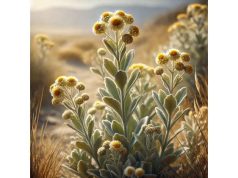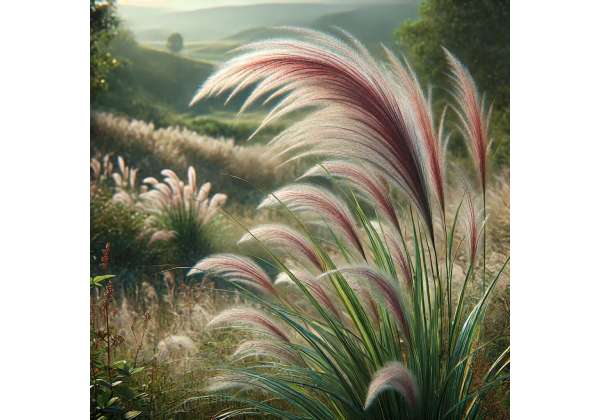
Eulalia, Miscanthus sinensis, is best known around the world as an elegant ornamental grass, but in parts of East Asia it also has a quieter medicinal history. Older ethnobotanical records describe its stems, spikelets, or whole aboveground parts being prepared for blood circulation, skin repair, cough-related discomfort, and other traditional uses. More recent laboratory work has focused on the Korean variety Miscanthus sinensis var. purpurascens, especially its flowers, which have shown interesting effects in wound-healing, skin-pigmentation, hair-growth, and allergy-related models.
That does not make Eulalia a mainstream medicinal herb. In fact, it is better understood as a plant with pockets of traditional use and a small but intriguing preclinical evidence base. Its notable compounds include aromatic constituents, glycoprotein fractions, and phenolic-type plant chemicals that may help explain anti-inflammatory, antiallergic, and tissue-repair activity. Still, human research is very limited, and no standard oral dose has been established. The most useful way to approach Eulalia is with accuracy: it is a promising but lightly studied herb whose potential seems real, yet whose benefits, dosage, and safety remain far less certain than those of more established medicinal plants.
Brief Summary
- Eulalia shows the most credible early promise for skin-repair, antiallergic, and mild circulation-related traditional uses.
- Most of the stronger modern data come from laboratory and animal work on Miscanthus sinensis var. purpurascens, especially the flowers.
- No validated oral medicinal dose exists; published studies have used about 3.92 to 62.5 μg/mL in cell work and 1 to 30 mg/kg in mouse allergy models.
- Do not translate research doses directly into home use, especially with concentrated extracts.
- Pregnant or breastfeeding people, children, and anyone with strong grass or pollen sensitivity should avoid medicinal use unless advised by a qualified clinician.
Table of Contents
- What is Eulalia and why is it used
- Key ingredients and medicinal properties
- What can Eulalia realistically help with
- How Eulalia is used
- How much Eulalia per day
- Side effects, interactions, and who should avoid it
- What the evidence actually says
What is Eulalia and why is it used
Eulalia, or Miscanthus sinensis, is a perennial grass in the Poaceae family. Many people know it as Chinese silver grass, Japanese silver grass, or maiden grass. It is native to East Asia and is widely cultivated for landscaping because of its arching leaves and feathery plumes. That ornamental identity is so dominant that many readers are surprised to learn the plant also appears in ethnobotanical and preclinical medicinal literature.
The first important point is that Eulalia is not a classic high-profile herb in the way ginger, peppermint, or chamomile are. Its medicinal identity is more regional and selective. Traditional records from China and nearby cultural settings describe the plant being used for blood circulation, heat-clearing, skin-related concerns, and other practical household purposes. A 2023 ethnobotanical survey among Shui healers in Southwest China recorded Miscanthus sinensis stem use for blood circulation, typically prepared by grinding and decoction. A 2024 ethnobotanical survey in Benguet, Philippines also noted Miscanthus sinensis in ritual use and mentioned wound-healing and skin-whitening associations. Those details do not prove clinical benefit, but they show the plant has been used as more than decoration.
The second point is that different plant parts matter. Traditional records mention stems, shoots, and whole aerial material, while modern studies often focus on spikelets, flower extracts, or specific fractions such as glycoproteins. That distinction matters because a flower absolute, a water extract, and a whole-plant decoction are not chemically identical. A large share of the most interesting laboratory data has come from the Korean variety Miscanthus sinensis var. purpurascens, often called flame grass. That variety is closely related, but it is still more precise to say some of the evidence comes from a specific botanical form rather than from every cultivated Eulalia grass.
So why has the plant been used medicinally at all? There are three likely reasons. First, grasses in traditional medicine are often valued for their cooling, draining, or circulation-related effects. Second, spikelets and flower extracts can contain glycoproteins and aromatic or phenolic compounds with measurable biologic activity. Third, practical access matters. A plant that grows abundantly and is already part of local life is more likely to gain a medicinal role than a rare plant with similar chemistry.
Today, readers usually search Eulalia for four reasons:
- To find out whether it really has medicinal value.
- To understand what active compounds it contains.
- To learn whether the flower extract claims for skin or hair have substance.
- To check whether it is safe to use as an herb.
The balanced answer is that Eulalia has authentic traditional use and a small but genuine research base, yet it remains a niche medicinal plant with limited human evidence. It is better described as promising than proven, and that distinction should shape every later discussion of benefits, dosage, and safety.
Key ingredients and medicinal properties
Eulalia does not owe its activity to one famous molecule. Instead, the plant appears to contain several groups of bioactive substances that vary by plant part and extraction method. The most interesting evidence so far points to glycoprotein-rich fractions from spikelets, aromatic components in flower absolutes, and broader phenolic-type compounds associated with antioxidant and tissue-response activity.
The 2021 study on Miscanthus sinensis var. purpurascens flower absolute found six identified volatile components in the flower extract and linked that extract to keratinocyte proliferation, cell migration, collagen-related responses, and lower melanin activity in stimulated pigment cells. The paper is more important for what it suggests than for the raw number of compounds. It shows that Eulalia flowers are chemically active enough to influence biological pathways relevant to skin repair and pigmentation, at least in cell models.
An older but still important line of research examined spikelets and isolated glycoprotein fractions. In mouse allergy models, these fractions appeared to reduce IgE-mediated biphasic cutaneous reactions, mediator-induced vascular permeability, scratching behavior, and inflammatory cell accumulation. This is a strong clue that at least one class of compounds in Miscanthus sinensis has anti-allergic and anti-inflammatory potential. It also suggests the plant’s value may lie less in simple “antioxidant herb” language and more in targeted immune and tissue-response effects.
The most plausible active categories include:
- Glycoprotein fractions from spikelets, associated with antiallergic and anti-inflammatory effects.
- Volatile aromatic compounds in flower extracts, which may contribute to skin-related and surface-level biologic actions.
- Phenolic-type compounds and plant secondary metabolites, which may support antioxidant and tissue-protective activity.
- General structural plant compounds that can influence extract behavior, especially when flowers or spikelets are processed into absolutes or non-dialyzable fractions.
These compounds help explain why the plant has been studied for skin, allergy, and hair-related outcomes rather than mainly for digestion or sedation. Eulalia’s most interesting medicinal profile appears to center on tissue response, inflammatory signaling, and cell behavior rather than on broad tonic use.
That said, chemical complexity does not automatically translate into practical home herbal value. A laboratory isolate can show impressive activity under controlled conditions without making a reliable household remedy. This is one reason Eulalia remains outside mainstream herbal practice. It is interesting, but not standardized.
A useful comparison is with better-characterized plant compounds such as quercetin and related plant flavonoids, which have broader clinical and pharmacologic context. Eulalia may contain functionally relevant phenolic chemistry, but its specific compound map is still not as well developed or as clinically anchored.
One more nuance matters. Much of the research attention is on the variety purpurascens, not necessarily on every ornamental Miscanthus sinensis sold in nurseries. So when people ask about the “key ingredients” of Eulalia, the most accurate answer is that flower extracts and spikelet fractions contain bioactive substances with measurable preclinical effects, but the plant does not yet have a single well-standardized medicinal chemical profile recognized across products.
What can Eulalia realistically help with
A realistic Eulalia benefits list must stay modest. This is not a herb with repeated human clinical trials or a long modern monograph tradition. Its most defensible potential uses come from three areas: skin-related support, antiallergic or anti-inflammatory activity, and selected traditional circulation-related uses.
The strongest modern signal is skin-related. In cell studies, flower absolute from Miscanthus sinensis var. purpurascens promoted keratinocyte proliferation and migration and supported collagen-associated responses. It also reduced melanin-related activity in stimulated melanocyte-type cells. That combination explains why Eulalia has attracted attention for wound-healing and skin-whitening claims. Still, those results come from laboratory models, not human wound-care trials. So it is fair to say the plant has potential in dermal biology, but not fair to claim it is a proven skin treatment.
The next credible area is allergic skin response. The older mouse work on spikelets and glycoprotein fractions found reduced ear swelling, inflammatory cell accumulation, vascular permeability, and scratching in IgE-mediated reactions. This suggests Eulalia may have an antiallergic or itch-modulating role in certain preclinical settings. Yet even here, the evidence should not be stretched into claims that the herb treats eczema, chronic hives, or seasonal allergy in people.
Traditional medicine adds another angle. Ethnobotanical records from Southwest China describe stem-based preparations for blood circulation. While that does not amount to modern cardiovascular evidence, it does suggest the plant was not used randomly. In traditional systems, “blood circulation” language often points to bruising, stagnation, pain, or recovery support rather than to the literal lowering of cholesterol or blood pressure.
A narrower, evidence-based benefits profile would include:
- Possible support for superficial skin repair and barrier recovery.
- Possible reduction of inflammatory skin responses in experimental models.
- Possible help with pigmentation-related pathways in cosmetic research settings.
- Traditional circulation-related use in decoction form.
- Preliminary interest for hair-supportive effects based on flower extract work.
What should not be promised:
- Proven wound healing in humans.
- Reliable skin-lightening results in everyday use.
- Treatment for allergic disease.
- Hair regrowth in clinically diagnosed alopecia.
- Broad internal benefits such as detox, immune boosting, or cancer protection.
This is where careful readers gain the most value. Eulalia appears to have a genuine medicinal signal, but it is a narrow signal. It is not a general-purpose herbal tonic. If someone wants a well-established herb for topical skin support, calendula for skin repair and soothing remains far better known and easier to use. Eulalia belongs more in the category of emerging or niche plant actives.
So what can it realistically help with? At present, the best answer is: perhaps certain skin-related and inflammatory processes, and maybe hair-growth-related pathways, mostly in preclinical or cosmetic-research contexts. For internal medicinal use, the evidence is thinner and more traditional than modern. That is not a dismissal. It is simply the most honest reading of the available data.
How Eulalia is used
Eulalia has been used in very different ways depending on whether the context is ethnomedicine, laboratory research, or cosmetic development. This makes the “how to use it” question more complicated than it first appears. Unlike mainstream herbal plants with clear tea, tincture, and capsule traditions, Eulalia appears in more specialized forms.
Traditional use described in ethnobotanical records most often involves stems or whole plant material that are ground or decocted and then taken as a soup-like or orally consumed preparation. In the Shui survey from Southwest China, the stem was associated with blood circulation and prepared by grinding and decoction. That suggests whole-plant water extraction, not refined concentrate.
Modern research, however, has focused on rather different preparations:
- Flower absolute
This is a concentrated aromatic extract used in skin-related cell research. It is not the same thing as a household tea or infusion. - Methanolic flower extract
This preparation has been studied in hair-related laboratory and mouse models. Again, it is much more concentrated and specialized than traditional home use. - Spikelet water extract or glycoprotein fraction
These forms were used in allergy-related mouse studies and show that the plant’s activity may depend on specific isolated fractions. - Whole-plant or stem decoctions
These belong more to traditional practice than to the modern lab literature.
This split matters because one cannot simply read about a flower absolute and then assume a backyard infusion from ornamental grass plumes will behave the same way. Extraction method changes potency, composition, and likely effect.
In practical terms, Eulalia is not a self-evident home remedy. Its medicinal use is better described than recommended. That is especially true because ornamental grasses can be exposed to pesticides, road dust, and landscape contaminants. A wild or garden plant is not automatically suitable for internal use.
A few practical principles help keep this realistic:
- Do not substitute ornamental garden material for verified medicinal plant material.
- Do not assume the flowers, stems, and spikelets are interchangeable.
- Do not treat cosmetic-research extracts as household herbal formulas.
- Do not confuse ethnobotanical description with a modern instruction manual.
If someone is mainly interested in topical soothing or simple surface skin support, a more familiar herb such as aloe vera for topical comfort is much easier to use safely. Eulalia’s more interesting role at present may be in extract research, not in general home herbalism.
That does not mean the plant has no practical future. It may eventually become relevant in specialty skin care, anti-itch research, or niche botanical formulation. But right now, “how Eulalia is used” is best answered by separating traditional decoctions from modern extracts and acknowledging that neither has yet become a standard consumer herbal format.
How much Eulalia per day
There is no validated human medicinal dose for Eulalia. That point needs to be stated clearly before any range is discussed. The available literature does not provide a standardized daily oral amount for Miscanthus sinensis stem, flower, spikelet, or whole-plant preparations.
What exists instead are three very different kinds of dosing information.
The first is traditional preparation style. Ethnobotanical records show that stems may be ground and decocted for oral use in local practice. But these surveys usually record the plant, part, and preparation style rather than providing modern gram-based dose instructions.
The second is preclinical research dosing. In the 1998 and 1999 mouse allergy studies, glycoprotein fractions or water extracts were used in the range of about 1 to 30 mg/kg, depending on the experimental setup. Those doses are important because they confirm biologic activity, but they are not ready-made home-use guidance.
The third is cell and animal extract work on the variety purpurascens. In hair-related work, flower extract was studied at about 3.92 to 62.50 μg/mL in dermal papilla cells and 1000 μg/mL in mouse topical application. In wound-healing and melanogenesis-related work, flower absolute was tested in controlled cell systems, not as a kitchen-prepared tea.
So how should readers interpret that?
- There is no evidence-based daily oral dose for ordinary human use.
- Research doses should not be copied directly.
- Topical or cosmetic-research concentrations do not translate into internal dosing.
- Traditional decoction use exists, but it is not standardized in modern units.
This means the most responsible “dosage advice” is actually guidance about restraint:
- Stay close to ethnobotanical understanding, not laboratory extrapolation.
- Avoid concentrated extracts unless the product is clearly identified and professionally formulated.
- Do not invent a dose by scaling mouse mg/kg figures to body weight.
- Treat long-term daily use as unsupported until better human data exist.
Timing is similarly uncertain. A traditional decoction might be taken around the time of a specific need, such as recovery support or a circulation-related folk use, rather than as a continuous daily tonic. That is probably the wiser frame. Eulalia looks more like a context-dependent herb than a routine supplement.
For readers seeking a better-defined herb with more understandable dosing patterns, ginger as a standardized everyday herb is a far simpler choice. Eulalia is still too early in its modern medicinal development to offer that kind of clarity.
So the plain answer to “how much Eulalia per day” is this: no validated oral dose exists, and the only precise ranges in the literature come from research models that should not be used as self-dosing instructions.
Side effects, interactions, and who should avoid it
Because Eulalia is lightly studied in humans, most of its safety discussion has to be based on reasonable caution rather than richly documented adverse-event data. The problem is not that the plant is known to be highly toxic. The problem is that medicinal use has not been standardized, product forms vary, and many available plants are grown ornamentally rather than medicinally.
The most likely safety concerns are practical:
- Mechanical irritation from hairy or fibrous plant material.
- Contact sensitivity in people who react to grasses or pollens.
- Skin irritation from concentrated extracts or aromatic fractions.
- Unpredictable internal exposure if homemade decoctions are made from unverified plant material.
- Contamination from garden chemicals or roadside growth.
People sometimes assume grasses are harmless because they are common. That is not a safe rule. Common plants can still cause rash, itching, throat irritation, or allergic response, especially if they belong to pollen-heavy grass groups. Eulalia is also not a plant with a strong modern safety monograph, so “no reports” should not be mistaken for “proven safe.”
Special caution is sensible for:
- Pregnant people.
- Breastfeeding people.
- Children.
- Anyone with strong grass-pollen or contact allergies.
- Anyone with asthma triggered by airborne plant materials.
- People considering internal use of concentrated extracts.
Drug interactions are not well documented. There is no solid modern evidence base establishing clear interactions with anticoagulants, diabetes medicines, antidepressants, or other common drug classes. But absence of evidence is not evidence of absence. When a plant has little human safety work, it is wiser to avoid concentrated medicinal use alongside prescription medication unless a clinician or pharmacist can assess the product.
There is also a form-related safety issue. The spikelet fractions studied in mice and the flower absolutes studied in cell systems are not the same as whole-plant decoctions. A person who tries to recreate a lab-active preparation at home may end up with something chemically different and harder to control.
For topical use, patch testing is sensible. For internal use, the larger issue is whether internal use is justified at all. In most cases, Eulalia is still better suited to research discussion than to routine self-treatment.
If the goal is a familiar topical astringent or soothing herb, witch hazel for topical use or other better-known options may be easier to use with confidence. Eulalia is simply not there yet in terms of safety familiarity.
The bottom line is cautious but fair: Eulalia does not currently look like a plant that should alarm most people in every context, but neither is it a herb that should be used casually, especially in concentrated or internal forms. The smaller the evidence base, the more modest the use should be.
What the evidence actually says
The evidence for Eulalia is limited, uneven, and interesting. All three descriptions matter. It is limited because there are no meaningful human clinical trials that establish a standard medical role. It is uneven because the data come from several different forms of the plant, especially the variety purpurascens, rather than from a single standardized herb product. And it is interesting because the plant has shown repeatable activity in allergy, skin, and hair-related models.
What the evidence supports with reasonable confidence:
- The plant has real ethnobotanical use in parts of Asia and the Philippines.
- Flower extracts from Miscanthus sinensis var. purpurascens can influence keratinocyte migration, collagen-related responses, and melanogenesis-related pathways in cell models.
- Spikelet-derived glycoprotein fractions can reduce IgE-mediated allergic skin responses in mice.
- Hair-related flower extract work suggests possible activity on dermal papilla signaling and hair-cycle transitions in stressed mice.
What the evidence does not yet support strongly:
- A validated medicinal oral dose for humans.
- Clinically proven wound-healing benefit in people.
- Reliable treatment claims for allergy, eczema, alopecia, or pigmentation disorders.
- Broad internal uses such as detoxification, fever reduction, or diuretic action in modern practice.
- The assumption that ornamental Miscanthus sinensis products are equivalent to research materials.
This makes Eulalia a good example of a plant that has enough research to be scientifically interesting, but not enough to be clinically settled. It also shows why precision matters. A headline that says “Eulalia heals wounds” is not supported. A more accurate statement would be: “flower extracts from a closely studied variety promoted wound-healing-related responses in skin cells.” That sounds narrower because it is narrower.
The same pattern applies to hair and allergy. The plant did not “cure hair loss” or “treat allergy” in people. It showed activity in models. That is important, but it is still several steps away from routine herbal medicine.
One of the more useful insights from the evidence is that Eulalia may prove more valuable in targeted topical or cosmetic formulation than in ordinary internal herbal use. Skin migration, collagen-associated signaling, pigmentation moderation, and dermal papilla responses all point in that direction. If the plant develops a future commercial or therapeutic role, it may well come through standardized extract work rather than through simple teas or capsules.
So where does Eulalia stand today?
- It is more credible than a purely speculative ornamental-plant remedy.
- It is much less proven than established medicinal herbs.
- It has a narrow but genuine research signal.
- It deserves cautious interpretation, not hype.
That is the most useful conclusion for readers. Eulalia has medicinal potential, especially around skin and allergic inflammation pathways, but at present it remains a promising specialty plant rather than a broadly validated herb.
References
- Ethnobotanical survey of medicinal and ritual plants utilized by the indigenous communities of Benguet province, Philippines 2024
- Diversity and traditional knowledge of medicinal plants used by Shui people in Southwest China 2023
- Chemical Composition of Miscanthus sinensis var. purpurascens Flower Absolute and Its Beneficial Effects on Skin Wound Healing and Melanogenesis-Related Cell Activities 2021
- Effect of Miscanthus sinensis var. purpurascens Flower Extract on Proliferation and Molecular Regulation in Human Dermal Papilla Cells and Stressed C57BL/6 Mice 2018
- Inhibitory mechanisms of glycoprotein fraction derived from Miscanthus sinensis for the immediate phase response of an IgE-mediated cutaneous reaction 1999
Disclaimer
This article is for educational purposes only and is not a substitute for medical advice, diagnosis, or treatment. Eulalia is a lightly studied medicinal plant, and most of the modern evidence involves cell studies, animal models, or specific botanical varieties rather than established human use. Do not rely on it to treat wounds, allergies, hair loss, or chronic illness without qualified professional guidance. Avoid medicinal use during pregnancy and breastfeeding, and use caution if you have grass allergies, asthma triggered by plant materials, or are considering concentrated extracts.
If you found this article useful, please share it on Facebook, X, or any platform you prefer.