European chestnut, Castanea sativa, occupies an unusual place in natural health. It is not just a woodland tree or a seasonal food. It also sits at the border between nutrition and herbal medicine. The edible chestnut is richer in starch, fiber, vitamin C, potassium, and polyphenols than many people expect, while the leaves, bark, shells, and wood have drawn attention for their tannins, ellagitannins, flavonoids, and other protective plant compounds. That combination helps explain why European chestnut appears in both traditional remedies and modern research on antioxidant, anti-inflammatory, antimicrobial, and gut-supportive actions. Still, the most important distinction is this: the evidence is much stronger for chestnut as a nutritious food and source of bioactive compounds than for chestnut as a standardized medicinal herb with proven human dosing. Used well, it is best approached in two lanes: as a whole food for daily nourishment, and as a more specialized extract or topical ingredient that deserves careful dosing, realistic expectations, and attention to allergy risk and product quality.
Quick facts
- European chestnut offers fiber, vitamin C, potassium, and polyphenols in a lower-fat package than most tree nuts.
- Leaf, bark, shell, and wood preparations are richer in tannins and are studied for antioxidant, astringent, antimicrobial, and anti-inflammatory effects.
- A practical food portion is about 40 to 80 g of cooked peeled chestnuts, or 20 to 30 g of chestnut flour in one serving.
- Concentrated extracts do not have one universally established human dose and may irritate the stomach if overused.
- Avoid it if you have chestnut allergy or latex-related cross-reactivity, and avoid medicinal extracts during pregnancy and breastfeeding unless advised by a clinician.
Table of Contents
- What is European chestnut
- Key ingredients and medicinal properties
- What can European chestnut help with
- Best ways to use it
- How much European chestnut per day
- Safety, interactions, and who should avoid it
- What the evidence really says
What is European chestnut
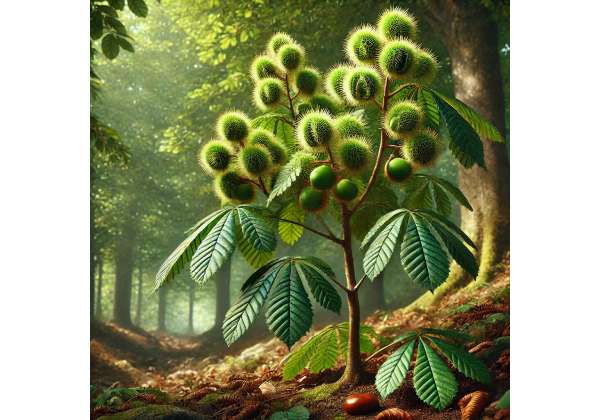
European chestnut, also called sweet chestnut, is a large tree in the beech family. It is native to parts of Europe and western Asia and has long been valued for food, timber, and local traditional medicine. The edible portion is the seed inside the spiny burr, but that is only one part of the story. Leaves, bark, shells, burs, wood extracts, and even chestnut honey have all been used or studied for health-related purposes.
This matters because many articles blur these forms together. A roasted chestnut, a chestnut flour pancake, a leaf extract, and a tannin-rich wood preparation are not the same intervention. They do not have the same chemistry, the same strength, or the same practical use. The edible chestnut behaves mainly like a nourishing food. The leaf and bark behave more like herbal materials. By-products such as shells and wood are now being explored as sources of concentrated polyphenols for supplements, cosmetics, and functional food ingredients.
Nutritionally, chestnuts are unusual among nuts. They are much lower in fat than almonds, walnuts, or hazelnuts and much higher in starch and water. That gives them a softer, more potato-like or grain-like role in meals. They are often roasted, boiled, steamed, pureed, or ground into flour. Because chestnut flour is naturally gluten-free, it has a place in some specialized diets and baking blends.
From a medicinal point of view, European chestnut is best understood as a food-medicine plant rather than a classic single-purpose herb. The fruit supports nutrition and digestion. The tannin-rich non-food parts are more often discussed for astringent, antimicrobial, antioxidant, or anti-inflammatory actions. That split helps prevent a common mistake: assuming that a health claim about a chestnut leaf extract automatically applies to the edible nut.
It also helps explain why dosage is so variable. Foods are eaten in portions. Extracts are used in measured amounts. Tea-like preparations, topical products, and polyphenol concentrates need even more care. Anyone exploring European chestnut should first decide which form they mean, because the answer changes the expected benefit, the dose, and the safety profile.
Key ingredients and medicinal properties
European chestnut contains two broad layers of bioactive value. The first comes from the edible chestnut itself. The second comes from tannin-rich plant parts such as leaves, bark, shells, burs, and wood. Together, they create a profile that is both nutritional and medicinal, but in different ways.
In the edible nut, the standout features are starch, fiber, vitamin C, potassium, and a modest amount of polyphenols. Chestnuts are energy-giving, but they are not oily in the way most nuts are. That makes them easier to place in meals built around complex carbohydrates and fiber. Their starch content is one reason chestnuts feel filling. Their fiber supports digestive regularity and slows the pace of digestion. Vitamin C and mineral content add a useful nutritional dimension that is not typical of many other nuts.
The medicinal chemistry becomes more interesting when you look beyond the nut. Chestnut leaves, bark, and by-products are especially rich in tannins, including ellagitannins and other hydrolyzable tannins. Castalagin and vescalagin are among the best-known chestnut tannins. These compounds help explain the plant’s astringent taste and many of its lab-observed biological effects. Tannins can bind proteins, tighten tissues, and influence microbial growth, which is why chestnut extracts are often studied for topical care, gut inflammation models, and antimicrobial actions.
Other important compounds include:
- Phenolic acids such as gallic acid and ellagic acid
- Flavonoids and catechin-like compounds
- Antioxidant polyphenols that help limit oxidative stress
- Triterpenes in some leaf extracts that may contribute to anti-inflammatory and anti-virulence activity
This chemistry gives European chestnut several realistic medicinal properties:
- Antioxidant support
- Mild astringent action
- Potential antimicrobial activity
- Anti-inflammatory effects in cell and animal models
- Nutritional support for digestion and steady energy release
A good way to think about chestnut is by comparing its tannin-rich side to oak bark’s astringent profile. Both plants owe much of their traditional tissue-tightening character to tannins, but chestnut is broader because its edible fruit also functions as a substantial food.
The key caution is that strong chemistry does not automatically mean strong clinical proof. European chestnut has a credible phytochemical story. It contains compounds that clearly do interesting things in test systems. But the degree of benefit depends heavily on the form used, the dose, and whether the goal is nourishment, digestive support, topical care, or targeted polyphenol intake. That is why good chestnut use begins with identifying the plant part, not just the species name.
What can European chestnut help with
European chestnut can help in several ways, but the most dependable benefits come from realistic expectations. It is strongest as a nourishing food and promising as a source of polyphenol-rich extracts. It is weakest when presented as a proven cure-all.
The first and clearest benefit is nutritional support. Cooked chestnuts can contribute fiber, vitamin C, potassium, and slow-release carbohydrate in a form that is naturally gluten-free and lower in fat than most nuts. For some people, that makes them useful in meals that need satiety without a heavy oil load. Chestnuts can fit well in soups, purees, stuffing, porridges, and flour blends where you want a gentle, earthy carbohydrate source.
The second likely area is digestive support. This happens in two different ways. As food, chestnuts provide fiber and starch that may help fullness and regularity when tolerated well. As extracts, chestnut by-products rich in ellagitannins and related polyphenols are being studied for gut and gastric inflammation models. That does not mean a chestnut supplement can treat digestive disease, but it does support the idea that chestnut-derived compounds may interact with the gut lining, inflammatory signaling, and microbial behavior in useful ways.
The third area is antioxidant and inflammatory balance. Chestnut shells, leaves, wood extracts, and burs have shown antioxidant and anti-inflammatory effects in preclinical research. These findings are interesting for gut health, skin care, and general cellular protection, but they remain mostly mechanistic or early-stage. This is not the same as saying chestnut has proven disease-preventing effects in people.
The fourth area is topical and tissue-soothing use. Tannin-rich botanical ingredients can help tighten tissues and reduce excess moisture, which is why chestnut derivatives show promise in skin and mucosal applications. This is best thought of as an astringent and protective effect, not a drug-like therapeutic claim.
The fifth area is metabolic support, though this one needs restraint. Because chestnuts are lower in fat than many nuts and provide fiber and polyphenols, they may fit better than richer nuts in some meal patterns. Some extracts have shown enzyme-related and glucose-related effects in laboratory work, but that is not enough to present chestnut as a blood sugar treatment.
For readers focused mainly on digestion, chestnut works more as a whole-food helper than a classic fiber supplement. If the goal is concentrated fiber support, psyllium for digestive regularity remains a more direct option. Chestnut’s value is broader and gentler: nourishment, texture, satiety, and modest polyphenol support.
In short, European chestnut may help with:
- Balanced nourishment
- Digestive comfort in food form
- Mild antioxidant support
- Experimental gut and topical support through extracts
- Dietary variety in gluten-free eating
That is a solid set of uses, but it works best when framed as support, not treatment.
Best ways to use it
The best way to use European chestnut depends entirely on which part of the plant you are using and what result you want. The same species can function as a food, a flour, a tea ingredient, a polyphenol extract, or a cosmetic raw material. Keeping those lanes separate makes use safer and more effective.
For everyday health, the food route is the most practical. Roasted or boiled chestnuts are easy to digest for many people and can replace part of a starch serving in a meal. They work well in soups, vegetable dishes, grain bowls, stuffings, and winter purees. Because they are naturally slightly sweet and low in fat, they pair especially well with savory herbs, mushrooms, onions, squash, and dark leafy greens.
Chestnut flour is another useful form. It can be used in porridge, pancakes, muffins, flatbreads, and blended baking mixes. It has a naturally sweet flavor, so it often lets you use less added sugar. It is best mixed with other flours rather than used alone in every recipe, since it is low in gluten-forming protein and behaves differently from wheat flour.
For medicinal-style use, leaf or bark preparations need more caution. These are not as standardized or as widely established in self-care as the food forms. Tea or extract products should clearly identify the plant part and give a specific recommended amount. Tannin-rich products are better suited to short, intentional use than casual daily overuse.
Topical use is a separate category. Chestnut-derived tannins and wood distillates are being explored for skin, mucosal, and wound-related applications because of their astringent, antioxidant, and anti-inflammatory potential. In practice, that means chestnut can appear in cosmetic or specialty topical products. It is best to treat these as formulation ingredients, not homemade cure-alls.
A useful rule is:
- Use the nut for nourishment
- Use the flour for dietary flexibility
- Use extracts for specific goals and only with clear labeling
- Use topical products only after patch testing
People drawn to chestnut’s tissue-tightening profile may find it helpful to compare that action with witch hazel in topical care. Both are tannin-forward, but witch hazel is much more established as a skin astringent, while chestnut remains more exploratory in many topical contexts.
The best use of European chestnut is usually the simplest one. Start with the edible form if your goal is food-based wellness. Move to specialized extracts only when the product is well described, the intended use is clear, and you are not expecting more evidence than the plant currently has.
How much European chestnut per day
European chestnut dosing makes the most sense when divided into food use and extract use. Trying to force one number across all forms creates confusion.
For food use, a practical portion of cooked, peeled chestnuts is about 40 to 80 g at a time. That is enough to add substance to a meal without turning chestnuts into the only carbohydrate source on the plate. Some people eat more, especially in traditional cuisines, but larger amounts can increase bloating or heaviness because chestnuts are rich in starch and fiber.
For chestnut flour, a practical starting range is about 20 to 30 g per serving in porridge, pancakes, or mixed baking. More can work, but it is usually better to build tolerance first, especially if your digestion is sensitive. In baking, chestnut flour often performs best as part of a flour blend rather than as a total replacement in every recipe.
For leaf, bark, shell, or wood extracts, there is no single evidence-based universal human dose that can be recommended across products. This is one of the most important safety points in the whole article. Chestnut extracts vary widely by plant part, extraction method, tannin concentration, and intended use. A food-like powder, a hydroalcoholic leaf extract, and a cosmetic wood derivative are not interchangeable.
That means the most responsible dosing advice for medicinal products is:
- Choose a product that names the exact plant part.
- Follow the maker’s labeled daily amount rather than inventing one.
- Start at the low end.
- Reassess after several days.
- Stop if you notice stomach irritation, constipation, rash, or worsening symptoms.
Timing matters too. Chestnut foods are best taken with meals. Tannin-rich extracts are often better tolerated with food and away from iron supplements or medicines, because tannins may interfere with absorption. A gap of a few hours is a sensible precaution.
Duration also matters. Food use can be ongoing if well tolerated. Concentrated herbal or polyphenol extracts are better treated as shorter trials unless there is a clear reason and professional guidance for longer use. If your goal is mainly antioxidant support, it is also worth remembering that chestnut should complement a wider diet rather than carry the whole burden by itself. That is the same logic that applies when people compare it with other polyphenol-rich antioxidant extracts.
In practice, the right dose is not one magic number. It is the lowest effective amount for the specific chestnut form you are using.
Safety, interactions, and who should avoid it
European chestnut is generally easy to place in the diet as a food, but safety becomes more important when you move toward concentrated extracts, tannin-rich preparations, or allergy-prone individuals.
The first major concern is allergy. Chestnut can trigger serious reactions in susceptible people. It may also be relevant in latex-related cross-reactivity. Anyone with a known chestnut allergy, unexplained reactions to tree nuts, or latex-associated food reactions should avoid self-testing and seek proper guidance first. This matters more than any theoretical health benefit.
The second concern is digestion. Even the edible nut can cause bloating, heaviness, or discomfort if eaten in large quantities, especially when the gut is not used to higher starch and fiber loads. Tannin-rich extracts may add another layer by causing stomach irritation, dryness, or constipation in some users. More is not better here.
The third concern is metabolic context. Chestnuts are lower in fat than many nuts, but they are still carbohydrate-rich. People with diabetes or insulin resistance can often include them, but portion size matters. A bowl of chestnuts is nutritionally different from a few walnuts. Concentrated chestnut extracts may also have effects on digestive enzymes or glucose handling in experimental work, so people using glucose-lowering medicines should be conservative and monitor closely.
The fourth issue is mineral and drug absorption. Tannins can bind with certain compounds in the gut. If you are using chestnut leaf, bark, or tannin-rich extracts, it is sensible to separate them from iron supplements and important oral medicines rather than take everything together.
Who should avoid medicinal-style chestnut extracts or use them only with professional input:
- People with chestnut allergy
- People with latex-related cross-reactivity
- Pregnant or breastfeeding individuals, because extract safety data are limited
- Children, unless a clinician specifically recommends the product
- People with significant digestive sensitivity to tannin-rich herbs
- People on tightly managed diabetes regimens
- People on potassium restriction if chestnuts are being eaten in large amounts
Food use and medicinal use should not be treated the same. Eating a reasonable serving of cooked chestnuts is far less concerning than using a concentrated extract without knowing its tannin strength. That difference is especially important online, where natural products are often presented as if all forms were equally gentle and equally proven. They are not.
A cautious approach is simple: start low, use one chestnut form at a time, watch for intolerance, and stop early if the product does not clearly agree with you.
What the evidence really says
The evidence for European chestnut is encouraging, but it is uneven. The strongest case is for chestnut as a nutritious food and a rich botanical source of polyphenols. The weakest case is for chestnut as a standardized medicinal treatment with clear human outcome data.
On the food side, the evidence is straightforward. European chestnuts provide starch, fiber, vitamin C, potassium, and phenolic compounds in a lower-fat format than most nuts. Their value in gluten-free foods, functional flours, and nutrient-dense seasonal eating is well supported. That part of the chestnut story is practical and credible.
On the extract side, the research is more exciting but more preliminary. Leaf, shell, bur, bark, and wood extracts have shown antioxidant, anti-inflammatory, antimicrobial, anti-virulence, enzyme-modulating, and gut-protective effects in laboratory studies. Some chestnut ellagitannins have also shown interesting activity in gastric cell models exposed to H. pylori. These findings help explain why chestnut is gaining attention in nutraceutical, cosmetic, and circular-bioeconomy research.
Still, a reader should keep three limits in mind.
First, many of the most impressive findings come from cell studies or animal work, not large human trials.
Second, the plant parts differ greatly. A bark extract, a leaf extract, and the edible nut cannot be treated as if they produce identical outcomes.
Third, commercial products vary a lot. Without standardization, two chestnut extracts may share a name but not a meaningful equivalence in dose or chemistry.
So what is the fair conclusion? European chestnut deserves attention, but not hype. It is a high-value food, a credible source of tannin-rich phytochemicals, and a promising ingredient family for gut, skin, and inflammatory research. It is not yet an herb with robust, universal human dosing guidance or strong clinical proof for major disease claims.
That puts chestnut in a middle ground. It is more interesting than a simple seasonal food, yet less clinically settled than some established botanical extracts. Readers who understand that balance are the ones most likely to use it well: as a nutrient-rich food first, and as an extract only when the product, purpose, and limits are all clear.
References
- Sweet Chestnut (Castanea sativa Mill.) Nutritional and Phenolic Composition Interactions with Chestnut Flavor Physiology – PMC 2022. (Review) ([PMC][1])
- Possible Beneficial Effects of Hydrolyzable Tannins Deriving from Castanea sativa L. in Internal Medicine – PMC 2023. (Review) ([PMC][2])
- Ellagitannins from Castanea sativa Mill. Leaf Extracts Impair H. pylori Viability and Infection-Induced Inflammation in Human Gastric Epithelial Cells – PubMed 2023. (Preclinical Study) ([PubMed][3])
- Castanea sativa Mill. By-Products: Investigation of Potential Anti-Inflammatory Effects in Human Intestinal Epithelial Cells – PMC 2024. (Preclinical Study) ([PMC][4])
- Beneficial Effects of Castanea sativa Wood Extract on the Human Body and Possible Food and Pharmaceutical Applications – PMC 2024. (Review) ([PMC][5])
Disclaimer
This article is for educational purposes only and is not a diagnosis, treatment plan, or substitute for medical advice. European chestnut can be a nutritious food, but concentrated extracts from leaves, bark, shells, or wood may act differently and are not appropriate for everyone. People with chestnut allergy, latex-related cross-reactivity, diabetes, digestive sensitivity, pregnancy, breastfeeding, or complex medication regimens should seek personalized guidance before using medicinal-style chestnut products.
If you found this article useful, please share it on Facebook, X, or any platform you prefer.