False acacia, better known botanically as Robinia pseudoacacia and commonly called black locust, is a fragrant flowering tree with a complicated herbal reputation. Its hanging white blossoms have long been used in seasonal syrups, teas, jams, and other traditional preparations, while its bark, leaves, seeds, and pods are widely recognized as potentially toxic. That contrast is the most important starting point for anyone researching this plant.
Interest in false acacia usually centers on the flowers. They contain flavonoids and other polyphenols linked with antioxidant activity, and traditional use has focused on mild digestive comfort, soothing floral infusions, and occasional skin applications. At the same time, modern evidence is still limited. Most of what we know comes from food-composition work, lab studies, animal research, and traditional practice rather than strong human clinical trials.
In practical terms, false acacia is best viewed as a cautiously used flower herb with culinary and folk-medicine value, not a proven therapeutic remedy. Correct plant identification, part selection, modest dosing, and careful attention to safety matter far more here than they do with many better-studied herbs.
Essential Insights
- False acacia flowers contain polyphenols and flavonoids that show antioxidant potential in laboratory research.
- Traditional use focuses on the flowers in teas, syrups, and other light preparations rather than concentrated medicinal extracts.
- A conservative food-style range is about 1 to 3 g dried flowers per 240 to 250 mL hot water, up to 1 to 2 cups daily.
- Bark, leaves, seeds, and pods can be toxic and should not be used in home remedies.
- Children, pregnant or breastfeeding people, and anyone uncertain about plant identification should avoid it.
Table of Contents
- What Is False Acacia
- Key Ingredients in False Acacia
- What Benefits Are Realistic
- How False Acacia Is Used
- How Much False Acacia Per Day
- Safety, Interactions, and Avoidance
- What the Research Says
What Is False Acacia
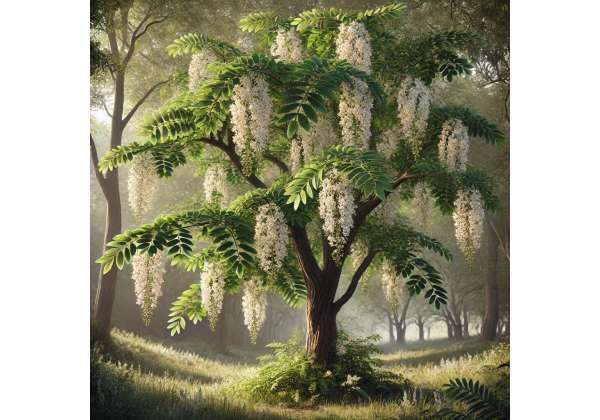
False acacia is a deciduous tree in the pea family. It is native to parts of North America but has spread widely across Europe and other regions, where it is known for fast growth, fragrant spring blossoms, thorny young branches, and durable wood. The flowers appear in drooping white clusters and have a sweet scent that explains why the tree is popular with bees and often associated with delicate floral syrups and honey.
One reason this plant confuses readers is its name. “False acacia” does not mean it is the same as true acacia species used for gum arabic or acacia fiber. Robinia pseudoacacia is a different plant with a different safety profile. That distinction matters because people sometimes assume all “acacia” products are interchangeable. They are not. False acacia has edible-tradition use centered on the blossoms, while several other parts of the tree are considered unsafe.
The flower is the part most often discussed for food and gentle folk use. In some regions, the blossoms are battered and cooked, steeped into infusions, or made into syrups, preserves, and seasonal desserts. This puts false acacia in the same broad culinary conversation as elderflower-style floral preparations, where aroma, mild taste, and short-term use matter as much as any medicinal goal.
From a practical herbal perspective, false acacia is best understood as three things at once:
- A fragrant edible flower with limited seasonal culinary use
- A traditional remedy with a scattered folk record
- A plant that demands caution because not all parts are safe
That last point should shape every decision about it. Many herbs are mostly safe when correctly identified. False acacia requires a narrower approach: use only the flowers, use them modestly, and avoid improvising with bark, leaves, pods, seeds, or strong homemade extracts.
It is also worth noting that some traditional claims around false acacia are broader than the evidence supports. Historical use has included digestive, calming, antispasmodic, and diuretic descriptions, but these uses have not been confirmed by strong clinical research in humans. So while the plant has real ethnobotanical interest, it should not be treated like a proven modern herbal medicine.
In short, false acacia is a flower-first herb with a strong identity issue: beautiful blossoms, interesting chemistry, and real toxicological limits. That combination is exactly why it attracts attention and why it should be approached with more care than trendier floral botanicals.
Key Ingredients in False Acacia
The most useful chemistry in false acacia is concentrated in the flowers. Research on Robinia pseudoacacia blossoms points to a mix of polyphenols, flavonoids, and related plant compounds that help explain the flower’s antioxidant activity and its traditional reputation as a soothing seasonal herb. These compounds do not automatically make the plant a medicine, but they do provide a reasonable scientific basis for why the flowers attract interest.
The standout compounds appear to be flavonoids. Studies of black locust flowers have identified substances such as myricetin, luteolin, quercetin, kaempferol derivatives, and hyperoside. These are the same broad classes of plant chemicals often discussed in other gentle herbs and edible flowers, including work on chamomile’s active compounds. In general, flavonoids help plants defend themselves and may contribute antioxidant, membrane-protective, and mild anti-inflammatory effects in laboratory settings.
False acacia flowers also contain:
- Phenolic acids and related antioxidant molecules
- Sugars and aromatic compounds that support their sweet taste and floral appeal
- Pigments and secondary metabolites that vary by growing conditions and harvest stage
These compounds likely work together rather than alone. That matters because herbal effects are rarely caused by one “magic ingredient.” Instead, the flower acts more like a small chemical network, with several mild compounds creating a combined food-like effect.
The chemistry changes sharply when you move beyond the flowers. The bark, leaves, seeds, and pods are the parts most associated with toxic constituents, especially toxalbumins and lectin-type compounds such as robin and phasin. These are not wellness ingredients. They are the reason false acacia cannot be treated like a generally harmless garden flower.
That split between useful flower chemistry and risky non-flower chemistry is the most important part of the plant’s profile:
- Flowers contain polyphenols of nutritional and research interest.
- Non-flower parts are the reason poison-control sources warn against casual use.
- Whole-plant “detox” or bark-based remedies are a poor idea.
Another detail that deserves attention is variability. Soil, climate, storage, freshness, and processing all affect phytochemical levels. Fresh blossoms used in a home syrup will not have the same concentration as a dried extract, and a standardized supplement is not equivalent to a handful of flowers collected from a tree. That makes false acacia a poor candidate for casual dose-swapping between tea, tincture, powder, and extract.
If you are evaluating false acacia as a herb, the key takeaway is simple: its flowers offer a modest but interesting phytochemical profile, while the rest of the plant raises the risk side of the equation. That is why any discussion of benefits should stay firmly tied to properly identified flowers and avoid the misleading idea that the entire tree is medicinal in the same way.
What Benefits Are Realistic
The realistic benefits of false acacia are narrower than many herbal product pages suggest. The flowers do show antioxidant activity in laboratory testing, and traditional use supports a role as a mild floral infusion or food ingredient. But that does not mean the plant has proven effects for major diseases, long-term detox, or broad therapeutic use. A careful reader should separate plausible support from established treatment.
The first realistic benefit is antioxidant support at the food and phytochemical level. False acacia flowers contain flavonoids and phenolic compounds that can neutralize free radicals in lab systems. This is useful and biologically interesting, but it is still an indirect benefit. Antioxidant activity in a test tube does not guarantee a clear clinical effect in people.
The second likely benefit is gentle sensory and digestive support. A warm flower infusion can be pleasant, calming, and easier on the stomach than stronger bitter herbs. Some traditional use describes false acacia flowers as soothing after meals or mildly comforting when the throat feels dry or irritated. Readers looking for stronger digestive evidence usually compare it with better-studied botanicals such as ginger, because false acacia simply does not have the same clinical depth.
Other possible benefits are best described as preliminary:
- Mild anti-inflammatory potential based on flower compounds
- Possible support for gut barrier or mucosal function in animal models
- Mild relaxing or comfort-oriented use in traditional tea practice
- Culinary enrichment through aroma, sweetness, and nectar-like flavor
What false acacia probably does not offer is clinically established relief for chronic inflammation, high blood sugar, infections, ulcers, or serious digestive disease. You may see those claims repeated online, but the human evidence is too thin to present them as dependable outcomes.
A sensible way to think about benefits is to divide them into three levels.
Most realistic:
- Pleasant floral tea or syrup
- Light antioxidant contribution
- Traditional, short-term comfort use
Possible but unproven:
- Mild digestive soothing
- Mild calming effect
- Supportive anti-inflammatory action
Not established:
- Disease treatment
- Reliable metabolic effects
- Long-term medicinal use
- Substitute for standard care
This more restrained view is not a weakness. It is what responsible herbal guidance looks like. Some plants are valuable because they are strong medicines. Others are valuable because they are gentle, seasonal, and culturally meaningful. False acacia fits the second category much better.
So if your goal is a soft floral infusion, a traditional syrup, or an edible blossom with interesting chemistry, false acacia may be worth exploring carefully. If your goal is a well-validated herb for digestion, sleep, inflammation, or immune support, there are many other options with stronger evidence and a wider safety margin.
How False Acacia Is Used
False acacia is used far more often as a flower ingredient than as a modern supplement. In practice, most safe use revolves around the blossoms, and the best preparations are simple, light, and short-lived. This is not a plant that benefits from aggressive extraction or experimental home medicine.
The most common traditional and household uses include:
- Flower infusion or tea
- Syrup for diluted drinks or desserts
- Jam, jelly, or floral sugar
- Lightly battered fresh blossoms in seasonal cooking
- Floral water or very mild cosmetic use made from the flowers only
The flower tea is the easiest and most restrained approach. Dried or fresh blossoms are steeped briefly, then strained. The result is usually delicate rather than strong. It is not meant to be a heavily medicinal decoction. That distinction matters because decoctions are typically used for tougher plant material such as bark and roots, and those are exactly the parts of false acacia people should avoid.
Syrups are another traditional use. The flowers are infused into water, sometimes with sugar and lemon, then filtered carefully. Here the goal is aroma and taste as much as any health effect. In that sense, false acacia behaves more like other fragrant blossom ingredients, including lavender, than like a classic bitter tonic herb.
If you plan to use fresh blossoms, a few practical rules help:
- Harvest only correctly identified flowers from clean areas away from traffic, pesticides, and industrial pollution.
- Use flowers that are freshly opened and fragrant, not wilted or browned.
- Remove insects, debris, and excess green material.
- Use the flowers promptly or dry them gently in shade with good airflow.
- Do not add bark, pods, seeds, or leaves to “strengthen” a preparation.
For topical use, restraint matters even more. Some people experiment with flower infusions in baths or facial rinses, but false acacia is not a standard dermatologic herb. Any skin use should be patch-tested first and kept mild. Strong extracts, essential-oil assumptions, and concentrated home tinctures are not good ideas here.
One of the most common mistakes is treating false acacia like a whole-plant remedy. It is not. Safe use depends on keeping the preparation flower-focused and modest. Another mistake is confusing black locust flowers with other white, fragrant blossoms from ornamental trees. Misidentification is a major safety issue with foraged herbs.
The best use cases are therefore narrow and practical: a seasonal floral tea, a carefully strained syrup, or a culinary flower experiment by someone who knows the plant well. Beyond that, the risk-to-benefit ratio starts to worsen quickly.
How Much False Acacia Per Day
There is no well-established clinical dosage for false acacia. That is the most honest place to start. No widely accepted guideline defines a standardized medicinal amount for Robinia pseudoacacia flowers, and there is even less support for extracts, tinctures, or capsules. Because of that, the safest dosing approach is a conservative, food-style range rather than a strong therapeutic one.
For a simple flower infusion, a cautious traditional range is:
- Dried flowers: about 1 to 2 teaspoons, roughly 1 to 3 g, per 240 to 250 mL hot water
- Fresh flowers: about a small loose handful, roughly 5 to 10 g, per 240 to 250 mL hot water
- Steeping time: about 5 to 10 minutes
- Frequency: 1 to 2 cups daily
- Duration: occasional use or short runs of several days rather than continuous long-term use
This is not a proven medical dose. It is a moderate practical range for flower use that keeps the plant in the culinary-herbal zone. Stronger is not automatically better. With false acacia, pushing the dose upward adds uncertainty much faster than it adds likely benefit.
A careful dosing framework looks like this:
- Start low. Begin with the lower end of the range and assess tolerance.
- Use the flowers only. Do not substitute bark, pods, seeds, or leaves.
- Keep preparations mild. Infusion is preferable to concentrated extract.
- Use short-term. This is better suited to occasional use than daily indefinite use.
- Stop if symptoms appear. Nausea, stomach upset, dizziness, or any unusual reaction means it is not a good fit.
For syrup use, the dose should also stay modest. A common food-style amount is about 1 tablespoon diluted in water or used in a dessert, once or twice a day. That is a culinary serving, not a medicinal prescription.
What should you avoid?
- Homemade bark decoctions
- Non-standardized tinctures from mixed plant parts
- Large “detox” doses
- Whole-plant powders
- Use in children without professional guidance
Standardization is another issue. A teaspoon of loosely dried flowers may differ a lot from one batch to another. Freshness, moisture, harvest timing, and processing all change the strength. That is why false acacia is better approached like a seasonal herb food than like a tightly dosed supplement.
If you want a stronger or more reliable effect for sleep, digestion, throat comfort, or inflammation, a better-studied plant is usually a smarter choice. False acacia dosing works best when the goal is gentle, limited, and clearly flower-based.
Safety, Interactions, and Avoidance
Safety is the most important part of any false acacia article because the plant has a split profile: the flowers are the commonly used part, while other parts of the tree are associated with poisoning. Anyone who skips that distinction is missing the main point.
The parts of concern are the bark, leaves, seeds, and pods. These parts contain toxic compounds, especially toxalbumins and related lectin-type substances. Ingestion can cause significant gastrointestinal and neurologic symptoms. Reported problems include nausea, vomiting, abdominal pain, weakness, diarrhea, dizziness, and lethargy. In animals, exposure can be serious as well, which is one reason the tree is commonly listed as toxic to pets and livestock.
Who should avoid false acacia entirely?
- Children
- Pregnant people
- Breastfeeding people
- Anyone unable to identify the plant with confidence
- People with a history of severe plant allergies
- Anyone considering bark, seed, pod, or leaf remedies
Who should be especially cautious?
- People with sensitive digestion
- People taking multiple medications
- People with chronic illness who may be tempted to self-treat
- Foragers harvesting from roadsides or sprayed landscapes
Formal drug-interaction studies are lacking, so the safest approach is conservative. That means avoiding concentrated extracts and being careful if you use medicines with narrow safety margins. There is not enough evidence to map reliable interactions, but uncertainty itself is a reason for caution.
For topical use, flower-based rinses or very diluted preparations may be tolerated by some people, but even that is not well studied. If the goal is astringent skin support, a better-known option such as witch hazel usually makes more sense because it has clearer traditional boundaries and a more familiar safety profile.
A few important safety rules are worth repeating:
- Never use bark or seed preparations at home.
- Never assume all parts are safe because the flowers are sometimes eaten.
- Never rely on social media for plant identification.
- Never use false acacia as a substitute for medical care in poisoning, infection, or ongoing digestive symptoms.
If accidental ingestion of bark, seeds, leaves, or pods occurs, contact a poison center or urgent medical service promptly, especially if symptoms begin. Do not wait for the reaction to “wear off” if a child, pet, or older adult is involved.
The bottom line is simple. False acacia can be explored only within a narrow window of safe practice: correctly identified flowers, modest amounts, and short-term use. Once you move outside that window, the safety conversation changes quickly from herbal use to toxic exposure.
What the Research Says
The research on false acacia is promising in a narrow, early-stage way. It supports interest in the flowers as a source of flavonoids and other bioactive compounds, but it does not justify strong medicinal claims for human use. That gap between interesting science and proven outcomes is exactly where Robinia pseudoacacia sits today.
Most of the literature falls into four categories:
- Phytochemical analysis of flowers and other plant parts
- Antioxidant and bioactivity testing in laboratory models
- Ethnobotanical or edible-flower reviews
- Animal or cell studies exploring gut, oxidative, or inflammatory pathways
This body of work tells us several useful things. First, the flowers consistently show meaningful polyphenol content. Second, extracts can demonstrate antioxidant effects in lab systems. Third, some newer preclinical studies suggest possible gastrointestinal protective effects under stress conditions. These are worthwhile signals. They are enough to justify more research.
What the literature does not yet provide is equally important:
- Strong human clinical trials
- Standardized medicinal dosing
- Clear drug-interaction data
- Long-term safety data for regular use
- Head-to-head comparisons with established herbs
That means false acacia is not evidence-based in the way a clinician or careful herbal practitioner would usually want before recommending it for a defined health problem. The plant may eventually prove more useful than it looks today, but right now the evidence supports curiosity, not confidence.
A balanced reading of the science would say this:
The flowers are chemically active and deserve attention.
The traditional use record is real but uneven.
The non-flower parts raise nontrivial safety concerns.
Human therapeutic evidence is still weak.
This matters because some herbs are overhyped precisely at the point where they become interesting. False acacia has enough chemistry to sound impressive and enough folklore to sound established, but not enough human data to bridge the gap. Readers searching for “medicinal properties” should therefore think in terms of potential mechanisms rather than proven treatment effects.
The strongest take-home message from the evidence is not that false acacia is a hidden cure. It is that the flowers are a legitimate subject for phytochemical and food-medicine research, while safe use must stay narrower than marketing language usually suggests.
For now, the best evidence-based stance is this: false acacia flowers may be used cautiously as a traditional floral preparation, but claims about major health benefits should remain modest until stronger human studies appear.
References
- Quantitative and Qualitative Identification of Bioactive Compounds in Edible Flowers of Black and Bristly Locust and Their Antioxidant Activity 2020
- Edible Flowers Used in Some Countries of the Mediterranean Basin: An Ethnobotanical Overview 2022 (Review)
- Elution-extrusion counter-current chromatographic separation and theoretical mechanism of antioxidant from Robinia pseudoacacia flower 2023
- Oral administration of Robinia pseudoacacia L. flower exosome-like nanoparticles attenuates gastric and small intestinal mucosal ferroptosis caused by hypoxia through inhibiting HIF-1α- and HIF-2α-mediated lipid peroxidation 2024 (Animal Study)
- A rare ingestion of the Black Locust tree 2004 (Case Report)
Disclaimer
This article is for educational purposes only and does not replace medical advice, diagnosis, or treatment. False acacia can be hazardous when the wrong plant parts are used, and self-treatment with bark, leaves, seeds, or pods is unsafe. If you are pregnant, breastfeeding, giving herbs to a child, managing a chronic condition, or taking prescription medicines, speak with a qualified healthcare professional before using this plant. Seek urgent help or contact a poison center if accidental ingestion of non-flower parts occurs.
If this guide was helpful, please share it on Facebook, X, or your preferred platform to help others use herbs more safely and more wisely.