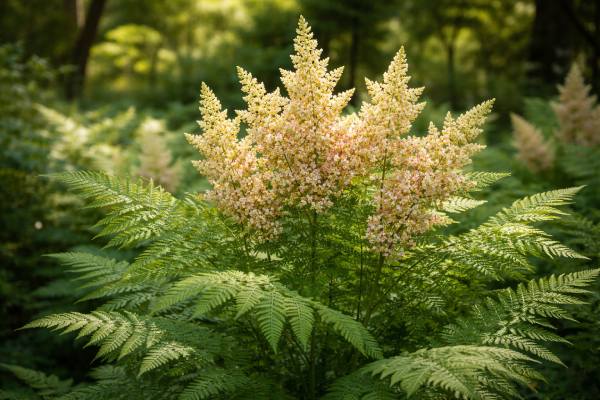
Flowering fern, better known botanically as Osmunda regalis and often called royal fern, is a striking wetland fern with a long but uneven medicinal history. Its common name comes from the tassel-like fertile fronds, which look almost flowered even though the plant is a true fern and does not bloom. Traditional use is best documented in parts of northern Spain, where the rhizome has been macerated in white wine as a folk remedy for bone fractures, joint pain, muscular aches, and related complaints. Modern science has added an intriguing layer: researchers have identified flavonoids, sterols, anthocyanins, fatty-acid-derived compounds, and other natural products in the plant, while laboratory studies suggest antioxidant, anti-inflammatory, cytotoxic, and antimicrobial potential.
Still, this is not a modern mainstream medicinal herb with a standardized dose or strong human clinical trials. Most of the evidence remains ethnobotanical, nutritional, or preclinical. That makes flowering fern interesting, but also easy to overstate. The safest and most useful way to understand it is as a historically respected fern with promising chemistry, limited clinical proof, and a dosage profile that remains traditional rather than established.
Essential Insights
- Flowering fern is traditionally used for bone, joint, and muscular complaints, especially in northern Spain, but strong human trials are lacking.
- Its rhizome and aerial parts contain flavonoids, sterols, anthocyanins, fatty-acid-derived compounds, and other bioactive molecules with preclinical activity.
- A reported traditional course was about 750 to 1500 mL total of rhizome-macerated “antojil wine,” taken over time, but no standardized modern medicinal dose exists.
- Internal use is not well standardized, and the best modern evidence is limited to lab, cell, and ethnobotanical studies rather than clinical treatment trials.
- Pregnant or breastfeeding people, children, and anyone considering self-treatment for fractures, tumors, or chronic pain should avoid unsupervised use.
Table of Contents
- What Is Flowering Fern
- Key Ingredients in Flowering Fern
- What Benefits Are Realistic
- How Flowering Fern Is Used
- How Much Flowering Fern Per Day
- Safety, Side Effects, and Who Should Avoid It
- What the Evidence Actually Says
What Is Flowering Fern
Flowering fern is a large, moisture-loving fern in the Osmundaceae family. It grows in swamps, stream margins, wet woodland, and other damp habitats, and it is widely distributed across Europe, parts of Africa, and parts of Asia. The plant is best known horticulturally as royal fern, while “flowering fern” refers to the brown fertile pinnae clustered at the tops of the fronds, which create a flower-like effect without true flowers. In other words, the name is visual, not botanical.
From a medicinal perspective, flowering fern sits in an unusual category. It has a real folk-medicine record, especially in northern Spain, but it is absent from modern major pharmacopoeias and has not developed into a standardized phytotherapy herb the way better-known roots, seeds, or leaves have. Ethnobotanical research from Cantabria found that the rhizome was traditionally macerated in white wine to create “antojil wine,” a bitter, mucilaginous remedy taken mainly for bone fractures, musculoskeletal disorders, joint pain, traumatic injuries, and related complaints. Informants also mentioned tonic, digestive, respiratory, and veterinary uses.
This traditional record is one reason the plant continues to attract scientific interest. It has been used for centuries, and even medieval European sources described it for fistulas, fractures, and tumors. But that long history should be interpreted carefully. Historical use shows cultural credibility, not automatic medical proof. A plant can be deeply embedded in tradition and still lack the kind of modern evidence needed for reliable self-treatment advice.
Another useful distinction is between ornamental, edible, and medicinal relevance. Flowering fern is often grown as a garden fern, and some studies have included its fiddleheads in analyses of edible fern nutrition. That does not make the mature rhizome or folk medicine preparations equivalent to a modern food or supplement. The part of the plant, the method of preparation, and the intended use all matter. This is not a kitchen herb in the way fennel or chamomile is. It is better understood as a niche ethnobotanical medicine with a stronger traditional reputation than clinical record.
In practical terms, flowering fern is most important for readers who want to understand traditional European fern medicine, not for those seeking a validated first-line herbal treatment. It belongs in the conversation because its history is real and its chemistry is interesting. It should stay in that conversation with proper caution, because the leap from “used for centuries” to “safe and proven today” has not been completed.
Key Ingredients in Flowering Fern
The key ingredients in flowering fern are not yet as fully mapped as those of better-studied herbs, but recent work has moved the chemistry beyond folklore. A recent phytochemical study characterized 17 natural products from the aerial parts of Osmunda regalis, including many compounds reported in this species for the first time and several previously undescribed natural products. That alone tells you something important: flowering fern is not chemically inert. It contains a surprisingly rich and still partly unexplored secondary-metabolite profile.
Several compound groups stand out. Reported constituents include flavonoids, sitosterol, the steroid ecdysterone or 20-hydroxyecdysone, anthocyanins based on pelargonidin and cyanidin, saturated fatty acids, long-chain alkanediols, ketoaldehydes, and other lipid-like compounds. Earlier work on root extract also identified tannins, glycosides, steroids, saponins, and ferulic acid, while nutritional work on fiddleheads showed phenolic compounds and antioxidant-related constituents. In short, the plant contains both classical phenolic compounds and less common fern-specific or wax-associated constituents.
What do these ingredients seem to do? Based on preclinical research, they may contribute to several kinds of biological activity:
- Antioxidant effects linked to phenolics and flavonoids
- Anti-inflammatory potential linked to polyphenols and related compounds
- Cytotoxic or antiproliferative activity in specific cancer-cell models
- Antimicrobial activity in some extract studies
- Structural or nutritive roles in edible fern tissues
That list sounds impressive, but the interpretation matters. A compound profile can support biological plausibility without proving therapeutic value in people. For flowering fern, this difference is central. The chemistry gives the plant a reason to be studied; it does not yet give it a clinically established medicinal identity.
Another complication is plant part and preparation. The aerial parts, rhizome, and fiddleheads do not behave exactly the same. One natural-products paper used aerial material. A cancer-cell study used ethanolic root extract. The traditional Spanish preparation uses the inner part of the rhizome macerated in wine. That means “flowering fern chemistry” is really several overlapping chemical profiles depending on what is harvested and how it is prepared. This makes dosage and standardization harder than with herbs that rely on one well-characterized medicinal part.
If a reader wants a familiar comparison, flowering fern is closer to a research-interest plant than to a consumer-ready phytotherapy herb. Better-known antioxidant or anti-inflammatory plants often have clearer monographs and a better-defined active-compound story, such as green tea. Flowering fern has enough chemistry to be credible, but not enough standardization to be casual. That is why its ingredient profile is best treated as a strong argument for research, not as permission for broad self-medication.
What Benefits Are Realistic
The realistic benefits of flowering fern are narrower than its folklore might suggest. The plant’s traditional uses are strongest for musculoskeletal complaints, especially fractures, bone weakness, joint disorders, bruises, sprains, and muscular pain in northern Spain. That tradition is important and well documented ethnobotanically, but it is not the same as proof that the plant speeds fracture healing or relieves arthritis in a controlled clinical setting. The most honest approach is to treat those uses as historically meaningful and biologically plausible, not established.
A second realistic benefit area is antioxidant potential. Studies on fern fiddleheads and on isolated compounds from Osmunda regalis support the view that the plant contains phenolic and flavonoid constituents with radical-scavenging activity. This does not guarantee a user will feel an obvious benefit, but it does support the broader idea that flowering fern belongs among plants with notable antioxidant chemistry. As with many botanical antioxidants, though, this is a mechanistic benefit more than a clinically proven symptom benefit.
The third plausible area is preclinical anti-inflammatory and anticancer interest. Root-extract studies have found inhibition of growth, invasion, angiogenesis, and gene-expression patterns in cancer cell lines, and more recent compound-isolation work has evaluated cytotoxicity against leukemia cells. These are serious findings in a laboratory context. They justify scientific attention. They do not justify telling a reader that flowering fern treats cancer. At most, they support the more careful claim that the species contains compounds worthy of further anticancer research.
A balanced benefit ladder looks like this:
- Most realistic:
- Traditional musculoskeletal folk use
- Antioxidant and phenolic richness
- Preclinical anti-inflammatory and cytotoxic interest
- Possible but not proven:
- Supportive topical or internal folk use for pain-related conditions
- Nutritional value from fiddleheads in food contexts
- Mild traditional digestive or respiratory use
- Not established:
- Fracture healing in modern clinical practice
- Proven cancer treatment
- Standardized anti-inflammatory therapy
- Safe long-term self-treatment
That last group matters most. Readers often assume that if a plant has a long history plus some lab evidence, then the benefits are already confirmed. With flowering fern, that assumption would be too generous. Broader fern reviews emphasize that pharmacological proof remains scarce across edible and medicinal fern species, and that chemical-biological standardization is still needed.
So what benefits are realistic? The clearest answer is that flowering fern offers a historically important pain-and-bone folk remedy tradition and a biologically intriguing preclinical profile. It does not yet offer the kind of standardized, reproducible clinical benefit that would make it a first-choice herbal medicine. Readers who want a better-established anti-inflammatory option are often better served by something like boswellia, while readers interested in flowering fern should treat it more as a promising but unproven ethnomedicinal plant.
How Flowering Fern Is Used
Traditional use of flowering fern is centered mainly on the rhizome, not the fronds. In Cantabria and nearby parts of northern Spain, the best-known preparation is “antojil wine,” made by macerating the middle part of the rhizome in white wine. The resulting preparation is described as bitter and mucilaginous, and in ethnobotanical reports it is taken mainly for bone fractures, joint and vertebral disorders, bruises, sprains, and other musculoskeletal complaints. This is the clearest real-world medicinal use pattern documented for Osmunda regalis.
That matters because many readers imagine ferns being used as teas from the leaves, like a common herbal infusion. Flowering fern does not fit that pattern well. The historical emphasis is on rhizome-derived preparations, while modern phytochemical studies have used either aerial-part extracts or ethanolic root extracts under laboratory conditions. Those are very different things. A folk rhizome maceration in wine is not equivalent to an ethanol-extracted lab fraction, and neither is equivalent to eating cooked fiddleheads as a food.
In practice, the main use categories are:
- Traditional rhizome maceration in wine for musculoskeletal folk use
- Experimental root or aerial-part extracts in laboratory studies
- Occasional food-context interest in fiddleheads as edible fern material
- Ornamental cultivation, which remains the plant’s main non-medicinal use today
This makes modern self-care tricky. There is no standardized flowering fern capsule, no mainstream monograph dose for tincture, and no broadly accepted home-preparation protocol outside regional folk practice. For that reason, flowering fern is not a good candidate for casual “DIY herbalism.” It is much safer to read it as an ethnomedicinal species than to improvise with fresh rhizomes or backyard fronds. For readers seeking a clearly topical, better-defined plant, an option such as aloe vera is far easier to place in modern self-care.
There is also a conservation angle. Ethnobotanical work showed that local harvesters were aware of scarcity and sometimes used partial-harvest practices, concealed harvest locations, or even cultivation in home gardens to protect the species. That tells us flowering fern was not treated as an abundant, disposable medicine. Traditional users recognized both its value and its vulnerability. This is another reason mass-foraging or experimental harvesting is a poor modern approach.
So how is flowering fern used? Historically, the answer is simple: primarily as a rhizome-based folk remedy, especially in wine maceration. Scientifically, it is now more often used as a plant source for extract testing and compound isolation. Those two uses are connected, but they are not interchangeable. One belongs to local tradition. The other belongs to preclinical research. Neither currently provides a straightforward, consumer-ready herbal format with well-defined instructions.
How Much Flowering Fern Per Day
There is no standardized modern daily dose for flowering fern. That is the most important dosage fact, and it should come before any traditional numbers. No major herbal monograph, clinical guideline, or standardized phytotherapy text provides a well-established oral dose for Osmunda regalis as a modern herbal medicine. This alone separates it from herbs that can be responsibly self-dosed with reasonable confidence.
The main dosage-like information we do have comes from ethnobotanical reporting. In a northern Spain study, informants described drinking antojil wine daily before breakfast until one or two 750 mL bottles had been consumed, with some chronic users taking it for much longer. That gives a traditional total-use range of about 750 to 1500 mL per treatment course, but it does not give a standardized concentration of rhizome per dose, nor does it prove safety. It is best understood as a record of practice, not a recommendation.
This distinction matters because traditional dosage systems often describe how a remedy was taken, not how much active compound was consumed. With flowering fern, that gap is especially large. The rhizome size, extraction strength, wine composition, storage, and duration could all vary. A modern reader cannot safely translate “one bottle of antojil wine” into a precise, reproducible medicinal dose.
A careful dosage framework therefore looks like this:
- Traditional course reported: 750 to 1500 mL total of rhizome-macerated wine
- Modern clinical dose: not established
- Standardized extract dose: not established
- Safe self-medication range: not established
This is one of those cases where the dosage section is more useful as a warning than as a formula. Readers sometimes assume that every medicinal plant article should end with a teaspoon, milliliter, or capsule recommendation. For flowering fern, that would be misleading. The available evidence does not justify it. Even the more modern experimental studies used concentrations relevant to cell culture, not to home use or supplementation.
If someone wants to interpret the traditional range practically, the safest conclusion is not “copy this at home.” It is “this remedy was used in a course-based folk system that has not been converted into a validated modern dose.” That means unsupervised internal use should be avoided, especially for children, pregnant people, people with chronic disease, or anyone taking multiple medications.
A few helpful rules follow from that uncertainty:
- Do not improvise dosing from historical wine remedies.
- Do not transfer lab-extract concentrations to home preparations.
- Do not assume edible fiddlehead data support rhizome-medicine dosing.
- Do not use long courses just because they appear in folk practice.
- Treat absence of a standardized dose as a safety signal, not as a loophole.
That may sound conservative, but it is the only honest approach. Flowering fern is not a herb with a proven modern oral dose. The traditional 750 to 1500 mL course is useful for ethnographic understanding, yet it is not enough to create safe consumer guidance. In some herbal articles, dosage is the section that empowers use. Here, it is the section that should slow people down.
Safety, Side Effects, and Who Should Avoid It
Safety is where flowering fern moves from interesting to uncertain. The plant is not backed by the kind of toxicology, interaction, and dose-ranging data that would support broad medicinal use. That does not automatically mean it is highly dangerous, but it does mean the margin of confidence is narrow. When a plant has a long tradition and little standardization, caution should increase, not decrease.
The most relevant traditional safety signal comes from ethnobotanical reporting in northern Spain. Informants there said antojil wine was not recommended for pregnant women or women of childbearing age, and some specifically described it as abortive in local belief. This is not the same as controlled reproductive toxicology evidence, but it is a strong enough historical caution that pregnancy and breastfeeding should be treated as clear avoid zones for unsupervised use.
The second safety issue is lack of standardization. Because the folk remedy is rhizome-based and the preclinical studies use specialized extracts, there is no clean way to know what a home preparation contains. One batch could be much stronger or weaker than another. A plant with poorly defined chemistry at the user level is inherently harder to dose safely than one with a recognized monograph.
Potential side effects are not well established in clinical trials, but reasonable concerns include:
- Gastrointestinal upset from crude internal preparations
- Irritation or intolerance to alcoholic macerations
- Unpredictable effects from concentrated extracts
- Misuse in place of fracture care, cancer care, or persistent pain evaluation
Another issue is indication creep. A plant that shows anticancer activity in a cell model can attract overconfident users. But lab findings are not human treatments. Substituting flowering fern for appropriate medical care in suspected cancer, serious injury, or progressive joint disease would be risky. That is especially important because traditional use for fractures could tempt people to self-treat problems that require imaging or orthopedic assessment.
Who should avoid unsupervised medicinal use?
- Pregnant people
- Breastfeeding people
- Children
- Anyone self-treating fractures or major pain
- Anyone with suspected cancer or unexplained weight loss
- Anyone taking multiple medicines or using concentrated botanical extracts
There is also a conservation-minded safety principle here. Rhizome harvesting can damage or kill plants if done poorly, and ethnobotanical reporting noted local concern about overharvesting and long regrowth time. So even if a person is focused only on personal safety, ecological safety still matters. This is not a plant that should be dug casually for experimental remedies.
For readers seeking a gentler, better-characterized herb for topical or general soothing purposes, something like witch hazel is easier to justify. Flowering fern may have real medicinal promise, but at present its safest profile is educational, not routine. The right question is not “can I take it?” The better question is “do I have enough evidence to take it responsibly?” For most people, the answer is still no.
What the Evidence Actually Says
The evidence on flowering fern is strongest for traditional use, moderate for chemistry, and weak for clinical proof. That is the cleanest summary. The plant has a documented ethnomedicinal history, especially in northern Spain. It also has a growing body of chemical and preclinical research. But it does not yet have the kind of human trials that would let a careful writer present it as a proven medicinal herb.
The best-established evidence is ethnobotanical. Field research from Cantabria recorded concrete traditional uses, preparation methods, safety beliefs, and conservation practices. That is valuable because it moves beyond vague claims of “used in folk medicine” and shows how the remedy was actually prepared and perceived. Few niche herbs have that level of real-world traditional documentation.
The next tier is phytochemistry and in vitro research. Recent natural-products work identified numerous compounds from the aerial parts, including several not previously described in the species, and root-extract studies found inhibition of proliferation, invasion, apoptosis-related pathways, and tube formation in head and neck cancer models. These findings matter because they support biological plausibility. They show that historical use is not attached to an inactive plant.
A third tier is nutritional and antioxidant context. Fiddlehead studies found that Osmunda regalis contains phenolic compounds and antioxidant potential, though the species was not among the very highest performers in that dataset. This supports the idea that flowering fern has food-related biochemical interest, but it does not convert fiddlehead nutrition into evidence for rhizome-based folk medicine. That distinction is easy to miss and worth keeping clear.
What is still missing is the most important layer for medicinal confidence:
- Randomized controlled human trials
- Standardized therapeutic extracts
- Reproducible clinical dosing
- Formal interaction studies
- Long-term safety data
Recent fern reviews make this limitation explicit. They conclude that fern extracts often show antioxidant and anti-inflammatory activity consistent with traditional use, but pharmacological studies remain scarce and chemical-biological standardization is still needed. That statement fits flowering fern very well. It is promising, but it is not yet a clinical herb.
So what does the evidence actually say? It says flowering fern is a historically important folk remedy with real phytochemical richness and meaningful preclinical signals. It does not say that the plant is ready for standardized self-treatment of fractures, rheumatic pain, cancer, or chronic inflammation. For a reader, that means the article’s core message should remain balanced: respect the tradition, note the biology, and do not over-read the science. That is not a weak conclusion. It is the most evidence-based one available.
References
- Cytotoxic Natural Products from the Jurassic Relict Osmunda regalis L 2024
- The traditional utilization, biological activity and chemical composition of edible fern species 2024 (Review)
- Nutritional and Antioxidant Potential of Fiddleheads from European Ferns 2021
- The influence of Osmunda regalis root extract on head and neck cancer cell proliferation, invasion and gene expression 2017
- Local Knowledge and Management of the Royal Fern (Osmunda regalis L.) in Northern Spain: Implications for Biodiversity Conservation 2009
Disclaimer
This article is for educational purposes only and does not replace medical advice, diagnosis, or treatment. Flowering fern is not a standardized modern herbal medicine, and its traditional uses do not substitute for fracture care, cancer care, or treatment of persistent joint, digestive, or respiratory symptoms. Avoid internal self-treatment during pregnancy, breastfeeding, childhood, or in any serious condition without professional guidance. Seek urgent medical care for suspected fractures, unexplained swelling, severe pain, or worsening illness.
If this article was helpful, please share it on Facebook, X, or your preferred platform to help others find careful, evidence-based herbal information.