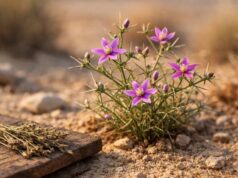
Forked-leaf sundew, or Drosera binata, is a striking carnivorous plant with a long herbal reputation and a much more modest modern evidence base. In traditional European herbalism, sundew species were valued mainly for dry, irritating coughs, throat irritation, and spasmodic bronchial symptoms. That reputation comes less from nutrition and more from the plant’s chemistry: sundews contain flavonoids and naphthoquinones, compounds that show antispasmodic, antimicrobial, and biologically active effects in laboratory research.
For readers considering forked-leaf sundew as a remedy, the most useful question is not whether the plant is interesting, but whether it is practical, safe, and evidence-based. The honest answer is nuanced. Some respiratory benefits look plausible, especially for mild cough support, but most stronger claims are still based on lab, ex vivo, or species-level research rather than solid human trials with D. binata itself. Product quality also varies, and modern phytotherapy often favors other sundew species for standardized medicinal use. Used thoughtfully, forked-leaf sundew may still have a place as a niche botanical, but it should be approached with realism rather than hype.
Quick Overview
- Traditionally used for dry, irritating cough and cough-related throat irritation, with modern support still mostly preclinical.
- Its best-known active groups are flavonoids and naphthoquinones, which may influence airway tone, mucus clearance, and microbial activity.
- Traditional tea use is often about 1 to 2 g dried herb per cup, taken 1 to 3 times daily, but modern products vary widely.
- Avoid self-treating with it during pregnancy, breastfeeding, childhood, or when cough comes with fever, chest pain, wheezing, or blood.
- Species quality differs, and many modern herbal products standardize other sundew species rather than raw Drosera binata.
Table of Contents
- What is Forked-Leaf Sundew
- Key ingredients and how they work
- Does Forked-Leaf Sundew help cough
- How is Forked-Leaf Sundew used
- How much should you take
- Safety, side effects, and interactions
- What does the evidence show
What is Forked-Leaf Sundew
Forked-leaf sundew is a perennial carnivorous plant in the Droseraceae family. Unlike the round, spoon-like traps seen in some other sundews, Drosera binata produces forked, narrow leaves covered with sticky glandular hairs. Those glistening droplets trap small insects, which the plant then digests to survive in nutrient-poor, acidic environments. In nature, that ecology is fascinating. In herbal medicine, though, the real interest lies in the aerial parts and their secondary compounds.
Historically, “sundew herb” was grouped more by genus than by a single species. That matters because traditional claims about sundew often blend experience from several Drosera species, especially Drosera rotundifolia, the better-known medicinal form. Forked-leaf sundew belongs to the same genus and shares broad chemical families with its relatives, but it is not automatically interchangeable in quality, concentration, or clinical relevance. Modern quality-control work has reinforced that point: species differences can be meaningful, and not every sundew is equally suited to phytopharmaceutical use.
In practical terms, forked-leaf sundew is best viewed as a specialized botanical rather than a mainstream daily tonic. It is not a culinary herb, not a meaningful nutrient source, and not a first-line remedy for chronic respiratory disease. Its traditional niche has been short-term support for spasmodic or dry coughs, often in small amounts and sometimes in formulas with more familiar respiratory herbs.
A few points help keep expectations grounded:
- It is a medicinal herb, not a wellness superfood.
- Its historical role is mostly respiratory, not broad-spectrum disease treatment.
- Most modern commercial sundew products are not built around fresh, self-harvested D. binata.
- Wild collection is a bad idea because sundews are ecologically sensitive and easy to misidentify.
That last point is especially important. Carnivorous plants grow slowly, are often protected locally, and can accumulate environmental contaminants from poor growing conditions. Even if a person can identify the plant, that does not guarantee medicinal quality. For nearly everyone, responsibly sourced, labeled products are safer than foraging or homemade experiments.
Taken together, forked-leaf sundew is best understood as a traditional cough herb with an unusual botanical identity, a real but limited medicinal history, and a need for careful species-aware use rather than blanket assumptions.
Key ingredients and how they work
Forked-leaf sundew’s value comes from phytochemicals rather than vitamins or minerals. The main groups discussed in the literature are flavonoids, naphthoquinones, and related phenolic compounds. These molecules help explain why sundew has been explored for cough, spasm, inflammation, and microbial control.
Flavonoids are among the most relevant compounds in medicinal sundews. In the broader genus, researchers have identified quercetin derivatives, hyperoside-related compounds, and other polyphenols that may influence smooth-muscle tone, inflammatory signaling, and airway surface function. These are often the most plausible candidates behind sundew’s old antitussive and antispasmodic reputation.
Naphthoquinones are another defining group. In Drosera species, compounds such as plumbagin, droserone, ramentaceone, and chlorinated derivatives have attracted attention because they show strong biological activity in test systems. These compounds are interesting, but they also explain why sundew should not be treated casually. The same chemistry that makes a plant pharmacologically active can also create variability in potency and tolerability.
Phenolic acids and ellagic acid derivatives likely contribute to antioxidant and defense-related effects. These compounds are less famous than plumbagin-like molecules, but they matter for the plant’s overall profile and may shape how extracts behave in the lab.
The key idea is synergy. Forked-leaf sundew is not thought to work through one magic ingredient. Instead, its effects probably arise from the combined activity of multiple compounds that can:
- relax or modulate airway smooth muscle,
- influence mucus handling and ciliary function,
- interfere with microbial growth in lab settings,
- and affect inflammatory pathways.
Even so, chemistry is not destiny. Two products can both say “sundew” on the label and still differ in species, extraction method, solvent, strength, and active profile. That is one reason modern pharmacognosy places so much emphasis on standardization. Recent quality work on medicinal sundew has shown that species-level differences are not trivial. In plain language, a forked-leaf sundew extract may resemble other sundews in broad chemical families, but it will not necessarily match them in medicinal consistency.
This is also why sweeping claims about “sundew benefits” deserve caution. A lab paper showing antibacterial activity from a tissue-cultured D. binata extract does not automatically mean a home tincture, tea, or capsule will do the same thing in the body. Extraction conditions, dose, and context change everything.
So when people ask for the key ingredients in forked-leaf sundew, the honest answer is not just a list of compounds. It is a framework: flavonoids likely matter for the respiratory story, naphthoquinones matter for biological activity and caution, and the overall profile depends heavily on the species, source, and preparation.
Does Forked-Leaf Sundew help cough
This is the question most readers actually care about, and it is where forked-leaf sundew has the strongest traditional identity. Sundew has long been used for dry, tickly, irritating coughs, especially when the cough feels spasmodic or comes in hard bursts. That old use is still the most credible medicinal role for the plant today.
The modern scientific picture is promising but not definitive. Research on other medicinal sundew species has shown effects that fit the traditional story: certain extracts can reduce acetylcholine-driven airway contraction and may improve ciliary beat frequency, a mechanism that could support normal mucus clearance. In simple terms, sundew chemistry may help airways feel less tight while also supporting the natural movement that clears secretions upward.
That does not mean forked-leaf sundew is a cure for every cough. A realistic expectation looks more like this:
- mild support for a dry, irritating cough after a cold,
- possible soothing help when coughing is repetitive or spasm-like,
- and a supportive role in short-term herbal formulas.
It is less convincing for wet, heavy chest congestion, bacterial pneumonia, uncontrolled asthma, or persistent cough that lasts for weeks. In those situations, the need is diagnosis, not experimentation.
One useful way to place forked-leaf sundew is to compare it with more familiar respiratory herbs. Where thyme for respiratory support is often chosen for productive cough and antimicrobial aromatic action, sundew is more often discussed for dry irritation and cough spasm. That does not make one herb better than the other; it just highlights that their traditional “fit” is different.
The best way to think about benefit is by symptom pattern:
- Most plausible fit: dry cough, throat-triggered cough, post-viral tickle, cough bursts.
- Less plausible fit: thick mucus with marked congestion.
- Poor fit: high fever, shortness of breath, chest pain, coughing blood, or chronic worsening symptoms.
There is also an important species caveat. Much of the respiratory research centers on Drosera rotundifolia, not D. binata. Because the chemistry overlaps, it is reasonable to discuss a genus-level rationale, but it would be misleading to claim that forked-leaf sundew itself has been clinically proven to treat cough in humans. It has not.
So, does it help? Potentially, yes, especially as a traditional short-term herb for mild dry cough patterns. But the support is still mostly mechanistic and preclinical, and the step from “plausible respiratory herb” to “proven medicine” has not yet been fully made.
How is Forked-Leaf Sundew used
Forked-leaf sundew is used in several forms, but not all of them belong to the same herbal category. That distinction matters. A classical herbal tea, a tincture, a standardized extract, and a homeopathic preparation may all mention sundew, yet they differ profoundly in concentration, evidence, and practical effect.
For herbal use, the most common forms are:
- Infusion or tea: made from the dried aerial parts.
- Tincture: alcohol-based liquid extract, often easier to dose.
- Fluid or dry extract: found in practitioner products or formulated herbal blends.
- Combination formulas: paired with other cough herbs.
The tea form is traditional, but it is not always the most convenient. Sundew is not a bulky tea herb, and raw material can be difficult to source consistently. Tinctures and professional extracts are often more realistic because they offer clearer dosing and better shelf stability.
Forked-leaf sundew is also rarely used as a stand-alone daily herb. In practice, it is more often paired with herbs chosen for a broader respiratory formula. For example, someone with a lingering post-cold cough may see it combined with demulcent or expectorant herbs, or with herbs that better suit mucus-heavy symptoms. In that kind of setting, elecampane for traditional chest support is a more natural partner than a competitor.
A sensible use approach includes a few rules:
- Buy a labeled product. The species, extract type, and serving size should be clear.
- Do not self-harvest. Conservation, contamination, and misidentification are real concerns.
- Use it for a defined purpose. Sundew makes more sense for acute symptom support than for vague daily wellness.
- Match the form to the symptom. Tea may suit gentle use; tinctures may be easier for short-term tracking.
- Reassess quickly. If symptoms worsen or fail to improve, do not keep extending use without a clear reason.
It is also worth noting what forked-leaf sundew is not. It is not a proven immune booster, not a stand-alone antimicrobial treatment, and not a replacement for inhalers, antibiotics, or medical evaluation. Some D. binata research shows intriguing antibacterial activity in the lab, but that should be read as scientific potential, not self-treatment guidance.
For most adults, the practical question is not “How can I use this every day?” but “Is this the right herb for this exact symptom pattern, and is the product credible?” That mindset usually leads to safer and more effective use.
How much should you take
There is no universally accepted, clinically established dose for forked-leaf sundew itself. That is the first and most important point. Dosage depends on species identity, extraction method, concentration, and whether the product is being used as a tea, tincture, or standardized extract. A homeopathic sundew product follows a completely different dosing logic and should not be confused with herbal dosing.
For traditional herbal use, a conservative range is more appropriate than a bold one. Common practice for dried sundew herb is roughly:
- Tea or infusion: about 1 to 2 g dried herb per cup, taken 1 to 3 times daily.
- Liquid tincture or fluid extract: follow the label closely, because strength varies substantially by extract ratio and alcohol content.
If a product does not clearly state the species, preparation, and serving size, it is not a good candidate for routine use. With niche herbs, vague labeling is a red flag.
Timing matters less than consistency. For cough support, many people do better taking small doses across the day rather than one large serving at once. Tea is often easiest between meals or when the throat feels scratchy. Tinctures may be taken in a small amount of water. If a product causes stomach discomfort, taking it after food may be more tolerable.
Duration should be short and purposeful. A reasonable self-care window is often 3 to 7 days for a mild acute cough pattern. Longer use only makes sense when a knowledgeable clinician has a reason for it. If a cough lasts more than a couple of weeks, keeps returning, or worsens at night, the issue is no longer just dosage. It is evaluation.
A few variables can change how much is appropriate:
- the concentration of the product,
- whether other cough herbs are in the formula,
- age and body size,
- alcohol sensitivity,
- and how severe the symptoms are.
For children, pregnancy, breastfeeding, and complex medical cases, there is not enough reliable dosing clarity to support casual self-use. In those groups, “no clear dose” should be treated as a warning, not as permission to guess.
The best dosing principle for forked-leaf sundew is simple: use the lowest amount that matches a credible product label, stay within short-term use, and stop early if the symptom pattern suggests something more serious than an uncomplicated dry cough.
Safety, side effects, and interactions
Forked-leaf sundew is not usually discussed as a high-risk herb, but that should not be confused with “well proven safe.” The real issue is limited direct clinical data, species variability, and uneven product quality. When evidence is thin, caution matters more, not less.
The most likely mild side effects are the usual herbal ones:
- stomach upset,
- nausea,
- mouth or throat irritation,
- headache,
- or skin sensitivity in people prone to plant reactions.
Alcohol-based tinctures may also be irritating for some users, especially those with gastritis, reflux, or alcohol intolerance.
The bigger safety concern is uncertainty. Modern work on medicinal sundew quality suggests that not all Drosera species are equally suitable for phytopharmaceutical use. In other words, “it is a sundew” is not enough to guarantee medicinal consistency. That is one reason many modern herbal references and products lean toward better-characterized medicinal sundews rather than raw, unstandardized forked-leaf material.
Who should avoid forked-leaf sundew unless a qualified clinician specifically recommends it?
- Pregnant or breastfeeding people, because safety data are too limited.
- Children, especially young children, unless the product is specifically designed and dosed for them.
- People with chronic lung disease, recurrent wheeze, or undiagnosed persistent cough.
- Anyone with alarm symptoms, including fever, chest pain, blood in mucus, blue lips, or shortness of breath.
- People taking multiple medications, when the product’s chemistry and extract strength are unclear.
On interactions, the honest answer is again limited data. There is no strong, well-mapped clinical interaction profile for D. binata, but that is not the same as proving no interactions exist. With niche botanicals, lack of evidence often means lack of study. That is especially relevant for concentrated extracts and mixed formulas.
A good rule is to be careful when combining sundew with:
- prescription cough and cold products,
- sedating remedies,
- multi-herb respiratory formulas,
- and any medicine regimen where a clinician would want to know about new supplements.
Another practical warning is diagnostic delay. A soothing cough herb can make a person feel “in treatment” while a more important cause is being missed. That is a real safety issue, and it is often more important than the herb itself.
So the safest position is this: short-term, low-dose use from a reputable source may be reasonable for a mild dry cough in a healthy adult, but uncertain species quality, limited human data, and symptom overlap with more serious conditions mean forked-leaf sundew should stay in the cautious-support category, not the carefree category.
What does the evidence show
The evidence for forked-leaf sundew is best described as scientifically interesting, clinically incomplete. That may sound restrained, but it is the most useful conclusion.
What looks strongest right now is the chemistry and mechanism story. Sundew species clearly contain active secondary metabolites, and these compounds can affect airway smooth muscle, ciliary function, inflammatory signaling, and microbial growth in laboratory systems. This helps explain why sundew earned a place in traditional respiratory herbalism.
The next level down is species-level medicinal plausibility. Research on Drosera rotundifolia gives sundew’s cough reputation a more believable scientific foundation. Extracts and flavonoids from that species have shown antispasmodic and airway-related effects that fit traditional use. For a reader, this means the old respiratory use is not pure folklore; it has some mechanistic backing.
What remains weak is the human clinical evidence for forked-leaf sundew itself. There are no robust, modern trials showing that D. binata reliably improves cough outcomes in the way a clinician could confidently prescribe. Some D. binata work is exciting, particularly around antimicrobial activity in vitro, but that is still far from proving internal medicinal benefit in people.
There are also three important limitations:
- Species substitution: not every sundew should be treated as interchangeable.
- Preparation differences: tea, tincture, extract, and lab isolate are not the same thing.
- Quality control: potency and composition can shift with cultivation, processing, and species choice.
That is why it helps to frame forked-leaf sundew as a narrow-support herb, not a broad-performance herb. It has a reasonable case for short-term use in mild dry cough patterns, especially when selected carefully and used conservatively. It does not have a strong case for bold claims about lung healing, infection treatment, or chronic disease management.
If someone wants a practical bottom line, it is this:
- The traditional respiratory use makes sense.
- The chemistry is real.
- The strongest modern support is still indirect or species-adjacent.
- The evidence is not strong enough to justify hype.
That may sound less dramatic than many herb articles online, but it is the more useful conclusion. Forked-leaf sundew is a legitimate botanical subject, just not a miracle remedy. For informed readers, that kind of clarity is much more valuable than oversized promises.
References
- Carnivorous Plants from Nepenthaceae and Droseraceae as a Source of Secondary Metabolites 2023 (Review)
- Effects of Extracts and Flavonoids from Drosera rotundifolia L. on Ciliary Beat Frequency and Murine Airway Smooth Muscle 2022
- Low-dose Drosera rotundifolia induces gene expression changes in 16HBE human bronchial epithelial cells 2021
- Quality parameters for the medicinal plant Drosera rotundifolia L.: A new approach with established techniques 2024
- Combination of silver nanoparticles and Drosera binata extract as a possible alternative for antibiotic treatment of burn wound infections caused by resistant Staphylococcus aureus 2014
Disclaimer
This article is for educational purposes only and is not a diagnosis or treatment plan. Forked-leaf sundew is a niche medicinal herb with limited direct human research, and most stronger claims still rely on species-level, laboratory, or traditional evidence. Seek medical care for persistent cough, fever, chest pain, wheezing, shortness of breath, or coughing up blood. Always check with a qualified healthcare professional before using any herbal product during pregnancy, breastfeeding, childhood, or alongside prescription medicines.
If this article helped you, please share it on Facebook, X, or your preferred platform.