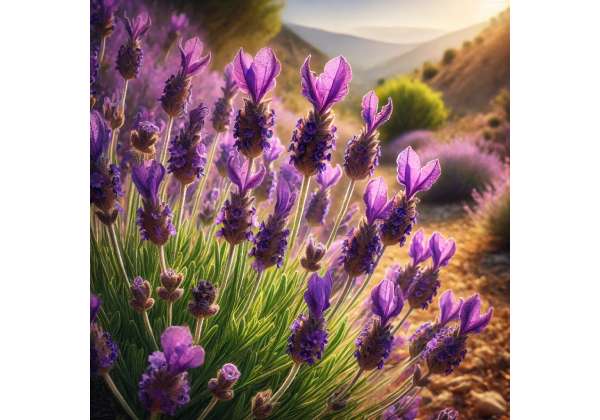
French lavender, the aromatic Mediterranean herb known botanically as Lavandula stoechas, is one of the most visually distinctive lavenders, with compact flower heads topped by showy bracts that resemble small purple flags. It has a long history in traditional herbal practice, especially around the Mediterranean, where it has been used for calming routines, digestive discomfort, mild respiratory congestion, topical care, and household fragrance. Yet French lavender is not simply a prettier version of common lavender. Its chemistry is different, its aroma is sharper and more camphor-like, and its safety profile deserves more caution than many readers expect.
That difference is what makes the herb worth understanding on its own terms. French lavender contains volatile compounds such as fenchone, camphor, and 1,8-cineole, alongside phenolic compounds that may contribute antioxidant and anti-inflammatory effects. It shows promising traditional and preclinical value, especially for mild relaxation, aromatic inhalation, and selected topical uses. At the same time, concentrated essential oil is not appropriate for everyone, and the evidence for oral medicinal use remains much thinner than the marketing often suggests.
Essential Insights
- French lavender is mainly used for aromatic calming, mild digestive support, and diluted topical applications rather than as a strong internal remedy.
- Its essential oil commonly contains fenchone, camphor, and 1,8-cineole, which help explain both its sharper scent and its stronger safety cautions.
- A conservative tea range is about 1–2 g dried flowering tops in 150–250 mL hot water, usually once or twice daily.
- Concentrated essential oil should not be swallowed casually and should be diluted before skin use.
- Pregnant or breastfeeding people, young children, and people with seizure disorders should generally avoid medicinal essential-oil use unless a qualified clinician advises otherwise.
Table of Contents
- What is French lavender
- Key compounds and medicinal actions
- What can it help with
- How is French lavender used
- How much French lavender per day
- Side effects, interactions, and who should avoid it
- What does the research actually show
What is French lavender
French lavender is a perennial shrub in the mint family, Lamiaceae, and it is native to the Mediterranean basin. In this article, French lavender refers specifically to Lavandula stoechas. That matters, because lavender naming is notoriously inconsistent in gardening, perfumery, and herbal commerce. In some regions, Lavandula stoechas is also called Spanish lavender, while “French lavender” may sometimes be used loosely for other lavender species in casual retail settings. For medicinal use, the botanical name matters more than the common name.
This species stands apart visually from the better-known narrow-leaved lavender. Its flower spikes are shorter and denser, and they are crowned by decorative bracts that look almost like butterfly wings. The scent is also different. Instead of the softer, sweeter profile associated with classic bedtime lavender, French lavender often smells sharper, greener, and more camphoraceous. That sensory difference reflects a real phytochemical difference.
The aerial parts are the main medicinal material. Depending on the tradition and the preparation, the flowers, flowering tops, and essential oil are used. Historically, the herb has appeared in infusions, decoctions, aromatic baths, household sachets, steam inhalations, and topical preparations. Folk use around the Mediterranean includes calming applications, digestive support, headache remedies, and respiratory support. Some traditions also used it as a wound-care herb and as a fragrant household plant.
A useful way to understand French lavender is to compare it with the species many readers already know. English lavender is usually associated with a softer linalool-rich aroma and a more familiar role in relaxation and sleep products. French lavender, by contrast, often carries more camphor, fenchone, and cineole-like notes, which makes it feel more stimulating to the senses even when it is used for calming purposes.
That does not make French lavender inferior. It makes it more specialized. Aromatically, it sits closer to the border between calming lavender and sharper, resinous Mediterranean herbs. Medicinally, that means the herb may fit best in modest, targeted uses rather than in broad daily supplementation.
Another important point is preparation quality. Wild-harvested plants, cultivated plants, dried flowering tops, and distilled oils can differ significantly. Geography, altitude, harvest time, and subspecies all influence the plant’s chemistry. Two products labeled “French lavender” may therefore smell different, behave differently, and deserve different levels of caution.
In short, French lavender is a distinct lavender species with traditional medicinal value, a strong aromatic identity, and a chemistry that rewards precision. It is not interchangeable with every other lavender on the shelf, and readers who treat it as a separate herb will make better decisions about benefits, dosing, and safety.
Key compounds and medicinal actions
French lavender owes its medicinal profile largely to its volatile oils, but the story does not end there. Like many aromatic herbs, it combines essential-oil constituents with non-volatile phenolic compounds, and the balance between those groups helps explain both its usefulness and its limits.
The best-known compounds in Lavandula stoechas are usually:
- Fenchone
- Camphor
- 1,8-cineole
- Linalool
- Linalyl acetate
- Rosmarinic acid
- Flavonoids and other phenolic acids
The exact profile can vary a great deal, which is one of the most important practical insights about this plant. French lavender is not chemically fixed in the way many supplement buyers assume. One batch may lean more heavily toward eucalyptol-like notes, another toward camphor and fenchone, and another may show a somewhat softer balance. Subspecies, climate, soil, and flowering stage all shape that outcome.
What do those compounds suggest in practical terms?
- Fenchone and camphor help give French lavender its brisk, penetrating aroma. They are often linked with sharper aromatic effects and stronger safety cautions, especially in concentrated essential oil.
- 1,8-cineole is commonly discussed in aromatic herbs used for freshness, airflow, and respiratory comfort. It helps explain why the herb is often used in inhalation-style preparations.
- Linalool and linalyl acetate are the compounds many people associate with “classic lavender” calm, though French lavender usually does not rely on them to the same degree as English lavender.
- Rosmarinic acid and flavonoids support many of the anti-inflammatory and antioxidant themes seen in experimental studies.
The medicinal actions most often attributed to French lavender include:
- Mild calming or nervine support
- Antispasmodic activity
- Antimicrobial and antifungal activity
- Anti-inflammatory effects
- Antioxidant effects
- Aromatic respiratory support
- Topical soothing potential
The key word in most of those categories is potential. The chemistry is active and biologically interesting, but it does not automatically follow that every traditional use has been clinically proven. A rich essential oil can do many things in vitro without becoming a dependable oral remedy in ordinary life.
A more refined way to think about French lavender is this: it is not just “lavender for relaxation.” It is a more chemically assertive Mediterranean lavender whose actions often reflect a mixed profile of calming and clearing. That is why some people find it useful in steam inhalation, tense digestion, scalp or skin products, or blended aromatic formulas.
Another practical nuance is that the volatile fraction and the whole herb are not the same medicine. A mild tea made from dried flowering tops behaves very differently from a concentrated essential oil. The oil brings the strongest fragrance, the strongest pharmacologic intensity, and also the highest risk of irritation or misuse. The whole herb usually acts more gently.
So when people ask what the “active ingredients” are, the honest answer is not one magic molecule. It is a shifting combination of terpenes and phenolics whose effect depends on species identity, harvest quality, and preparation method. That complexity is part of the herb’s appeal, but it is also why standardized expectations are hard to promise.
What can it help with
French lavender is best matched to modest goals. Readers looking for a dramatic, clinically proven herb for anxiety, chronic insomnia, infection, or inflammatory disease will likely expect too much from it. Readers looking for a traditional aromatic herb that may support tension, mild digestive discomfort, and selected topical concerns are closer to its real strengths.
The most realistic benefit area is mild relaxation. French lavender has a long traditional reputation as a nervine herb, and its aroma alone can make it feel centering and settling. Still, it is important not to overborrow evidence from other lavender species. The strongest human data around lavender and anxiety often come from Lavandula angustifolia products, not specifically from Lavandula stoechas. With French lavender, the safer conclusion is that calming effects are plausible and traditional, but not as well confirmed in modern human trials.
A second likely use is for mild digestive spasm and post-meal heaviness. Traditional systems have used it as a carminative and antispasmodic herb, especially when digestion feels tight, windy, or unsettled rather than frankly diseased. That makes sense given its aromatic profile. It is better suited to occasional discomfort than to serious digestive disorders.
French lavender may also have a place in aromatic respiratory support. Its sharper oil profile helps explain why some traditional uses include steam inhalations and fragrance-based support for stuffiness. This is a comfort use, not a treatment for asthma attacks, pneumonia, or chronic lung disease.
Topical use is another realistic lane. Diluted essential oil or infused preparations may support minor skin care, scalp routines, and external soothing. Some experimental work suggests wound-healing and antimicrobial potential, which makes French lavender interesting in creams and lotions. But again, potential is not the same as guaranteed outcome, and concentrated oil can irritate skin if used poorly.
Common practical goals include:
- Easing the mental “edge” at the end of the day
- Supporting mild, stress-linked digestive discomfort
- Adding aromatic freshness to steam or diffuser use
- Supporting minor topical soothing in diluted preparations
- Blending into relaxing bath or massage routines
That mild profile also explains why people sometimes compare it with chamomile for gentle calming and digestive support. The difference is that chamomile usually has a softer evidence-to-risk balance for everyday tea use, while French lavender asks for more care around oil concentration and species identity.
The biggest mistake is expecting one herb to cover every “lavender” promise. French lavender can be useful, but it is not a stand-alone answer for sleep disorders, panic symptoms, migraines that need medical evaluation, or infected skin conditions. It belongs more naturally in supportive routines than in self-treatment of serious illness.
In practical terms, the herb helps most when the target is mild, functional, and sensory: tension, heaviness, congestion, surface irritation, or the need for a cleaner transition into rest. That may sound subtle, but subtle is often exactly where aromatic herbs do their best work.
How is French lavender used
French lavender appears in more forms than many readers realize, and the form determines both the experience and the safety profile. The simplest and gentlest use is as a light herbal infusion from dried flowering tops. The most intense form is the essential oil. Those two preparations should not be treated as equivalents.
Common forms include:
- Dried flowers or flowering tops for tea
- Tinctures and liquid extracts
- Essential oil for diffusion or dilution
- Bath blends
- Massage oils
- Topical creams, salves, or balms
- Sachets and linen blends
Tea is the easiest entry point for most adults. It delivers the herb in a milder whole-plant form and works best when the goal is light relaxation or digestive support. The taste is more resinous and medicinal than sweeter culinary lavender, so some users blend it with milder herbs.
Aromatic inhalation is another classic use. This may involve a diffuser, a steam bowl, or simply inhaling from diluted aromatic preparations. Because French lavender often contains more cineole, camphor, and fenchone than gentler lavender species, the scent can feel clearer and more penetrating. Some people like this for stuffy evenings or mentally tense days; others find it too sharp.
Topical use can be practical when the oil is diluted properly. Massage oils, chest rubs, and skin preparations use French lavender for fragrance, mild soothing, and its broad traditional antimicrobial reputation. But this is exactly where dilution matters. Undiluted essential oil can irritate skin, especially on the face, neck, or already-inflamed areas.
A few practical rules improve safety and usefulness:
- Match the form to the goal. Tea is for light internal support, while essential oil is better reserved for aromatic or diluted topical use.
- Do not swallow the essential oil casually. A pleasant smell does not make an essential oil safe to ingest.
- Use lower concentrations on sensitive skin and avoid eyes, mucous membranes, and broken skin.
- Favor short, purpose-driven use over indefinite daily use.
- Buy products that clearly state Lavandula stoechas rather than vague “lavender oil.”
French lavender can also be compared with tea tree for stronger topical antimicrobial applications. Tea tree tends to be the more direct choice when the main goal is a cleansing, spot-treatment style topical product, while French lavender is often chosen when fragrance, gentle soothing, and broader sensory appeal matter more.
Some readers are surprised to learn that sachets and bath use are still relevant. For a herb like this, low-exposure uses can be especially sensible. A bath blend or linen sachet captures some of the plant’s benefits without turning it into a high-dose internal regimen.
The main takeaway is simple: French lavender is versatile, but it is most useful when used with restraint. A tea, a diffuser session, or a properly diluted topical blend can make sense. A strong, repeated, poorly diluted essential-oil routine usually does not.
How much French lavender per day
There is no universally accepted modern clinical dose for French lavender, and that is one of the clearest signs that this herb should be approached conservatively. Most practical guidance comes from traditional use, whole-herb logic, and essential-oil safety principles rather than from large human trials.
For tea, a cautious traditional range is about 1 to 2 g of dried flowering tops or aerial parts per 150 to 250 mL of hot water. A common starting point is one cup in the evening or after a meal. Some adults use up to two cups in a day, but this is not a herb that needs aggressive escalation.
For tinctures and extracts, caution is even more important because strength varies widely. If a product does not clearly state the plant part, extraction method, and suggested serving, it is better to skip it. Unlike a mild tea, a concentrated extract can compress a lot of chemistry into a small dose.
For essential oil, the safest framework is not a “daily intake” model at all.
- Diffuser use often starts with 1 to 3 drops per session in a well-ventilated room.
- Topical blends are commonly kept around 0.5 to 2 percent dilution in a carrier oil.
- Facial or highly sensitive skin is usually better at the low end of that range.
A practical dilution guide looks like this:
- 0.5 percent: very sensitive skin or first-time use
- 1 percent: gentle general body application
- 2 percent: stronger body-use blends for limited areas
What should be avoided? Swallowing the essential oil without qualified supervision. Because French lavender oil can be relatively rich in camphor-like and ketone-like constituents, it is not the kind of lavender oil to treat as a casual culinary dropper product.
Timing depends on purpose. For relaxation, evening use makes the most sense. For digestion, after meals is more logical. For aromatic support during congestion, short inhalation sessions are usually more sensible than frequent all-day exposure.
Duration matters as much as dose. A few days of use during a rough patch is different from weeks of routine intake. Since strong long-term dosing has not been well standardized, the smarter approach is to use the herb for a clear reason, then stop and reassess.
Readers looking for a more established bedtime herb sometimes compare it with valerian for stronger sleep support. That comparison is useful because it highlights what French lavender is not: it is usually not the strongest sleep herb in the cabinet. It is better at gentle, aromatic support than at heavy sedation.
The best dosing principle for French lavender is moderation. Start low, choose the gentlest form that fits the goal, and let the herb stay a small tool rather than a high-dose daily habit.
Side effects, interactions, and who should avoid it
French lavender is often perceived as automatically safe because it belongs to the lavender family. That is too simplistic. Lavandula stoechas has a more assertive essential-oil profile than many people expect, and concentrated use deserves real caution.
The most common side effects are mild but important:
- Skin irritation or redness from undiluted oil
- Headache from strong aroma exposure
- Nausea or stomach upset with excessive internal use
- Dizziness in sensitive users
- Fragrance-triggered discomfort in people prone to scent sensitivity
The higher-risk scenario is misuse of essential oil. Concentrated French lavender oil is not a routine oral supplement. Its camphor- and fenchone-rich character is one reason experienced herbalists and aromatherapists are often more cautious with this species than with milder lavender preparations.
People who should generally avoid medicinal essential-oil use include:
- Pregnant or breastfeeding people
- Infants and young children
- People with seizure disorders
- People with a history of strong fragrance sensitivity
- People with asthma who react poorly to aromatic exposures
- Anyone using multiple sedative products at the same time
Interaction data are not as complete as many consumers assume. Still, a careful approach makes sense with:
- Sedatives or sleep medicines
- Other strong essential oils
- Alcohol in larger amounts
- Topical products containing multiple potentially irritating oils
- Medicines that already cause drowsiness
It is also worth separating whole-herb tea from essential oil. A mild tea made from flowering tops is usually much gentler than an oil blend or oral oil product. That does not make tea risk-free, but it does mean the most serious avoidable problems often come from concentrated oil, not from a light infusion.
Topical use needs discipline. Always dilute before use on intact skin, and patch-test first if you have reactive skin. Avoid use near the eyes, inside the nose, on mucous membranes, or on deep or infected wounds unless a clinician has specifically recommended a formulation.
A practical safety question is whether French lavender is the right herb for daily calm. In many cases, the answer is no. People wanting a milder daily option often do better with lemon balm as a gentler calming herb, especially when the goal is regular tea use rather than intense aromatic exposure.
Stop use and seek help if any of these appear:
- Persistent nausea or vomiting
- Marked dizziness
- Rash or swelling
- Wheezing or breathing difficulty after inhalation
- Neurologic symptoms after concentrated exposure
The core safety lesson is that “lavender” is not one uniform category. French lavender is a specialized aromatic herb, not a free-form wellness ingredient. When used lightly and appropriately, it can be pleasant and helpful. When concentrated, overused, or swallowed carelessly, it can move from gentle to troublesome much faster than many users expect.
What does the research actually show
The research on French lavender is promising, but it is not mature enough to support the biggest claims made in wellness marketing. Most of the encouraging findings come from phytochemical studies, in vitro work, animal models, and species-level reviews rather than from large, well-designed human trials.
That matters because French lavender is a herb with strong lab appeal. Its essential oils and extracts show antioxidant, anti-inflammatory, antimicrobial, and in some cases wound-healing or neuroactive potential. Those are meaningful findings, and they help explain why the herb stayed in traditional practice. But they are not the same as proof that a home user will get reliable clinical results from tea, capsules, or oil.
The strongest research themes look like this:
- The chemistry is well documented and often rich in fenchone, camphor, cineole, and phenolic compounds.
- Experimental models support anti-inflammatory and antioxidant potential.
- Topical research suggests possible wound-healing value in formulated products.
- Traditional use for calming, spasm relief, and aromatic support is biologically plausible.
The main limitations are just as important:
- Human studies specific to Lavandula stoechas are sparse.
- Essential-oil composition varies widely by subspecies and geography.
- Extract standardization is inconsistent.
- Positive laboratory findings do not automatically translate to safe oral self-treatment.
This creates an important evidence gap. Many consumers hear “lavender helps anxiety and sleep” and assume that applies equally across species. In reality, much of the best-known clinical lavender research involves other forms of lavender, especially Lavandula angustifolia. French lavender should not automatically inherit the whole evidence base of the genus.
The topical story is slightly stronger than the oral story. Formulated wound-healing and anti-inflammatory research is intriguing, and it makes external use one of the more promising modern lanes for the herb. Aromatic use is also reasonable because inhalation asks less of the evidence than claiming disease treatment through ingestion.
There is another subtle but useful insight in the research: variability is not a side note. It is central. A cineole-rich French lavender oil may behave differently from a fenchone-heavy one. This is one reason standardized human research has been harder to build and one reason commercial products can feel inconsistent.
So where does that leave the herb in practice?
- It is more than folklore.
- It is less than a clinically settled remedy.
- It works best as a cautious, supportive herb rather than a primary treatment.
That middle position is not a weakness. It is simply the honest evidence-based place to put French lavender today. The herb has clear phytochemical interest, meaningful traditional roots, and several promising experimental signals. What it still lacks is enough human evidence to justify bold claims for sleep disorders, anxiety disorders, major pain conditions, or internal anti-inflammatory treatment.
A thoughtful reader should come away with balanced expectations: French lavender is a valid herb to know, a pleasant herb to use carefully, and a herb whose marketing is currently more confident than its clinical proof.
References
- A Comprehensive Review of Lavandula stoechas L. (Ustukhuddus) Plant: Phytochemistry, Pharmacology, and In Silico Studies 2025 (Review)
- Mediterranean Lavenders from Section Stoechas: An Undervalued Source of Secondary Metabolites with Pharmacological Potential 2023 (Review)
- Fenchone and camphor: Main natural compounds from Lavandula stoechas L., expediting multiple in vitro biological activities 2023
- Topical Emulsion Containing Lavandula stoechas Essential Oil as a Therapeutic Agent for Cutaneous Wound Healing 2021
- A Phytopharmacological review of a Mediterranean plant: Lavandula stoechas L 2020 (Review)
Disclaimer
This article is for educational purposes only and does not replace medical advice, diagnosis, or treatment. French lavender can be pharmacologically active, especially as an essential oil, and it may not be appropriate for children, pregnancy, seizure disorders, fragrance-sensitive individuals, or people using sedating medicines. Do not use it to self-treat serious sleep, respiratory, neurologic, or skin conditions without qualified medical guidance.
If you found this article useful, please share it on Facebook, X, or any platform you prefer.