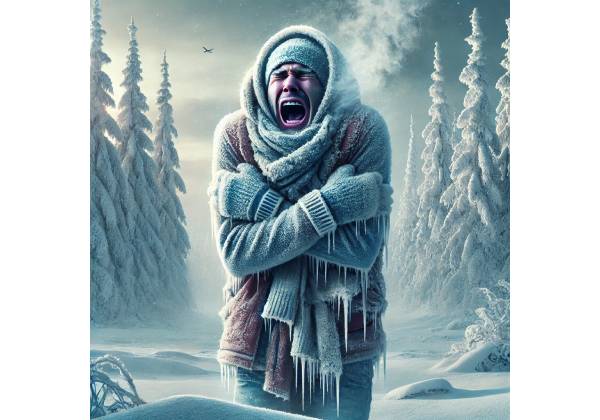
A sharp drop in temperature, the first frost on a windshield, a gust of cold air at the train platform, or the thought of a long winter ahead can all feel routine to most people. For someone with cheimaphobia, those same moments may trigger dread, physical tension, and an urgent wish to avoid exposure. The fear may center on winter itself, cold weather, cold air, ice, frost, or the idea of becoming dangerously cold.
This is not the same as disliking winter or preferring warm climates. Cheimaphobia describes a much stronger, more disruptive pattern in which cold-related cues start to feel threatening even when the actual situation is manageable. People may avoid going outside, overdress far beyond what conditions require, cancel plans, or organize daily life around staying warm and feeling safe. With careful assessment, however, this fear can be understood and treated.
Table of Contents
- What Cheimaphobia Is
- Symptoms and Warning Signs
- Causes and Risk Factors
- How Diagnosis Is Made
- Daily Impact and Complications
- Treatment Options That Help
- Self-Help and Winter Management
- When to Seek Help and Outlook
What Cheimaphobia Is
Cheimaphobia is commonly used to describe an intense fear of winter, cold weather, cold air, frost, or becoming too cold. In practice, the exact wording varies. Some people mainly fear winter conditions as a season. Others fear the bodily sensation of cold itself, or what they believe cold exposure might lead to, such as illness, loss of control, or physical collapse. Clinically, symptoms like these are usually evaluated within the broader framework of specific phobia rather than as a widely standardized stand-alone diagnosis. Older psychiatric literature also uses related terms, including frigophobia, especially in culturally shaped presentations centered on fear of coldness.
The distinction between a phobia and ordinary preference matters. Many people dislike winter, avoid icy roads, or feel cautious during severe weather. That is reasonable. A phobia is different because the fear is intense, persistent, and out of proportion to the immediate situation. It often leads to avoidance, marked distress, or major disruption in normal life. A person may refuse to go outside on cool days, keep indoor temperatures unusually high, wear heavy layers in mild weather, or panic when unexpected cold exposure occurs.
Cheimaphobia can show up in several forms:
- fear of stepping outdoors in cold air
- fear of winter travel, snow, or frost
- fear of touching cold objects
- fear of getting chilled indoors
- fear of becoming sick, weak, or trapped because of cold
- fear linked to past cold-related distress, such as getting stranded or falling on ice
In some people, the fear is mostly situational. In others, it becomes a broader threat pattern. The person starts scanning the environment for signs of cold, drafts, weather changes, and body sensations. That hypervigilance can make even normal temperature shifts feel alarming.
It is also important to separate fear of cold from medical cold intolerance. A person with hypothyroidism, anemia, Raynaud phenomenon, low body weight, or another medical issue may feel unusually cold for physical reasons. That is not the same as a phobia, though the two can overlap. In cheimaphobia, the nervous system treats cold-related cues as emotional threats, and avoidance becomes the main coping strategy.
The most useful way to think about cheimaphobia is as a learned fear response. The brain has started to link cold, winter, or cold sensations with danger. That link can become powerful, but it can also be changed. Understanding that is the first step toward treatment.
Symptoms and Warning Signs
Cheimaphobia can affect thoughts, emotions, physical sensations, and behavior all at once. In milder cases, symptoms appear only during obvious cold exposure, such as walking outside on a freezing day. In more severe cases, the reaction begins far earlier, sometimes when the weather forecast changes or when the person merely imagines winter conditions.
Emotional and mental symptoms
Common psychological symptoms include:
- intense dread before cold-weather exposure
- repeated “what if” thoughts about getting too cold
- fear of becoming sick, trapped, weak, or unable to cope
- intrusive thoughts about frost, snow, wind, or winter travel
- irritability when temperatures drop
- shame about needing more warmth or avoiding ordinary activities
- difficulty concentrating when cold-related plans are approaching
Anticipatory anxiety is often a major part of the condition. The feared situation may still be hours or days away, but the body begins reacting as if danger were already present. This can make winter feel exhausting even before any real exposure occurs.
Physical symptoms
Like other specific phobias, cheimaphobia may trigger the body’s stress response. Symptoms can include:
- racing heartbeat
- sweating
- trembling
- nausea
- chest tightness
- dizziness
- shortness of breath
- stomach upset
- muscle tension
- feeling faint or unreal
Some people misread these symptoms as proof that cold is already harming them. That interpretation can intensify panic. The person may think, “My body is shutting down,” when in fact their body is mounting an anxiety response.
Behavioral warning signs
Cheimaphobia often becomes most visible through avoidance. Common patterns include:
- refusing to go outdoors in cool or cold weather
- canceling errands, school, or work when temperatures fall
- overdressing far beyond what conditions require
- keeping indoor heating unusually high
- avoiding refrigerated foods or cold drinks
- repeatedly checking forecasts or room temperature
- seeking constant reassurance about cold exposure
- avoiding winter travel, snow, or any setting perceived as chilly
Children may cling, cry, argue, or refuse to leave the house. Adults may explain the same behavior in more socially acceptable ways, such as saying they “hate winter” or are “just sensitive to the cold.”
A useful sign that the problem may be more than ordinary dislike is functional impact. Someone who simply prefers warm weather may complain but still manage daily life. Someone with cheimaphobia may organize nearly everything around not feeling cold. They may miss appointments, stop exercising outdoors, avoid social life, or feel unable to travel in colder months.
The symptoms can also widen over time. A person may first fear icy outdoor conditions, then begin fearing air conditioning, cold rooms, drafts, or chilled drinks. That spread is a warning sign that the fear system is becoming more generalized and deserves closer attention.
Causes and Risk Factors
Cheimaphobia usually does not come from one single cause. Like many phobic conditions, it tends to develop through a mix of direct experience, temperament, learning, and ongoing reinforcement through avoidance. For some people, the origin is obvious. For others, the fear grows gradually until cold-related situations no longer feel ordinary.
One common pathway is a distressing past experience. A person may have been stranded in winter, suffered severe shivering, fallen on ice, become sick during cold weather, or felt panic while unable to warm up quickly. Even if the event was brief, the brain may store cold as a threat cue. Later exposures can then reactivate the same alarm response.
Another pathway is observational learning. Children and adults can absorb fear from family members, warnings, or repeated stories about the dangers of winter. If cold is described as something constantly risky or intolerable, a person may become especially alert to it. This does not mean careful families cause phobias. It means anxious learning can happen through both experience and environment.
Important risk factors
Several factors may increase vulnerability:
- a history of anxiety disorders
- panic attacks or strong sensitivity to body sensations
- other specific phobias
- traumatic or humiliating past experiences in cold conditions
- high need for certainty and control
- perfectionistic or threat-focused thinking
- chronic stress and poor sleep
- preexisting medical cold sensitivity that becomes emotionally loaded
That last point is important. If a person truly feels colder than others because of a medical issue, they may become more vigilant about temperature. Over time, physical sensitivity and psychological fear can reinforce each other. The body becomes uncomfortable more quickly, and the mind begins to expect disaster from that discomfort.
How the fear gets maintained
Once the fear starts, avoidance tends to strengthen it. If a person stays home on a chilly day and feels immediate relief, the brain learns that escape worked. That relief is genuine, but it keeps the fear alive.
Several patterns help maintain the cycle:
- Avoidance: the person never learns they might cope better than expected.
- Hypervigilance: every draft, forecast, and cold sensation gets treated as a warning.
- Catastrophic thinking: mild discomfort is interpreted as danger.
- Safety rituals: repeated checking, overlayering, or constant heat-seeking become mandatory.
- Generalization: fear spreads from severe cold to ordinary cool conditions.
It is also important to note that severe fear of cold can, in some contexts, be shaped by cultural beliefs. Published case literature on frigophobia describes presentations in which fear of coldness is tied to culturally mediated illness beliefs rather than to winter alone. That does not mean all cheimaphobia is cultural, but it does show that the meaning assigned to cold can strongly shape the fear response.
Understanding the causes does not excuse the problem away, but it does reduce blame. Cheimaphobia is not weakness or lack of resilience. It is a learned fear pattern, and learned fear patterns can be treated.
How Diagnosis Is Made
Diagnosis of cheimaphobia begins with a careful clinical assessment. There is no scan, blood test, or thermometer threshold that confirms it. A clinician instead looks for a pattern of intense, persistent fear linked to winter, cold weather, or cold-related situations, along with avoidance and clear disruption in normal life. The key question is not whether the person dislikes being cold. It is whether fear has become disproportionate, rigid, and impairing.
A good assessment usually asks:
- What exactly is feared most: cold air, snow, frost, illness, loss of control, or something else?
- How quickly does anxiety begin?
- What situations are now being avoided?
- Is the fear seasonal, or does it continue year-round?
- Are there panic symptoms?
- Has the fear followed a traumatic event?
- Are there symptoms of another anxiety disorder?
These questions matter because two people may both say they fear winter while having very different clinical pictures. One may mainly fear bodily panic. Another may fear getting sick. Another may be reacting to past trauma. Another may have real cold intolerance from a medical condition that has become emotionally amplified.
Medical rule-outs matter
Because cold sensitivity can have physical causes, diagnosis should not assume the problem is purely psychological from the start. Abnormal cold intolerance can be associated with issues such as anemia, Raynaud phenomenon, hypothyroidism, chronic illness, hypothalamic problems, or poor general health. If a person has new, severe, or persistent cold sensitivity, medical evaluation may be needed alongside mental health assessment.
What clinicians usually look for
Cheimaphobia is typically considered within the framework of specific phobia when the following are present:
- intense fear or anxiety tied to a particular set of cold-related cues
- exposure almost always triggers marked distress
- the person avoids those situations or endures them with major anxiety
- the fear is out of proportion to the actual risk
- the pattern persists over time
- daily functioning is affected in a meaningful way
Clinicians may also consider other possibilities, including:
- panic disorder
- generalized anxiety
- obsessive health fears
- trauma-related symptoms
- medical cold intolerance
- depression with reduced stress tolerance
Published clinical guidance on specific phobia also emphasizes that the fear is usually recognized as excessive, yet still difficult to control. That mismatch often appears in cheimaphobia. A person may know a cool room is not dangerous but still feel genuinely unsafe in it.
Questionnaires may sometimes be used to rate anxiety severity or avoidance, but the most useful part of diagnosis is descriptive detail. A clinician can then build a hierarchy of feared situations, distinguish physical cold sensitivity from fear-driven avoidance, and design treatment that matches the actual pattern. That clarity is often the first real relief people feel.
Daily Impact and Complications
Cheimaphobia can affect much more than comfort. Winter, cool weather, and temperature shifts are built into daily life, and when they begin to feel threatening, the effects can spread into health, work, relationships, and independence. Many people first notice the problem as inconvenience. Over time, it can become a major organizing force in how life is lived.
A person with cheimaphobia may avoid morning commutes, winter errands, outdoor exercise, school drop-offs, travel, social events, or even sitting near doors, windows, or air conditioning. Some begin dressing in heavy layers even in mild conditions. Others keep their homes overly heated and still do not feel safe. The fear can also influence where they live, when they travel, and how much they participate in family life.
Common functional effects
The condition may lead to:
- reduced outdoor activity
- less exercise and lower fitness
- missed appointments or work days
- avoidance of travel in colder months
- family tension around heating, clothing, or winter routines
- social withdrawal
- dependence on others for errands or transport
- financial strain from excessive heating or last-minute cancellations
This can be especially hard in climates with long winters, where total avoidance is not realistic. The person may then live in constant anticipatory stress, counting down to cold seasons rather than adapting to them.
Emotional complications
Cheimaphobia can also cause:
- shame about “overreacting”
- frustration with one’s own limits
- irritability and exhaustion
- low confidence
- worsening generalized anxiety
- panic attacks
- depressed mood from restricted activity
There is also a risk that the person never builds tolerance or practical winter confidence. Someone who avoids all cold exposure may not learn safe ways to layer clothing, pace activity, assess conditions, or cope calmly when a temperature drop happens unexpectedly.
Another complication is the fusion of fear with bodily discomfort. If mild chill or normal shivering is repeatedly interpreted as proof of danger, the person may become more afraid of their own physical sensations than of winter itself. That can make the condition feel inescapable because the trigger is not only outside but inside the body.
A subtler consequence is a shrinking life. A holiday invitation, a winter walk, a child’s outdoor event, or a routine errand becomes something to manage defensively rather than something to participate in. Over time, the question shifts from “What matters today?” to “How can I avoid feeling cold?”
That narrowing is one of the clearest signals that the fear deserves treatment. The aim is not to make someone love winter. It is to stop fear from dictating safety, movement, and opportunity. When that happens, function improves along with emotional well-being.
Treatment Options That Help
Cheimaphobia is treatable, and the strongest evidence for specific phobias supports exposure-based treatment, usually delivered within cognitive behavioral therapy. The core principle is straightforward: avoidance preserves fear, while gradual, structured contact with the feared cue helps retrain the brain’s threat response.
Exposure-based therapy
Exposure therapy is considered the preferred treatment for specific phobia. In this approach, the person does not get pushed into the hardest cold-weather situation on day one. Instead, treatment is built as a stepwise ladder. For cheimaphobia, that ladder might include:
- talking about cold-related fears in detail
- looking at images or videos of winter scenes
- sitting briefly in a slightly cooler room
- opening a window for a short period
- standing outside for a controlled, brief interval
- walking outdoors in cool weather with planned coping tools
- gradually extending duration and reducing safety rituals
The point is not to prove that cold is always pleasant. It is to teach the nervous system that manageable cold-related exposure can be tolerated without catastrophe.
Cognitive behavioral therapy
CBT often helps alongside exposure by addressing the thoughts that intensify fear. Examples include:
- “If I feel chilled, I will get seriously ill.”
- “If I start shivering, I will lose control.”
- “I cannot cope with cold at all.”
- “If I am not completely warm, I am unsafe.”
CBT helps people challenge these assumptions, recognize avoidance patterns, and develop more flexible responses. Guidance on phobia treatment consistently supports CBT and gradual exposure, while also noting that medication is not usually the main treatment.
Medication
Medication is not usually the first-line treatment for specific phobias. It may sometimes be used for associated anxiety symptoms or overlapping conditions, but talking therapies are generally preferred, and medication effects often do not produce the same lasting learning that exposure does. Some medicines can reduce symptoms in the short term, but psychotherapy offers a more durable path when people are able to complete it.
Newer tools
Virtual reality and app-based exposure have become areas of growing interest. Research on digital exposure tools for specific phobias suggests they may help some people access treatment more easily. That does not replace individualized care, but it expands the range of options.
Good treatment is measured by function, not just by comfort. Success may mean going outdoors without panic, reducing extreme heat-seeking behaviors, traveling in winter, or managing a chilly environment without immediate escape. Confidence often comes after repeated action, not before it.
Self-Help and Winter Management
Self-help strategies are most useful when they support treatment rather than strengthen avoidance. The goal is not to force yourself into unsafe weather or pretend cold never matters. The goal is to separate sensible winter planning from fear-driven restriction.
Practical daily strategies
Many people benefit from a structured approach like this:
- Identify the exact trigger. Is the fear about outdoor wind, cold air on the face, icy roads, drafts indoors, or the sensation of chilled hands?
- Track avoidance habits. Notice whether you are responding to actual weather risk or to anxiety alone.
- Rate feared situations. Build a ladder from easier to harder situations.
- Practice planned exposure. Use small steps rather than all-or-nothing leaps.
- Review what happened. After each step, compare feared outcomes with actual outcomes.
This process turns fear into something observable and workable.
Helpful coping tools
Useful techniques may include:
- dressing appropriately rather than excessively
- checking weather once, not repeatedly
- using slow breathing when panic rises
- naming symptoms as anxiety rather than emergency
- using realistic coping statements
- planning short, repeated outdoor exposures
- keeping routines stable during colder months
- staying physically active in ways that build confidence
Examples of helpful self-talk include:
- “I can feel cold and still cope.”
- “Discomfort is not the same as danger.”
- “I do not need perfect warmth to be safe.”
- “Avoidance relieves fear now, but teaches it later.”
What to avoid
Certain habits often keep cheimaphobia strong:
- checking the thermostat constantly
- refusing any cool exposure at all
- wearing layers so extreme they become a ritual
- canceling plans the moment discomfort appears
- searching online repeatedly for worst-case cold risks
- using shame or force instead of gradual practice
It is also wise to avoid turning every symptom into proof of medical crisis unless there is a real reason for concern. If you do have a medical condition affecting cold tolerance, follow medical advice and build exposure work around that reality. Treatment should be safe and individualized, not dismissive of physical health.
Support from family can help when it is balanced. Loved ones are most helpful when they encourage realistic preparation and gradual coping rather than endless reassurance or pressure. The message should be, “You can learn to manage this,” not “There is nothing wrong with you” or “You must just toughen up.”
Over time, self-help works best when it is consistent. A five-minute walk in cool air repeated calmly can do more for recovery than one dramatic attempt to “beat” the fear. The nervous system learns through repetition, not through force.
When to Seek Help and Outlook
It is time to seek help when fear of winter or cold is doing more than making you uncomfortable. If it is changing how you work, travel, socialize, or care for yourself, it deserves attention. Many people delay because the fear seems understandable on the surface. Cold can be unpleasant, and winter can carry real hazards. But a phobia is different because the fear becomes excessive, persistent, and life-limiting.
Signs it is time to get help
Consider professional evaluation if:
- you avoid going outside in conditions most people manage
- work, school, or relationships are being disrupted
- you panic at the thought of cold exposure
- you rely on rigid warming rituals to feel safe
- the fear is spreading to more and more situations
- you are missing medical, social, or practical needs because of it
- your mood is worsening during colder months because of fear and restriction
Help is especially important if the fear appears to be mixed with panic attacks, health anxiety, trauma, or a possible physical condition that also needs assessment.
What recovery usually looks like
Improvement is rarely instant. Most people recover in stages:
- they understand the fear more clearly
- they identify the avoidance cycle
- they begin graded exposure
- they learn to tolerate cold-related discomfort without panic
- they regain function and flexibility
A realistic outcome is not necessarily loving winter or choosing cold-weather hobbies. It may mean walking outside without dread, tolerating a cool room, traveling in winter, or no longer structuring daily life around fear. Those are meaningful gains.
The prognosis for specific phobia is generally favorable when treatment is direct and structured. People who are able to complete exposure-based cognitive behavioral therapy often have a promising outlook. Research comparing single-session and multi-session exposure also suggests that treatment can be effective even when formats differ.
One final point matters: winter preference is not the same as illness, and cold sensitivity is not always a phobia. But when fear of cold begins to decide where you go, what you do, and how small your life becomes, that fear is worth treating. People do get better. The path is usually gradual, but it is real, and it often begins with recognizing that the fear is understandable, patterned, and changeable.
References
- Specific Phobia – StatPearls – NCBI Bookshelf 2024
- Treatment – Phobias – NHS 2022
- The relative efficacy and efficiency of single- and multi-session exposure therapies for specific phobia: A meta-analysis – PubMed 2022 (Systematic Review and Meta-Analysis)
- oVRcome – Self-guided virtual reality for specific phobias: A randomised controlled trial – PubMed 2023 (RCT)
- Cold intolerance: MedlinePlus Medical Encyclopedia 2024
Disclaimer
This article is for educational purposes only and is not a substitute for professional medical or mental health care. Fear of winter or cold can overlap with specific phobia, panic symptoms, trauma-related reactions, health anxiety, and medical conditions that cause true cold intolerance. A qualified clinician can help determine whether symptoms are primarily psychological, physical, or both, and can recommend treatment that fits the person’s history and level of impairment. Seek prompt medical care if cold sensitivity is new, severe, worsening, or accompanied by symptoms that may suggest an underlying health condition.
If this article was useful, please consider sharing it on Facebook, X, or another platform your audience prefers.