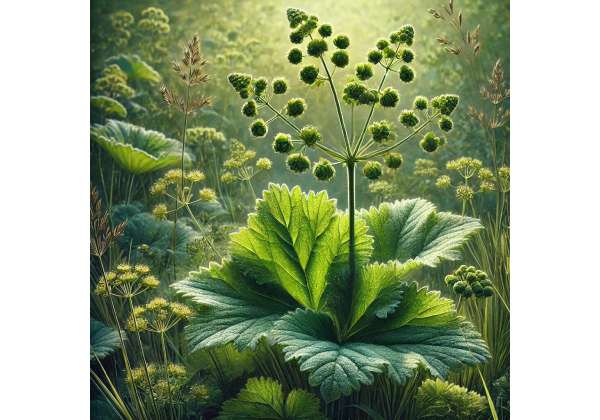
Alchemilla vulgaris—often called lady’s mantle—is a traditional European herb best known for its astringent, toning effect on tissues. Herbalists have used the aerial parts (leaves and flowering tops) in teas, washes, and tinctures for concerns that involve “too much looseness”: occasional diarrhea, minor mouth and throat irritation, and mild skin weeping or oozing. Lady’s mantle is also widely associated with women’s health, where it has a long reputation for supporting comfort during the menstrual cycle and helping tissues recover after childbirth, although modern clinical evidence remains limited.
Its signature feel comes from tannins and other polyphenols that can bind to proteins on the surface of mucous membranes and skin, creating a protective “tightening” layer. This can translate into short-term soothing, less surface irritation, and reduced minor fluid loss from tissues. Like many tannin-rich herbs, the same chemistry that makes it useful also shapes how you should dose it and who should avoid it.
Essential Insights
- May help calm occasional diarrhea and mild mouth and throat irritation when used short term.
- Tannins can interfere with mineral and medication absorption; separate from iron and prescriptions by 2+ hours.
- Typical tea range is 1.5–4 g dried herb per cup, up to 3 cups daily.
- Avoid during pregnancy unless supervised, and use extra caution with heart conditions or concentrated extracts.
Table of Contents
- What is Alchemilla?
- Key ingredients and medicinal properties
- What does lady’s mantle help with?
- How to use Alchemilla daily
- How much Alchemilla per day?
- Side effects, interactions, and who should avoid
- Evidence review and practical guidance
What is Alchemilla?
Lady’s mantle (Alchemilla vulgaris) is a low-growing perennial in the rose family (Rosaceae). If you have seen its fan-shaped leaves catching dew like beads, you have seen its most famous trait: the leaf surface repels water, so droplets pool neatly at the center. Historically, that “mystical” dew helped inspire the genus name Alchemilla, linked to old alchemical traditions. In practice, though, the herb’s real value comes from its chemistry—especially tannins and flavonoids.
Herbal preparations typically use the above-ground parts harvested in flower. You may see the herb sold as Alchemillae herba, lady’s mantle herb, or simply lady’s mantle. Because the genus contains many similar species, quality products should specify A. vulgaris (or the exact species) and the plant part used.
Traditional use patterns are fairly consistent across Europe:
- Internal use: tea for occasional diarrhea, mild digestive upset, and general “toning” support; sometimes for menstrual-cycle comfort.
- Oral and throat use: cooled tea as a gargle for minor irritation.
- Topical use: washes or compresses for minor skin irritation, especially when tissues feel “weeping,” tender, or overly reactive.
A helpful way to think about lady’s mantle is as a tannin-forward astringent. Astringency is not the same as “drying you out.” Instead, it describes a temporary tightening and protective effect on surface tissues. This is why the herb is often chosen for short-term, situational use rather than daily, long-term supplementation.
One practical note: tannin-rich herbs can vary in taste and strength depending on harvest time and preparation. If your tea tastes extremely bitter and puckering, you may have a higher-tannin batch—use a smaller dose, shorten steep time, or reserve it for brief courses.
Key ingredients and medicinal properties
Lady’s mantle is a polyphenol-dense herb. The “key ingredients” most often discussed are not single isolated compounds, but families of plant chemicals that work together—especially tannins, flavonoids, and phenolic acids. These are the main groups that shape its medicinal properties:
- Tannins (especially ellagitannins and related compounds): Tannins bind to proteins on the surface of skin and mucous membranes. This can create a thin protective layer that reduces minor irritation and helps tissues feel firmer. In the gut, that same action may reduce watery stool during occasional diarrhea. Tannin-rich herbs can also have mild antimicrobial effects at the surface level, although that does not replace medical treatment for infections.
- Flavonoids (such as quercetin derivatives): Flavonoids are often associated with antioxidant and anti-inflammatory signaling in the body. In practical terms, they may support tissue comfort and normal inflammatory balance—especially in skin and mucosa.
- Phenolic acids and related polyphenols: These contribute additional antioxidant capacity and may support the herb’s traditional topical uses, including comfort after minor irritation.
- Bitter principles (in smaller amounts): These can influence taste and may gently support digestion for some people, though lady’s mantle is not typically used as a primary “bitter tonic.”
From these ingredients, the herb’s most relevant medicinal properties are usually described as:
- Astringent and toning (core identity)
- Soothing to mucous membranes (mouth, throat, gut)
- Antioxidant support (especially relevant for topical and tissue stress contexts)
- Mild antimicrobial surface activity (adjunctive, not primary therapy)
Because its core action is astringency, lady’s mantle overlaps with other classic astringent botanicals. For example, topical astringents like witch hazel for topical tightening and soothing share a similar “tissue toning” logic, even though their exact chemistry differs. The practical takeaway is that lady’s mantle tends to work best when your goal is surface-level support—calming irritation, reducing minor weeping, and helping tissues feel less raw.
One more nuance: polyphenols are sensitive to preparation. Hot water extracts tannins efficiently, which is why tea is such a common form. Alcohol tinctures can also extract polyphenols, but tincture strength can vary widely. If you are sensitive to tannins, tea preparation (with a shorter steep) often gives you more control.
What does lady’s mantle help with?
People usually look for lady’s mantle for two broad reasons: digestive support and women’s health support, with topical soothing as a close third. It can be helpful to translate traditional claims into realistic, measurable outcomes you might actually notice.
Digestive comfort (short-term)
Lady’s mantle is most defensible as a short-term option for occasional diarrhea or loose stools, especially when you want a gentle, “settling” tea. The astringent polyphenols may:
- reduce the feeling of gut irritation,
- decrease watery stool frequency for some people,
- and provide a mild protective effect on the intestinal lining.
This is best suited for brief use (for example, a day or two). If diarrhea is severe, persistent, bloody, or accompanied by fever or dehydration, it needs medical evaluation.
Mouth and throat soothing
Cooled tea is commonly used as a gargle for minor mouth and throat irritation. The sensation is often immediate: less rawness, less “scratchy” feeling, and a slight tightening that can feel protective. This is a supportive measure rather than a treatment for bacterial infections.
Menstrual-cycle support and pelvic tissue tone
Lady’s mantle has a long folk reputation for women’s health—often described as “toning” the pelvic area, supporting comfort around menstruation, and helping tissues recover postpartum. What that can realistically mean:
- Some people report less heaviness or “dragging” sensation.
- Some use it for mild cramping or cycle-related discomfort.
- Others use it as a gentle tea during the luteal phase (the second half of the cycle) as part of a calming routine.
Because direct human research is limited, it is best framed as traditional support rather than a guaranteed therapeutic effect. If cramps are significant, pairing approaches that address spasms directly—such as cramp bark for menstrual spasms—may fit the intent better, while lady’s mantle may play a supporting role for “tone” and tissue comfort.
Topical use for minor irritation
As a wash or compress, lady’s mantle is commonly chosen for minor skin irritation that feels moist, tender, or prone to mild weeping. People may use it after shaving irritation, on minor chafing, or as a soothing compress when skin feels reactive. It should never be used on deep wounds, serious burns, or infected skin without professional guidance.
Overall, lady’s mantle is most appropriate when your goals are gentle, short-term calming and tissue comfort, not dramatic symptom reversal.
How to use Alchemilla daily
Lady’s mantle is available in several practical forms. The best choice depends on your goal and how sensitive you are to tannins.
Tea (infusion)
Tea is the most traditional option and often the easiest to dose safely.
- Use when: occasional loose stool, cycle comfort routines, mouth and throat soothing (as a cooled gargle), or mild “toning” support.
- Why it works: hot water extracts tannins and other polyphenols efficiently.
How to prepare a balanced tea
- Add dried herb to a cup or teapot.
- Pour hot (not aggressively boiling) water over it.
- Steep 5–10 minutes (shorter if you are tannin-sensitive).
- Strain and drink warm, or cool for gargling/compresses.
If you are using it for comfort and routine rather than acute diarrhea, aim for a milder tea (shorter steep, modest dose). Some people blend it with gentler herbs to improve taste and overall experience. A common pairing is with calming aromatics, and a mild blend can complement chamomile’s calming constituents for evening use—though you should keep blends simple so you can tell what is helping.
Tincture (alcohol extract)
Tinctures are convenient and concentrated, but they vary in strength (1:2, 1:5, etc.).
- Use when: you want portability or you do not tolerate the taste of tea.
- Practical tip: start low, because astringent tinctures can feel strong quickly.
Capsules or tablets
These are common in modern supplements, sometimes standardized.
- Use when: you prefer measured dosing and no taste.
- Watch for: unclear labeling (species, plant part, extract ratio).
Topical compress, rinse, or sitz bath
For external use, prepare a strong tea, let it cool, then apply:
- Compress: soak a clean cloth, wring out, apply for 10–15 minutes.
- Rinse: use as a gentle wash.
- Sitz bath: add strained infusion to warm water for localized comfort.
Topical use should be limited to intact skin or minor surface irritation. Stop if you notice worsening redness, burning, or rash.
A good rule is to treat lady’s mantle as a targeted tool: use it when the “astringent and soothing” profile fits, then pause once the situation improves rather than taking it indefinitely.
How much Alchemilla per day?
Dosage depends on the form you choose and your reason for using it. Because lady’s mantle is tannin-rich, the goal is usually the lowest effective dose for the shortest necessary time, especially for digestive concerns.
Tea dosage (most common)
A practical, traditional range for dried aerial parts is:
- 1.5–4 g dried herb per cup (150–250 mL water)
- Up to 2–3 cups daily
For astringent digestive support, people often take it for 1–3 days, then reassess. For cycle-related routines, some use a gentler tea once daily during a specific window (for example, several days before menstruation), but long-term daily use is not a default recommendation.
Timing tips
- For occasional diarrhea: drink after the first loose stool and repeat later the same day if needed.
- For mouth and throat: use as a gargle 2–4 times daily, swallowing is optional.
- For general comfort: take between meals if it does not upset your stomach; if it feels too “tightening,” take with a small snack.
Tincture dosage
Because products vary, follow the label. Common practice ranges often land around:
- 1–2 mL, up to 3 times daily, depending on extract strength.
Start with a smaller amount (for example, 0.5–1 mL) to assess tolerance.
Capsules or standardized extracts
Labels vary widely. A cautious approach is:
- Choose products that list the extract ratio or standardization, and
- Start at the low end of the label range for the first week.
Spacing from food and supplements
Tannins can bind minerals and reduce absorption. If you use iron, zinc, or sensitive medications, take lady’s mantle at least 2 hours away. If urinary comfort is your goal, remember that hydration and urinary-support habits matter too; some people compare strategies like cranberry for urinary comfort, but these are not interchangeable—cranberry is not an astringent.
When to stop or adjust
Reduce dose or stop if you notice:
- constipation or an overly “dry” feeling,
- stomach upset or nausea,
- headaches or unusual symptoms after starting a concentrated product.
If symptoms persist beyond a few days (especially digestive symptoms), treat that as a signal to investigate the cause rather than continuing to escalate dose.
Side effects, interactions, and who should avoid
Lady’s mantle is often well tolerated as a tea used briefly, but its safety profile is shaped by tannins and by the fact that concentrated extracts can behave differently from traditional infusions.
Common side effects
Most side effects are mild and dose-related:
- Stomach upset or nausea, especially with strong tea or tinctures on an empty stomach
- Constipation if used too long or too strongly (an astringent effect can overshoot)
- Dry mouth or “tight” sensation that feels unpleasant for some people
If any of these appear, reduce steep time, lower the dose, or stop.
Potential interactions
Because tannins can bind compounds, the most practical interaction is absorption-related:
- Iron supplements: separate by at least 2 hours.
- Minerals and some medications: separate by 2+ hours, especially if the medication requires reliable absorption.
If you take prescription medications where consistent blood levels matter (for example, thyroid medication, some heart medications, certain antibiotics), it is safest to treat spacing as non-negotiable—or avoid the herb unless a clinician confirms compatibility.
Who should avoid lady’s mantle
Avoid or use only with professional guidance if you are in these groups:
- Pregnant or breastfeeding: traditional use exists, but modern safety data are limited.
- People with heart conditions or arrhythmias: some animal research suggests caution with concentrated preparations; avoid high-dose extracts unless supervised.
- Those with chronic constipation or who are prone to bowel slowing.
- Individuals with known Rosaceae allergies (rare, but possible).
- Anyone with unexplained heavy bleeding, severe pelvic pain, or irregular cycles: treat these as medical questions first. If you are looking at herbal options for menstrual support, approaches such as yarrow for menstrual support may appear in traditional contexts, but persistent or intense symptoms should be evaluated rather than self-treated.
Extra caution situations
- Children: use only under pediatric guidance; dosing is not “small adult dosing.”
- Liver or kidney disease: concentrated polyphenol products can be unpredictable; use only with clinician oversight.
- Long-term daily use: not a default strategy. Consider “courses” with breaks.
Red flags that warrant medical care
Seek medical help if you have:
- diarrhea lasting more than 48–72 hours,
- dehydration, fever, blood in stool, or severe abdominal pain,
- chest pain, palpitations, fainting, or new shortness of breath after starting an herbal extract,
- heavy vaginal bleeding or severe pelvic pain.
Safety is not just about the plant—it is also about matching the plant to the situation and choosing a form and dose that make sense.
Evidence review and practical guidance
Lady’s mantle sits in an interesting place: it is a widely used traditional herb with plausible mechanisms (tannins and polyphenols), but it has fewer high-quality human trials than many people expect. Understanding what the evidence can and cannot say helps you use it wisely.
What the evidence supports most strongly
- Mechanistic plausibility for astringency: Tannins can produce measurable tissue-tightening and protective surface effects. This aligns well with traditional use for occasional diarrhea and topical soothing.
- Antioxidant and anti-inflammatory activity in laboratory settings: Extracts of Alchemilla species often show antioxidant capacity and effects on inflammatory pathways in vitro. This supports why the herb is explored for skin comfort and tissue stress contexts.
- Topical potential: There is growing interest in Alchemilla vulgaris for skin barrier comfort and minor irritation, including work on formulations and skin hydration outcomes. This is promising, but topical cosmetics and clinical dermatology are not the same thing—results depend on the extract, the base formula, and the condition being treated.
Where evidence is limited or mixed
- Women’s health claims: Traditional use is strong, but direct human evidence is thinner. If you use it for cycle comfort, treat it as supportive: track symptoms across at least two cycles and keep variables stable (same dose, same timing, minimal blends). If nothing changes, it is reasonable to move on.
- Systemic disease claims: Claims that a tea can “fix hormones” or “detox the uterus” are not supported as blanket statements. Some studies explore hormonal or metabolic markers in animals, but translating that to humans requires caution.
Practical guidance for real-world use
If you want to use lady’s mantle in a way that is both cautious and meaningful, consider this approach:
- Choose the simplest form first: tea is easiest to dose and easiest to stop.
- Define your goal in one sentence: “I want fewer episodes of loose stool today,” or “I want less throat irritation for the next two days,” or “I want milder cycle discomfort this month.”
- Use a time-bound trial:
- Digestive: 1–3 days
- Throat gargle: 2–5 days
- Cycle support: one cycle with consistent timing
- Assess and decide: continue only if benefits are clear and side effects are minimal.
A final, often overlooked point: quality matters. Misidentified species, weak plant material, or unclear extracts can make results inconsistent. Look for products that specify species, plant part, and extraction details, and prefer reputable suppliers.
Used as a targeted astringent and soothing herb—rather than a cure-all—lady’s mantle can fit well into an evidence-informed herbal routine.
References
- Harnessing the Power of Alchemilla: A Natural Solution for Skin Health and Dermatological Disorders 2025 (Review)
- Beyond Traditional Use of Alchemilla vulgaris: Genoprotective and Antitumor Activity In Vitro 2022
- Ex vivo biotransformation of lady’s mantle extracts via the human gut microbiota and its implications for polyphenol-mediated cardioprotection 2025
- In vivo cardiotoxicity of Alchemilla vulgaris in Wistar rats: A cautionary safety evaluation 2024
- Effect of Alchemilla vulgaris on oxidative stress, inflammation and hormonal disturbances in a rat model of polycystic ovary syndrome 2025
Disclaimer
This article is for educational purposes only and does not provide medical advice, diagnosis, or treatment. Herbal products can affect people differently based on health status, medications, pregnancy or breastfeeding status, and product strength. If you have a medical condition, take prescription medications, are pregnant or breastfeeding, or are considering using Alchemilla for persistent symptoms (such as ongoing diarrhea, heavy bleeding, or heart-related symptoms), consult a qualified healthcare professional before use. Seek urgent medical care for severe, rapidly worsening, or unusual symptoms.
If you found this guide helpful, consider sharing it on Facebook, X (formerly Twitter), or your favorite platform so others can make informed, safety-first choices.