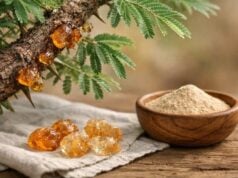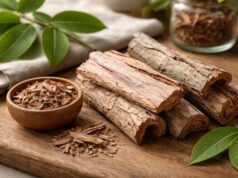
Alstonia (Alstonia scholaris)—often called devil tree, blackboard tree, or saptaparni—is an evergreen tree used in several traditional systems across South and Southeast Asia. In practice, people most often use the bark or leaves in formulas aimed at respiratory comfort, especially lingering cough, bronchial irritation, and seasonal breathing complaints. Modern research interest has grown because the plant contains a distinctive set of indole alkaloids and related compounds that may influence inflammation signaling, airway reactivity, and microbial balance.
Still, Alstonia is not a casual “daily wellness” herb. Its chemistry is active, products vary widely, and the safest decisions depend on the exact form (bark decoction vs. standardized alkaloid capsule vs. tincture), dose, and personal risk factors. This article walks through what Alstonia is, what’s inside it, where benefits are most plausible, how it’s used, what dosing looks like in real-world terms, and how to reduce avoidable side effects—while staying honest about what research can and cannot confirm.
Quick Safety and Use Snapshot
- Respiratory-focused Alstonia preparations may support cough comfort and airway inflammation balance in short-term use.
- Standardized leaf-alkaloid capsules in clinical safety research used 40–120 mg, three times daily for up to 7 days.
- Avoid combining high doses with sedating or heart-active medications unless a clinician approves.
- Avoid during pregnancy and breastfeeding, and avoid giving to children unless supervised by a qualified professional.
- People with liver disease, heart rhythm conditions, or complex medication regimens should avoid self-experimentation.
Table of Contents
- What is Alstonia scholaris?
- Key ingredients and medicinal properties
- Does Alstonia help with cough and breathing?
- Common uses and how to take it
- How much Alstonia per day?
- Side effects, interactions, and who should avoid it
- What the evidence actually says
What is Alstonia scholaris?
Alstonia scholaris is a tall evergreen tree in the Apocynaceae family. It’s native across parts of South Asia, Southeast Asia, and nearby regions, and it’s widely planted as an ornamental shade tree. If you’ve seen it, you may remember its whorled leaves (often arranged like spokes), clusters of small fragrant flowers, and milky latex—typical of many Apocynaceae plants.
In traditional medicine, Alstonia is best known for respiratory formulas and fever-support remedies, with the bark being the most historically used part. In some regions, leaves are used as well, and modern product development has focused heavily on leaf alkaloid fractions that can be standardized more consistently than raw bark.
Common names and why they matter
Names vary by region and system, and that’s not just trivia—it affects what you receive when you buy a product:
- Saptaparni (Ayurvedic tradition), “devil tree,” and “blackboard tree” are common English references.
- “Dita bark” may be used in older texts, and it can refer to bark-based preparations.
- Some products use “Alstonia” loosely, which risks confusion with other Alstonia species.
When safety is on the line, species identity and plant part matter. Bark and leaves can have overlapping chemistry, but the ratio of active compounds can differ, and the preparation style (decoction vs. extract) changes what your body is exposed to.
How Alstonia is typically positioned today
Modern interest clusters around three practical themes:
- Short-term respiratory support (cough, bronchial irritation, airway inflammation patterns).
- Antimicrobial and immune-modulating potential (mostly preclinical).
- Broad “tonic” claims (which are common in marketing but less clearly supported and harder to dose safely).
A useful mental model is to treat Alstonia as a targeted, short-duration herb—more like a focused intervention than a daily supplement.
Key ingredients and medicinal properties
Alstonia’s most distinctive compounds are monoterpenoid indole alkaloids—a class known for strong biological activity. The plant also contains supportive phytochemicals (triterpenes, phenolics, and others), but the alkaloids are the main reason dosing and safety need extra respect.
Key active compound groups
While exact profiles vary by plant part and extraction method, the most discussed constituents include:
- Indole alkaloids: Often described as the “signature” chemistry of A. scholaris. Examples frequently reported include echitamine and related alkaloids, along with other named alkaloids that appear in leaf and bark extracts. These compounds are the focus of several respiratory and safety studies.
- Triterpenoids and sterol-like compounds: These are common across many medicinal barks and may contribute to inflammation modulation and barrier-support effects, depending on the extract.
- Phenolic acids and flavonoid-like compounds: These may support antioxidant behavior and may help explain why some traditional uses emphasize “cooling” or irritation-soothing effects.
- Latex-associated components: The milky sap is not typically used as a wellness ingredient and can be irritating; it’s one reason handling fresh plant material deserves caution.
Why preparation changes what “Alstonia” means
A major source of confusion is assuming all Alstonia products behave the same. In reality:
- Bark decoctions (water-based, simmered) concentrate a different mix than alcohol or resin-rich extracts. Decoctions also vary widely in strength depending on time, heat, and bark quality.
- Alcohol extracts or tinctures can pull more alkaloids and resinous compounds, which may feel “stronger” and may raise side-effect risk in sensitive people.
- Standardized leaf-alkaloid capsules aim for consistent dosing by measuring a defined fraction rather than relying on raw plant variability.
How these compounds may translate to effects
From a mechanism standpoint, Alstonia’s chemistry is most often linked to:
- Inflammation signaling modulation (a plausible fit for irritated airways and certain inflammatory patterns)
- Immune response “rebalancing” (a broad category that can be helpful or unhelpful depending on context)
- Antimicrobial activity against certain bacteria and viruses in experimental settings
A careful takeaway: Alstonia’s compounds are active enough to justify scientific interest, but that same potency is why product quality and dose discipline are central to safe use.
Does Alstonia help with cough and breathing?
Alstonia is most commonly searched for respiratory reasons—cough, bronchitis, “chest tightness,” post-infectious throat irritation, and sometimes asthma-related discomfort. The most reasonable way to frame it is: Alstonia may help some people by supporting a calmer inflammatory environment in the airways and by influencing immune signaling that can drive mucus, irritation, and hyperreactivity.
Most plausible benefit areas
Based on traditional use patterns and modern research direction, the most plausible applications include:
- Acute bronchial irritation with cough and thick mucus, especially when symptoms linger after a viral illness
- Post-infectious cough patterns where inflammation remains after the main infection has passed
- Allergy-linked airway reactivity (the evidence here is mainly preclinical; it is not a substitute for standard asthma care)
It’s also common to see Alstonia positioned as “immune support.” That can be meaningful—but vague. Immune support is most useful when it’s tied to a specific, time-limited goal (for example, helping the body resolve airway inflammation after an illness), rather than taken indefinitely.
If your primary goal is short-term immune and respiratory support, it can help to compare approaches used for other well-known herbs in that category, such as immune-focused andrographis protocols, which are also typically framed as short-duration interventions rather than daily tonics.
What “working” usually looks like
When Alstonia is a good fit, people typically report improvements such as:
- Less frequent coughing fits, especially at night
- Reduced throat “tickle” and irritation
- Easier mucus clearance and less chest tightness
- A steadier return to baseline breathing over several days
A realistic timeline is 2–7 days for noticeable shifts in comfort when the underlying issue is mild-to-moderate irritation and not a progressing infection.
When Alstonia is not the right tool
Avoid relying on Alstonia alone if any of the following are present:
- Wheezing or shortness of breath that is new, severe, or worsening
- High fever, chest pain, blue lips, or confusion
- Cough with blood, or a cough lasting more than 3–4 weeks without evaluation
- Known asthma with increased rescue-inhaler use, nighttime awakening, or reduced peak flow
In these cases, Alstonia may be discussed as a complementary option later, but it should not delay appropriate medical assessment.
Common uses and how to take it
People use Alstonia in several forms, and choosing the right form is often more important than choosing the “strongest” form. The safest starting point is the form that allows clear dosing, short duration, and easy discontinuation if you react poorly.
Common forms you may see
- Bark decoction (tea made by simmering): Traditional in many systems; strength varies widely.
- Bark powder in capsules: Convenient but still variable; sometimes harder on the stomach.
- Leaf extracts: Often marketed for respiratory comfort; quality depends on standardization.
- Standardized leaf-alkaloid capsules: Designed for dose consistency; often used in research contexts.
- Combination formulas: Alstonia is frequently paired with other respiratory herbs.
Practical use cases
Most real-world use falls into a few patterns:
- Short course for lingering cough: A time-limited trial (several days) with careful monitoring.
- Seasonal respiratory support: Used intermittently rather than continuously.
- Formula component: Included as one ingredient among demulcents, expectorants, or soothing botanicals.
Because breathing issues can have many causes (infection, allergy, reflux, smoke exposure), a “one herb fixes all” approach usually disappoints. A more useful strategy is matching the method to the symptom pattern—steam for congestion, soothing agents for rawness, and targeted botanicals for inflammatory cough.
For example, if congestion and sinus pressure are prominent, many people pair their routine with steam inhalation approaches like those described in eucalyptus respiratory applications. This is not the same as “stacking herbs”; it’s simply using different tools for different mechanisms—airway moisture and clearance vs. immune signaling and inflammation.
Quality and sourcing tips that reduce risk
Because Alstonia products can vary, these checkpoints matter:
- Look for species and plant part on the label (Alstonia scholaris, leaf vs. bark).
- Prefer standardized extracts when possible, especially if you want reproducible dosing.
- Avoid multi-stimulant blends (especially with high caffeine or strong essential oils) if you are cough-prone or anxious.
- Choose short-duration protocols unless a clinician is monitoring you.
Alstonia is best used like a focused, reversible experiment: small dose, short timeline, and a clear “stop” rule if symptoms worsen.
How much Alstonia per day?
Dosing is the hardest part of Alstonia, because “Alstonia” can mean very different products. The most responsible way to discuss dose is by form, starting with standardized options that have clearer safety data.
Standardized leaf-alkaloid capsules
In clinical safety research on a standardized leaf-alkaloid capsule, the dosing structure included:
- Multiple-dose use: 40–120 mg, three times daily for up to 7 days
- Single-dose escalation: A wider range was tested in single-dose cohorts, but short-term repeated dosing is the more practical reference point for everyday decision-making.
If you are using a standardized capsule, use the manufacturer’s labeled amount as your primary guide, and treat the clinical ranges above as context—not as a reason to exceed a label.
Bark decoction or bark powder
Bark-based preparations are traditional, but they are more variable. Without standardization, the same “grams of bark” can yield very different alkaloid exposure depending on:
- Bark age and storage conditions
- How long it is simmered and how much water is reduced
- Whether it’s combined with other herbs that change extraction
- Your own body size, liver clearance, and sensitivity
For that reason, bark decoctions are best approached with a qualified herbal clinician who can tailor dose, duration, and monitoring—especially if you have asthma, heart rhythm concerns, or take prescription medications.
Timing, duration, and “stop rules”
For respiratory comfort use, a conservative framework is:
- Timing: With food if stomach-sensitive; earlier in the day if you notice vivid dreams or sedation.
- Duration: Aim for 3–7 days, reassessing daily.
- Stop rules: Stop if you develop rash, severe stomach pain, dizziness, palpitations, worsening wheeze, or new swelling.
Common dosing mistakes
- Taking multiple Alstonia products at once (bark tea plus extract plus capsule).
- Using it continuously “to prevent illness,” which raises cumulative exposure without clear added benefit.
- Treating a worsening infection or uncontrolled asthma as an herbal-only problem.
The safest dose is the smallest dose that helps, used for the shortest time that makes sense.
Side effects, interactions, and who should avoid it
Alstonia is often tolerated in short courses, but side effects do occur—especially with stronger extracts, higher doses, or long duration use. Because many people try Alstonia during respiratory illness (when they are already dehydrated, fatigued, or using other medicines), it’s important to separate herb effects from illness effects.
Possible side effects
Commonly reported or biologically plausible side effects include:
- Stomach upset: nausea, cramping, loose stools, or appetite changes
- Dry mouth or throat sensations (sometimes mistaken for “it’s working”)
- Drowsiness or unusual sleepiness in some individuals
- Dizziness or lightheadedness, especially if you’re not eating well
- Allergic reactions: rash, itching, facial swelling, or breathing changes (stop immediately)
If you experience palpitations, chest tightness beyond your baseline, or significant shortness of breath, stop and seek medical advice.
Potential interactions
Interaction data in humans is limited, but caution is warranted when combining Alstonia with:
- Sedatives and sleep aids (additive drowsiness)
- Heart rhythm and blood pressure medications (because alkaloids can be biologically active)
- Asthma medications (not because “they conflict,” but because worsening asthma should never be masked)
- Multi-herb cough formulas that already contain strong actives
People sometimes combine Alstonia with soothing cough botanicals such as licorice. That pairing may feel helpful, but licorice has its own risk profile (notably blood pressure and fluid balance concerns in susceptible individuals). If you want a clearer picture of that ingredient before combining, review licorice safety considerations and active compounds and keep your overall formula simple.
Who should avoid Alstonia unless supervised
- Pregnancy and breastfeeding: Avoid due to limited safety data and higher stakes.
- Children: Avoid unless supervised by a qualified clinician experienced with pediatric dosing.
- Liver disease or heavy alcohol use: Avoid self-dosing; alkaloid metabolism can be unpredictable.
- Heart rhythm disorders or unexplained palpitations: Avoid self-experimentation.
- Complex medication regimens: Especially those involving psychiatric meds, cardiac meds, or narrow-therapeutic-index drugs.
A practical safety rule: if you cannot clearly describe your Alstonia product (species, plant part, standardized amount), it’s safer not to use it.
What the evidence actually says
Alstonia sits in a familiar place for traditional herbs: strong historical use, promising modern mechanisms, and an evidence base that is growing but uneven. The most credible research direction is respiratory-focused, especially around standardized leaf alkaloid preparations. Beyond that, many benefits remain preclinical or based on indirect evidence.
Where evidence is strongest
Two areas stand out:
- Human safety data for a standardized leaf-alkaloid capsule: A controlled clinical safety study in healthy volunteers provides useful dose and tolerability context, including short-term repeated dosing.
- Respiratory mechanism studies in animal models: Research using asthma-like airway inflammation models suggests alkaloid fractions can reduce inflammatory markers, mucus changes, and airway hyperreactivity patterns—useful for hypothesis-building.
These findings support why Alstonia is being studied for bronchitis-like conditions and post-infectious cough patterns. However, animal-model success does not guarantee the same magnitude of effect in humans with diverse triggers (infection, allergy, pollution, reflux).
Antimicrobial and antiviral findings
Laboratory studies suggest Alstonia extracts can inhibit certain microbes under experimental conditions, including respiratory-relevant targets. This is one reason Alstonia is sometimes framed as “anti-infective.” The careful interpretation is that antimicrobial activity may help explain traditional respiratory use, but it does not mean Alstonia can replace medical evaluation for pneumonia, influenza complications, or bacterial sinus infections.
Other claimed benefits: promising, but less certain
You’ll also see claims related to metabolism, liver support, fever, and inflammation in other tissues. Some studies examine these areas, but they often involve:
- purified fractions rather than typical consumer products
- doses that do not translate cleanly to real-world use
- short timeframes that do not address long-term safety
If your primary interest is liver support, for example, it’s usually more practical to start with ingredients that have more established human evidence and standardized dosing traditions—such as those discussed in milk thistle liver-support strategies—rather than using Alstonia as a first-line choice.
What this means for your decision
A grounded, evidence-aligned approach is:
- Prefer short-term, clearly labeled products
- Use Alstonia for focused respiratory goals, not broad daily wellness
- Treat it as complementary to medical care, especially for asthma
- Stop early if your response is negative or unclear
In short: Alstonia is credible enough to be studied seriously, but not proven enough to justify casual or indefinite use—especially in high-risk groups.
References
- The safety and tolerability of alkaloids from Alstonia scholaris leaves in healthy Chinese volunteers: a single-centre, randomized, double-blind, placebo-controlled phase I clinical trial 2021 (Clinical Trial)
- Anti-microbial Effects In Vitro and In Vivo of Alstonia scholaris 2021 (Study)
- Indole alkaloids of Alstonia scholaris (L.) R. Br. alleviated nonalcoholic fatty liver disease in mice fed with high-fat diet 2022 (Study)
- Effects of total alkaloids from Alstonia scholaris (L.) R. Br. on ovalbumin-induced asthma mice 2024 (Study)
Disclaimer
This article is for educational purposes only and does not provide medical advice. Herbal products can vary widely in identity, potency, and purity, and bioactive plant alkaloids may cause side effects or interact with medications. Do not use Alstonia as a substitute for professional diagnosis or treatment—especially for asthma, severe or worsening shortness of breath, high fever, chest pain, or suspected pneumonia. If you are pregnant, breastfeeding, have liver or heart conditions, or take prescription medications, consult a qualified clinician before using Alstonia or any concentrated herbal extract.
If this guide was helpful, please consider sharing it on Facebook, X (formerly Twitter), or your preferred platform to help others make safer, more informed choices.