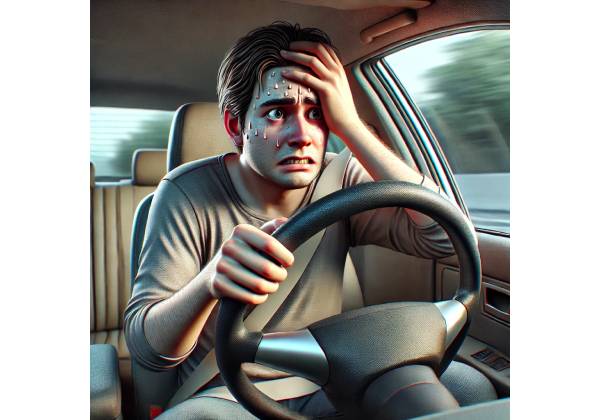
Amaxophobia is an intense fear of driving, riding in a car, or being responsible for a vehicle in motion. Many people feel nervous in heavy traffic, bad weather, or after a near miss. A phobia is different. The fear is stronger, more persistent, and more disruptive than the situation alone would explain. It can turn routine trips into ordeals, lead to strict avoidance, and slowly reduce a person’s independence, work options, and social life.
For some people, the fear begins after a crash or a panic episode behind the wheel. For others, it grows gradually through stress, loss of confidence, or repeated avoidance. This article explains what amaxophobia is, how it is recognized, why it develops, how clinicians diagnose it, and what treatment usually helps. It also covers practical management and safe steps toward recovery.
Table of Contents
- What Amaxophobia Is
- Signs and Symptoms
- Causes and Risk Factors
- How Diagnosis Works
- Effects on Daily Life
- Treatment and Driving Recovery
- Management and When to Seek Help
What Amaxophobia Is
Amaxophobia is the persistent and excessive fear of driving or being in a vehicle. In everyday use, it usually refers to fear of driving a car, though some people also use the term for fear of riding as a passenger. The fear can focus on several different concerns: losing control of the vehicle, causing a crash, being trapped in traffic, making a mistake under pressure, fainting or panicking while driving, or being unable to escape if anxiety surges on the road.
Clinically, amaxophobia is often understood within the broader category of specific phobia, although it can overlap with panic disorder, trauma-related symptoms, or generalized anxiety. That overlap is important. Two people may both say, “I am afraid to drive,” but the underlying pattern may be very different. One may fear highways after a collision. Another may fear bridges, tunnels, left turns, or merging. A third may mainly fear the bodily sensation of panic and avoid driving because it feels like a place where panic would be dangerous or humiliating.
This is what makes amaxophobia more than ordinary caution. Careful driving is adaptive. Feeling tense in a storm, on black ice, or in a truly risky traffic situation is a normal response. A phobia is different because the fear becomes disproportionate, sticky, and life-limiting. It may appear even on familiar roads, in broad daylight, during short local trips, or at the mere thought of taking the wheel.
People with amaxophobia often create a system of workarounds that hides how much the fear has grown. They may only drive one route, only drive in the slow lane, never drive at night, refuse highways, depend on family for transport, or plan life around avoiding unfamiliar roads. These strategies can look practical from the outside, but they often strengthen the fear by teaching the brain that driving is unsafe unless strict rules are followed.
The condition may begin suddenly or build gradually. A person can go from full independence to limited mobility after one frightening event, or may slowly narrow their driving over months or years until whole parts of life become difficult. In both cases, the pattern tends to be self-reinforcing: fear leads to avoidance, avoidance brings relief, and relief teaches the nervous system to fear driving even more.
The encouraging fact is that amaxophobia is treatable. Many people regain confidence, flexibility, and mobility when the fear is approached in a structured way rather than organized around escape.
Signs and Symptoms
The symptoms of amaxophobia usually involve emotional distress, physical anxiety, and avoidance behavior. Some people feel fear only when driving. Others become anxious long before a trip starts, sometimes as soon as they hear that they will need to drive later that day. In more severe cases, even seeing traffic, thinking about highways, or sitting in the driver’s seat can trigger symptoms.
Common emotional and mental symptoms include:
- intense fear before or during driving
- dread of highways, bridges, tunnels, roundabouts, or busy intersections
- fear of causing harm to oneself or others
- racing thoughts about crashing, freezing, or losing control
- strong self-doubt about driving skill
- embarrassment about depending on other people for transport
Physical symptoms can closely resemble panic. These may include:
- rapid heartbeat
- shaking
- sweating
- shortness of breath
- dizziness
- nausea
- chest tightness
- tingling
- blurred focus
- a sense of unreality or impending disaster
What often makes amaxophobia especially disruptive is the setting in which the symptoms occur. A panic surge in a living room is distressing. A panic surge while merging into traffic can feel dangerous in a much more immediate way. Because of that, people may begin to fear the anxiety itself as much as the road.
Behavioral signs are often the clearest clue that the problem has moved beyond routine nervousness. A person may:
- avoid driving entirely
- drive only with another person in the car
- refuse highways, city centers, bridges, or night driving
- take very long alternative routes to avoid fast roads
- cancel work, school, appointments, or social plans
- repeatedly check routes, weather, and traffic for reassurance
- insist on sitting as a passenger even for short familiar trips
Some people still drive, but only under very narrow conditions. They may tell themselves they are merely “selective” drivers, while daily life becomes increasingly restricted. Others stop driving after one frightening event and do not resume for months or years.
Symptoms in children and adolescents can look different. A teen learning to drive may show unusual panic, refusal, tears, or repeated excuses to delay lessons. In adults, the fear is often masked by logistical explanations such as cost, convenience, or preference, even when anxiety is the real driver.
The most important distinction is impairment. Feeling uneasy in bad traffic is common. Amaxophobia becomes more clinically significant when fear repeatedly interferes with work, caregiving, health appointments, travel, education, or ordinary independence. When a person’s map of daily life starts shrinking around the fear, the problem deserves serious attention.
Causes and Risk Factors
Amaxophobia usually develops through a combination of learning, stress, and individual vulnerability rather than one single cause. In some people, the starting point is obvious. In others, the fear emerges slowly and is harder to trace. What matters most is not finding one perfect explanation, but understanding the pattern that taught the brain to treat driving as a threat.
A common trigger is a motor vehicle crash or near miss. Even a relatively minor collision can leave a strong emotional imprint, especially if the person felt trapped, helpless, or responsible. The nervous system may begin to associate traffic, speed, lane changes, or intersections with danger long after the physical event is over. Some people notice the fear right away. Others resume driving for a while and then develop symptoms later.
Driving fear can also arise without a crash. A panic attack behind the wheel is another common pathway. After one episode of dizziness, racing heart, trembling, or shortness of breath on the road, the person may begin to fear that the same thing will happen again. The road then becomes linked not only with traffic risk, but with the fear of one’s own body.
Other contributing factors may include:
- a history of anxiety, panic, or other phobias
- strong sensitivity to bodily sensations
- perfectionism or fear of making mistakes
- low confidence after a long break from driving
- learning from anxious family members
- stressful life periods that reduce coping capacity
- prior trauma, especially trauma involving lack of control
Some people develop amaxophobia after a long period without driving. Moving to a busy city, returning to driving after illness, starting again after years of relying on public transport, or switching from quiet local roads to fast highways can all expose a gap between old skill and current confidence. That gap may be manageable for some, but deeply unsettling for others.
There is also a practical feedback loop that keeps the fear going. Avoidance reduces anxiety quickly. That relief feels useful and justified. But it also prevents corrective learning. The brain never gets the chance to discover that many feared trips can be completed safely and that anxiety can peak and subside without catastrophe. Over time, the avoidance itself becomes one of the strongest maintaining factors.
Risk tends to increase when the feared situation is easy to avoid. Unlike some phobias, driving can often be outsourced for a while through family help, ride services, or remote work. That can be useful in the short term, but it may also allow the fear to deepen quietly.
Not every case of amaxophobia is identical. For one person, the fear centers on crashes. For another, it centers on panic, embarrassment, dissociation, or being trapped in a car. Treatment works best when these differences are understood clearly instead of being flattened into a single generic label.
How Diagnosis Works
Amaxophobia is diagnosed through a clinical assessment rather than a scan, lab test, or driving exam alone. A qualified clinician usually begins by asking how the fear started, which driving situations are most difficult, how the person responds physically and emotionally, and how much daily life has changed as a result. The goal is not only to decide whether a phobia is present, but to understand the exact form it takes.
A careful assessment often covers:
- the main trigger situations, such as highways, bridges, tunnels, traffic lights, rain, night driving, or driving alone
- whether the fear began after a crash, panic attack, illness, or a gradual loss of confidence
- what the person expects will happen, such as crashing, freezing, fainting, dissociating, or humiliating themselves
- the level of avoidance and how much life has narrowed around it
- whether there are trauma symptoms, panic symptoms, depression, or broader anxiety problems
- which safety behaviors are used, such as overchecking routes, gripping the wheel rigidly, avoiding certain lanes, or relying on a companion
Clinicians usually look for a persistent and disproportionate fear linked to a defined situation, along with distress, avoidance, or significant interference. The person often recognizes that the response is stronger than the real danger, but that insight does not make the fear disappear. In fact, many people with amaxophobia are painfully aware that their response feels irrational and still feel unable to change it.
Diagnosis also requires distinguishing amaxophobia from related conditions. That matters because treatment may need to be adjusted depending on the main driver of symptoms.
Questions often include whether the problem is more consistent with:
- specific phobia
- panic disorder with avoidance of driving
- post-traumatic stress symptoms after a crash
- agoraphobic avoidance
- health-related fears about fainting, seizures, or sudden illness
- depression with reduced motivation and confidence
- real cognitive or visual problems that affect road safety
A clinician may recommend medical review if symptoms like fainting, blackouts, severe vertigo, or sudden sensory changes raise concern about a physical cause. In many cases, however, the problem is psychological rather than neurological, even though it feels powerfully physical in the moment.
Some assessments also include standardized questionnaires for anxiety, panic, trauma, or functional impairment. These tools can help track severity and progress, but they do not replace the detailed interview. The most useful information often comes from concrete examples: what happened during the last attempted drive, why a bridge feels impossible, or which route still feels barely manageable.
A good diagnosis does more than name the problem. It becomes the treatment map. It shows which thoughts, bodily sensations, and habits are keeping the fear in place and which parts of driving recovery need the most support.
Effects on Daily Life
Amaxophobia can affect far more than transportation. Driving is tied to work, school, health care, parenting, errands, social life, and personal freedom. When fear begins deciding where a person can go and under what conditions, the impact spreads quickly across everyday functioning.
Work is often one of the first areas affected. A person may turn down shifts, avoid job opportunities, refuse business travel, or depend on long and tiring alternate routes to keep anxiety down. Even when they still arrive where they need to go, the mental effort may be heavy. An ordinary commute can consume hours of anticipatory worry and leave the person drained before the day begins.
Common daily-life consequences include:
- missed appointments and delayed care
- reduced job options
- social withdrawal
- overdependence on family or partners
- difficulty transporting children
- avoidance of unfamiliar places
- shrinking independence over time
The fear often creates hidden costs. Someone may spend much more on taxis or delivery services, or turn simple tasks into complicated plans built around rides from others. Family members may step in generously at first, but over time the arrangement can create strain, resentment, or guilt. The person with the phobia may feel ashamed, burdensome, or frustrated by how much planning is required for ordinary life.
Amaxophobia can also change self-image. Driving is often connected with adulthood, competence, and autonomy. When that ability becomes restricted by fear, people may begin to doubt themselves more broadly. They can feel fragile, stuck, or unlike the person they used to be. This loss of confidence can then spill into work, relationships, and general decision-making.
Another complication is generalization. The fear may begin with one narrow trigger and expand. A person who first avoids highways may later avoid bridges, then city traffic, then short local drives, then even being a passenger. The brain learns not only that the original situation is dangerous, but that uncertainty itself should be avoided.
This pattern can be especially painful after a crash. The person may already be recovering from physical injury, stress, or legal and financial consequences. Driving fear then adds another layer by limiting mobility and prolonging dependence.
The fear can also affect mental health more broadly. Persistent avoidance may contribute to isolation, low mood, irritability, sleep problems, and constant anticipation of the next transportation challenge. Some people start using alcohol, sedatives, or excessive reassurance to cope, which can introduce further problems.
Despite this, the outlook is often better than it feels from inside the fear. Once treatment begins and avoidance starts to loosen, people frequently recover confidence faster than they expected. Even small gains, such as one short independent drive, can have outsized emotional value because they reopen parts of life that had quietly closed.
Treatment and Driving Recovery
The most effective treatment for amaxophobia is usually cognitive behavioral therapy with exposure-based work. This approach is designed to change the fear cycle directly. It helps the person understand how anxiety is being maintained, test catastrophic beliefs, and gradually relearn that driving can be tolerated safely. Treatment is not about forcing someone onto a highway on day one. It is about building skill and confidence in a staged, realistic way.
A typical treatment plan may include:
- education about anxiety, phobias, and avoidance
- identifying the exact situations that trigger fear
- building a fear ladder from easier drives to harder ones
- practicing gradual exposure instead of escape
- reducing safety behaviors that keep the fear alive
- reviewing progress and refining the plan after each step
Exposure is the core of treatment. That may begin with sitting in the parked car, then driving around a block, then short familiar routes, then slightly busier roads, and later more difficult settings such as highways, bridges, or night driving. The sequence depends on the individual. What matters is repetition. The brain changes through direct experience, not reassurance alone.
Cognitive work is also important. Many people with amaxophobia overestimate danger and underestimate coping ability. Therapy helps challenge thoughts such as:
- “If I feel panic, I will lose control of the car.”
- “If I make one mistake, something terrible will happen.”
- “I cannot handle being trapped in traffic.”
- “Because I felt afraid once, I am no longer a safe driver.”
The goal is not blind positive thinking. It is more accurate thinking paired with practice.
If the fear followed a crash or carries trauma-related features, treatment may also include trauma-focused elements. If panic is central, therapy may address fear of bodily sensations directly. In some cases, driving simulators or virtual reality tools can support practice, especially when real-world exposure feels too abrupt at the start. Still, real driving practice in safe, planned conditions is usually essential for full recovery.
Medication is not usually the main treatment for a specific driving phobia. It may be considered when symptoms overlap with broader anxiety, panic, depression, or trauma. Even then, medication alone does not usually rebuild confidence behind the wheel. Also, any medicine that causes sedation or slowed reaction time raises obvious driving concerns and should be reviewed carefully with a clinician.
Recovery often happens in layers. First comes reduced dread, then greater tolerance, then flexibility, then confidence. The aim is not to love every road condition. It is to make driving a manageable activity again rather than a fear-organized part of life.
Management and When to Seek Help
Self-management can support recovery, but it works best when it reduces avoidance rather than disguises it. The guiding question is not, “How do I make sure I never feel anxious while driving?” It is, “How do I respond to driving anxiety in a way that helps it weaken over time?”
Helpful day-to-day strategies include:
- keeping a consistent sleep schedule so fatigue does not magnify anxiety
- limiting caffeine if it noticeably increases panic symptoms
- practicing slow, steady breathing before starting the car
- choosing one small driving goal at a time
- repeating successful routes until they feel less charged
- writing down feared predictions and comparing them with what actually happened
- reducing excessive route checking and reassurance seeking
A practical fear ladder might look like this:
- sit in the driver’s seat with the engine off
- drive in an empty parking lot
- take a five-minute local route in daylight
- repeat the same route without a support person
- add one moderately busier road
- drive at a slightly busier time of day
- practice the most feared route in stages
Progress is often better when steps are small enough to repeat regularly. Waiting to feel fully fearless before trying again tends to prolong the problem. Confidence usually grows after practice, not before it.
Support from family can help, but only if it is balanced. Helpful support includes calm encouragement, realistic planning, and praise for effort. Less helpful patterns include doing all the driving forever, giving repeated reassurance that the person is definitely safe, or pushing too hard too fast. Both overprotection and pressure can keep the fear active.
Professional help is worth seeking when amaxophobia:
- limits work, school, parenting, or health care
- leads to panic attacks while driving
- follows a crash and does not improve
- keeps expanding to more roads or situations
- has lasted for months
- creates major dependence on others
- occurs alongside depression, trauma symptoms, or substance use
Urgent evaluation is important if symptoms include true blackouts, severe disorientation, self-harm thoughts, or unsafe attempts to drive while highly distressed or sedated.
The outlook is generally favorable when treatment is consistent. Many people improve substantially, even after years of avoidance. Recovery does not always mean instant return to every driving situation. It often means regaining enough range, confidence, and choice that fear no longer controls mobility. That shift can restore work access, relationships, spontaneity, and a sense of self that had been narrowed by the phobia.
References
- Specific Phobia – National Institute of Mental Health (NIMH) current official page. ([National Institute of Mental Health][1])
- Anxiety Disorders in Children and Adolescents 2022 (Review). ([PubMed][2])
- Psychological therapy using virtual reality for treatment of driving phobia: a systematic review 2023 (Systematic Review). ([PubMed][3])
- Driving anxiety and anxiolytics while driving: Their impacts on behaviour and cognition behind the wheel 2023 (Review). ([PubMed][4])
- Cognitive Behavior Therapy for Mental Disorders in Adults: A Unified Series of Meta-Analyses 2025 (Meta-Analyses). ([PubMed][5])
Disclaimer
This article is for educational purposes only and does not replace assessment, diagnosis, or treatment by a qualified medical or mental health professional. Fear of driving can occur as a specific phobia, but it may also overlap with panic, trauma-related symptoms, or medical conditions that affect safe driving. If symptoms are persistent, worsening, or interfering with daily life, seek professional evaluation.
If this article helped you, please consider sharing it on Facebook, X, or another platform you prefer.