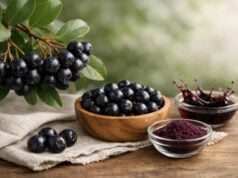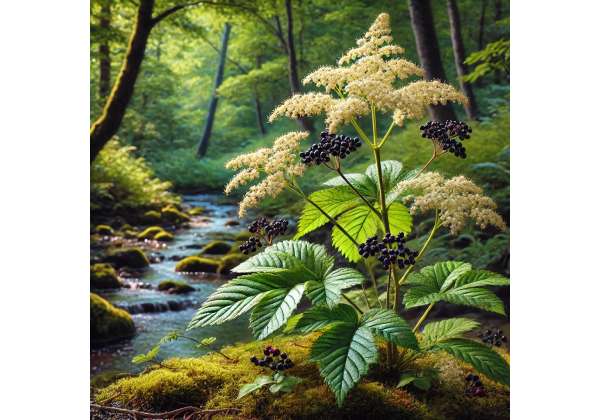
American elder—often called American elderberry—is a flowering shrub best known for its deep purple berries and delicate white blossoms. In traditional North American herbalism, the cooked berries were valued for seasonal respiratory comfort, while the flowers were used in gentle teas and washes. Today, American elder appears most often as syrups, gummies, capsules, lozenges, and juices marketed for immune support during cold and flu season. Its popularity makes sense: elderberries are rich in anthocyanins and other polyphenols that can support the body’s antioxidant defenses, and early clinical research suggests some products may modestly reduce the duration or intensity of upper respiratory symptoms when taken early. Still, the evidence is mixed, and product quality varies widely.
The most important practical point is also the most overlooked: raw or unripe berries, leaves, and stems contain cyanide-producing compounds and should not be consumed. This guide explains what American elder is, what’s inside it, what it may realistically help with, how to use it well, and how to dose it safely.
Key Takeaways
- When started early, some elderberry extracts may modestly reduce cold and flu symptom duration or severity in certain people.
- Do not consume raw or unripe berries, leaves, or stems; improper preparation can cause nausea, vomiting, and severe diarrhea.
- Typical adult dosing ranges from 300–600 mg extract 1–2 times daily or 10–15 mL syrup 2–4 times daily, depending on the product.
- People who are pregnant, breastfeeding, immunosuppressed, or living with autoimmune disease should consult a clinician before use.
Table of Contents
- What is American elder?
- Active compounds and actions
- Does it help colds and flu?
- Other potential health benefits
- How to use elderberry safely
- How much per day?
- Side effects, interactions, and evidence
What is American elder?
American elder (Sambucus canadensis) is a species of elder native to much of North America. In scientific literature and product labeling, you may also see it described as a subspecies of European black elder (Sambucus nigra subsp. canadensis). That naming overlap matters because many clinical studies and commercial extracts are based on Sambucus nigra, not strictly Sambucus canadensis. The plants are closely related and share a similar “elderberry” chemical profile, but they are not identical. If you are choosing a product for a specific reason (like a studied syrup), it helps to confirm the species and the type of extract used.
Which parts are used?
- Berries (fruit): used as syrups, capsules, gummies, juices, and lozenges—almost always from cooked or processed fruit.
- Flowers (elderflower): used in teas, rinses, and traditional topical preparations; generally milder and more aromatic than the fruit.
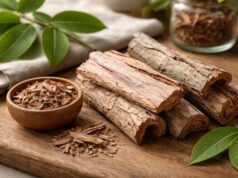
- Leaves, stems, bark, and roots: not used in modern self-care because they contain higher levels of irritating compounds and cyanide-producing glycosides.
Why preparation is non-negotiable
Raw elderberries and other parts of the plant contain cyanogenic glycosides that can release cyanide in the gut. Proper cooking and industrial processing reduce these compounds substantially. The risk is highest with:
- Unripe berries
- Homemade preparations that include stems or leaves
- Cold-processed “raw” berry blends
- Large quantities of freshly crushed berries taken immediately
In practical terms, American elder is best treated like a food-medicine crossover: the berries are safe when properly cooked or standardized, and potentially harmful when “wildcrafted” casually or consumed raw.
What people usually expect from it
Most readers come to American elder with one of three intents:
- Immune support during cold and flu season
- Faster recovery when symptoms begin
- A polyphenol-rich antioxidant supplement (often as a daily gummy or capsule)
This article is designed around those real-world goals, while also clarifying the limits: elderberry is not a substitute for vaccination, medical evaluation, or appropriate antiviral care when needed.
Active compounds and actions
American elderberries are best known for their dark pigments—anthocyanins—which are part of a broader family of polyphenols. These compounds do not act like a single “drug-like” molecule with one target. Instead, they tend to influence physiology in layered ways: supporting antioxidant defenses, interacting with inflammatory signaling, and in some cases showing antiviral activity in lab models.
Anthocyanins (signature polyphenols)
Anthocyanins give elderberries their deep purple color and are often used as a quality marker in commercial extracts. In the body, anthocyanins and their metabolites can help:
- Support the body’s antioxidant network (including recycling of other antioxidants)
- Influence vascular and endothelial function in subtle ways
- Modulate inflammatory signaling pathways (effects can vary by dose and context)
Because anthocyanin-rich foods can have similar “antioxidant plus signaling” profiles, elderberry is often compared to other dark berries. For a broader antioxidant context, see blueberry extract benefits, dosing, and safety.
Flavonols and phenolic acids
Elderberries also contain flavonols (including quercetin-related compounds) and phenolic acids. These may contribute to overall antioxidant activity and to the way extracts influence inflammatory mediators. If you are curious about quercetin specifically—because many immune blends pair it with elderberry—this quercetin dosing guide can help you compare goals, dosing ranges, and precautions.
Pectins and polysaccharides
Beyond polyphenols, elderberries contain fibers and pectins that can influence texture (especially in syrups and gummies). Some products also include polysaccharide-rich fractions that may contribute to immune signaling in early-stage research. These effects are less predictable than the well-characterized polyphenols.
Potential antiviral mechanisms (mostly preclinical)
In test-tube and cell studies, certain elderberry extracts may:
- Interfere with viral attachment or entry for some respiratory viruses
- Influence cytokine production (sometimes increasing certain markers in vitro, sometimes decreasing them depending on preparation)
- Affect pathways related to inflammation and oxidative stress
A key nuance: preclinical “antiviral” findings do not guarantee clinical effectiveness. The human outcome depends on dose, timing, and whether an extract delivers active compounds in a consistent way.
The safety chemistry: cyanogenic glycosides
The same plant family chemistry that supports defense in the wild can be unpleasant for humans when raw. Cyanogenic glycosides are a core reason to avoid raw berries, leaves, and stems. High-quality processing and cooking are designed to lower this risk.
If you remember only one thing from the chemistry: the benefits are associated mainly with processed fruit polyphenols, while the avoidable risks are associated mainly with raw plant parts and poor preparation.
Does it help colds and flu?
This is the headline question for most people, and the most honest answer is: sometimes, modestly, and not consistently. The best clinical signal for elderberry is not “prevents illness,” but rather “may shorten or soften symptoms” when taken early—often within the first 24–48 hours of onset.
What benefits are most plausible
Based on clinical trials and systematic reviews, potential outcomes include:
- Slightly shorter duration of cold or flu-like symptoms in some studies
- Reduced symptom severity scores (congestion, cough frequency, sore throat discomfort)
- Faster return to usual function for a subset of users
These outcomes are not guaranteed, and they appear most dependent on timing and extract type. Many people take elderberry after they have been sick for several days; by that point, any antiviral or immune-modulating effect is less likely to matter.
Why results vary
Elderberry research has several built-in challenges:
- Products differ (syrup vs capsule, standardized extract vs whole fruit, mixed-ingredient formulas)
- Studies use different outcomes and scoring tools
- Some trials combine elderberry with other ingredients, making it hard to attribute effects
- Some studies enroll people with influenza-like illness, while others focus on common cold patterns
How to use it for best odds
If you choose to try elderberry for an acute respiratory illness, a practical strategy is:
- Start at the first clear sign of symptoms.
- Use a product with a defined serving size and consistent dosing directions.
- Continue for a short window (often 3–7 days) rather than indefinitely.
- Stop early if it causes GI upset or if symptoms worsen.
What elderberry should not replace
- Fever management and hydration strategies
- Clinically appropriate antivirals when indicated
- Evaluation for severe symptoms (shortness of breath, chest pain, dehydration, confusion)
- Vaccination and infection-control basics
How it compares to other “immune season” herbs
Some people rotate or combine immune-support strategies. If your goal is broad seasonal respiratory support rather than a berry-based extract, echinacea benefits and uses is a common comparison point. The two are not interchangeable: echinacea is often used for immune signaling and sore throat patterns, while elderberry is more commonly used for symptom reduction early in an illness.
Bottom line: elderberry is best viewed as a reasonable short-term add-on for early symptoms, not a stand-alone solution or a prevention guarantee.
Other potential health benefits
While colds and flu dominate the conversation, American elder also draws interest for broader “antioxidant and inflammation” support. Here, the evidence is newer, more varied, and often less directly applicable to everyday decisions—but it can still guide realistic expectations.
1) Antioxidant and vascular support
Elderberry polyphenols may support endothelial function and oxidative balance, which is one reason elderberry appears in “heart and circulation” blends. In real life, this typically translates to:
- A nutrient-dense polyphenol supplement option for people who do not regularly eat berries
- A supportive addition to lifestyle changes (diet, movement) rather than a replacement
- Benefits that are likely subtle and gradual, if present
If your primary goal is cardiovascular risk reduction, elderberry should not be your first lever. Diet quality, sleep, blood pressure control, and clinically appropriate medications have far stronger evidence.
2) Inflammation signaling
Some studies explore how elderberry influences inflammatory markers. The direction of effect can depend on the extract and the person. This matters because consumers sometimes worry that elderberry “overstimulates” immunity. Current human evidence has not clearly confirmed dangerous immune overstimulation in healthy people at typical supplemental doses, but it also does not prove universal safety in every population.
3) Cognitive aging and metabolic research (early but interesting)
A recent small clinical trial used American elderberry juice daily in older adults with mild cognitive impairment and found it feasible and well tolerated, with preliminary signals suggesting potential benefits in select cognitive tasks and low-grade inflammation markers. That is promising, but it is not yet strong enough to justify elderberry as a cognitive intervention. Think of this area as “emerging,” not “established.”
4) Skin and topical traditions
Historically, elderflower preparations were used in gentle washes and compresses. Modern skincare sometimes uses elder extracts for antioxidant marketing. Evidence for meaningful cosmetic change is limited; if you like the ingredient and tolerate it, it can be a reasonable addition, but it is not a substitute for proven dermatologic care.
5) Gut comfort and immune gut signaling
Because berries contain polyphenols and fibers, they may interact with the gut microbiome. This is a plausible pathway for broader health effects, but it remains difficult to translate into a clear recommendation beyond: if elderberry agrees with you and is properly prepared, it can be one polyphenol source among many.
In summary, elderberry’s “beyond colds” story is credible at the mechanism level and intriguing in early trials, but the most practical, evidence-aligned use remains short-term support for upper respiratory symptoms and general polyphenol intake.
How to use elderberry safely
The safest way to use American elder is to choose a form that minimizes preparation errors and makes dosing clear. Most problems with elderberry come from two issues: raw plant exposure and uncertain product quality.
Common forms you will see
- Syrup: classic for acute use; easy to dose; often includes sweeteners
- Gummies: convenient; dosing varies widely; often lower in active compounds per serving
- Capsules and tablets: better for standardized extracts; less sugar; useful for travelers
- Lozenges: helpful when throat comfort is the primary goal
- Juice: may be used as a daily polyphenol option; check sugar content and dose size
- Tea: typically elderflower or processed berry; avoid DIY “raw berry tea” from unripe fruit
A practical “safe use” checklist
When choosing a product, look for:
- Clear serving size and ingredient amounts (avoid vague proprietary blends when possible)
- A statement that the fruit is cooked, pasteurized, or processed (especially for liquids)
- Species identification (Sambucus canadensis or Sambucus nigra) if that matters to you
- Third-party testing or quality certification when available
- Reasonable claims (avoid products promising prevention or cure of serious viral disease)
If you make elderberry syrup at home
Homemade syrup can be done safely, but only if you treat preparation as non-optional:
- Use ripe berries and remove stems thoroughly.
- Simmer sufficiently (a gentle boil and simmer are commonly used in traditional recipes).
- Do not taste raw berry mash.
- Refrigerate promptly and discard if it ferments, grows mold, or smells “off.”
- Keep it out of reach of children, and dose conservatively.
If you are unsure about the berry source or ripeness, choose a commercial product instead.
Pairing with other immune basics
Elderberry is an add-on, not a foundation. If you are building a simple immune-season routine, consider your baseline nutrient status first. For example, many people evaluate dietary intake and supplementation of zinc for immune support before relying on botanical blends. The strongest “immune supplement” strategy is often correcting obvious gaps (sleep, hydration, protein, micronutrients) rather than stacking many herbs.
When to use it
- Acute symptoms: short-term use for a few days up to a week is most common
- Seasonal routine: some people use low daily doses during high-exposure periods, but prevention evidence is less consistent
Used well, elderberry is straightforward: pick a safe form, dose for a short window, and keep quality and preparation front and center.
How much per day?
There is no single “official” dose for American elder because products vary (and clinical trials use different preparations). The most useful approach is dosing by form, staying within label guidance, and using higher-frequency dosing only for short acute windows.
Typical adult dosing ranges (common label patterns)
These ranges are meant as practical norms, not medical prescriptions:
- Standardized extract capsules or tablets:
- Often 300–600 mg per dose, 1–2 times daily for general use
- For acute symptoms, some products use 300–600 mg, 2–4 times daily for a few days
- Syrup (elderberry fruit):
- Commonly 10–15 mL (about 2–3 teaspoons) 2–4 times daily during acute use
- For daily seasonal use, many people use 5–15 mL once daily
- Lozenges:
- Follow label directions; common patterns are every 2–4 hours as needed within a daily maximum
- Juice:
- Doses vary widely; one clinical trial in older adults used 5 mL three times daily of a defined elderberry juice for months, while commercial juices may suggest much larger volumes
- If using juice, consider both polyphenol content and sugar load
Children and teens
Pediatric dosing should be more conservative because:
- Products differ in concentration
- Safety data are thinner in young children
- GI side effects can be more problematic
Many commercial syrups offer child dosing (often beginning around age 4), but children under 4 should not be given routine herbal syrups without clinician guidance.
Timing and duration
- For symptom support: start early and continue 3–7 days
- For seasonal use: consider periodic breaks (for example, weeks on and off) rather than uninterrupted use for months, unless a clinician advises otherwise
What to do if you want “immune prevention”
If your goal is prevention, the highest-leverage steps are still exposure management, sleep, and nutritional adequacy. A common foundational check is whether your vitamin intake is adequate; for dosing context, see vitamin C dosage and safety. Elderberry may be layered on, but it should not be the only plan.
A simple dosing rule that reduces regret
If you are unsure, choose the lowest reasonable label dose first, assess tolerance for 48 hours, and increase only if you are using it short term and your stomach tolerates it well. With elderberry, more is not automatically better—especially if it triggers nausea or diarrhea.
Side effects, interactions, and evidence
American elder is widely used, but “popular” is not the same as “risk-free.” The safest way to think about elderberry is to separate three categories: properly processed fruit products, raw plant exposure, and special populations where immune or medication considerations apply.
Common side effects (processed fruit products)
Most adverse effects at typical supplemental doses are gastrointestinal:
- Nausea
- Stomach cramping
- Loose stools, especially with higher syrup doses or sugar alcohols in gummies
Allergic reactions are uncommon but possible, especially in people sensitive to plants in the Adoxaceae family or to additives in flavored products.
The big safety issue: raw or unripe plant parts
Raw or unripe berries and other parts of the elder plant can cause significant GI distress due to cyanide-producing compounds. Symptoms can include nausea, vomiting, and severe diarrhea. This is why “raw elderberry” trends are a bad idea, and why careful destemming and cooking matter for homemade preparations.
Medication interactions and timing
Elderberry is not known for a long list of high-certainty drug interactions, but several scenarios deserve caution:
- Immunosuppressants: people taking immunosuppressive therapy should consult their prescribing clinician before using immune-targeting botanicals.
- Diabetes medications: some berry polyphenols may influence glucose regulation; monitor if you notice lower readings when starting.
- Multiple supplements at once: blends can add overlapping ingredients (zinc, echinacea, vitamin C, quercetin), increasing the chance of side effects.
If you are on critical-dose medications, keep elderberry use short-term and avoid taking it at the exact same time as medications unless your clinician says otherwise.
Who should avoid or seek medical guidance first
- Pregnancy and breastfeeding (limited safety data for routine use)
- Autoimmune disease (out of caution, especially during flares)
- Organ transplant recipients or anyone on immunosuppressive therapy
- People with a history of severe allergies to plant-based supplements
- Children under 4 (unless specifically advised)
What the evidence actually says
The clinical evidence is strongest for elderberry’s role in reducing upper respiratory symptom duration or severity in some contexts—especially when used early. Systematic reviews note that results are mixed and that trials are generally small, with product variability limiting certainty. Evidence for prevention is weaker than evidence for symptom support.
For broader claims (metabolic health, inflammation, cognitive aging), the early research is intriguing—particularly for American elderberry juice—but not yet strong enough to treat as established benefit. A fair, evidence-based stance is:
- Reasonable to try short term for early cold and flu symptoms
- Reasonable as a polyphenol supplement if properly prepared and tolerated
- Not proven as a disease-prevention strategy or as treatment for serious viral illness
- Not a substitute for clinical care when symptoms are severe or prolonged
Used with these boundaries, American elder can be a helpful tool—especially when you prioritize proper preparation, credible products, and realistic expectations.
References
- Elderberry for prevention and treatment of viral respiratory illnesses: a systematic review – PMC 2021 (Systematic Review)
- Cyanogenic Glycoside Analysis in American Elderberry – PMC 2021 (Safety and Food Chemistry Study)
- Development of Potential Therapeutic Agents from Black Elderberries (the Fruits of Sambucus nigra L.) – PMC 2024 (Review)
- Feasibility and Preliminary Efficacy of American Elderberry Juice for Improving Cognition and Inflammation in Patients with Mild Cognitive Impairment – PubMed 2024 (Randomized Controlled Trial)
- Elderberry: Usefulness and Safety | NCCIH 2024 (Government Overview)
Disclaimer
This article is for educational purposes only and does not replace individualized medical advice, diagnosis, or treatment. Herbal products can vary in species, strength, and quality, and “elderberry” preparations differ substantially from raw plant material. Do not consume raw or unripe elderberries, leaves, stems, or bark. If you are pregnant, breastfeeding, immunosuppressed, living with an autoimmune condition, managing diabetes, or taking prescription medications, consult a licensed clinician or pharmacist before using American elder products. Seek urgent medical care for severe symptoms (such as shortness of breath, chest pain, dehydration, confusion), allergic reactions, or persistent illness.
If this guide helped you, please share it on Facebook, X (formerly Twitter), or your preferred platform so others can use American elder more safely and responsibly.