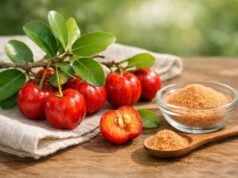
Amla (Phyllanthus emblica), also called Indian gooseberry, is a tart green fruit used as both a food and a traditional herbal ingredient across South Asia. It is best known today for its dense antioxidant profile and its potential to support cardiometabolic health—especially cholesterol, triglycerides, and blood sugar patterns—when used consistently. Amla’s effects are not limited to “vitamin C support.” The fruit contains a distinctive mix of tannin-like compounds and polyphenols that appear to influence inflammatory signaling, oxidative stress, and how the body handles lipids and glucose after meals.
Because amla can be taken as fresh fruit, powder, juice, or standardized extract, results depend strongly on the form you choose and how you use it. Some people notice steadier energy and digestion within days, while lab marker changes typically require weeks. This guide explains what amla is, what’s in it, what benefits are realistic, how to use it practically, what dosage ranges make sense, and how to avoid common safety mistakes—especially if you take medications or have medical conditions that require close monitoring.
Quick Overview
- Consistent amla use may support healthier cholesterol and fasting glucose over 8–12 weeks.
- Amla’s tannins and polyphenols add benefits beyond basic vitamin C content.
- Typical supplemental ranges are 500–1,000 mg/day of extract or 1–3 g/day of powder, depending on the product.
- Stomach upset can happen; start low and take with food if sensitive.
- People on blood thinners or diabetes medications should avoid self-prescribing concentrated extracts.
Table of Contents
- What is amla?
- Key ingredients and medicinal properties
- Does amla help cholesterol and blood sugar?
- Digestive, immune, and skin benefits
- How to use amla
- How much amla per day?
- Safety and evidence overview
What is amla?
Amla is the fruit of Phyllanthus emblica, a small tree native to South Asia and widely cultivated throughout India, Sri Lanka, and parts of Southeast Asia. The fruit is firm, pale green to yellow-green, and intensely sour with a characteristic astringent “drying” finish. That taste is a clue to its chemistry: amla is rich in tannin-like compounds and polyphenols that behave differently than the simple acids found in many sour fruits.
In traditional use, amla is rarely treated as a single “quick remedy.” It is often used as a foundational ingredient that supports resilience—especially when the body feels taxed by heat, stress, poor sleep, or digestive imbalance. Modern wellness interest has become more targeted. People now most often choose amla for cardiometabolic goals (cholesterol, triglycerides, blood sugar), antioxidant support, and steady digestion rather than for dramatic short-term symptom relief.
A practical point that shapes real outcomes is that amla shows up in multiple forms, and these forms are not interchangeable:
- Fresh fruit (a food-like effect, but availability is regional)
- Dried powder (whole-fruit profile, includes fiber)
- Juice (taste-forward, but dose and acidity vary widely)
- Standardized extracts (more consistent dosing, often used in clinical studies)
- Traditional multi-ingredient formulas (harder to compare by dose)
When people say “amla didn’t work,” it often means they used a form that did not match their goal. For example, if your target is digestion and regularity, whole-fruit powder can be more relevant than a tiny extract capsule. If your target is lab markers, a standardized extract is easier to use consistently for a defined trial.
Another common confusion is assuming all products called “amla” are equivalent. Some labels use the older botanical name Emblica officinalis; others use Phyllanthus emblica. These names generally refer to the same fruit in modern usage, but quality still depends on processing, storage, and whether the product is actually fruit-based or mixed with fillers and sweeteners. The most reliable choice is a product that clearly states the plant part (fruit), the form (powder vs. extract), and a consistent dose you can repeat daily.
Key ingredients and medicinal properties
Amla is often introduced as a “vitamin C fruit,” but its medicinal properties come from a broader chemistry set: vitamin C-related activity, hydrolyzable tannins, polyphenols, and supportive micronutrients. This matters because two products with similar “vitamin C” claims can still behave differently depending on how much of the fruit’s tannin-polyphenol matrix remains intact.
Vitamin C and why it is not the whole story
Fresh amla can contain meaningful vitamin C, though the actual amount varies with cultivar, ripeness, storage, and processing. Drying and heat can reduce vitamin C content, while some extracts are designed to preserve antioxidant capacity more consistently. Still, many of amla’s observed effects—especially those tied to oxidative stress and inflammation—are linked to compound groups that act alongside vitamin C rather than replacing it. If you want a clear framework for how vitamin C dosing differs by goal and what “too much” can look like, see vitamin C dosage, benefits, and safety.
Tannins and polyphenols that shape effects
Amla is rich in hydrolyzable tannins and related polyphenols, often discussed under names such as emblicanin A and B, punigluconin, pedunculagin, gallic acid, and ellagic acid. You do not need to memorize these. The practical takeaway is that these compounds:
- Support antioxidant capacity in ways that can persist even when vitamin C content varies
- Influence inflammatory signaling, which may affect cardiometabolic markers and tissue comfort
- Contribute to amla’s astringency, which can affect digestion (helpful for some, irritating for others)
Fiber, organic acids, and micronutrients
Whole-fruit powder includes fiber that can support regularity and satiety. Amla also contains organic acids that can stimulate digestive secretions in some people, plus minerals in smaller amounts. These components are more prominent in whole fruit preparations than in many concentrated extracts, which is why the “best” form depends on the outcome you want.
Medicinal properties translated into modern language
When amla is described traditionally as supportive for “rejuvenation,” the modern translation is usually a cluster of effects:
- Antioxidant support (helping the body manage oxidative stress)
- Inflammation balance (supporting calmer signaling that influences tissues and metabolism)
- Cardiometabolic support (lipids and glucose handling)
- Mucosal and tissue support (mouth, gut lining, and skin comfort in some patterns)
Amla’s chemistry is best viewed as a system-level support tool. It may not feel dramatic on day one, but it can produce meaningful, measurable changes when used consistently and matched to the right form and dose.
Does amla help cholesterol and blood sugar?
Amla is one of the more studied fruits in the “functional” category for cardiometabolic targets, and this is where many people have the strongest intent: lowering LDL cholesterol, improving triglycerides, supporting fasting glucose, and smoothing post-meal spikes. The most realistic framing is that amla may provide a modest but meaningful shift—especially for people with borderline or elevated markers—when taken consistently for weeks.
How amla may influence lipids
Several mechanisms can plausibly support cholesterol and triglyceride improvements:
- Fiber (especially in whole-fruit powder) can reduce cholesterol reabsorption and support elimination.
- Polyphenols may influence lipid oxidation and inflammatory pathways that relate to cardiovascular risk.
- Some extracts appear to influence enzymes involved in cholesterol synthesis and transport, though findings depend on the specific preparation.
In practical terms, people who benefit most often see changes in LDL cholesterol and total cholesterol first, with triglycerides being more variable. Triglycerides are strongly influenced by alcohol, refined carbohydrates, and overall calorie balance, so amla will not “override” those factors.
Blood sugar support: what is plausible
Amla may support glucose handling through:
- Slowing carbohydrate absorption when taken with meals (more relevant with powder or food-based forms)
- Influencing insulin sensitivity and oxidative stress pathways in ways that support steadier fasting glucose over time
- Supporting post-meal glucose control in some contexts, especially when baseline glucose is elevated
If you already use glucose-active supplements, avoid stacking multiple strong tools at once without a plan. For example, berberine dosing and medication cautions show why combining multiple glucose-lowering ingredients can increase hypoglycemia risk for some people. Amla is often gentler, but “gentler” is not the same as “no interaction.”
What results should look like in real life
A realistic outcome set includes:
- Small to moderate improvements in lipid labs after 8–12 weeks
- Mild improvements in fasting glucose or post-meal readings in some people
- Better satiety and fewer cravings if amla helps stabilize meal patterns (especially with whole-fruit powder)
It is also common for people to notice “secondary” changes: steadier energy, less afternoon slump, or a calmer inflammatory baseline. Those can be meaningful, but they are not a substitute for objective lab monitoring when your goal is cardiometabolic risk reduction.
How to get a fair trial
A fair trial is simple and measurable:
- Choose one amla product and one dose.
- Keep diet and exercise reasonably stable.
- Track blood pressure, fasting glucose (if relevant), and labs on a set schedule.
- Commit to a time window long enough to matter—usually at least 8 weeks.
Amla can support cardiometabolic health, but it works best as part of a consistent pattern: fiber-forward meals, adequate protein, daily movement, and sleep that protects insulin sensitivity.
Digestive, immune, and skin benefits
Many people start amla for cholesterol or glucose and stay with it because they notice broader “baseline” benefits—especially digestion comfort, seasonal resilience, and skin or hair support. These outcomes are often real, but they are also the easiest to overpromise. The most useful approach is to tie each benefit to a practical signal you can observe.
Digestive benefits: who tends to benefit
Amla’s sour-astringent profile can support digestion for some people by stimulating saliva and digestive secretions, and by contributing tannins that influence gut microbial balance. Whole-fruit powder adds fiber that can support regularity and satiety. People most likely to benefit are those who experience:
- Sluggish digestion with heavy meals
- Irregularity that improves with gentle fiber increases
- “Inflammatory” gut discomfort that responds to calmer, simpler routines
However, if you have reflux, gastritis, or a very sensitive stomach, amla—especially as sour juice on an empty stomach—can worsen symptoms. In those cases, the most tolerable starting point is often a small dose of powder or capsule taken with food.
If regularity is your main goal, it helps to separate whole-food fiber strategies from concentrated fiber supplements. psyllium digestive benefits are a useful comparison because psyllium offers tighter dose control, while amla offers a broader phytochemical profile.
Immune resilience and seasonal routines
Amla is commonly used in seasonal routines because its polyphenols and vitamin C-related activity support antioxidant capacity and may influence immune signaling. The grounded expectation is not “never get sick,” but:
- Better resilience during high-stress periods when sleep is limited
- A steadier return to baseline after travel, workload spikes, or seasonal changes
- Support for mucosal tissues (mouth, throat, and gut lining) that contribute to immune barriers
Immune outcomes depend heavily on sleep, protein intake, and stress load. Amla can complement these, but it cannot replace them.
Skin and hair support: what is realistic
Amla is often used for hair and skin in two ways: internally (powder or extract) and topically (hair oils and rinses). Internal use may support skin appearance indirectly by supporting oxidative balance and metabolic health. Topical use can support scalp comfort and hair feel, but results vary widely depending on formulation.
If your goal is skin elasticity and barrier support, amla is often paired with structural nutrition approaches rather than used alone. For broader context, collagen peptides and skin support strategies can help you place amla within a more complete “inside-out” plan that includes protein and micronutrients.
Amla’s non-metabolic benefits tend to be subtle but valuable: better digestion comfort, steadier resilience, and improved “baseline” tissue feel when used consistently and not pushed beyond tolerance.
How to use amla
Amla works best when you treat it as a consistent routine ingredient rather than a sporadic “boost.” The form you choose should match your goal, your digestion, and how precisely you want to control dosing.
Common forms and how to choose
- Fresh fruit: Best as a food approach. Benefits align with whole-food patterns, but availability is limited outside growing regions.
- Powder (whole fruit): Versatile and often cost-effective. Includes fiber and a broader whole-fruit matrix. Good for digestion, regularity, and general resilience.
- Juice: Convenient but highly variable. Some juices are diluted, sweetened, or blended, which changes potency and glucose impact.
- Standardized extract: Best when your goal is lab markers and you want consistent dosing. Often easier to use in time-limited trials.
- Traditional jams or tonics: Can be useful, but added sweeteners may conflict with glucose goals.
A simple decision rule:
- Choose powder if you want whole-fruit benefits, fiber support, and flexible culinary use.
- Choose extract if you want repeatable dosing and a clean trial for cholesterol or glucose markers.
Practical ways to take amla powder
Many people dislike amla’s sour-astringent taste at first. These strategies improve adherence:
- Mix into yogurt, oats, or a smoothie to buffer acidity.
- Stir into warm water after meals (not boiling hot, which can degrade sensitive compounds over time).
- Combine with honey or fruit only if glucose goals allow.
- Start with a very small amount for 3–7 days to confirm tolerance.
If you use powder, aim for consistency: the same time of day, the same approximate dose, and the same preparation method so you can evaluate how it affects you.
Using extracts intelligently
With extracts, label clarity matters. Look for:
- Species identification (Phyllanthus emblica)
- Plant part (fruit)
- Extract ratio or standardization details
- A clear capsule dose you can replicate daily
Avoid “proprietary blends” that bury the dose. Amla is not an herb where mystery blends serve you well; the benefits are dose- and duration-dependent.
Topical and cosmetic use
Amla is commonly used in hair oils, scalp treatments, and hair rinse traditions. If you use amla topically, treat it like any cosmetic active:
- Patch test first
- Avoid applying to broken skin
- Stop if scalp irritation or rash appears
Most people get the best results by combining a simple internal routine (powder or extract) with basic lifestyle anchors: hydration, protein adequacy, and consistent sleep. Amla becomes more effective when it is easy to repeat.
How much amla per day?
Amla dosage depends on form. A teaspoon of powder is not the same as a 500 mg extract capsule, and juice can vary even more. The goal is to use a dose you can repeat consistently, then adjust only if you can clearly track benefits and tolerance.
Common dose ranges by form
These ranges are practical starting points for adults:
- Whole-fruit powder: 1–3 g/day (often split into 1–2 doses). Some people use more, but increasing gradually helps avoid stomach upset.
- Standardized extract: 500–1,000 mg/day, often split into two doses if the product is more concentrated or if you are using it for glucose support.
- Juice: Use food-like serving sizes and treat it as variable. If your goal is glucose control, be cautious with juices that include added sweeteners.
Because products differ, your label is your anchor. If the label lists “fruit equivalent,” that can help you compare across brands more meaningfully than raw milligrams alone.
Timing for different goals
- Digestion and regularity: with meals or after meals, especially if you are sensitive.
- Glucose goals: split dosing with meals can be more relevant than a single daily dose.
- General resilience: consistent daily timing matters more than the exact hour.
If you experience reflux or burning, avoid empty-stomach dosing and avoid acidic juice forms until you know your tolerance.
Duration: how long to use it
Match the timeline to the outcome you want:
- 1–2 weeks to judge digestive tolerance and comfort changes
- 4–8 weeks for skin and resilience patterns
- 8–12 weeks for cholesterol and glucose labs
When to reduce or stop
Reduce dose or stop if you notice:
- Persistent nausea, stomach pain, or diarrhea
- Unusual bruising or nosebleeds
- Lightheadedness, shakiness, or low-blood-sugar symptoms
- Rash, swelling, or allergic symptoms
Also consider your broader nutrient context. Amla can support absorption of non-heme iron when used with meals, which can be beneficial for iron-deficient diets but less desirable if you have high iron stores. For a clear safety framework, iron dosing risks and practical guidelines can help you decide whether to pair amla with iron-rich meals or to be more cautious with frequent use.
A good dose is the smallest dose you can repeat daily without side effects—because consistency is what turns amla from a “try once” ingredient into a meaningful intervention.
Safety and evidence overview
Amla is widely used as a food and is generally well tolerated in normal dietary amounts. Most safety issues arise with concentrated extracts, higher doses, sensitive digestion, or medication interactions. The most responsible approach is to treat concentrated amla like a supplement—because that is what it is—rather than assuming that “it’s a fruit, so it can’t interact.”
Common side effects
Most side effects are dose-related and digestive:
- Stomach upset, cramping, or nausea (more likely with empty-stomach use)
- Loose stools (more likely when powder doses rise quickly)
- Reflux irritation (more likely with sour juice or acidic preparations)
If symptoms are mild, lowering the dose and taking with food often resolves the issue.
Interactions and who should avoid self-prescribing
Use extra caution or avoid self-prescribing concentrated extracts if you:
- Take blood thinners or antiplatelet medications (warfarin, clopidogrel, aspirin). Even modest changes in diet and supplement routines can matter when clotting control is sensitive.
- Use diabetes medications or insulin, because improvements in glucose handling can increase hypoglycemia risk if medications are not adjusted appropriately.
- Have bleeding disorders, upcoming surgery, or unexplained bruising.
- Are pregnant or breastfeeding, because concentrated extract safety data is limited.
- Are managing complex chronic illness with multiple medications.
If anticoagulation is part of your care, stability is often as important as the substance itself. A useful framework for why “routine consistency” matters is explained in vitamin K dosage and safety; apply the same principle to supplement changes even when the supplement is not vitamin K.
What the evidence supports—and what it does not
Amla has a stronger human evidence base than many botanical ingredients, particularly for cardiometabolic markers. Systematic reviews and controlled trials suggest potential improvements in lipid profile and some glucose-related outcomes, but several limits matter:
- Many studies are short (weeks to a few months), so long-term durability is less certain.
- Products differ (powder vs. aqueous extract vs. other extracts), making exact dosing comparisons difficult.
- Benefits appear clearer in people with elevated baseline markers than in already-healthy adults.
Amla is also studied for antioxidant and inflammation-related markers, which helps explain its broader “resilience” reputation. Still, antioxidant markers do not automatically translate to real-world outcomes like fewer infections or major risk reduction without supportive lifestyle changes.
The safest, most evidence-aligned approach is a structured trial: one product, a moderate dose, a defined time window, and measurable outcomes—especially if your goal involves cholesterol, glucose, or medication-sensitive health conditions.
References
- The impact of Emblica Officinalis (Amla) on lipid profile, glucose, and C-reactive protein: A systematic review and meta-analysis of randomized controlled trials 2023 (Systematic Review and Meta-analysis)
- Clinical effects of Emblica officinalis fruit consumption on cardiovascular disease risk factors: a systematic review and meta-analysis 2023 (Systematic Review and Meta-analysis)
- The Efficacy and Safety of Emblica officinalis Aqueous Fruit Extract among Adult Patients with Dyslipidemia: A Systematic Review and Meta-analysis 2023 (Systematic Review and Meta-analysis)
- Evaluation of the effects of a standardized aqueous extract of Phyllanthus emblica fruits on endothelial dysfunction, oxidative stress, systemic inflammation and lipid profile in subjects with metabolic syndrome: a randomised, double blind, placebo controlled clinical study 2019 (RCT)
Disclaimer
This article is for educational purposes only and does not provide medical advice. While amla is commonly consumed as a food, concentrated powders and extracts can affect individuals differently and may interact with medications—especially blood thinners, antiplatelet drugs, and diabetes medications. Do not use amla to replace professional diagnosis or treatment. If you are pregnant, breastfeeding, have a bleeding disorder, have diabetes, are preparing for surgery, or take prescription medications, consult a qualified clinician before starting amla or changing your supplement routine.
If you found this guide helpful, please share it on Facebook, X (formerly Twitter), or your preferred platform so others can make safer, more informed decisions.