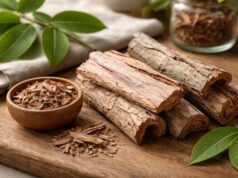
Anacyclus pyrethrum—often called pellitory or akarkara—is a pungent, warming root used in North African, Ayurvedic, and Unani traditions for oral discomfort, sluggish digestion, and “nervine” and reproductive support. The root is famous for its immediate sensory effect: a strong tingling heat that rapidly increases saliva and can create a temporary numbing or distracting sensation in the mouth. That same intensity is also why careful use matters. Modern supplements commonly market Anacyclus for libido and male vitality, while traditional applications still focus on toothache, gum comfort, and throat and mouth irritation when prepared properly.
What makes this herb worth understanding is that its benefits are highly “form and context dependent.” A tiny amount used topically in the mouth is not the same as daily capsules, and the evidence for sexual health claims is far less mature than the tradition suggests. This guide explains what Anacyclus is, what compounds drive its effects, how it is used for oral care and vitality, and how to dose it conservatively while paying attention to safety and product quality.
Quick Overview
- For short-term mouth and tooth discomfort, a tiny amount of root may provide a warming, numbing sensation and stimulate saliva.
- Start low: many adults trial 250–500 mg/day of dried root powder and adjust cautiously based on tolerance.
- Avoid use if you have ragweed or daisy-family allergies, active mouth ulcers, or significant reflux, since the root can be irritating.
- Pregnant or breastfeeding people, children, and anyone with persistent tooth pain or fertility concerns should seek clinical guidance instead of self-treating.
Table of Contents
- What is Anacyclus pyrethrum?
- Key ingredients and medicinal properties
- Does Anacyclus help toothache?
- Libido, fertility, and hormone claims
- Other potential health benefits
- How to use Anacyclus
- Dosage, safety, and evidence
What is Anacyclus pyrethrum?
Anacyclus pyrethrum is a small flowering plant in the daisy family (Asteraceae). In herbal practice, the root is the primary medicinal part. It is typically dried, sliced, or powdered and used in small amounts because it is intensely pungent. Common traditional names include pellitory (or pellitory of Spain) and akarkara. You may also see it described as “pyrethrum root,” which can be confusing because “pyrethrum” is also used for insecticidal extracts made from different plants. In supplements, you want the Latin name Anacyclus pyrethrum clearly stated to avoid mix-ups.
The herb’s “signature” experience is immediate. If you touch a small piece of the root to the tongue or gum, it can create:
- A sharp tingling or buzzing sensation
- Warmth that can feel almost peppery
- A noticeable increase in saliva
- A transient numbing or distracting effect in the mouth
That sensory effect explains many traditional oral uses. Historically, pellitory root was used for toothache, gum discomfort, and sluggish salivation. In some systems, it was also used as a general “stimulating” remedy—especially when someone felt cold, lethargic, or mentally foggy.
Traditional use clusters tend to fall into three practical categories:
- Oral and throat comfort: toothache, gum irritation, mouth “heaviness,” or dryness.
- Stimulation and warming: low appetite, slow digestion, and a sense of reduced vitality.
- Reproductive support: libido and male vitality, particularly in traditions that categorize herbs by warming and stimulating qualities.
It is also important to name what Anacyclus is not. It is not a gentle daily tonic for everyone, and it is not a substitute for dentistry or medical evaluation. If you have a cracked tooth, an abscess, bleeding gums, or pain that persists beyond a day or two, any numbing herb can mask symptoms while the underlying problem worsens.
Think of Anacyclus as a “high-signal, small-dose” plant: it can feel strong even at low amounts. Used carefully, that can be useful. Used carelessly, it can be irritating.
Key ingredients and medicinal properties
Anacyclus pyrethrum is not best understood as “one active ingredient.” Its effects come from a set of compounds—especially pungent lipid-like molecules—plus supporting polyphenols and other plant constituents. The root’s chemistry helps explain both its traditional uses and its main safety limits.
N-alkylamides and the “tingle” effect
The compounds most associated with pellitory’s sensory impact are N-alkylamides, often highlighted by pellitorine (also spelled pellitorin in some sources). Alkylamides are known for producing a tingling, buzzing, or warming sensation in the mouth and for influencing nerve signaling at the tissue surface. In practical terms, this can:
- Increase salivation (helpful when the mouth feels dry or “stuck”)
- Create a temporary “counter-irritant” effect that distracts from tooth discomfort
- Produce a mild numbing sensation for some users
Because these effects are immediate and local, they can be noticeable even when systemic effects are unclear.
Polyphenols, flavonoids, and antioxidant support
Beyond alkylamides, Anacyclus contains a range of phenolic compounds and flavonoids that are commonly associated with antioxidant behavior. These compounds are often used to explain claims related to inflammation balance, cellular stress, and tissue repair. However, the presence of antioxidants does not automatically equal a meaningful human outcome; dose, absorption, and product quality matter.
Other constituents you may see discussed
Depending on the extract and analysis method, reports include:
- Trace aromatic and volatile components (contributing to taste and sensation)
- Lignan-type compounds such as sesamin in some analyses
- Diverse minor metabolites that may influence antimicrobial or anti-inflammatory activity in lab studies
A nuance worth knowing: the plant name includes “pyrethrum,” and some discussions mention pyrethrin-type compounds. In consumer terms, this does not mean Anacyclus is being used as an insecticide in supplements. The more relevant point for users is identity verification—buy products that clearly state Anacyclus pyrethrum root.
Medicinal properties in real-world language
The traditional properties most consistent with what people actually feel are:
- Sialagogue: increases saliva
- Counter-irritant and rubefacient: creates warming sensation that can reduce the perception of pain
- Supportive antimicrobial activity: mainly relevant to topical contexts, not as a replacement for antibiotics
- Inflammation-modulating potential: strongest in preclinical data, less certain in humans
If you treat Anacyclus as a root that primarily acts through strong local stimulation and secondarily through broader phytochemical effects, most of its uses and cautions make more sense.
Does Anacyclus help toothache?
Anacyclus is widely used for tooth and gum discomfort, but it helps in a very specific way: it can change sensation, not fix the cause. The root’s tingling heat and salivation response can temporarily reduce the “sharpness” of pain, especially when discomfort is linked to irritation of the gums or a sensitive tooth surface. For some people, the sensation is strong enough to distract from pain for a short window.
What it may do well
For short-term, mild oral discomfort, pellitory root may:
- Provide a counter-irritant effect that reduces perceived pain
- Increase saliva, which can make the mouth feel less dry and irritated
- Offer brief numbing or “buzzing” relief when applied carefully
This can be useful when you need temporary comfort while arranging dental care or when you have minor gum irritation from a temporary trigger.
What it cannot do
No topical herb can reliably resolve:
- Cavities that need treatment
- Tooth fractures or cracked fillings
- Abscesses or spreading infection
- Severe gum disease
If you have swelling, fever, facial pain, pus, or pain that wakes you at night, treat that as a prompt for urgent evaluation, not stronger home remedies.
How people use it for oral discomfort
A conservative approach emphasizes tiny amounts and short contact time:
- Root “touch” method: touch a very small piece of dried root to the gum near the sore area for 10–30 seconds, then remove it.
- Powder method: place a tiny pinch of powder on the gum for up to 30 seconds, then rinse.
- Diluted rinse: add a small amount of tincture to water and swish briefly (do not use undiluted extracts on sensitive tissues).
Common sense safety rules:
- Avoid placing it directly on open sores or ulcers.
- Do not “park” it against the gum for minutes at a time.
- Stop if burning escalates, the tissue turns white, or irritation worsens afterward.
Comparing options for tooth discomfort
Many people compare pellitory to other traditional oral comfort herbs. A common alternative for temporary tooth pain relief is clove; see clove oral care and pain relief uses for a different mechanism and safety profile. The key point is that both can be helpful symptom tools, but neither replaces diagnosis.
A practical decision rule
If oral discomfort improves quickly and stays mild, short-term topical use may be reasonable. If it persists beyond 24–48 hours, spreads, or worsens, shift from symptom management to identifying the cause. Tooth pain is one of the clearest cases where temporary relief can unintentionally delay necessary care.
Used carefully, Anacyclus can be a targeted, short-term comfort strategy. Used repeatedly or aggressively, it can irritate tissue and make the situation harder—not better.
Libido, fertility, and hormone claims
Anacyclus pyrethrum is heavily marketed for libido and male vitality, often framed as a “testosterone support” herb. These claims have roots in traditional medicine systems where warming, stimulating plants are used to support sexual energy and reproductive strength. Modern research adds an important nuance: most of the supportive data is preclinical (animal or lab), and human evidence is still limited.
Why it is used for vitality
The root’s sensory profile—warming, stimulating, and strongly felt—creates a plausible traditional narrative for libido support. In practice, users often describe:
- Increased subjective “warmth” or arousal sensitivity
- A stimulant-like effect that may improve perceived drive in some people
- A possible mood lift when low motivation is linked to stress and fatigue
What preclinical studies suggest
Animal studies have reported changes such as:
- Improved sperm parameters (count, motility) in specific models
- Changes in androgen-related hormones in some experiments
- Improved sexual behavior metrics in male rats
These findings are interesting, but they do not automatically translate to predictable effects in humans. Animal doses can be high relative to typical supplements, and outcomes can be model-specific (for example, toxin-exposure models or diabetes models).
What we can say cautiously about real-world use
A realistic interpretation is:
- Anacyclus may be a “supportive” herb in libido formulas, especially when the goal is warming stimulation.
- It is not established as a primary treatment for erectile dysfunction, infertility, or clinically low testosterone.
- If a product helps, it may be through a combination of factors: perceived stimulation, stress response changes, and indirect effects on mood and confidence.
If your goal is evidence-aligned testosterone or libido support, it can be useful to compare Anacyclus with better-studied options and lifestyle levers. For example, tongkat ali benefits, dosage, and side effects is a common comparison in male vitality discussions, with more human trial data than Anacyclus.
Who should not self-treat fertility issues
If you are trying to conceive, it is worth treating fertility as a medical-quality topic. A few months of delay can matter, and many drivers are not obvious (thyroid status, sleep apnea, varicocele, medication effects, alcohol, heat exposure, metabolic issues). An herbal trial may be reasonable as a supportive add-on, but it should not replace evaluation—especially if:
- You have been trying for 6–12 months without success (earlier if age is a factor)
- You have known hormone disorders, testicular pain, or prior reproductive surgery
- Sexual dysfunction is sudden, severe, or worsening
Anacyclus may belong in the “adjunct and experiment” category. If you approach it that way—short-term, conservative dosing, clear outcomes tracked—you are more likely to make decisions that are both safe and useful.
Other potential health benefits
Beyond oral care and sexual health marketing, Anacyclus pyrethrum appears in research discussions for pain modulation, inflammation balance, mood-related effects, and even metabolic or cognitive claims. These areas are best treated as promising but not settled, largely because human studies are sparse and extracts vary widely.
Pain and inflammation support
Preclinical research and some in vivo models suggest Anacyclus extracts may influence pain perception and inflammatory processes. That aligns with traditional uses for:
- Neuralgia-like discomfort and “nerve pain” patterns
- Musculoskeletal aches and stiffness
- Local inflammation in mouth tissues
The practical translation is modest: Anacyclus might be one component in a broader pain-support strategy, but it is not a substitute for diagnosis, physical therapy, or evidence-based anti-inflammatory care. If your primary goal is joint comfort, a more studied botanical option is often preferred, such as boswellia uses and research for inflammation support.
Mood, stress response, and “mental fatigue”
Some animal studies explore anxiolytic- or antidepressant-like effects of aqueous or alcoholic extracts. If these effects translate at all, they may show up as:
- Slightly improved resilience to stress
- Less irritability when overstimulation is a factor
- Better perceived energy when fatigue is stress-driven rather than sleep-driven
However, it is easy to overinterpret this category. Anacyclus is a stimulating, pungent root; for some people, that stimulation could worsen anxiety, reflux, or sleep.
Antimicrobial and immune-adjacent claims
Extracts show antimicrobial activity in lab settings, but lab antimicrobial effects are not the same as treating infections in real people. The most defensible role for antimicrobial talk is topical: mouth rinses and oral care contexts. For systemic infections, this herb should not delay appropriate medical treatment.
Wound healing and tissue repair discussions
Some research explores wound healing outcomes in animal models. The responsible takeaway is not “Anacyclus heals wounds,” but rather that its phytochemistry may influence pathways involved in inflammation and repair. In real life, wound care depends heavily on cleanliness, blood flow, nutrition, and infection control.
What benefits are most realistic today
If you rank Anacyclus benefits by decision usefulness:
- Short-term oral comfort and salivation support (most plausible and direct)
- Adjunct warming and stimulation (subjective, varies widely)
- Libido and fertility support (interesting preclinical signals, limited human certainty)
- Broader systemic claims (still emerging, less actionable)
This ranking helps prevent the most common mistake: treating a strong-tasting, stimulating root as if it were a proven systemic medicine.
How to use Anacyclus
Using Anacyclus well is mostly about matching the form to the goal and keeping doses small enough to avoid irritation. Because the root is intense, many people get better results from conservative use than from “more is better” experimentation.
Common forms
- Dried root slices or chips: most traditional for oral use (short contact time)
- Root powder: used in capsules, blends, or small topical oral applications
- Tincture or liquid extract: convenient for dosing, but should be diluted for oral rinses
- Decoction: less common because the root is pungent; used in small amounts
- Topical oil infusion: sometimes used for warming rubs (requires patch testing)
Practical ways people use it
For short-term mouth discomfort
- Use a tiny amount locally and briefly, then remove and rinse.
- Limit use to short windows and avoid repeated aggressive applications.
For “vitality” trials
- Capsules or measured powder are easier to standardize than chewing root.
- Take with food to reduce stomach irritation.
- Keep the trial time-limited and track outcomes (libido, energy, sleep quality).
Simple preparation ideas
Mild decoction (for experienced users)
- Add about 0.5–1 g dried root to 250 mL water.
- Simmer gently for 10 minutes, then strain.
- Sip slowly, and stop if reflux or burning occurs.
Diluted rinse
- Add a small measured amount of tincture to water, swish briefly, then spit.
- Avoid alcohol-based rinses if your mouth tissue is already irritated.
How to choose a quality product
Because “pellitory” can be confused with other plants, quality signals matter:
- Look for the Latin name Anacyclus pyrethrum and the plant part root.
- Prefer single-ingredient products at first so you can assess tolerance.
- Be cautious with “testosterone booster” blends that stack many stimulatory ingredients.
- If a product claims standardization, it should specify what is being standardized (not just a marketing phrase).
Common mistakes to avoid
- Using large doses expecting stronger benefits (often leads to irritation)
- Applying root or powder to broken gums or mouth ulcers
- Using it as a substitute for dental care
- Taking it late in the day if it disrupts sleep or worsens reflux
- Assuming all “pyrethrum” products are the same (they are not)
When in doubt, treat Anacyclus like a strong spice: start small, keep exposure brief when topical, and build a decision around comfort and safety rather than intensity.
Dosage, safety, and evidence
Anacyclus dosing is not standardized across products, so the safest approach is conservative: start low, use short trial windows, and let tolerance guide whether it belongs in your routine. The ranges below reflect common supplement patterns and traditional-style use, but label instructions and individual sensitivity should still lead.
Typical adult dosage ranges
Dried root powder (capsules or measured powder)
- Common trial range: 250–500 mg once daily with food
- If well tolerated: 250–500 mg twice daily
- A conservative upper range for short-term use is often 1,500–2,000 mg/day, but many people do not need to go that high and may find it irritating
Tincture or liquid extract
- Because strengths vary, follow the label. A common pattern is 1–2 mL up to 3 times daily (often diluted in water), adjusting down if drowsiness, burning, or stomach upset occurs.
Oral topical use (tooth and gum comfort)
- Use tiny amounts with short contact time (seconds, not minutes).
- Avoid repeated dosing that inflames tissue. Symptom masking is not the goal.
Timing and duration
- For oral comfort: use briefly as needed, and reassess quickly if pain persists.
- For vitality trials: consider a 2–4 week trial, then decide based on measurable outcomes.
- If using daily, many people prefer cycling (for example, a few weeks on, then a break) rather than continuous long-term use.
Side effects and who should avoid it
The most common problems are irritation-related:
- Burning or stinging in the mouth
- Increased salivation (expected, but can be uncomfortable)
- Stomach burning, reflux flare, or nausea
- Headache or jittery feeling in sensitive users
Avoid or use clinician guidance if you are:
- Pregnant or breastfeeding
- A child or adolescent
- Allergic to ragweed or other daisy-family plants (Asteraceae)
- Prone to significant reflux, gastritis, or mouth ulcers
- Managing complex medical conditions or taking multiple medications where side effects are hard to interpret
Interactions to consider
Definitive interaction data are limited. Practical caution points include:
- Avoid combining high doses with other strong stimulants if you become jittery or sleep-disrupted.
- Pause use before surgery or dental procedures unless your clinician advises otherwise, since it can irritate tissues and complicate symptom assessment.
- If you take many supplements in a “stack,” introduce Anacyclus alone first so you can identify tolerance.
What the evidence actually supports
The strongest, most decision-relevant support for Anacyclus is still traditional and preclinical:
- Oral and tooth discomfort: plausible based on local sensory effects and topical tradition
- Analgesic and anti-inflammatory outcomes: supported in animal models, but human confirmation is limited
- Libido and fertility claims: intriguing animal data, but not yet a robust human evidence base
A responsible takeaway is that Anacyclus can be reasonable as a short-term, low-dose experiment for specific goals—especially oral comfort—while broader systemic claims should be treated as “possible, not proven.” If symptoms are persistent (tooth pain, erectile dysfunction, infertility, severe fatigue), the safer and more effective next step is clinical evaluation rather than escalating herbal dosing.
References
- Phytochemistry, Biological and Pharmacological Activities of the Anacyclus pyrethrum (L.) Lag: A Systematic Review – PMC 2022 (Systematic Review)
- Anacyclus pyrethrum enhances fertility in cadmium-intoxicated male rats by improving sperm functions – PMC 2024 (Preclinical Study)
- The Toxicological and Pharmacological Evaluation of the Anacyclus pyrethrum Aqueous Extract: Implications for Medicinal and Therapeutic Applications | MDPI 2024 (Toxicology and Pharmacology Study)
- Anacyclus pyrethrum (L): Chemical Composition, Analgesic, Anti-Inflammatory, and Wound Healing Properties – PMC 2020 (Preclinical Study)
Disclaimer
This article is for educational purposes only and does not replace individualized medical advice, diagnosis, or treatment. Herbal products can vary in identity, strength, and purity, and Anacyclus pyrethrum can be irritating to mouth and digestive tissues if used aggressively or at high doses. If you are pregnant, breastfeeding, have allergies to daisy-family plants, live with reflux or ulcer disease, or take prescription medications, consult a licensed clinician or pharmacist before use. Seek prompt dental or medical care for severe or persistent tooth pain, swelling, fever, suspected infection, sexual dysfunction, or fertility concerns rather than relying on symptomatic herbal relief.
If you found this guide helpful, please share it on Facebook, X (formerly Twitter), or your preferred platform so others can use Anacyclus more safely and responsibly.