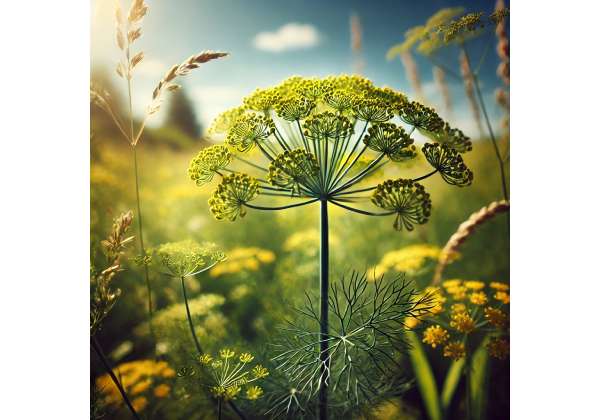
Anethum (Anethum graveolens), better known as dill, is an aromatic herb in the Apiaceae (celery) family, valued both as a culinary staple and a traditional digestive aid. The feathery leaves (“dill weed”) and the seeds have slightly different chemistry and uses: leaves are fresh and bright, while seeds are warmer and more concentrated. In traditional practice, dill has been used to ease gas, support comfortable digestion, and add flavor without relying on heavy salt or sugar. Modern research is most developed around cardiometabolic markers—especially cholesterol and insulin resistance—where small human trials and meta-analyses suggest modest, goal-dependent benefits when dill is taken as a supplement for several weeks.
Because dill is also a concentrated essential-oil plant, safety depends on the form you choose. Used as food, it is generally gentle. Used as capsules, extracts, or essential oil, it becomes more “medicinal” and deserves the same care you would give any supplement: appropriate dosing, attention to interactions, and realistic expectations.
Quick Overview
- May support digestive comfort and reduce mild gas when used as tea or a culinary herb.
- Human studies commonly use 1,500–3,000 mg/day of dill powder or extract for 6–12 weeks for metabolic markers.
- Concentrated dill essential oil is not a casual ingestible; avoid internal use unless supervised and never apply undiluted to skin.
- Avoid medicinal-dose dill if pregnant, trying to conceive, or managing blood sugar with medication unless a clinician advises.
Table of Contents
- What is anethum?
- Key ingredients in dill
- Health benefits and uses
- How to use anethum at home
- How much dill per day?
- Safety, interactions, and who should avoid
- What the research actually says
What is anethum?
Anethum (Anethum graveolens) is an annual aromatic herb native to parts of the Mediterranean region and West Asia, now cultivated worldwide. If you have ever used dill to brighten a cucumber salad, flavor fish, or make pickles taste “complete,” you already understand its most reliable benefit: it makes food easier to enjoy—often with less added salt, sugar, or heavy sauces.
From a practical, health-focused perspective, dill is best understood by its parts and typical forms:
- Leaves (dill weed): Mild, grassy, and delicate. The leaves are rich in aroma but are less concentrated than seeds, so they are ideal for everyday culinary use.
- Seeds (technically fruits): Warmer, slightly bitter, and more potent. Seeds are the traditional choice for digestive teas, spice blends, and many supplement preparations.
- Extracts and capsules: Usually made from seeds, leaves, or a mix; they concentrate specific compounds and can reach “therapeutic” doses.
- Essential oil: A highly concentrated volatile oil used mainly for fragrance, flavor manufacturing, and topical applications when properly diluted.
As with many Apiaceae plants, dill has close culinary relatives with overlapping traditional uses. If you enjoy the “carminative” (gas-relieving) role of dill, you may recognize similar effects from caraway seed for digestive support and related spices used after meals.
It is also worth noting that the name “dill” sometimes includes closely related cultivated types (such as “Indian dill”), and the chemical profile can vary by cultivar, growing conditions, harvest time, and whether you are using leaf or seed. That variability helps explain why dill can be soothing for one person and unremarkable for another, especially when comparing food use versus standardized supplements.
If you want a simple decision rule: use fresh dill for daily flavor and gentle support, and consider seed tea or standardized extracts only when you have a specific goal, a defined dose, and a plan to monitor results.
Key ingredients in dill
Dill’s effects come from two broad categories of “active” material: volatile aromatic compounds (especially in seeds and essential oil) and non-volatile plant compounds (more prominent in leaves and whole-seed preparations). Understanding this split helps you choose the right form for the outcome you want.
1) Volatile compounds (aroma and fast-acting sensations)
These are the compounds you smell immediately when you crush dill seed or chop fresh leaves. The most discussed constituents include:
- Carvone (often dominant in dill seed essential oil): contributes the classic dill note and is studied for antimicrobial and smooth-muscle–related effects in lab settings.
- Limonene: a citrus-like terpene found across many aromatic plants; associated with digestive “settling” sensations for some people.
- Alpha-phellandrene, dill ether, and related terpenes: vary by plant part and growing conditions; shape fragrance and flavor intensity.
Volatile compounds tend to act quickly (minutes to hours) and are part of why a warm dill seed tea can feel “settling” after a heavy meal. They are also why essential oil requires caution: concentrating these compounds changes the risk profile.
2) Polyphenols and other non-volatile compounds (slower, cumulative effects)
Whole dill and many extracts contain flavonoids and phenolic compounds that may support antioxidant balance and inflammatory signaling. These compounds are more likely to matter over repeated use (weeks) rather than immediately after a single serving.
3) Nutritional contributors (food-level benefits)
Used as a culinary herb, dill adds small but meaningful “nutrient density” to meals:
- Leaves contribute small amounts of vitamins and minerals while improving palatability of vegetables and proteins.
- Seeds contribute fiber-like plant material and a more concentrated phytochemical load per gram than leaves.
A key practical point is that “more concentrated” is not always “better.” If your goal is to make meals healthier, the best lever might be using dill to make vegetables, legumes, and lean proteins taste better consistently. If your goal is a measurable change in cholesterol or insulin resistance, a standardized dose of a seed-based product is more relevant—but also more likely to interact with medications and require monitoring.
Think of dill as a spectrum: food → tea → capsules/extracts → essential oil, with potency and caution increasing as you move to the right.
Health benefits and uses
Dill’s benefits fall into two buckets: comfort-oriented uses (how you feel day to day) and marker-oriented uses (numbers you can track, like LDL cholesterol). Both can be valid, but they call for different forms and expectations.
Digestive comfort (gas, mild cramping, “heavy meal” relief)
Traditional use most often centers on dill seed as a carminative—supporting normal movement of gas through the gut and helping the abdomen feel less tense. Many people use dill in these practical ways:
- After-meal tea: warm dill seed infusion after rich or high-fiber meals.
- Culinary pairing: dill with legumes, cabbage, eggs, or fish—foods that can feel “heavy” for some.
- Gentle appetite support: aromatic herbs can make meals satisfying without needing extra sugar or fat.
If your main goal is digestive comfort, it can help to compare dill with other well-known soothing herbs like peppermint for digestive comfort. Dill tends to be milder and more food-friendly; peppermint tends to be more noticeable and, for some people, can aggravate reflux.
Cardiometabolic support (cholesterol, triglycerides, insulin resistance)
This is where modern evidence is most developed. Across small trials, dill powder or extracts have been studied for effects on LDL cholesterol, triglycerides, insulin, and insulin resistance. The typical pattern in research is “modest and variable”: some people see improvements, others see little change, and results depend on baseline risk, dose, and duration.
A realistic, useful framing is:
- Most plausible benefits: modest reductions in LDL and improvements in insulin resistance markers when taken consistently for several weeks, especially in people who already have elevated cardiometabolic risk.
- Less reliable benefits: big shifts in fasting glucose or dramatic weight loss. Dill is not a “shortcut herb,” and it does not replace dietary patterns, sleep, or medication when needed.
Other traditional and emerging uses (supportive, not primary)
You will also see dill discussed for antimicrobial activity, antioxidant support, and general “calming” effects. These are often based on laboratory or animal findings and do not automatically translate to meaningful outcomes in humans at culinary doses. They can still be useful as part of a broader lifestyle approach, but they should not be oversold.
Bottom line: dill is excellent for daily food upgrades and may offer small-to-moderate metabolic support when used in supplement form with a clear plan and measurable goals.
How to use anethum at home
The best way to use dill depends on whether you want flavor, digestive comfort, or a therapeutic-style trial. Below are practical options arranged from gentlest to strongest.
1) Culinary dill (daily baseline use)
This is the most sustainable approach and often the most overlooked “health intervention.” Try:
- Fresh leaves: stir into yogurt sauces, lemony dressings, soups, or lentil dishes at the end of cooking.
- Dill-forward meals: pair with fish, potatoes, cucumbers, beets, eggs, and beans.
- Pickling spice blends: dill seed plus mustard seed, garlic, and peppercorn can turn vegetables into a snack you actually want.
If you like building flavor with aromatic seeds, you may also enjoy the overlap with coriander in cooking and traditional use, which shares a similar “bright but grounding” role in many cuisines.
2) Dill seed tea (targeted comfort, quick feedback)
A simple infusion is often enough for post-meal heaviness.
- Lightly crush 1–2 teaspoons of dill seeds.
- Pour over 250–300 mL of hot water.
- Steep 10–15 minutes, strain, and sip warm.
For stronger aroma, cover the cup while steeping to keep volatile compounds from escaping. Many people prefer this after dinner rather than on an empty stomach.
3) Supplement-style use (measurable goals)
If you are trialing dill for metabolic markers, treat it like a short experiment:
- Pick a specific product form (powder capsules or standardized extract).
- Set a time window (often 6–12 weeks aligns with common study lengths).
- Decide what you will measure (lipid panel, fasting insulin, or glucose trends, if appropriate).
4) Topical use (only when properly diluted)
Dill essential oil is concentrated and should not be used undiluted. If used topically, it should be properly diluted in a carrier oil and patch-tested first. For most people, culinary and tea use deliver the benefits without introducing avoidable skin risk.
A helpful mindset: start with food, then tea, and only then consider supplements—especially if you have health conditions or take medications.
How much dill per day?
There is no single “perfect” dill dose because the right amount depends on the form (leaf, seed, powder, extract), the goal (comfort vs lab markers), and your tolerance. The ranges below are practical starting points, not medical prescriptions.
Culinary use (most people, most days)
Food-level use is flexible and generally safe:
- Fresh dill leaves: roughly 1–2 tablespoons chopped per serving is common in recipes, and you can use more if you tolerate it.
- Dried dill weed: 1–2 teaspoons per dish (dried is more concentrated than fresh).
- Dill seed in food: 1/4–1 teaspoon per recipe, adjusted to taste.
Culinary dosing is ideal if your goal is better meal quality, improved vegetable intake, and gentle digestive support.
Tea for digestive comfort
A common range is:
- 1–2 teaspoons crushed dill seed per cup, once daily as needed, often after meals.
If the tea feels too strong (nausea, heartburn, or headache), reduce the seed amount or steep for a shorter time.
Supplement dosing used in studies (short-term trials)
Human trials have used dill in the range of:
- 1,500 mg/day (often as a threshold where some metabolic effects become more noticeable in pooled analyses), up to
- 3,000 mg/day of dill powder (for example, split into multiple capsules) for several weeks.
If you choose an extract rather than whole powder, the label dose may be lower because extracts concentrate specific constituents. In that case, look for standardization information and avoid “megadose” products that do not clearly state what you are getting.
Timing and duration
- For digestive comfort, timing is simple: take dill as tea or food after meals.
- For metabolic markers, consistency matters more than timing. A typical trial is 6–12 weeks, with a check-in on labs or symptoms at the end.
A good safety habit is to start at the low end for 7–10 days, then increase only if you tolerate it and have a clear reason to do so.
Safety, interactions, and who should avoid
Dill is generally low-risk as a food, but concentrated forms change the equation. Safety is best approached by asking two questions: what form are you using and what else is going on in your health picture?
Common side effects (more likely at medicinal doses)
- Mild stomach upset, nausea, or loose stools
- Headache or lightheadedness (uncommon, often dose-related)
- Skin irritation with topical use, especially with essential oil if not properly diluted
If you notice new symptoms, reduce dose or stop and reassess. “More” is not always “better” with aromatic herbs.
Medication and condition considerations
- Diabetes medications: Dill supplements may improve insulin resistance markers in some people. If you take insulin or glucose-lowering drugs, monitor for low blood sugar symptoms and discuss changes with a clinician.
- Lipid-lowering therapy: Dill is not a substitute for statins or other prescribed therapy. If you use it alongside medication, treat it as an adjunct and track labs rather than guessing.
- Allergies: Dill is in the Apiaceae family (like celery and some other aromatic plants). If you have known reactions in this family, be cautious—especially with concentrated extracts.
- Surgery: If you use dill as a supplement (not just food), consider stopping 1–2 weeks before surgery unless your surgical team advises otherwise, mainly because of blood sugar management and the general principle of simplifying supplement use around procedures.
Who should avoid medicinal-dose dill (unless supervised)
- Pregnant people or those trying to conceive, because concentrated herbal doses can have unpredictable effects and safety data are limited
- Breastfeeding people, unless advised by a clinician familiar with herbal products
- Anyone using essential oil internally without qualified supervision (this is not a casual practice)
- People with significant medication complexity (multiple prescriptions) unless there is a clear monitoring plan
If you want a conservative approach: keep dill as a food and occasional tea, and reserve supplement dosing for time-limited trials with clear goals and tracking. For broader herb safety thinking—especially with common food-allergy overlap—some people find it useful to review how other everyday plants like celery in diet and wellness can still be problematic for sensitive individuals.
What the research actually says
Dill is a good example of a plant that is clearly useful in everyday life, while its “supplement claims” require careful interpretation. The strongest modern evidence cluster is cardiometabolic, but even there, the story is nuanced.
Where the evidence is most convincing
- Lipid markers: Meta-analyses and updated reviews of randomized trials suggest dill supplementation can reduce LDL cholesterol and sometimes triglycerides, with effects more apparent in people who already have elevated risk. The magnitude is typically modest, and results differ by dose, duration, and baseline values.
- Insulin resistance markers: Some pooled analyses show improvements in insulin and HOMA-IR, which can matter even when fasting glucose does not change dramatically.
Why results vary so much
Several factors make “dill” a moving target in research:
- Different preparations: whole powder, seed extracts, mixed plant parts, and varying standardization can lead to different active compound exposure.
- Different populations: someone with metabolic syndrome or type 2 diabetes is more likely to show measurable changes than someone with normal labs.
- Short study durations: many trials run 6–12 weeks, which may be enough to shift some markers but not enough to show durable clinical outcomes.
- Lifestyle background noise: changes in diet, activity, sleep, or medication adherence can overshadow a small supplement effect.
What research does not yet prove
- That dill prevents heart attacks, cures diabetes, or replaces standard care
- That essential oil is a safer or “stronger” path for internal use
- That everyone will respond the same way
A practical way to use this evidence
If you want to try dill for metabolic support, treat it like a structured experiment:
- Choose one standardized product or a consistent powder dose.
- Keep other variables stable for 6–12 weeks.
- Track one or two outcomes (for example, LDL and fasting insulin, or fasting glucose trends if you already monitor).
- Decide in advance what “success” looks like (for example, a modest LDL reduction, improved insulin resistance markers, or symptom improvement).
The most evidence-aligned conclusion is also the most balanced: dill is a safe, helpful culinary herb for most people, and it may provide measurable—but usually modest—support for cardiometabolic markers when used in a defined dose and time frame.
References
- Anethum graveolens L. (Dill) Effect on Human Lipid Profile: An Updated Systematic Review 2022 (Systematic Review)
- The effects of Anethum graveolens (dill) supplementation on lipid profile and glycemic control: a systematic review and meta-analysis of randomized controlled trials 2022 (Systematic Review and Meta-Analysis)
- The effects of Anethum graveolens (dill) powder supplementation on clinical and metabolic status in patients with type 2 diabetes 2020 (RCT)
- Chemical Composition and Bioactivity of Dill Seed (Anethum graveolens L.) Essential Oil from Plants Grown under Shading 2024
Disclaimer
This article is for educational purposes only and does not replace personalized medical advice. Herbs and supplements can affect people differently based on health conditions, allergies, pregnancy status, and medications. If you are pregnant, breastfeeding, managing a chronic condition (such as diabetes), preparing for surgery, or taking prescription drugs, consult a qualified clinician before using dill in supplement or essential-oil form. If you develop symptoms of an allergic reaction or significant side effects, stop use and seek medical care.
If you found this guide helpful, consider sharing it on Facebook, X (formerly Twitter), or your favorite platform so others can make safer, more informed choices about anethum and dill.