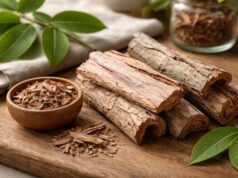
Arrowroot (Maranta arundinacea) is a tropical rhizome best known for the fine, white starch milled from its underground stem. In kitchens, arrowroot powder is valued as a clean-tasting thickener that creates a glossy finish in sauces, fruit gels, and gravies—often with less cloudiness than wheat flour. In wellness circles, it is sometimes chosen as a gentle carbohydrate for people who want a gluten-free option or a bland food during short bouts of stomach upset. The health story of arrowroot is less about rare “active compounds” and more about how starch behaves in the body: digestion speed, portion size, and whether a product contains mostly refined starch or more whole-root flour with fiber. Some early research also explores arrowroot fibers and extracts for gut and immune effects, but most findings are not yet confirmed in large human trials. Used thoughtfully, arrowroot fits best as a practical food ingredient—useful, versatile, and generally safe—while still deserving basic portion awareness and quality sourcing.
Quick Overview
- Works well as a gluten-free thickener for sauces and fruit-based desserts when heated gently.
- May be easier to tolerate than some grains during short-term digestive upset, depending on preparation.
- Typical culinary range: 5–20 g per day (about 1–4 teaspoons) for thickening, adjusted to recipe needs.
- Avoid inhaling the powder and avoid routine use in infants without pediatric guidance.
- People with diabetes or on glucose-lowering medication should monitor portions and blood sugar response.
Table of Contents
- What is arrowroot and how is it made?
- Nutrition and key ingredients
- Does arrowroot help digestion?
- Blood sugar and metabolic considerations
- How to use arrowroot in food and home care
- How much arrowroot per day?
- Side effects, interactions, and what evidence shows
What is arrowroot and how is it made?
Arrowroot is the common name for the starch extracted from the rhizome of Maranta arundinacea, a plant grown in tropical and subtropical regions. While “arrowroot” can sometimes be used loosely for other starches in everyday conversation, true arrowroot powder comes from Maranta. It matters because botanical source influences texture, thickening behavior, and digestion.
In its simplest form, arrowroot is a refined starch: the rhizome is harvested, cleaned, crushed, and washed so that starch granules separate from fibrous material. The starch is then dried and milled into a very fine powder. This process explains why arrowroot powder is usually white, light, and silky to the touch—and also why it is typically low in protein, fat, and micronutrients compared with whole foods.
A practical way to understand arrowroot is to separate these three categories you might see on labels:
- Arrowroot starch or arrowroot powder (refined): mostly carbohydrate, designed for thickening.
- Arrowroot flour (sometimes used interchangeably in marketing): may still be largely starch, but processing varies; read labels for fiber and protein.
- Whole rhizome flour (less common): includes more of the original plant material and may contain more fiber and plant compounds, which can change both nutrition and cooking performance.
People often choose arrowroot for its culinary behavior. It thickens quickly at relatively moderate heat, gives sauces a glossy look, and stays fairly neutral in flavor. It can also be appealing for gluten-free cooking because it does not rely on wheat proteins to create structure.
One detail cooks learn fast: arrowroot thickened foods can behave differently depending on ingredients and heat. Prolonged boiling or high acidity can reduce thickening power, and repeated reheating can thin a sauce over time. This is not a safety concern—it is simply a reason to match arrowroot to the right recipe (for example, quick pan sauces, fruit glazes, and gentle simmering rather than long, rolling boils).
As a food ingredient, arrowroot’s “medicinal properties” mostly come down to how it replaces other thickeners: it can reduce gluten exposure for people avoiding wheat, and it can make certain bland foods easier to prepare when appetite is low.
Nutrition and key ingredients
Arrowroot’s nutrition profile is straightforward: it is primarily starch. That simplicity is exactly why it works well in recipes that need thickening without added taste, color, or gluten. It is also why arrowroot should not be treated like a nutrient-dense supplement. Think of it as a cooking tool that can support dietary preferences rather than a concentrated “superfood.”
What is in arrowroot powder?
Most commercial arrowroot powder contains:
- Carbohydrate (starch): the main component and the source of calories.
- Small amounts of fiber: typically low in refined starch products, higher if a product includes more of the whole rhizome.
- Trace minerals: amounts vary by soil, processing, and whether the product is refined starch or whole flour.
- Very little protein and fat: usually not meaningful contributors to daily intake.
Starch quality matters more than the label
From a health perspective, the most important “ingredient” is the starch itself—specifically:
- Amylose and amylopectin balance: this influences gel texture and may influence digestion speed.
- Granule structure: how the starch behaves when heated and cooled can influence how it thickens and how it is tolerated.
- Resistant starch potential: some starches resist digestion and act more like fiber, feeding gut microbes; processing and cooking method can increase or decrease this.
It helps to connect these points to real-life outcomes. If you use arrowroot as a small thickening agent (a teaspoon here, a tablespoon there), its metabolic impact is usually modest. If you use it as a major flour replacement in baked goods, the carbohydrate load increases quickly, and blood sugar response becomes more relevant—especially for people with insulin resistance.
Plant compounds and “medicinal” framing
Unlike strongly aromatic herbs, arrowroot does not owe its reputation to potent essential oils or bitter alkaloids. Most traditional “remedy” uses center on its blandness and digestibility: it can be made into thin porridges or gels when someone needs gentle calories.
Some research interest also focuses on arrowroot byproducts (fiber fractions) and on extracts tested in laboratory settings. Those areas are promising, but they do not change the basic truth that most arrowroot products on store shelves are refined starch.
If your goal is to increase fiber rather than simply thicken, arrowroot is not the most efficient option. A better strategy is to use arrowroot for texture while pairing it with fiber-rich foods. For example, adding small amounts of chia seeds for fiber and gel texture alongside arrowroot in certain recipes can balance mouthfeel with more meaningful nutrition.
The key takeaway is realistic: arrowroot is a useful starch with specific cooking advantages. Its “health value” depends on how much you use, what you replace with it, and whether your product is refined starch or a more whole-food flour.
Does arrowroot help digestion?
Arrowroot is often described as “gentle on the stomach,” and that claim is easiest to understand when you look at how people typically use it: in small amounts to thicken liquids, or in bland preparations when appetite is low. In those contexts, arrowroot may feel easier to tolerate than rich, fatty foods or heavily spiced meals. Still, it is important to separate comfort traditions from proven medical treatment.
Where arrowroot may be helpful in real life
Arrowroot can make practical sense for short-term digestive support when used as part of a simple eating plan:
- During temporary stomach upset: a thin arrowroot porridge or gel can be easier to eat than rough, high-fat, or high-fiber meals.
- When recovering appetite: it adds calories in a form that is easy to mix into broths or fruit-based foods.
- For texture without dairy or gluten: it can thicken soups and sauces without butter, cream, or wheat flour.
These uses do not require big doses. Often, the benefit is simply that arrowroot helps you prepare foods you can tolerate.
The fiber question: starch versus whole-root products
Most arrowroot powder is refined starch and contains little fiber. That means it is not a “prebiotic” in the same way that true fiber supplements are. However, research exploring arrowroot fiber fractions suggests that when fiber-rich components are included (often from byproducts rather than refined starch), there may be more meaningful effects on gut microbiota in experimental settings.
In everyday shopping, you can apply a simple rule:
- If the label lists almost all carbohydrate with minimal fiber, you are buying a thickener.
- If the product is a whole rhizome flour with measurable fiber, it may behave differently in digestion and may be more filling, but it also may thicken differently and taste more “root-like.”
Practical preparation for “gentle” use
If you are trying arrowroot for short-term comfort, preparation matters as much as the ingredient:
- Mix arrowroot with cool water first to make a smooth slurry (this prevents clumping).
- Stir the slurry into warm liquid and heat gently until it thickens.
- Keep flavors simple: a pinch of salt, mild cinnamon, or small amounts of fruit can be easier to tolerate than heavy sweeteners.
If digestive support is your primary goal, it can help to compare arrowroot’s role (texture and gentle calories) with ingredients that are more directly fiber-focused. For example, inulin is often used specifically to increase prebiotic fiber, but it can cause gas and bloating in some people—an important reminder that “helpful” depends on the person.
When arrowroot is not the right tool
Arrowroot should not be treated as a self-treatment for ongoing diarrhea, persistent abdominal pain, blood in stool, fever, dehydration, or symptoms lasting more than a couple of days without improvement. In those situations, hydration strategies and medical evaluation matter more than any thickener.
In short, arrowroot can be a supportive kitchen ingredient during temporary digestive discomfort, mainly because it helps create bland, easy-to-eat foods—not because it has strong, clinically proven gastrointestinal medicinal action.
Blood sugar and metabolic considerations
Because arrowroot is mainly starch, the most important metabolic question is simple: how does it affect blood sugar in your body, at your portion size, in your meal context? There is no single answer for everyone, but there are reliable patterns you can use to make better decisions.
The portion reality
Arrowroot is usually used in teaspoons to tablespoons. At that level, it is often a small carbohydrate addition spread across an entire dish. The bigger metabolic impact shows up when arrowroot becomes a major ingredient—such as in gluten-free baking where it replaces a large portion of flour, or in snack foods built around refined starches.
A helpful mental model:
- Small thickening use: often modest impact, especially when eaten with protein, fat, and fiber.
- Large flour replacement: can raise carbohydrate load quickly, making blood sugar response more noticeable.
What changes blood sugar response most
Even if you never calculate glycemic index numbers, you can improve outcomes by focusing on meal design:
- Pair starch with protein: eggs, fish, yogurt, legumes, or tofu can slow the overall rise.
- Add fiber strategically: vegetables, berries, or seeds can blunt spikes and improve satiety.
- Mind liquids and desserts: starch thickened fruit gels and sweet sauces can become “fast carbs” if the recipe contains a lot of sugar.
- Watch repeated snacking: frequent small servings of refined starch snacks can add up over the day even if each serving feels minor.
A realistic “arrowroot for glucose-aware cooking” approach
If you want the texture benefits of arrowroot without turning a recipe into a refined-starch heavy meal:
- Use the minimum effective amount to reach the texture you want.
- Choose whole-food bases (broths, vegetables, unsweetened fruit) rather than sugar-forward bases.
- Serve the dish as part of a balanced plate, not as a stand-alone starch snack.
Weight and appetite considerations
Arrowroot is not inherently a weight-loss food. It is energy-dense because it is mostly carbohydrate. That said, it can support weight goals indirectly when it helps you cook satisfying foods that reduce reliance on ultra-processed sauces and packaged thickeners. The benefit here is behavioral and culinary: you control ingredients, sweetness, and portion size.
If you are working specifically on blood sugar control and want a sweet taste without sugar, consider using tools designed for that purpose rather than relying on starch swaps alone. For example, stevia can help reduce added sugar in certain recipes, which may matter more metabolically than the choice between two starch thickeners.
Who should be most cautious
- People with diabetes, prediabetes, or reactive hypoglycemia.
- Anyone using glucose-lowering medications, especially if changing diet patterns quickly.
- People who notice strong cravings after refined-starch snacks.
Arrowroot can absolutely fit into a glucose-aware diet, but it works best as a small functional ingredient—not as the foundation of a highly refined, starch-heavy pattern.
How to use arrowroot in food and home care
Arrowroot’s main value is practical: it thickens cleanly, it is easy to mix, and it works for many gluten-free and dairy-free recipes. The most common disappointments come from technique mistakes, so this section focuses on how to get reliable results.
In cooking: the “slurry first” rule
Arrowroot clumps if added directly to hot liquid. For smooth sauces, always:
- Mix arrowroot powder with cool water (or cool broth) until fully dissolved.
- Whisk into warm liquid.
- Heat gently until the sauce turns glossy and thick.
For many recipes, it thickens quickly. Once thickened, avoid boiling hard for long periods. If you need prolonged high heat, other thickeners may hold texture better.
Best uses
Arrowroot shines in:
- Pan sauces and gravies finished at the end of cooking
- Fruit glazes and pie fillings (especially when you want a clear, shiny gel)
- Dairy-free puddings and custard-style desserts
- Gluten-free baking as a partial flour component (usually combined with other flours)
Common troubleshooting
- Sauce gets stringy or thins out: too much heat or too much acid; add arrowroot near the end and keep heat moderate.
- Powdery taste: too much arrowroot for the volume; reduce and simmer gently to fully hydrate.
- Clumps: slurry was not fully dissolved; whisk longer in cool liquid before adding.
As a flour companion, not a solo flour
Arrowroot has no gluten and little protein, so it does not build structure the way wheat does. In baking, it works best blended with other gluten-free flours. If you want a gluten-free base with more protein and minerals than pure starch, buckwheat is one option people use to add body while keeping recipes wheat-free.
Home care and topical routines
Some people use arrowroot powder as a body powder alternative, especially if they dislike talc-like products. It can help reduce friction and absorb moisture. If you try it:
- Use a small amount and avoid creating airborne dust.
- Do not apply to broken skin or infected rashes.
- Avoid use around infants’ faces or in ways that could be inhaled.
Arrowroot is also used in some DIY deodorant and skincare recipes because it feels silky and absorbs oils. Keep expectations realistic: it can support comfort and dryness, but it does not treat underlying skin conditions on its own.
Quality and storage tips
- Store in a sealed container away from humidity (starches absorb moisture and can clump).
- Choose reputable brands to reduce contamination risk and to ensure the product is true Maranta arundinacea rather than a mixed starch.
Used well, arrowroot is less a “remedy” and more a smart kitchen ingredient that can support dietary needs and simple home routines.
How much arrowroot per day?
Arrowroot dosing is different from dosing an herbal extract because most people use it as food. That means the most meaningful guidance is “how much is typical in recipes” and “how often does that add up in your day,” rather than a single standardized therapeutic dose.
Typical culinary amounts
As a thickener, common ranges are:
- Light thickening (soups, broths): 1–2 teaspoons (about 3–6 g) per 1 cup (240 ml) liquid
- Medium thickening (gravies, sauces): 1 tablespoon (about 8–10 g) per 1 cup liquid
- Fruit fillings and gels: often 1–2 tablespoons (about 8–20 g) depending on the fruit and desired firmness
Because a batch serves multiple people, your personal intake may be only a fraction of the total used. In day-to-day eating, many people end up around 5–20 g per day when using arrowroot occasionally for cooking.
“Gentle porridge” style use
For short-term digestive comfort, people often make a thin gel or porridge:
- Mix 1–2 teaspoons (3–6 g) in cool water, then heat with 1 cup liquid until it thickens lightly.
- Take once or twice daily for a day or two while also prioritizing hydration and simple meals.
This is not a medical treatment protocol. It is a conservative food-based approach to make eating easier when appetite or tolerance is low.
How to adjust for your goals
- For texture only: use the minimum amount that works; more is not better.
- For glucose awareness: keep arrowroot as a small component, and avoid stacking it with added sugar.
- For satiety: arrowroot alone is not very filling; pair it with protein and whole foods.
Upper-limit thinking: when “too much” becomes likely
There is no universal toxic threshold for arrowroot as a food, but problems become more likely when you use it heavily:
- Large daily amounts can meaningfully increase carbohydrate intake.
- Refined starch-heavy snacks can worsen cravings in some people.
- Some people notice constipation or bloating when their diet becomes very low in whole-food fiber.
If you are using arrowroot as a major flour replacement, treat it like any refined carbohydrate: track how much you use, and consider blending with fiber-containing ingredients or eating it in balanced meals. If your goal is to raise fiber, a targeted option like psyllium husk is often used for that purpose, though it should be introduced gradually with adequate water.
Timing guidance
- For cooking: timing is recipe-based; add as slurry near the end for best texture.
- For comfort foods: choose times when you can observe your response and avoid rushing.
In practical terms, arrowroot is easiest to use safely when you treat it as a small, functional ingredient rather than a daily staple.
Side effects, interactions, and what evidence shows
Arrowroot is generally well tolerated as a food ingredient, but safety still depends on context: who is using it, how much, and in what form (refined starch, fiber fractions, or concentrated extracts).
Possible side effects
Most side effects come from quantity and pattern rather than from toxicity:
- Blood sugar rise: more likely when used heavily in baking or sweetened snacks.
- Digestive changes: constipation if overall diet is low in fiber, or bloating if paired with other fermentable ingredients.
- Powder inhalation irritation: a practical concern when using it as a body powder or when measuring quickly.
True allergy to arrowroot is considered uncommon, but any food can trigger reactions in sensitive individuals. Stop use if you notice hives, swelling, wheezing, or persistent itching.
Medication considerations
Arrowroot itself is not widely documented as a drug-interacting herb, but these cautions are sensible:
- Diabetes medications or insulin: large increases in refined starch intake can change glucose control; monitor and adjust diet patterns thoughtfully.
- Weight-loss medications: arrowroot is calorie-containing; it can work against appetite goals if used heavily in desserts or snacks.
- Special diets: if you use arrowroot to avoid gluten, ensure the product is not cross-contaminated and is labeled appropriately for your needs.
Who should be most cautious or avoid routine use
- Infants and small children: avoid powder inhalation risks and avoid making arrowroot a routine “remedy” without pediatric guidance.
- People with diabetes or prediabetes: portion awareness matters, especially with baked goods.
- Anyone on a medically prescribed diet: confirm that starch additions align with your plan.
What the evidence actually suggests
Research on Maranta arundinacea spans several areas, and the strength of evidence varies:
- Food science and functional properties: strong evidence exists that arrowroot starch has useful thickening and gel-forming behavior, with measurable differences in viscosity, swelling, and texture depending on processing. This supports its widespread use in cooking and manufacturing.
- Fiber fractions and gut-metabolic effects: experimental studies (including animal models) have explored whether arrowroot-derived fibers can influence gut microbiota and metabolic markers. These results are promising but do not automatically translate to benefits from typical household use of refined arrowroot powder.
- Extracts and antimicrobial or anti-inflammatory testing: laboratory studies have evaluated arrowroot extracts in cell models for antimicrobial and inflammation-related outcomes. These are early-stage findings and should not be interpreted as proof of clinical benefit from eating arrowroot starch.
The honest conclusion is balanced: arrowroot’s best-established value is culinary, and its most reliable “health benefit” is enabling certain diets and preparations (gluten-free thickening, bland comfort foods, controlled ingredients). More experimental research exists on fibers and extracts, but it is not yet the basis for strong health claims in everyday use.
If you use arrowroot as intended—small amounts for thickening, mindful portions in baking, and careful handling to avoid inhalation—it is a generally safe and useful staple for many kitchens.
References
- Characterization of arrowroot (Maranta arundinacea) starch as a potential starch source for the food industry 2023 (Open-Access Study)
- Study of physicochemical, pasting, and emulsifying properties of single and dual-modified arrowroot (Maranta arundinacea) starches using autoclave-heating treatment and Octenylsuccinylation 2025 (Open-Access Study)
- Dietary fibers of Canna edulis and Maranta arundinacea rhizomes ameliorate metabolic diseases and gut dysbiosis in mice fed a high-fat diet 2025 (Animal Study)
- Antimicrobial and anti-inflammatory properties of Maranta arundinacea extract against Campylobacter jejuni and Campylobacter coli in T84 cells 2026 (Cell Study)
- An Analysis of the Plant- and Animal-Based Hydrocolloids as Byproducts of the Food Industry 2022 (Review)
Disclaimer
This article is for educational purposes only and does not provide medical advice, diagnosis, or treatment. Food ingredients and botanicals can affect individuals differently and may be inappropriate for certain medical conditions or medication regimens. If you are pregnant, breastfeeding, managing diabetes or another chronic condition, or taking prescription medications, consult a qualified clinician before making major dietary changes. Seek medical care promptly for severe or persistent digestive symptoms, signs of dehydration, allergic reactions, or any symptoms that worsen instead of improving.
If you found this guide useful, consider sharing it on Facebook, X (formerly Twitter), or your preferred platform to help others find practical, safety-first information.