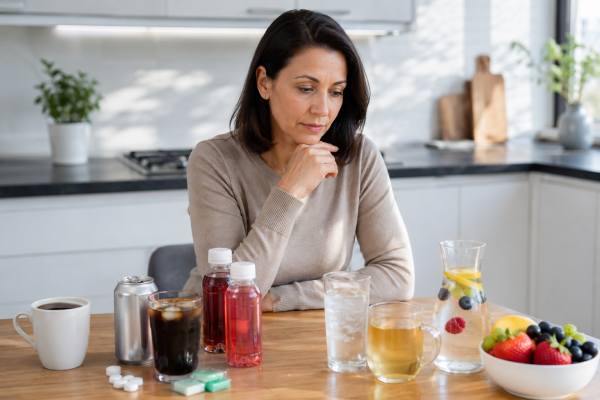
Artificial sweeteners show up in diet soda, sugar-free coffee syrups, flavored waters, protein shakes, gum, “zero sugar” drink mixes, low-calorie desserts, electrolyte powders, and many medicines. For some people with bladder urgency, frequency, bladder pressure, or urge leaks, those products seem to make the bladder feel more jumpy. The tricky part is that the research is mixed, and the real trigger is often the whole product, not only the sweetener.
A diet soda, for example, might contain artificial sweetener, carbonation, caffeine, citric acid, phosphoric acid, preservatives, and a large fluid load all at once. Any one of those factors, or the combination, can make symptoms worse in a sensitive bladder. That is why the most useful approach is not to panic about every sugar substitute. It is to test your own pattern in a structured way, remove the most likely triggers, and replace them with drinks and foods that are less likely to irritate the bladder.
Table of Contents
- How Sweeteners May Affect the Bladder
- Symptoms That Point to a Trigger
- Where Sweeteners Hide
- How to Test Sweeteners Without Guessing
- What to Try Instead
- How to Reintroduce Without Starting Over
- When It Is Not About Sweeteners
How Sweeteners May Affect the Bladder
Artificial sweeteners are often discussed as “bladder irritants,” but that phrase needs a plain explanation. An irritant does not always damage the bladder. It usually means something makes the bladder lining, bladder nerves, or bladder muscle more reactive. The result is a stronger urge to pee, more trips to the bathroom, pressure before the bladder is full, or leaking before reaching the toilet.
Research does not prove that every person with urgency must avoid artificial sweeteners. Large studies and recent reviews show inconsistent results. Some people report clear flares after sweetened diet drinks or sugar-free products, while others notice no change. That mixed picture makes sense because urgency symptoms rarely come from one ingredient alone. Bladder sensitivity, fluid timing, caffeine intake, constipation, pelvic floor tension, infection risk, menopause-related tissue changes, diabetes, medications, and sleep all affect how the bladder behaves.
The most practical takeaway is simple: artificial sweeteners are worth testing when symptoms spike after “diet,” “zero,” “light,” or sugar-free products, especially drinks. They are not automatically the cause of every bladder problem.
A useful starting point is to think about sweeteners as one part of a broader group of foods and drinks that trigger urgency. The bladder often reacts to patterns: a large diet soda in the afternoon, two sugar-free coffees before noon, citrus-flavored sparkling water all day, or a packet of sweetener in every cup of tea.
The product often matters more than the packet
A teaspoon-sized packet of sucralose in oatmeal is different from a 20-ounce diet cola. The cola brings carbonation, acid, caffeine, and a large volume of fluid. A “zero sugar” energy drink adds caffeine, acids, flavorings, and sometimes high-dose vitamins. A sugar-free mint brings a small dose of sweetener, but if it contains sugar alcohols, it can also affect the gut.
That is why people often say, “Artificial sweeteners bother my bladder,” when the main trigger is actually diet soda, flavored water, or a powdered drink mix. The label helps, but the symptom pattern tells the real story.
Dose and timing change the reaction
A bladder-sensitive person might tolerate one lightly sweetened food but react to repeated exposure across the day. Common patterns include urgency after a morning coffee with sweetener, more frequency after sipping artificially sweetened drinks all afternoon, or night waking after a sugar-free drink in the evening.
Timing also matters because the bladder responds to both ingredients and volume. Drinking a large artificially sweetened beverage quickly can stretch the bladder and increase urine production at the same time. Sipping a smaller amount with food is often easier to tolerate.
Sweeteners can affect the bowel too
Sugar alcohols such as sorbitol, xylitol, maltitol, mannitol, and erythritol are not the same as aspartame or sucralose, but they often appear in sugar-free gum, candies, protein bars, and “keto” desserts. In larger amounts, they can cause gas, bloating, loose stool, or cramping. A bloated or constipated bowel can press on the bladder and make urgency worse.
This is one reason a person might blame the bladder after eating sugar-free candy, when the first problem started in the gut. Constipation is a common bladder trigger, so it belongs in the same troubleshooting plan as diet drinks and sweeteners. If bowel fullness is part of your pattern, review how constipation can trigger bladder symptoms before cutting out more foods than necessary.
Symptoms That Point to a Trigger
A sweetener-related bladder flare usually has a pattern. Symptoms often show up within a few hours of a specific drink or food, repeat after the same product, and improve when the product is removed. The pattern is more convincing than one bad bladder day.
The most common symptoms people track are urgency, frequency, bladder pressure, burning without infection, and urge leaks. Urgency means a sudden strong need to pee that feels hard to delay. Frequency means peeing more often than usual during the day. Nocturia means waking up at night to pee. Urge incontinence means leaking after a sudden urge.
A bladder trigger is more likely when symptoms change quickly. For example, you usually pee every three to four hours, but after two cans of diet cola you go every hour and feel bladder pressure. Or you usually sleep through the night, but after an artificially sweetened evening drink you wake up twice.
The pattern is less clear when symptoms are constant every day, unrelated to meals or drinks, or paired with fever, back pain, blood in the urine, or worsening burning. Those signs need a medical check instead of a diet-only approach.
Urgency after sweet drinks
Urgency after a diet drink does not prove the sweetener is the only trigger. Diet sodas and flavored waters often combine several bladder stressors. Carbonation can create a bloating sensation, acids can bother sensitive tissue, caffeine can increase urine production and bladder muscle activity, and the sweetener can be one more variable.
This is why swapping diet cola for caffeine-free diet cola does not always solve the problem. It removes caffeine but leaves carbonation, acids, and sweetener. A better test is to remove the whole product first, then challenge one variable at a time.
Burning without a positive UTI test
Some people feel burning or raw bladder discomfort after acidic or artificially sweetened products even when urine testing does not show an infection. This is common in people with bladder pain syndrome or interstitial cystitis, but it also happens with temporary irritation.
Burning still deserves attention. If burning is new, strong, or comes with cloudy urine, odor, fever, pelvic pain, or back pain, testing for infection is more important than guessing about sweeteners. If tests keep coming back negative and symptoms flare with specific foods or drinks, a trigger diary becomes more useful.
People with recurring urgency, pain, or pressure often need a broader plan than avoiding sweeteners. Dietary testing sometimes fits into an interstitial cystitis diet approach, especially when acidic foods, coffee, alcohol, and spicy foods trigger symptoms too.
Leaks on the way to the bathroom
If artificial sweeteners worsen urgency, urge leaks can follow. This happens when the bladder sends a “go now” signal before you are ready. The leak is not a character flaw or poor effort. It is a timing problem between bladder signals, pelvic floor response, and access to a bathroom.
Trigger control helps some people, but leaks usually improve more when diet changes are paired with bladder training, pelvic floor relaxation or strengthening when appropriate, timed voiding, and constipation management. Diet alone is rarely the whole answer for established urge incontinence.
Where Sweeteners Hide
The easiest products to spot are diet soda and tabletop sweetener packets. The harder ones are everyday items marketed as healthy, low-carb, diabetic-friendly, keto, light, zero sugar, or high protein. Many people remove diet soda but keep using sweetened waters, gum, protein shakes, and electrolyte powders without realizing the bladder is still getting the same type of exposure.
Check ingredient lists instead of relying on front labels. “No added sugar” does not mean unsweetened. “Naturally sweetened” does not mean bladder-safe. Stevia and monk fruit are plant-derived, but a sensitive bladder still reacts to some products that contain them, especially when they are mixed with citric acid, carbonation, or sugar alcohols.
| Label name | Common places to find it | Bladder troubleshooting note |
|---|---|---|
| Aspartame | Diet soda, drink mixes, light yogurt, sugar-free gelatin | Often appears with acids, flavors, and carbonation in drinks. |
| Sucralose | Packets, protein powders, flavored waters, coffee syrups | Common in “zero sugar” drinks and fitness products. |
| Saccharin | Packets, some diet foods, older sugar-free products | Worth testing if symptoms follow tabletop sweeteners. |
| Acesulfame potassium or Ace-K | Diet soda, energy drinks, drink powders, protein shakes | Often combined with sucralose or aspartame. |
| Stevia or steviol glycosides | “Natural” zero-sugar drinks, packets, flavored waters | Plant-derived does not guarantee symptom-free. |
| Monk fruit extract | Low-carb foods, sweetener blends, protein products | Usually appears in blends, so check the full ingredient list. |
| Sorbitol, xylitol, maltitol, erythritol | Sugar-free gum, candy, bars, keto desserts | Can affect the bowel, which can worsen urgency indirectly. |
A common mistake is focusing only on drinks. Sugar-free gum and mints matter when they are used all day. A few pieces are unlikely to explain severe symptoms, but constant chewing can add up, especially with sugar alcohols. Cough drops, chewable vitamins, liquid medicines, and powdered supplements also deserve a quick label check.
Another overlooked source is coffee flavoring. A person may blame coffee itself, but the trigger might be sugar-free vanilla syrup plus caffeine plus the habit of drinking two large coffees quickly. If coffee is part of the pattern, compare it with caffeine-related bladder urgency rather than assuming the sweetener is acting alone.
How to Test Sweeteners Without Guessing
The best test is short, organized, and specific. Do not cut out every possible bladder irritant at once unless symptoms are severe and you need a reset. If you remove sweeteners, caffeine, citrus, tomatoes, spices, alcohol, carbonation, chocolate, and half your normal foods on the same day, you will not know what helped.
A simple two-week test works well for many people. Remove the most likely artificial sweetener sources, keep the rest of your routine steady, and track symptoms. If symptoms improve, reintroduce one item at a time. If nothing changes, sweeteners are probably not your main trigger.
Use a bladder diary to spot triggers instead of relying on memory. Memory tends to overvalue dramatic days and miss small repeated patterns. A diary shows timing, dose, bathroom trips, urgency level, leaks, sleep, bowel movements, and menstrual or menopause-related changes when relevant.
Step 1: Pick the products to remove
Start with the highest-exposure items. These are usually drinks and products used daily:
- Diet soda, especially cola or citrus flavors
- Zero-sugar energy drinks
- Artificially sweetened sparkling water
- Flavored water enhancers and powdered drink sticks
- Sugar-free coffee syrups
- Protein shakes or powders with sucralose or Ace-K
- Packets added to coffee, tea, oatmeal, or cereal
- Sugar-free gum, mints, or candy used throughout the day
Do not worry about rare, tiny exposures at first. A chewable medicine used once or a small amount in a special food is less useful to test than the drink you consume every afternoon.
Step 2: Keep fluids steady
Many people accidentally drink much less when they remove diet drinks. Then symptoms change because urine becomes concentrated, not because the sweetener is gone. Concentrated urine can burn and increase urgency.
Replace the removed drink with a similar volume of a lower-irritation option. If you usually drink 16 ounces of diet soda at lunch, try 12 to 16 ounces of still water, weak herbal tea, or another tolerated drink. Avoid extreme fluid restriction. The goal is calmer urine, not dehydration.
Step 3: Track the right details
For two weeks, write down what you drink, when you pee, urgency level, leaks, bladder pain or burning, and nighttime bathroom trips. A simple 0–3 urgency scale is enough: 0 means no urgency, 1 means mild, 2 means strong but controllable, and 3 means sudden or leaking.
Also note bowel movements. A constipation flare can ruin a sweetener test by adding bladder pressure. If bowel habits change after removing sugar-free gum or candy, that detail matters.
Step 4: Look for a meaningful change
A meaningful change is practical, not perfect. Examples include going from 12 bathroom trips a day to eight, waking once instead of three times, having fewer “drop everything” urges, or stopping afternoon leaks. A small improvement still matters when it makes errands, work, sleep, or exercise easier.
If symptoms do not change after two weeks, bring the sweetener question down your priority list. Look harder at caffeine, alcohol, constipation, pelvic floor tension, urinary infection, medication effects, sleep problems, and overall bladder training.
What to Try Instead
The best replacement depends on what the sweetened product was doing for you. Some people want bubbles. Some want caffeine. Some want flavor. Some want a dessert without much sugar. Replacing a habit works better than simply removing it.
For daily hydration, still water is the lowest-risk choice, but it does not need to be plain forever. Try chilled water, water with cucumber, mint, or a small amount of tolerated fruit, or weak herbal tea. Chamomile, rooibos, marshmallow root tea, and plain warm water are often gentler than citrus-heavy blends. Avoid assuming every herbal tea is bladder-friendly; many fruit teas are acidic.
For people who miss soda, the first swap should remove several irritants at once. Try still water with a meal, then later test plain sparkling water if carbonation matters to you. If plain sparkling water triggers urgency, bubbles are part of your problem. If it does not, the issue may be cola, citrus flavoring, caffeine, sweetener, or the drink size.
For people who need sweetness, small amounts of regular sugar, honey, or maple syrup may be easier on the bladder than nonnutritive sweeteners, but they are not the right choice for everyone. People with diabetes, prediabetes, high triglycerides, or strict carbohydrate targets should ask a clinician or dietitian how to handle sweet drinks and desserts safely. The bladder goal should not create a blood sugar problem.
For coffee drinkers, try reducing the stack of triggers. Choose a smaller serving, skip sugar-free syrup, use milk or a tolerated creamer, and avoid drinking coffee on an empty stomach. If symptoms remain strong, test half-caf or low-acid coffee. People with bladder pain sometimes do better with non-coffee warm drinks, especially during flares. If coffee remains a major issue, consider low-acid coffee alternatives that preserve the morning ritual without the same bladder hit.
For desserts, compare the whole food, not only the sweetener. A small serving of regular pudding may be easier than a large “keto” dessert with sugar alcohols. Plain yogurt with tolerated fruit may work better than light yogurt with artificial sweetener and citric acid. Homemade oatmeal with cinnamon and a small amount of sweetener may be easier to control than packaged “sugar-free” snacks.
For breath freshening, switch from constant sugar-free gum to water, oral hygiene, or occasional mints that do not upset your gut. If dry mouth drives gum use, review medications with a clinician, because dry mouth often comes from antihistamines, antidepressants, bladder medicines, and blood pressure drugs.
Alcohol deserves a separate note. Replacing diet soda with wine, cocktails, or hard seltzer is not a bladder-friendly swap. Alcohol can increase urine production, reduce bladder control, and worsen leaks in some people. If drinks are part of your symptom pattern, compare sweeteners with alcohol-related urgency and leaks before deciding what to keep.
How to Reintroduce Without Starting Over
Reintroduction is where you learn the most. If you feel better after removing artificial sweeteners, do not bring back every old product on the same day. Test one item, in a normal serving, at a time when you can observe symptoms.
Start with the product you miss most or the one most useful in your routine. If you want to test a sweetener packet, use one packet in the morning and keep the rest of the day steady. If you want to test diet soda, choose one small serving with lunch, not a large bottle while running errands. Avoid testing during a UTI, constipation flare, travel day, menstrual flare, or poor sleep week if those affect your bladder.
Give each test 24 to 48 hours before trying the next item. Some bladder reactions are quick, but others show up later through sleep disruption, bowel changes, or repeated exposure. If symptoms return, stop that item and wait until the bladder settles before testing something else.
A clear reaction does not always mean lifelong avoidance. It might mean dose control. You may learn that one diet drink a week is fine, but one every afternoon causes frequency. Or that sucralose in a protein powder bothers you, while a small amount of stevia in tea does not. The goal is a workable personal threshold.
Use this practical ranking:
- Keep without concern: no symptoms after reintroduction.
- Use occasionally: mild symptoms only with larger servings or repeated use.
- Limit strongly: urgency, burning, pressure, or leaks return reliably.
- Avoid during flares: tolerable when stable but irritating when symptoms are already active.
This approach prevents unnecessary restriction. It also gives you better information for a clinician. “Diet soda makes me pee more” is useful. “One 12-ounce caffeine-free diet cola caused urgency within two hours on two separate test days” is much more useful.
If urgency remains even after trigger control, add bladder skills instead of cutting more foods. Scheduled bathroom trips, urge suppression, relaxed breathing, pelvic floor coordination, and gradual spacing between voids often do more than another round of food restriction. A structured bladder training plan is especially helpful when you have started peeing “just in case” because you fear sudden urgency.
When It Is Not About Sweeteners
Artificial sweeteners are only one possible trigger. If symptoms are new, severe, painful, or persistent, do not assume diet is the explanation. Urgency and frequency can come from overactive bladder, UTI, bladder pain syndrome, pregnancy, diabetes, high fluid intake, low fluid intake, constipation, pelvic floor dysfunction, vaginal or urethral irritation, prostate enlargement, kidney stones, sleep apnea, and medication side effects.
A UTI is more likely when urgency comes with burning, cloudy urine, strong odor, pelvic pain, fever, or feeling unwell. A kidney infection is more concerning when urinary symptoms come with fever, chills, nausea, or back/flank pain. Blood in the urine needs medical guidance, even if it happens after a suspected food trigger.
Overactive bladder is different from a simple dietary flare. It involves urgency, frequency, nocturia, and sometimes urge leaks that continue across many days or weeks. Food and drink triggers can worsen it, but treatment often includes bladder training, pelvic floor therapy, medications, nerve stimulation, or other options. If symptoms fit that pattern, read about overactive bladder symptoms and treatment options rather than relying only on ingredient changes.
Medication effects are easy to miss. Diuretics increase urine production. Some cold medicines, antihistamines, antidepressants, and muscle relaxers can affect bladder emptying. Diabetes medicines, lithium, and high caffeine intake can change urination patterns too. If your symptoms began after a new medicine or dose change, bring that timeline to your clinician.
Pelvic floor tension can also mimic bladder irritation. A tight pelvic floor can cause urgency, burning, hesitancy, pain after peeing, or pressure that feels like a bladder problem. In that situation, cutting out more foods may not solve the main issue. Pelvic floor therapy, relaxation work, bowel management, and treatment for pain triggers often matter more.
Seek prompt care if you have fever, flank pain, vomiting, new blood in urine, inability to pee, severe pelvic pain, pregnancy with urinary symptoms, symptoms after a procedure, or urinary symptoms in a person at higher risk for complications. For non-emergency symptoms that keep returning, a primary care clinician, gynecologist, urologist, urogynecologist, or pelvic floor physical therapist can help sort out whether sweeteners are a side issue or a major trigger.
References
- The AUA/SUFU Guideline on the Diagnosis and Treatment of Idiopathic Overactive Bladder 2024 (Guideline)
- Potential Bladder Irritants and Overactive Bladder Symptoms: A Systematic Review 2025 (Systematic Review)
- Dietary Influence on Bladder Pain Syndrome: A Systematic Review 2024 (Systematic Review)
- Artificially sweetened beverages and urinary incontinence-a secondary analysis of the Women’s Health Initiative Observational Study 2023 (Observational Study)
- Effectiveness of Fluid and Caffeine Modifications on Symptoms in Adults With Overactive Bladder: A Systematic Review 2023 (Systematic Review)
- Total fluid intake, caffeine, and other bladder irritant avoidance among adults having urinary urgency with and without urgency incontinence: The Symptoms of Lower Urinary Tract Dysfunction Research Network (LURN) 2023 (Observational Study)
Disclaimer
This article is for education and does not diagnose the cause of urinary urgency, bladder pain, burning, or leaks. New, severe, recurring, or worsening urinary symptoms deserve medical evaluation, especially with fever, back pain, blood in urine, pregnancy, inability to pee, or symptoms that suggest infection. If you have diabetes, kidney disease, recurrent UTIs, bladder pain syndrome, or use medications that affect urination, ask a qualified clinician before making major diet or fluid changes.