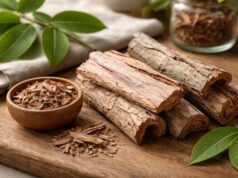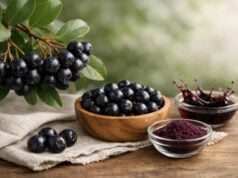
Australian tea tree (Leptospermum scoparium) is a fragrant shrub in the myrtle family whose leaves and nectar have become well known through two modern products: mānuka essential oil and mānuka honey. This name deserves a brief clarification at the start. In everyday retail, “tea tree oil” often refers to Melaleuca alternifolia. Leptospermum scoparium is more commonly called mānuka or New Zealand tea tree, though it also grows in parts of Australia and is sometimes marketed with “Australian tea tree” wording. The distinction matters because the chemical profile, strength, and safety guidance are not identical.
Used appropriately, Leptospermum scoparium preparations are valued for antimicrobial support, skin and scalp care, and wound-adjacent uses such as dressings that rely on medical-grade honey. At the same time, concentrated essential oils can irritate skin and should not be swallowed, and honey has its own safety rules for infants and people managing blood sugar. This guide explains what’s in mānuka products, what benefits are realistic, how to use them, and how to stay within safe limits.
Quick Facts
- May help support clearer skin and a calmer scalp when used topically and diluted correctly
- Medical-grade honey dressings can support wound care under clinical guidance, especially for slow-healing wounds
- Essential oil should be diluted (commonly 1–2%) and never taken by mouth
- Avoid essential oil use in pregnancy, on infants, or if you have severe fragrance allergy or eczema flares
Table of Contents
- What is Australian tea tree
- Key ingredients and how they work
- Health benefits and realistic uses
- How to use it safely
- Dosage and dilution guidelines
- Side effects interactions and who should avoid
- What the evidence says
What is Australian tea tree
Leptospermum scoparium is an evergreen shrub with small leaves and white or pink flowers. It thrives in coastal and upland environments and belongs to the Myrtaceae family (the same broad family that includes eucalyptus). Traditionally, leaves were used in infusions and topical preparations in regional healing practices, and the plant’s nectar later became the basis for what is now marketed globally as mānuka honey.
A naming note that prevents confusion
Many people search “Australian tea tree” expecting the essential oil of Melaleuca alternifolia (classic tea tree oil used for acne, fungal issues, and scalp care). However, Leptospermum scoparium is typically marketed as:
- Mānuka oil (an essential oil distilled from foliage, sometimes bark and seed material depending on producer)
- Mānuka honey (a monofloral or predominantly mānuka nectar honey)
The two “tea trees” are related only by common marketing language and a shared family background. Their oils differ in signature actives, which means dilution guidance and tolerability can differ too. If a product label does not list the botanical name, you cannot reliably know what you are buying.
Common forms you will encounter
For Leptospermum scoparium, most consumer use fits into three categories:
- Essential oil: used topically (diluted) for skin and scalp, and sometimes used in aromatherapy-style applications.
- Honey: used as a food and, in medical-grade form, as part of wound dressings.
- Extracts and topical blends: creams, gels, and serums that include mānuka oil or mānuka honey derivatives for cosmetic or skin-comfort purposes.
A practical way to decide what you need is to match the form to the goal. If your goal is skin support, diluted essential oil or a finished topical product is usually the route. If your goal is wound support, evidence tends to focus on medical-grade honey dressings, which are not the same thing as spreading kitchen honey on a wound.
What it is not
Despite broad marketing, Leptospermum scoparium is not best approached as an all-purpose internal herb. In particular, ingesting essential oil is a common and avoidable mistake. The most responsible, evidence-aligned use is external and targeted, with special attention to sensitive skin and allergy-prone individuals.
Key ingredients and how they work
The “active” story of Leptospermum scoparium depends on which product you mean. Mānuka oil and mānuka honey share a plant origin, but their chemistry is different: one is dominated by volatile oil constituents, the other by sugars, acids, and nectar-derived bioactives.
Mānuka oil and its chemotypes
Mānuka essential oil varies substantially by geography and plant chemotype. In research and industry discussions, you will often see emphasis on:
- Beta-triketones such as leptospermone, isoleptospermone, flavesone, and grandiflorone
- Monoterpenes and sesquiterpenes that shape aroma and skin feel
- Supporting constituents such as calamenene and other aromatic compounds
This variability is not just academic. Oils higher in beta-triketones are often discussed for stronger antimicrobial behavior, while monoterpene-heavy oils may feel sharper and can be more irritating for some users. When a brand provides a chemotype profile or GC-MS summary, it is a quality signal because it helps explain why one bottle behaves differently from another.
Mechanistically, these constituents are studied for:
- Antimicrobial activity (inhibiting certain bacteria and influencing biofilms in laboratory settings)
- Anti-inflammatory signaling modulation at the skin surface
- Deodorizing and scalp-balancing effects through microbial and oil-balance pathways
Mānuka honey and “non-peroxide” activity
Mānuka honey is known for antimicrobial activity that goes beyond the typical hydrogen-peroxide mechanism of many honeys. It is often associated with nectar-derived compounds (commonly discussed in relation to methylglyoxal and related markers), plus:
- Phenolic compounds and flavonoids
- Organic acids that influence pH
- Osmotic effects from sugar concentration
In practice, honey’s wound-related usefulness is not only “killing germs.” It can also support a moist healing environment, help with debridement, and reduce odor in certain wound contexts when used as medical-grade products.
Why this matters for everyday decisions
A key takeaway is that mānuka oil behaves like a potent, variable essential oil, while mānuka honey behaves like a biologically active honey. One is best treated as a carefully diluted topical active; the other is best treated as a food or a clinical dressing material. Conflating them leads to the most common errors, such as swallowing essential oil or using kitchen honey on wounds that require sterile, standardized care.
Health benefits and realistic uses
Most interest in Leptospermum scoparium centers on antimicrobial support, especially for skin and wound-adjacent care. The most helpful way to think about benefits is to separate what is plausible for home use from what belongs in a clinic.
Skin support for blemishes and irritation-prone areas
Diluted mānuka oil is commonly used in cosmetic routines for:
- Occasional blemishes and congested skin
- Odor-prone areas (as part of deodorant-style blends)
- Minor irritation related to shaving or friction, when skin is intact
Realistic outcomes are modest: less visible redness, fewer “angry” spots, and a cleaner feel. It is not a cure for cystic acne, rosacea, or chronic dermatitis. For those conditions, essential oils can sometimes worsen the situation by adding irritation to an already inflamed skin barrier.
If you need a gentler “skin calming” companion in a routine that includes active botanicals, consider pairing with non-fragrant, barrier-friendly options such as aloe vera for soothing topical support, rather than stacking multiple aromatic oils.
Scalp and dandruff-style concerns
Mānuka oil appears in some shampoos and scalp serums intended for:
- Flaking and itch related to oily scalp patterns
- A “fresh” scalp feel after sweating or heavy styling products
Here, the benefit is often a combination of mild antimicrobial action plus sensory and deodorizing effects. The main risk is irritation, especially if the product is highly fragranced or used too frequently.
Wound-adjacent uses and medical-grade honey
The strongest evidence in the Leptospermum scoparium ecosystem tends to cluster around honey in wound care, including chronic wounds, burns, and pressure-ulcer contexts—when honey is used as a standardized, medical-grade dressing. For a reader deciding what to do at home, the practical line is:
- Minor superficial cuts: clean and protect first; honey is not required
- Slow-healing or chronic wounds: do not self-treat with kitchen honey; use clinician-guided care and appropriate dressings
If your interest is specifically mānuka honey and how quality markers relate to real-world use, practical guidance on manuka honey use can help you interpret labels and avoid over-claiming.
Respiratory and throat comfort
Mānuka honey is sometimes used for throat comfort and cough-related soothing. This is largely a “demulcent” effect (soothing coating) plus antimicrobial and antioxidant context. The realistic expectation is symptom comfort, not treatment of pneumonia, strep throat, or persistent cough causes.
How to use it safely
Safe use starts with a simple rule: mānuka oil is a topical active that must be diluted, and mānuka honey is a food or a clinical dressing material depending on context. Most problems happen when people treat essential oil like a casual household remedy.
Using mānuka oil on skin
For facial or body use, choose one of these approaches:
- Finished product: a cream, gel, or serum that already contains mānuka oil at a skin-appropriate concentration. This is often the simplest option for sensitive users.
- Do-it-yourself dilution: mix the essential oil into a carrier oil (such as jojoba, squalane, or fractionated coconut oil) at an appropriate percentage.
Apply to intact skin only. For spot use, use a small amount and avoid repeated reapplication every time you notice the area. More frequent application often increases irritation without improving results.
Using it on the scalp
If you use mānuka oil for scalp concerns, it is usually better to use a rinse-off format such as shampoo or a pre-formulated scalp tonic. Leave-on essential oils can aggravate itch if the scalp barrier is already compromised. Start with less frequent use (for example, two to three times per week) and increase only if your scalp clearly tolerates it.
For people who like astringent, oil-control approaches, some find it helpful to rotate with non-oil botanical options such as witch hazel for topical oil and irritation management, rather than layering multiple essential oils.
Using mānuka honey at home
For general wellness, mānuka honey is typically used like a functional food:
- Stir into warm (not boiling) tea
- Use as a throat-soothing spoonful
- Add to yogurt or oatmeal for taste and texture
If your goal is respiratory comfort, honey is often combined with soothing herbs and warm liquids. If you want additional bee-derived antimicrobial context, some people compare honey with propolis. If that topic matters to your audience, propolis immune and respiratory support offers a useful contrast in form, dosing, and tolerability.
What not to do
Avoid these high-risk practices:
- Swallowing essential oil directly or in water
- Applying essential oil to broken skin, ulcers, or deep wounds
- Using honey as a substitute for wound evaluation when there are signs of infection (spreading redness, heat, pus, fever, or severe pain)
- Giving honey to infants under 12 months due to botulism risk
Dosage and dilution guidelines
With Leptospermum scoparium, “dosage” usually means either topical dilution (for mānuka oil) or serving size and frequency (for honey). The best guidance is conservative because individual sensitivity varies and product chemistry can differ by batch.
Mānuka essential oil dilution
A practical, skin-friendly range for many adults is:
- Face and sensitive areas: 0.5–1% dilution
- Body and scalp products: 1–2% dilution
- Short-term localized body use: up to 2–3% for limited areas if well tolerated
How to calculate at home:
- 1% dilution is about 1 drop essential oil per 1 teaspoon (5 mL) carrier oil
- 2% dilution is about 2 drops per 1 teaspoon (5 mL) carrier oil
These are approximations because drop sizes vary, but they are safer than “a few drops” with no structure.
Use patterns that are generally reasonable:
- Apply once daily for the first 2–3 days to assess tolerance
- If tolerated, increase to twice daily for targeted short-term use
- Reassess after 7–14 days; if there is no clear benefit, stop rather than escalating
If you are using a finished product, follow the label. “More often” rarely improves results with essential oils and commonly increases irritation.
Patch testing as part of dosing
Patch testing is effectively a dosing step:
- Apply a diluted mixture to a small area of inner forearm.
- Leave for 24 hours (do not cover tightly).
- If itching, burning, or rash appears, do not use on larger areas.
Mānuka honey serving ranges
For food use, common serving patterns are:
- 1–2 teaspoons (about 7–14 g) once or twice daily for throat comfort or general use
- In tea, add after the drink cools slightly to preserve flavor and aroma
For wound contexts, “dose” is determined by dressing type and clinical plan. Medical-grade honey dressings are selected by wound size, exudate level, and change frequency. For home readers, the safest guidance is to treat medical-grade wound care as clinician-guided rather than self-formulated.
Duration and cycling
- Essential oil: use in short courses, usually 1–2 weeks, then pause to reassess skin barrier and results.
- Honey: food use can be ongoing, but moderation matters for sugar intake and for people managing glucose.
If you are using multiple active topicals (acids, retinoids, benzoyl peroxide), lower essential-oil exposure rather than stacking irritation risks.
Side effects interactions and who should avoid
Safety for Leptospermum scoparium products is mostly about skin tolerance, allergy risk, and appropriate use context. The two main product families—essential oil and honey—have different cautions.
Mānuka oil side effects
Possible adverse effects include:
- Burning, stinging, or redness shortly after application
- Dryness and scaling over time, especially on the face
- Allergic contact dermatitis (itchy rash that can spread beyond the application area)
Risks increase with higher concentration, frequent use, occlusion (covering tightly), and use on already inflamed or broken skin. If you develop a rash, stop immediately. If swelling, hives, or breathing symptoms occur, seek urgent medical care.
Who should avoid mānuka essential oil
Avoid or use only with clinician guidance if you are:
- Pregnant or breastfeeding
- Using it on infants or young children
- Managing moderate to severe eczema, rosacea, or chronic dermatitis flares
- Known to react to fragrances, essential oils, or topical botanicals
- Using it near eyes or on mucous membranes
Also use caution around pets. Many essential oils can be problematic for cats and some dogs, especially with diffusion in closed spaces.
Honey cautions
Honey is generally safe as a food for most older children and adults, but key cautions include:
- Do not give honey to infants under 12 months
- Use moderation if you have diabetes or insulin resistance
- Avoid if you have known allergy to bee products
- Be cautious with oral use if you are actively treating dental caries risk and frequently exposed to sugars
For wound care, the major safety issue is sterility and appropriate use. Kitchen honey is not designed for wound sterility standards. For chronic wounds, burns, or post-surgical wounds, use medical-grade products and clinician guidance.
Medication interactions
Topical mānuka oil has limited systemic absorption when used correctly, so medication interactions are uncommon. The bigger issue is indirect: skin irritation can mimic infection or worsen dermatitis, leading to unnecessary antibiotic use or delayed care.
Honey can influence blood sugar, which matters for people using glucose-lowering medications. If you use honey daily and you monitor glucose, treat it like any other carbohydrate source and adjust your plan with your clinician.
When to seek medical care
Seek evaluation if you notice:
- Rapidly spreading redness, heat, pus, fever, or severe pain in a skin area
- Non-healing wounds beyond expected timelines
- Persistent scalp inflammation with hair loss or bleeding
- New allergy symptoms after essential oil exposure
What the evidence says
The evidence base for Leptospermum scoparium is best described as strong in laboratory antimicrobial work, growing in formulation research, and more mixed in large clinical outcomes—especially for essential oil uses. Honey-based wound care has broader clinical literature, though not every study is specific to mānuka honey.
Mānuka essential oil research
Studies consistently show antimicrobial activity of mānuka oil against various bacteria in laboratory settings, including work that explores effects on biofilms. This supports why it is used in cosmetic and hygiene products. The gap is translating lab potency into predictable clinical outcomes for acne, eczema, or infections without irritation.
A realistic clinical interpretation is:
- Mānuka oil may help as a supportive topical for minor, superficial issues when diluted and tolerated.
- It should not be treated as a substitute for diagnosis and treatment of fungal infections, cellulitis, or severe inflammatory skin disease.
- Product chemistry matters; different chemotypes and formulations can behave differently on the skin.
Emerging formulation research is exploring ways to deliver mānuka oil more effectively while reducing irritation, including encapsulation strategies and targeted delivery systems. These are promising directions, but they are not the same as over-the-counter essential oil use at home.
Honey dressings and wound outcomes
Honey dressings have a clearer clinical footprint than essential oil. Systematic reviews and meta-analyses suggest honey dressings can improve certain wound-healing outcomes compared with some alternative dressings, though results vary by wound type, study quality, and protocol. Importantly, this evidence supports honey dressings as a category; it does not imply that any honey from a kitchen shelf is interchangeable with medical-grade products.
For readers, the practical message is:
- For minor cuts and scrapes, standard wound hygiene is usually enough.
- For chronic or complex wounds, honey dressings can be part of care, but selection and monitoring matter.
- If you are choosing mānuka honey for general wellness, it is best treated as a functional food rather than as a treatment for infection.
Where hype exceeds evidence
Marketing sometimes implies that mānuka oil or honey can “kill all germs,” replace antibiotics, or solve chronic skin disease. Evidence does not support that level of certainty. The best-supported use is targeted, adjunctive, and safety-first: dilute essential oil, use honey responsibly, and involve clinicians for wounds and infections.
References
- Antimicrobial and anti-biofilm activity of manuka essential oil against Listeria monocytogenes and Staphylococcus aureus of food origin 2022 (Research Article)
- Chitosan-Based Nanoencapsulation of Mānuka Oil for Periodontal Treatment 2025 (Review and Formulation Research)
- Efficacy and Safety of Honey Dressings in the Management of Chronic Wounds: An Updated Systematic Review and Meta-Analysis 2024 (Systematic Review and Meta-Analysis)
- Studies on bioactivities of Manuka and regional varieties of honey for their potential use as natural antibiotic agents for infection control related to wound healing and in pharmaceutical formulations 2024 (Review)
Disclaimer
This article is for educational purposes only and does not provide medical advice, diagnosis, or treatment. Essential oils can cause skin irritation or allergic reactions, and they should not be ingested unless prescribed by a qualified professional in a medically appropriate form. Mānuka honey and honey dressings may support wound care in specific contexts, but chronic wounds, burns, spreading skin infections, and wounds in people with diabetes require professional evaluation and proper sterile products. If you are pregnant, breastfeeding, treating a medical condition, taking prescription medications, or caring for a child, consult a qualified healthcare professional before using mānuka oil or honey therapeutically.
If you found this guide helpful, please share it on Facebook, X (formerly Twitter), or any platform you prefer so others can make safer, better-informed choices.