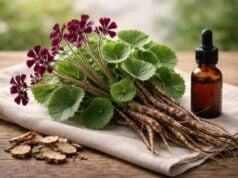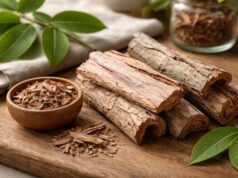
Avens (Geum urbanum), often called wood avens or herb bennet, is a traditional European herb best known for its astringent root and its subtle, clove-like aroma. Historically, it has been used to steady an unsettled stomach, support the intestines during short-lived diarrhea, and soothe irritated tissues in the mouth and throat. Those uses make sense when you look at what avens contains: a tannin-rich profile that can “tighten” and protect mucous membranes, along with polyphenols that show antioxidant and antimicrobial activity in early research. Today, avens is most commonly prepared as a decoction (a gently simmered root tea) or as a tincture, and it is often used in short, focused trials rather than as an everyday tonic. Like many astringent herbs, it can be helpful when your symptoms fit the pattern—but it can also be drying, constipating, or irritating if overused. The safest approach is practical: choose the right form, use a reasonable dose, and know when to stop.
Top Highlights
- May help calm short-term loose stools and post-meal “churning” by supporting mucous membrane tone.
- Can be used as a gargle for minor mouth and throat irritation when tissues feel tender or “spongy.”
- Typical root decoction range: 2–4 g dried root per cup, up to 2–3 cups daily for 3–7 days.
- Avoid long-term daily use because high tannin intake can worsen constipation and reduce iron absorption.
- People who are pregnant, anemic, on blood thinners, or managing chronic digestive disease should avoid unsupervised use.
Table of Contents
- What is avens?
- Key compounds in Geum urbanum
- Does avens help digestion and diarrhea?
- Avens for mouth and throat care
- Topical uses for skin and minor wounds
- How to use avens: forms and preparation
- Dosage, safety, and what evidence says
What is avens?
Avens (Geum urbanum) is a hardy perennial in the rose family (Rosaceae) that grows in woodland edges, hedgerows, shaded paths, and gardens across much of Europe and parts of Western Asia. It has small yellow flowers and a modest, leafy habit—easy to overlook until you pull up the root and notice its distinctive scent. The root and rhizome are the most commonly used parts in traditional herbalism, though the aerial parts are sometimes included in milder teas.
What makes avens interesting is how it sits at the intersection of “kitchen” and “medicine.” The root has been used historically as a warming, aromatic addition to drinks and cordials, but its stronger identity is medicinal: an herb chosen for astringency. In everyday terms, “astringent” means it can help tissues feel firmer and less irritated by forming a light protective layer at the surface. That same action is why astringent roots are often used for short-lived diarrhea, mouth tenderness, and minor oozing irritation.
Avens also has several common names that hint at its history:
- Wood avens: a nod to its habitat
- Herb bennet or St. Benedict’s herb: reflecting its place in medieval herbal practice
- Clove root: referring to its clove-like note, often attributed to aromatic compounds in the root
In modern use, avens is best approached as a situational herb. It is not typically used for broad, indefinite “detox” goals. Instead, it fits short trials for:
- loose stools linked to temporary dietary stress or mild stomach upset
- “spongy” or irritated gums and mouth tissues (as a rinse)
- throat discomfort where a drying, toning gargle feels relieving
- topical support for small, superficial skin irritation when a mild astringent is helpful
If you’re familiar with other astringent roots, you’ll notice avens has a similar “logic” to its use. For example, tormentil is another tannin-rich root traditionally used for short-term digestive steadiness, though the feel and intensity can differ from person to person.
A key practical note: avens is often most effective when you match it to the right pattern—mild, short-lived, tissue-level irritation—rather than using it for chronic disease without professional guidance.
Key compounds in Geum urbanum
Avens is not a single-compound herb. Its actions come from a blend of tannins, polyphenols, and aromatic constituents that together create its classic astringent profile. For practical use, the most important question is not “what’s the one active ingredient,” but “which compound families shape the effects I can actually feel?”
Tannins: the foundation of astringency
The dominant group in avens root is tannins, including hydrolyzable tannins (often discussed as ellagitannin-type compounds) and condensed tannins (proanthocyanidins). Tannins bind to proteins on the surface of tissues, which can:
- reduce a “weeping” sensation on irritated mucosa
- create a more protected, toned feel in the mouth, throat, and intestines
- slow down overly rapid secretions in some short-term digestive patterns
This is why avens is often used for loose stools, mild intestinal irritation, and gum tenderness. The same effect is also why it can become drying or constipating if used too long or too strong.
Polyphenols and phenolic acids
Beyond tannins, avens contains a broader polyphenol profile that may contribute to antioxidant and antimicrobial activity in laboratory testing. In practical terms, these compounds are part of why avens is often described as “soothing” even though it is astringent—many people experience it as calming to irritated tissues rather than harsh, as long as the dose is moderate.
Aromatic constituents and the clove-like note
Avens root is known for a warm, clove-like aroma, commonly associated with aromatic compounds that can be released during drying and simmering. This is not just trivia: the aroma often makes avens easier to tolerate than purely bitter astringents, and some people find the scent itself contributes to the “settling” experience of a warm decoction.
If you enjoy that spice-like quality, you may recognize a family resemblance to clove, though avens is generally used for different goals and at different intensities.
Why preparation changes what you get
Because tannins and many polyphenols extract well in hot water, avens is commonly prepared as a decoction rather than a quick steep. Simmering helps pull out heavier compounds from the root. Alcohol extracts (tinctures) can concentrate a broader range of constituents and may feel stronger per dose.
A useful rule is to match preparation to need:
- For intestinal steadiness: a modest root decoction is often the most intuitive starting point
- For mouth and throat care: a slightly stronger decoction, cooled for rinsing, can be practical
- For convenience: a standardized tincture allows smaller, measured doses
The chemistry supports the tradition, but it also explains the limits: avens is best for short, targeted use where astringency is truly appropriate.
Does avens help digestion and diarrhea?
Avens is most often used for digestion in one specific scenario: when the gut feels irritated, overly active, or “loose,” and you want a gentle way to steady things without resorting immediately to strong medications. Traditional use emphasizes short-term support, not chronic disease management.
How it may help in the real world
Avens’ tannins can create a protective, toning effect on the intestinal lining. In practical terms, that may translate into:
- fewer urgent trips to the bathroom during mild, short-lived diarrhea
- less “burning” or rawness when stools are frequent
- a more settled feeling after bland meals
- reduced intestinal “gurgling” when the gut is temporarily irritated
The effect is often described as supportive rather than dramatic. If you feel noticeably worse after taking avens, it’s a sign the pattern may not match—or the dose may be too strong.
When avens is a better fit
Avens may be worth considering when:
- diarrhea is mild and short-lived (for example, dietary indiscretion or transient stress)
- the main sensation is irritation and looseness rather than cramping and spasm
- you also want a mild mouth or throat rinse from the same batch (a practical bonus)
It may be less helpful when:
- diarrhea is driven by infection with fever or dehydration risk
- symptoms are primarily painful cramping (where antispasmodic strategies may matter more)
- diarrhea is chronic, recurrent, or associated with weight loss, blood in stool, or nighttime waking
A grounded way to use it for digestive comfort
A simple approach is a 3–7 day trial:
- Start with a moderate decoction (not overly strong).
- Use it alongside bland, hydration-focused meals.
- Reassess daily for clear improvement.
Because tannins can bind minerals and may reduce absorption of iron when taken repeatedly, it’s wise to keep avens separate from iron-containing meals or supplements by at least a couple of hours, especially if you’re prone to low ferritin.
If your digestive goals lean more toward building stool bulk and supporting regularity rather than “tightening,” a different tool may fit better. For example, psyllium is often used to normalize stool form in both constipation and loose-stool patterns, but it works through fiber and water balance rather than astringency.
Red flags that should override herbal self-care
Seek medical care promptly if you have:
- signs of dehydration (dizziness, very dark urine, inability to keep fluids down)
- fever, severe abdominal pain, or blood in stool
- diarrhea lasting more than a few days without improvement
- diarrhea in older adults, very young children, or immunocompromised individuals
Avens can be a sensible short-term ally for mild digestive upset, but it should never become a reason to delay evaluation when symptoms are significant or persistent.
Avens for mouth and throat care
One of the most traditional uses of avens root is as a rinse or gargle—especially when gums feel tender, the mouth feels irritated, or the throat feels scratchy in a way that benefits from gentle “toning.” This is a classic application for tannin-rich herbs: they can make tissues feel less swollen, less weepy, and more comfortable after contact.
When it tends to fit best
Avens mouth and throat care is most often chosen for:
- mild gum irritation or a “spongy” feeling after brushing or flossing
- transient mouth tenderness (for example, from minor friction)
- a scratchy throat that feels better with a drying, tightening gargle
- a lingering “raw” sensation after a short illness, when you want comfort rather than stimulation
It is not a substitute for dental care, evaluation of persistent sores, or treatment of infections. If symptoms last longer than about two weeks, recur frequently, or are severe, a clinician or dentist should evaluate the cause.
How to prepare a practical rinse
A simple method is to make a root decoction and reserve a portion for rinsing:
- Simmer the root gently, then strain well.
- Let it cool fully to lukewarm or cool temperature.
- Swish for 30–60 seconds, then spit. Repeat up to 2–3 times daily.
You can also use it as a gargle for 15–30 seconds if throat tissues feel irritated. If it feels too drying, dilute it with water.
What to expect
A well-matched avens rinse often leaves a clean, slightly tightened feel. Some people notice reduced minor bleeding from tender gums, though bleeding can also be a sign you need improved technique or professional periodontal support. If the rinse causes burning or worsens dryness, reduce strength or stop.
Helpful pairings and gentle alternatives
Avens can be used alone, but many people prefer an oral routine that includes a soothing resin or aromatic support when appropriate. For example, myrrh has a long history in mouth care traditions and is often used for similar “tissue support” goals, though it has a different feel and is not ideal for everyone.
When not to rely on rinses
Stop home care and seek evaluation if you notice:
- mouth ulcers that do not heal
- persistent gum bleeding with swelling or pain
- fever, facial swelling, or severe tooth pain
- sore throat with difficulty swallowing or breathing
Used appropriately, avens fits well as a short-term rinse for minor irritation—especially for people who appreciate a simple, non-sugary, non-stimulating approach.
Topical uses for skin and minor wounds
Avens is sometimes used externally for its astringent and soothing qualities, especially when skin feels irritated and slightly “weepy” or when minor surface issues benefit from a gentle tightening effect. These topical uses are rooted in traditional practice, and modern interest is largely based on the same chemistry: tannins and polyphenols that can influence the surface environment.
Where topical avens may be useful
A cooled avens decoction can be used as:
- a compress for minor skin irritation
- a wash for areas that feel damp, sore, or lightly inflamed
- a gentle support for small superficial scrapes after proper cleaning
- a sitz-style rinse in traditions that use astringent herbs for comfort (only with intact skin and good hygiene)
Because avens is tannin-rich, it is best suited to situations where a slightly drying, toning effect is desirable. It may be less comfortable on very dry, eczema-prone skin unless diluted and followed with a suitable moisturizer.
How to use it safely
A simple, conservative workflow:
- Prepare a root decoction and let it cool completely.
- Patch-test on a small area first (especially if your skin is reactive).
- Apply as a compress for 10–15 minutes, once or twice daily.
- Stop if you notice increased redness, itching, burning, or tightness.
Avoid applying herbal preparations to deep wounds, punctures, bites, or burns beyond mild superficial redness. Those situations need proper medical assessment and sterile wound care.
What topical avens can and cannot do
Topical avens is best viewed as supportive comfort care. It may help the surface feel calmer and less irritated, but it should not be treated as an antiseptic substitute or a cure for skin infection.
Seek evaluation if you see:
- spreading redness, warmth, swelling, or pus
- increasing pain or fever
- red streaks moving away from a wound
- wounds that do not improve within a few days
Choosing between astringents
If you like the concept of topical astringency, you may also explore other plant options with a longer track record in modern topical products. witch hazel, for example, is commonly used for skin toning and transient irritation. The feel can differ: witch hazel is often used as a distilled or extract-based product, while avens is more commonly a home-prepared decoction.
Clean handling matters
One overlooked point: water-based herbal preparations can spoil. Make fresh decoction daily for topical use, store it refrigerated if needed, and discard it if it changes smell or appearance. Clean cloths and clean hands matter as much as the herb.
Used carefully, avens can be a helpful “short-term skin comfort” option—especially when you want a simple compress rather than a complex multi-ingredient product.
How to use avens: forms and preparation
Avens is usually taken as a root preparation, and the method you choose can make a noticeable difference in how it feels and how predictable it is. The goal is to select a form that fits your use-case and minimizes unnecessary risk.
Common forms
- Dried root or rhizome (tea cut): ideal for decoctions and rinses
- Powdered root: convenient, but easier to overdo and more likely to irritate sensitive digestion
- Tincture: concentrated and portable, often easier to dose in small increments
- Combined formulas: sometimes paired with other astringent or aromatic herbs for gut or mouth support
When shopping, look for clear labeling of the plant part (root/rhizome), reputable sourcing, and a product that does not hide dosing in vague blends.
How to make an avens root decoction
A decoction is the classic preparation for tannin-rich roots:
- Add the dried root to cool water.
- Bring to a gentle simmer (not a hard boil).
- Simmer 10–15 minutes, then cover and let it sit another 5 minutes.
- Strain well.
This produces a tea that is often slightly bitter and astringent, sometimes with a warm spice note. If it tastes intensely drying, use less root or shorten simmer time.
Using one batch for two purposes
Avens is practical because one decoction can be used internally and externally:
- Drink a portion warm for digestive support.
- Cool a portion for mouth rinsing or compresses.
If you do this, prioritize hygiene: store the cooled portion in the refrigerator and use it within 24 hours.
When tincture makes more sense
Tinctures can be helpful when:
- you want consistent, small doses
- you are traveling or do not want to prepare decoctions
- you want to titrate slowly to avoid dryness or constipation
Because tinctures are concentrated, they can also make it easier to “creep” into longer use. A good rule is to treat tincture use with the same discipline as tea: short trial, clear goal, daily reassessment.
Practical combinations
Avens is sometimes paired with warming aromatics for digestive comfort, especially when symptoms feel cold or sluggish. If you already use aromatics like ginger, keep the combination gentle—overly warming blends can irritate sensitive stomachs.
The best preparation is the one you can use consistently, at an appropriate strength, without side effects. With astringent herbs, that usually means moderate dosing and short duration.
Dosage, safety, and what evidence says
Avens is widely described as safe for short-term traditional use, but the safety profile is inseparable from its astringency. High tannin herbs are powerful in a specific way: they can be helpful when the goal is to “tighten” irritated tissues, and problematic when the body needs hydration, lubrication, and gentle motility.
Typical dosage ranges
Adult ranges commonly used in traditional practice include:
- Root decoction: 2–4 g dried root per 250 ml water, up to 2–3 times daily
- Powdered root: 0.5–1 g, up to 2–3 times daily (best taken with water and food)
- Tincture: product-dependent; many fall in the range of 1–3 ml up to 2–3 times daily
For most self-care goals, a reasonable duration is 3–7 days, occasionally up to 14 days if well tolerated and clearly helpful. Long-term daily use is generally not a great fit for tannin-heavy herbs.
Common side effects
Side effects tend to be dryness-related:
- constipation or reduced bowel movement frequency
- stomach tightness or nausea if taken too strong
- dry mouth or throat if used repeatedly as a gargle
- headache or “wired” feeling is uncommon and usually points to another factor
If you become constipated, stop rather than pushing through. The goal is steadiness, not shutdown.
Interactions and timing cautions
Tannins can interfere with absorption of some nutrients, especially iron. If you use iron supplements or are prone to low ferritin, separate avens from iron by at least 2 hours.
Use extra caution and get professional guidance if you:
- take blood thinners or antiplatelet drugs
- use diabetes medications (early research suggests potential effects on glucose-related enzymes, but this is not a reason to self-treat diabetes)
- have chronic gastrointestinal disease (IBD, chronic diarrhea, chronic constipation)
- have kidney disease or a history of kidney stones and are experimenting with many polyphenol supplements at once
Who should avoid avens
Avoid unsupervised use if you are:
- pregnant or breastfeeding
- giving herbs to children
- anemic or actively treating iron deficiency
- dealing with persistent diarrhea, bloody stools, or severe abdominal pain
What the evidence actually supports
Most modern research on Geum urbanum focuses on phytochemistry and laboratory models (antioxidant, antimicrobial, enzyme-related activity). These studies help explain traditional uses but do not replace human clinical trials. At this stage, the most honest conclusion is:
- Avens is plausible and traditional for short-term digestive and mucosal support.
- Evidence for specific disease treatment in humans is limited, so claims should remain modest.
- The risk profile is mainly about overuse: excessive dryness, constipation, and nutrient absorption issues.
If you treat avens as a short, targeted tool—used when the pattern fits—you’re far more likely to get benefits without the common downsides.
References
- A review of the traditional uses, phytochemistry, pharmacology and toxicity for the genus Geum (Rosaceae) – PubMed 2025 (Review)
- Avens Root (Geum Urbanum L.) Extract Discovered by Target-Based Screening Exhibits Antidiabetic Activity in the Hen’s Egg Test Model and Drosophila melanogaster – PubMed 2021 (Preclinical Study)
- Evaluation of Geum urbanum L. Extracts with Respect to Their Antimicrobial Potential – PubMed 2022 (Laboratory Study)
- In Vitro Antineoplastic and Antiviral Activity and In Vivo Toxicity of Geum urbanum L. Extracts – PMC 2022 (Laboratory Study)
- Ellagitannins and Other Polyphenols Along with Dietary Components of the Rosaceae Medicinal Plants – PMC 2025 (Research Study)
Disclaimer
This article is for educational purposes only and does not provide medical advice, diagnosis, or treatment. Herbal products can cause side effects and may interact with medications or medical conditions. Avens (Geum urbanum) is not appropriate for self-treatment of severe or persistent diarrhea, bloody stools, significant abdominal pain, dehydration, or ongoing mouth lesions. If you are pregnant, breastfeeding, have anemia, take prescription medications (especially blood thinners or diabetes medicines), or have a chronic health condition, consult a qualified clinician before using avens. Seek urgent medical care for signs of allergic reaction, severe weakness, dehydration, fever, worsening symptoms, or any symptom that does not improve as expected.
If you found this guide helpful, consider sharing it on Facebook, X (formerly Twitter), or your preferred platforms so others can find clear, safety-first information.