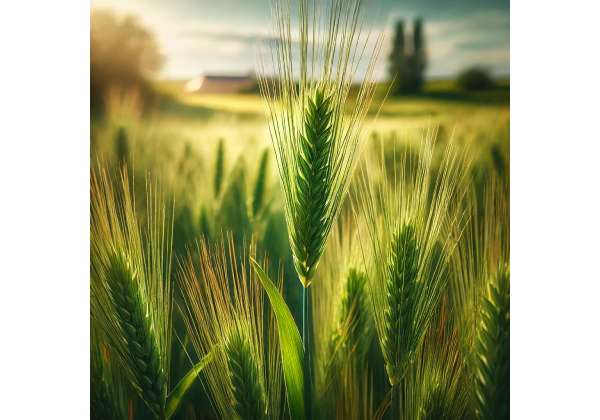
Barley grass is the young, green leaf of the barley plant (Hordeum vulgare), typically harvested before the grain develops. In that early stage, the plant concentrates nutrients and protective compounds that support rapid growth—one reason barley grass became popular as a “green superfood” powder for smoothies and daily wellness routines. People most often use barley grass to increase micronutrient intake, support digestion and regularity, and add a steady source of antioxidant and anti-inflammatory plant compounds to their diet.
Its appeal is practical: barley grass powders are easy to mix, travel well, and can help fill nutritional gaps when vegetables are inconsistent. At the same time, it is not a shortcut for “detox,” and it is not automatically safe for everyone. Product quality varies, and important considerations include gluten cross-contamination, vitamin K content, and the possibility of heavy-metal residues in some supplements. With a clear plan—choosing a reputable product, using a realistic dose, and watching for side effects—barley grass can be a useful, low-effort addition to a broader nutrition-first approach.
Key Takeaways
- Daily use may support overall nutrition and antioxidant intake, especially when vegetable intake is inconsistent.
- Some people notice better regularity and less “heavy” digestion when using a fiber-containing leaf powder.
- Typical intake is 3–6 g/day of barley grass powder, or 1–3 g/day of juice powder, adjusted to tolerance.
- Choose products tested for contaminants, and use caution if you take blood thinners due to vitamin K.
- Avoid if you have celiac disease unless the product is certified gluten-free, or if you have severe grass allergies.
Table of Contents
- What is barley grass
- Key ingredients and nutrients
- Does barley grass improve health
- How to use barley grass
- How much barley grass per day
- Side effects interactions and who should avoid
- What the evidence actually shows
What is barley grass
Barley grass refers to the young leaves of the barley plant (Hordeum vulgare). It is usually harvested when the shoots are still tender and bright green—often around 15–25 cm tall—before the plant shifts energy into forming the grain. This timing matters because “barley grass” is not the same as barley grain. The grain is best known for beta-glucan fiber and cholesterol support, while the grass is used more as a nutrient-dense green with chlorophyll, minerals, vitamins, and plant antioxidants.
You will see barley grass sold in a few common ways:
- Leaf powder (whole-leaf powder): dried and milled young leaves; typically contains more fiber.
- Juice powder: the juice is pressed from fresh leaves and then dried; typically lower in fiber but often stronger in taste and concentration.
- Extracts or “barley green” blends: may combine powders with tablets or other ingredients; dosing can look very different from plain powder.
Barley grass is sometimes marketed for “detox,” but a more grounded way to view it is as a vegetable-like supplement: it can raise your intake of certain micronutrients and phytonutrients, but it does not replace the liver, kidneys, fiber-rich foods, or medical care. If you want a simple mental model, think of barley grass as a convenient green—closer to taking a concentrated serving of leafy greens than taking a drug-like herb.
It is also commonly compared to other “green powders,” especially wheatgrass. They overlap in use and flavor profile, but their phytochemical fingerprints differ. If you are weighing which one fits your needs or tolerance, wheatgrass benefits and practical use guidance can help you compare taste, typical serving sizes, and the kinds of claims that are most realistic for grasses.
One final clarity point: barley grain naturally contains gluten proteins, and barley grass is sometimes harvested early enough that gluten is minimal. However, real-world products can still be cross-contaminated during growing, harvesting, or processing. If gluten avoidance is medically necessary, product selection is not optional—it is central to safety.
Key ingredients and nutrients
Barley grass is popular because it stacks several categories of “useful inputs” in one small serving: micronutrients, plant pigments, polyphenols, and (depending on the product) fiber. What you actually get depends on whether you choose whole-leaf powder or juice powder.
Micronutrients and chlorophyll
Most barley grass powders provide meaningful amounts of:
- Vitamin K (important for blood clotting and bone metabolism, but a key interaction risk for people on anticoagulants)
- Folate and certain B vitamins in modest amounts (varies by product and processing)
- Minerals such as potassium, calcium, magnesium, iron, and trace elements (again, highly variable)
- Chlorophyll and related green pigments, which contribute to the deep color and are often used as a quality cue
In practice, barley grass is rarely a “complete multivitamin,” but it can meaningfully increase nutrient density when your baseline diet is light on vegetables.
Polyphenols and flavonoids
Barley grass contains polyphenols that function as the plant’s protective chemistry. Two often-discussed flavonoids in young barley leaves are saponarin and lutonarin. These are linked to antioxidant activity in lab testing and may help explain why people perceive barley grass as supportive during periods of oxidative stress (hard training blocks, poor sleep, high workload). While “antioxidants” is a broad term, the practical takeaway is that barley grass is not just vitamins—it is also plant defense compounds that may influence inflammation-related signaling.
Fiber and why product type matters
- Whole-leaf powders typically contain insoluble fiber, which can support stool bulk and regularity.
- Juice powders may have much less fiber, which can be helpful if you want the micronutrients without changing digestion, but less helpful if regularity is your main goal.
This is why two people can take “barley grass” and have opposite experiences: one feels improved regularity and appetite control (fiber effect), while another feels no digestive change (juice powder) but enjoys the convenience of a concentrated green.
If you are choosing between “green powders” for nutrition density, it can also help to compare barley grass with algae-based options that are richer in certain proteins and carotenoids. spirulina nutrition and immune benefits offers a useful contrast in how “greens” can differ in macronutrient profile and tolerability.
The most honest ingredient summary is this: barley grass is a nutrient-dense plant food concentrate, and the best version for you depends on whether you want fiber, concentrated pigments, or a balance of both.
Does barley grass improve health
Barley grass can support health in a few realistic, common-sense ways—especially when it is used to make a healthy routine easier. The strongest benefits tend to fall into “supportive” categories rather than dramatic medical outcomes.
1) Nutrient density and dietary consistency
If your vegetable intake is inconsistent, adding barley grass to a smoothie or water can be a practical way to increase:
- daily micronutrient exposure
- intake of plant pigments and polyphenols
- “green food” consistency on busy days
This is often the most meaningful benefit: not a single ingredient, but the way it helps you follow through.
2) Digestive comfort and regularity
Whole-leaf barley grass powders can support regularity because they contribute insoluble fiber and water-holding bulk. People commonly report:
- easier morning bowel movements
- less sluggishness after meals
- better tolerance of higher-protein diets when fiber is low
That said, if you use a juice powder, you may not see these effects because the fiber content can be much lower.
3) Metabolic support, with realistic expectations
Some people use barley grass for blood sugar, cholesterol, or uric acid support. A careful way to frame this is:
- Barley grass may help as part of a broader metabolic plan (diet quality, activity, sleep, weight management).
- The evidence base is smaller than for established nutrition interventions.
- Effects, when present, are usually modest and build over weeks to months.
If you want metabolic outcomes, focus on what you can measure and sustain: fasting glucose trends, post-meal energy stability, waist circumference, or lab markers tracked with your clinician.
4) “Detox” claims versus what is plausible
Barley grass is frequently marketed for detoxification. A more accurate interpretation is:
- Your liver and kidneys do the detox work.
- Barley grass may support overall resilience by supplying antioxidants, micronutrients, and (sometimes) fiber.
- Feeling “lighter” can reflect improved hydration, better regularity, or a shift away from ultra-processed foods when barley grass becomes part of a routine.
If you want a “green powder” primarily for gut comfort, consider whether simple fiber strategies might outperform expensive blends. psyllium for digestive health is a useful comparison because its effects are more direct and predictable for bowel regularity.
The bottom line: barley grass is most effective when it supports habits—better nutrition consistency, better fiber intake, and better routine adherence—rather than when it is treated as a stand-alone cure.
How to use barley grass
Barley grass is easy to use, but small details—product type, mixing method, and timing—often determine whether you love it or abandon it after three days.
Choose the right form for your goal
- Whole-leaf powder: best if you want fiber-related benefits (regularity, fullness). Taste is often more “grassy,” and some people notice more digestive movement.
- Juice powder: best if you want concentrated greens without much fiber. Often mixes smoother but can taste stronger.
- Capsules or tablets: best for travel or taste sensitivity, but you may need many pills to match a meaningful powder dose.
- Blends (“greens” formulas): convenient, but harder to evaluate because barley grass may be only one small part of a proprietary mix.
If you are comparing products, look for transparency:
- exact grams (or mg) per serving
- whether it is leaf powder or juice powder
- any third-party testing for contaminants and gluten
Mixing and taste strategies
Barley grass can taste earthy and slightly bitter. Practical tips:
- Mix with cold water first; hot water can intensify aroma and clumping.
- Use a frother, shaker bottle, or blender to reduce grit.
- Pair with citrus (lemon, lime) or pineapple in smoothies to soften the grassy edge.
- Start with a half serving for the first week, especially if you are sensitive.
A simple “starter smoothie” pattern:
- 1 cup water or unsweetened yogurt
- 1 banana or 1 cup frozen pineapple
- 1 tablespoon chia or ground flax (optional)
- barley grass powder (start low)
- blend well
When to take it
- With breakfast or lunch: often best if barley grass makes your stomach feel unsettled when taken alone.
- Before meals: some people prefer this for appetite and post-meal energy stability, but it can increase nausea if you are sensitive.
- Split dosing: morning and early afternoon can improve tolerability if you are using higher amounts.
How long to use it
For simple nutrition support, barley grass can be used daily long-term if tolerated. For a targeted goal (such as uric acid or digestive regularity), a practical trial window is 8–12 weeks with one or two simple metrics tracked (bowel frequency, bloating score, uric acid labs, or post-meal energy stability).
The most important “how to use it” rule is consistency. A small dose you actually take is more effective than an ideal dose you forget.
How much barley grass per day
Barley grass dosing depends on the form (leaf powder vs juice powder vs tablets) and on your main goal (nutrition support vs digestion support). Labels vary widely, so it helps to think in grams of powder per day and then adjust for tolerance.
Typical daily ranges
For most adults:
- Whole-leaf barley grass powder: 3–6 g/day (about 1–2 teaspoons, depending on density)
- Barley grass juice powder: 1–3 g/day (often more concentrated, usually lower fiber)
- Capsules/tablets: aim to match the gram range on the label; this can be 6–12 tablets or more depending on tablet size
If your main goal is regularity, the leaf powder range is often more relevant because it contributes fiber. If your main goal is “greens consistency” without digestive change, the juice powder range may be a better fit.
How to start without getting side effects
A simple ramp plan:
- Days 1–4: 1–2 g/day with food
- Days 5–10: 3 g/day
- Weeks 2–4: increase to 4–6 g/day only if you want more effect and tolerate it well
If you notice nausea, cramping, or loose stools, reduce the dose by 30–50% for a week before trying to increase again.
Timing and split dosing
- One daily dose is simplest.
- If you use more than 4–5 g/day, splitting into two doses (morning and afternoon) can improve comfort and reduce “green-burp” aftertaste.
What about “clinical” doses
In some clinical-style protocols, “barley green” interventions can be higher than typical wellness use and may combine a powder packet with tablets. That does not mean you need to copy those doses for general health—especially if you are using barley grass as a daily green rather than a targeted intervention under supervision.
When to reassess
Reassess your dose if:
- you are using it mainly for nutrition and already eat 5+ servings of vegetables most days
- it causes persistent digestive upset
- you start a medication that interacts with vitamin K or potassium
- you see no benefit after 8–12 weeks and adherence has been good
A good dose is the smallest amount that delivers your desired effect with minimal friction and no safety concerns.
Side effects interactions and who should avoid
Barley grass is often well tolerated, but “natural” does not mean risk-free. The main safety issues come from digestive reactions, gluten cross-contamination, vitamin K interactions, and product quality (including contaminants).
Common side effects
- Nausea (often from taking it on an empty stomach or using too much too soon)
- Gas, bloating, or looser stools (more common with whole-leaf powders due to fiber)
- Headache (sometimes from dehydration if bowel movements increase and fluids do not)
- Allergic-type symptoms in people sensitive to grasses (itching, runny nose, rash)
Most side effects improve by lowering the dose, taking it with food, and increasing water intake.
Gluten and celiac precautions
Barley grain contains gluten proteins. Barley grass may be harvested before significant grain proteins develop, but real products can be contaminated. If you have celiac disease or must strictly avoid gluten:
- use only certified gluten-free barley grass products
- avoid bulk-bin powders or unknown sources
- stop immediately if you develop symptoms consistent with gluten exposure
Medication interactions to consider
- Warfarin and other anticoagulants: vitamin K intake can change how these medications work. If you use barley grass, keep the dose consistent and discuss it with your clinician. For a deeper overview of why vitamin K consistency matters, see vitamin K dosing and safety considerations.
- Diuretics, ACE inhibitors, or kidney medications: barley grass can be mineral-rich (including potassium), which can be a concern in kidney disease or when potassium must be controlled.
- Diabetes medications: if barley grass improves post-meal glucose response for you, monitor for low blood sugar if you are on glucose-lowering drugs.
Who should avoid or use only with guidance
- People with celiac disease (unless certified gluten-free)
- People with severe grass allergies
- Those with advanced kidney disease or strict potassium limits
- Anyone on warfarin without clinician guidance and a plan for consistent intake
- Pregnant and breastfeeding individuals: not because it is proven harmful, but because supplement quality and safety data vary and conservative avoidance is often appropriate
Quality and contaminant concerns
Because barley grass products are concentrated plant materials, quality matters. Look for third-party testing, and avoid products that do not clearly identify sourcing and manufacturing standards.
What the evidence actually shows
Barley grass sits in a familiar nutrition-supplement zone: it has plausible mechanisms (nutrients, fiber, polyphenols), some targeted human trials, and a large amount of preclinical research—but not the kind of large, definitive clinical evidence you would expect for a medication. A practical evidence-based approach is to separate “reasonable,” “possible,” and “not established.”
Reasonable: nutrition support and dietary substitution
It is reasonable to expect barley grass to improve nutrient density when it is used to replace less nutritious options (sweetened drinks, skipped breakfasts, ultra-processed snacks). This benefit is more about behavior and consistency than about a single active compound.
Possible: post-meal glucose response in certain people
Human research on young barley leaf powders suggests that a fiber-containing barley leaf powder can modestly blunt post-meal glucose rise in people who tend to spike higher after meals. This aligns with a straightforward mechanism: insoluble fiber and water-holding capacity can change how quickly glucose moves through the digestive tract. The key detail is that this is not guaranteed in everyone—and it may depend on dose, product type, and baseline glucose response.
Possible: uric acid and inflammation-related markers
There is emerging clinical interest in “barley green” preparations (derived from young barley leaves) for uric acid management in hyperuricemia. Early clinical findings suggest potential benefit when used alongside a balanced dietary pattern over a multi-month period. This is promising, but it is still an early evidence base—better viewed as an adjunct, not a replacement for medical care when uric acid is significantly elevated.
Not established: broad disease treatment claims
Claims that barley grass “treats” cancer, cures chronic disease, or replaces standard therapies are not supported by the overall quality of evidence. The most honest interpretation is:
- barley grass can be a supportive nutrition tool,
- it may help some measurable markers in specific contexts,
- and it should not be used as a substitute for diagnosis, medication, or evidence-based treatment plans.
Safety evidence is part of the evidence picture
One of the most practical evidence points is not a benefit claim but a quality one: analyses of dietary supplements have found that contaminant levels can vary by product type and form. This supports the recommendation to choose reputable brands and not assume all “green powders” are interchangeable.
If you are comparing barley grass with other concentrated green supplements, keep the evidence lens: algae-based products often have more studies in certain areas (and different risks), while grasses often overlap with fiber and phytonutrient claims. chlorella nutrition and safety considerations can be a useful comparison when you are deciding which “green” best matches your goals and tolerability.
A grounded conclusion is simple: barley grass can be worth using if it helps you sustain a healthier routine, and it is most defensible when you choose quality products and track outcomes you can actually measure.
References
- Effects of barley green on uric acid, inflammatory factors, xanthine oxidase activity and body composition of patients with hyperuricemia: a randomized controlled trial 2025 (RCT)
- Insoluble Fiber in Young Barley Leaf Suppresses the Increment of Postprandial Blood Glucose Level by Increasing the Digesta Viscosity 2013 (RCT)
- Analysis of Mercury Concentration in Dietary Supplements Supporting Weight Loss and Health Risk Assessment 2025 (Safety Study)
- Chemical Composition and Protective Effect of Young Barley (Hordeum vulgare L.) Dietary Supplements Extracts on UV-Treated Human Skin Fibroblasts in In Vitro Studies 2021 (Experimental Study)
- Preventive and Therapeutic Role of Functional Ingredients of Barley Grass for Chronic Diseases in Human Beings 2018 (Review)
Disclaimer
This article is for educational purposes only and does not replace medical advice, diagnosis, or treatment. Supplements can vary in quality and may contain contaminants or allergens. Barley grass products may interact with medications—especially anticoagulants affected by vitamin K—and may not be appropriate for people with celiac disease unless certified gluten-free. If you are pregnant, breastfeeding, managing kidney disease, taking prescription medications, or treating a medical condition such as diabetes or hyperuricemia, consult a licensed clinician or pharmacist before using barley grass. Stop use and seek medical guidance if you develop an allergic reaction, persistent gastrointestinal symptoms, or any concerning changes.
If you found this guide helpful, consider sharing it on Facebook, X (formerly Twitter), or any platform where you discuss nutrition and evidence-informed wellness.