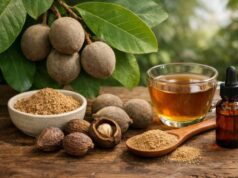
Bayberry (Myrica cerifera), also called wax myrtle or southern bayberry, is an aromatic coastal shrub native to North America. Its leaves carry a spicy-resinous scent, while the gray-blue berries are coated in a natural wax once prized for candle making. In herbal traditions, the root bark is the best-known medicinal part, valued for its strong astringent character and its ability to “dry up excess” in tissues—especially when mucus, loose stool, or a sore, boggy throat are the main complaint.
Modern interest in bayberry focuses on its tannins and flavonoids (including myricetin-related compounds), which help explain why it is discussed for digestive tightening, seasonal throat support, and topical cleansing. At the same time, bayberry is not a casual everyday supplement. Its potency can irritate the stomach in higher doses, and evidence in humans is limited compared with more widely studied herbs. The most practical approach is to use bayberry in short, clearly defined trials, choose a preparation that fits your goal, and keep safety screening front and center.
Quick Facts for Bayberry
- May support a sore throat and excess mucus when used as a short-term gargle or tea.
- Can tighten loose stool and reduce weepy irritation because it is tannin-rich and strongly astringent.
- Typical adult tea range is 1–2 g dried root bark per cup, up to 2 times daily for short periods.
- May cause nausea or vomiting if too strong; avoid high doses and long continuous use.
- Avoid if pregnant, breastfeeding, under 18, or taking blood thinners, unless a clinician advises otherwise.
Table of Contents
- What is bayberry?
- Key ingredients and medicinal properties
- Bayberry for colds and sore throat
- Bayberry for digestion and diarrhea
- How to use bayberry
- How much bayberry per day?
- Safety, interactions, and what evidence shows
What is bayberry?
Bayberry (Myrica cerifera) is a hardy shrub or small tree that thrives in sandy, coastal soils and wetland edges. If you have ever crushed a wax myrtle leaf between your fingers, you have met one of its defining features: tiny resin glands that release a sharp, clean, evergreen-like scent. That aroma is not just pleasant—it signals a chemistry that plants often use for protection, and people have historically used that same chemistry for practical remedies.
It is also a plant with naming confusion. “Bayberry” can refer to several different species around the world, including Asian bayberry fruits used as food. This article is specifically about Myrica cerifera (often listed under the synonym Morella cerifera). When buying any product, look for the full Latin name to avoid substitutions.
Parts used and why they matter
Bayberry is used in several ways, but the root bark is the classic medicinal material in Western herbalism. Different parts behave differently:
- Root bark: strongest astringent action; the most traditional medicinal part.
- Leaves: aromatic and resinous; sometimes used in teas or washes, typically milder than root bark.
- Fruit wax: used mainly in cosmetics and formulations; not the same as “bayberry bark.”
This distinction matters because bayberry is potent. Root bark contains high tannin levels and can be irritating in excess, which is one reason bayberry has historically been used in short courses rather than as a daily tonic.
Traditional use patterns
Bayberry’s historical use tends to cluster around “excess and irritation” patterns, such as:
- Sore throat with swollen, spongy tissues and thick mucus
- Seasonal congestion and “catarrh” traditions
- Loose stool, dysentery-like symptoms, or weepy gut irritation
- Topical cleansing for minor skin stressors
In modern terms, these uses align with an herb that is astringent, mildly antimicrobial in lab models, and locally toning to mucous membranes. What bayberry is not: a gentle culinary herb or a universally safe daily supplement. It is better treated like a targeted tool—useful when it fits the symptom pattern, unnecessary when it does not.
A final practical note: bayberry’s taste is strongly bitter and drying. If you cannot tolerate the flavor, tinctures or diluted gargles are often easier than strong teas, and topical uses can be the most comfortable entry point for cautious experimentation.
Key ingredients and medicinal properties
Bayberry’s “feel” in the body—drying, tightening, and sometimes sharply stimulating—comes from a mix of compound families that act locally on tissues. Understanding those families helps you choose the right preparation and avoid common dosing mistakes.
Tannins
Tannins are the headline constituents of bayberry root bark. They bind to proteins on the surface of tissues, which can create a tightening, protective effect. In practical terms, that may translate into:
- Less weepy irritation in the mouth and throat
- Reduced “boggy” swelling in mucous membranes for some people
- A drying effect that can help when stools are loose and the gut feels inflamed or overactive
The flip side is important: too much tannin can cause stomach upset, contribute to constipation, and interfere with absorption of some nutrients or medications if taken at the same time.
Flavonoids and related polyphenols
Bayberry is associated with flavonoid compounds in the myricetin family, including glycosides such as myricitrin. These are widely researched plant polyphenols linked with antioxidant and inflammation-modulating activity in preclinical work. In a bayberry context, they help explain why extracts show biological activity in lab studies, but they do not guarantee clinical outcomes in humans.
Triterpenes and resinous constituents
Bayberry root bark contains resinous compounds and triterpenes (often discussed in phytochemistry sources for this plant). These compounds can contribute to antimicrobial activity in testing models and may also explain why bayberry can feel “stimulating” and intense compared with gentler astringents.
Aromatic constituents in leaves
The leaves contain aromatic terpenes and resin glands that give bayberry its distinctive scent. Aromatics often play a role in topical cleansing traditions and the “freshening” feel of a mild wash or steam, though bayberry is not typically used as an essential oil internally.
What these properties add up to
From a user’s perspective, bayberry’s medicinal personality is best summarized as:
- Astringent and drying (strongest with root bark)
- Locally toning to mucous membranes
- Supportive for microbial balance in preclinical research settings
- Potentially irritating if overused
This is why bayberry often works best when you match it to a clear pattern: thick mucus, swollen tissues, or loose and weepy irritation—then keep the dose conservative and the duration short.
Bayberry for colds and sore throat
Bayberry is traditionally used when a cold or seasonal illness feels “wet,” congested, and stubborn—especially when the throat and nasal passages feel swollen, coated, or overly mucousy. The goal is not to “kill a virus,” but to support comfort by tightening irritated tissues, reducing excess secretions, and helping the throat feel less raw.
When bayberry is a good match
Bayberry tends to fit best in these situations:
- A sore throat with spongy, swollen tissues rather than a dry tickle
- Thick post-nasal drip or heavy mucus that makes swallowing unpleasant
- A coated mouth feel that improves with astringent gargles
- Early symptoms where you want supportive care while monitoring for worsening
Because bayberry is astringent, it is often used as a gargle or diluted tea rather than a strong internal dose. Local application can deliver the “toning” effect where you want it, with less chance of upsetting the stomach.
How to use it for throat support
A simple approach is to treat bayberry like a short-term throat tool:
- Prepare a mild tea (or dilute tincture in warm water).
- Gargle for 20–30 seconds, then spit or swallow based on your comfort and the strength of the preparation.
- Repeat 2–4 times daily for a short window (often 2–5 days), then reassess.
Practical details that matter:
- Strength: if the tea is intensely bitter and puckering, it is probably too strong for frequent use.
- Hydration: astringents can feel harsher when you are dehydrated; prioritize fluids.
- Timing: use bayberry after warm drinks or steam, when tissues are already softened.
What bayberry is not for
Avoid treating bayberry as a replacement for medical evaluation. Seek care if you have:
- High fever that persists
- Trouble breathing, chest pain, or wheezing
- Severe throat pain with difficulty swallowing fluids
- Symptoms that worsen after several days
If you want a food-forward, gentler companion strategy for immune season, many people use supportive plants such as elderberry for seasonal wellness routines, while reserving bayberry for more targeted “mucus and throat” situations.
Bayberry’s best respiratory role is situational and time-limited: it can make you feel more comfortable while your body handles a seasonal illness, but it should be used thoughtfully and not pushed into high-dose, long-duration routines.
Bayberry for digestion and diarrhea
Bayberry’s strongest traditional digestive use is as a tightening, toning astringent when stools are loose, urgent, or “weeping.” The intent is not to shut digestion down; it is to calm an irritated gut surface and reduce excess fluid loss. This makes bayberry a very different tool from laxatives or “gentle digestive bitters.” It is more like an emergency brake: useful in specific short-term scenarios, inappropriate as a daily habit.
When it may help
Bayberry is most often discussed for:
- Occasional loose stool that comes with intestinal irritation
- Gut upset that feels raw or overactive rather than sluggish
- Situations where you want to “dry up” excess mucus or discharge-like symptoms in traditional language
Tannins are the key here. They can form a protective layer on mucous membranes and reduce secretions. This is one reason tannin-rich plants appear across many traditions for diarrhea support.
How to use it practically
For digestive support, bayberry is usually taken as a mild tea/decoction or in small tincture doses. Practical habits that reduce risk:
- Start with a low strength preparation.
- Use it after a small amount of food if your stomach is sensitive.
- Keep the trial short (often 1–3 days for acute issues), then stop.
Many people also do better when they pair bayberry with basic supportive measures:
- Oral rehydration (especially if there is fluid loss)
- Bland foods (rice, broth, bananas, toast)
- Temporary avoidance of alcohol, heavy fats, and very spicy meals
Important boundaries and warning signs
Do not self-treat diarrhea with bayberry if you have:
- Blood in stool, black tarry stool, or severe abdominal pain
- Signs of dehydration (dizziness, very dark urine, rapid heartbeat)
- Persistent fever
- Diarrhea lasting more than 48–72 hours without improvement
Also note that astringents can work “too well.” If you become constipated or crampy, reduce or stop.
If you want to understand how another classic astringent is discussed for similar situations, oak bark health benefits is a useful comparison because it shares the tannin-forward, tissue-toning logic.
Bayberry can be a strong ally for the right digestive pattern, but it demands respect: conservative dosing, short duration, and prompt escalation to medical care when red flags appear.
How to use bayberry
Because bayberry can be intense, “how you use it” is largely about managing concentration. Most people do best when they choose the form that matches the goal and keeps the dose predictable.
1) Tea or decoction (root bark)
Bayberry root bark is often prepared as a decoction (a gentle simmer) because bark is tougher than leaf.
- Use a small amount of dried root bark.
- Simmer gently, then let it cool to a comfortable temperature.
- Start with small servings rather than large mugs.
This form is most commonly used for short-term digestive or throat-support goals, but it is also the easiest to overdo if you make it too strong.
2) Gargle or mouth rinse
For sore throat support, a gargle is often the most practical approach because it targets the tissues directly. You can use a diluted tea or a small amount of tincture in warm water.
Tips:
- Keep the solution mild enough that it does not sting.
- Use it for a short window (a few days), then reassess.
3) Tincture (root bark)
Tinctures offer dose control, which is helpful if you cannot tolerate the taste of tea. The tradeoff is potency: tinctures can deliver a concentrated hit quickly. Start low and avoid stacking doses close together.
4) Topical wash or compress (leaf or diluted bark tea)
Bayberry’s astringent and aromatic nature is sometimes used for minor skin stressors, especially where tissues feel weepy or inflamed. A cooled infusion can be used as a wash or compress, but test on a small area first.
If your main goal is topical astringent support with a long history of use in modern skincare, witch hazel topical uses is a helpful comparator because it is widely used for similar “tightening and soothing” intentions, often in gentler formulations.
Quality and storage basics
- Choose products that specify Myrica cerifera (or Morella cerifera) and the plant part used.
- Store dried bark in an airtight container away from heat and light.
- Avoid products with vague labeling (“bayberry blend”) if you want predictable effects.
A simple rule for bayberry: prefer local use (gargle, wash) when appropriate, and keep internal use short-term and conservative.
How much bayberry per day?
Bayberry does not have a universally established clinical dose, and products vary. The safest dosing strategy is to treat bayberry as a short-term, symptom-matched herb, using the lowest effective amount and reassessing quickly. If you are new to bayberry, begin at the low end of any range and increase only if you tolerate it well.
Conservative adult ranges by form
These ranges are intended as cautious, practical starting points for healthy adults:
- Tea/decoction (root bark): 1–2 g dried root bark per cup, up to 2 times daily
- Powdered root bark: 0.5–1 g once or twice daily, mixed into warm water or soft food
- Tincture: follow label directions when clearly stated; consider starting at half the suggested dose for the first 2–3 days
- Gargle: use a mild infusion or diluted tincture 2–4 times daily for a few days, then stop
Because bayberry can be irritating, “more” is rarely better. Many people get the best results by using a mild preparation more consistently for a short window rather than making a very strong brew.
Timing and duration
- For sore throat and mucus, use bayberry in focused bursts (often 2–5 days), then stop.
- For acute digestive upset, keep use short (often 1–3 days) and prioritize hydration.
- Avoid continuous daily use for weeks unless a clinician is monitoring you.
How to adjust your dose safely
Use your body’s feedback as the guide:
- If you feel nauseated, crampy, or unusually dry, reduce the dose or stop.
- If stools become too firm or you feel blocked, stop—this is a sign the astringency is overshooting.
- If you notice no benefit within a short trial, do not keep escalating; consider whether bayberry is the wrong match for your symptoms.
Spacing from meals and supplements
Because tannins can bind to proteins and minerals, it is sensible to take bayberry away from iron supplements and at least 1–2 hours apart from prescription medications when possible.
The safest bayberry dose is the smallest one that achieves your goal without side effects—and for many people, that ends up being a mild tea, a gargle, or a short tincture trial rather than a high-dose regimen.
Safety, interactions, and what evidence shows
Bayberry’s safety profile is best described as reasonable for short-term use in healthy adults, with a few clear cautions. The main risk is not mystery toxicity; it is the very thing that makes bayberry useful—its intensity. Strong astringents can irritate the stomach, dry tissues too aggressively, and complicate medication routines if used carelessly.
Possible side effects
Most side effects are dose-related and often improve when you reduce strength:
- Nausea, stomach upset, or vomiting (more likely with strong preparations)
- Constipation or cramping if the astringency is too strong
- Headache or “wired” feeling in sensitive individuals
- Skin irritation with topical use (especially on very reactive skin)
If you experience vomiting, severe abdominal pain, or signs of dehydration, stop and seek medical advice.
Who should avoid bayberry unless a clinician advises otherwise
- Pregnant or breastfeeding individuals
- Children and teens under 18
- People with inflammatory bowel disease flares, severe reflux, or chronic gastrointestinal irritation
- Anyone with known allergies to similar aromatic shrubs
- People scheduled for surgery (avoid concentrated use beforehand unless your clinician says otherwise)
Medication and supplement interactions
Bayberry is most likely to interact in two practical ways:
- Absorption effects from tannins
Tannins can bind to compounds in the gut, which may reduce absorption. To reduce this risk, separate bayberry from medications and key supplements (especially iron) by 1–2 hours when possible. - Bleeding risk caution
Bayberry is not a proven “blood thinner,” but because many plant polyphenols can influence platelet-related pathways in research settings, it is prudent to use extra caution if you take anticoagulants or antiplatelet medications. If you notice unusual bruising, nosebleeds, or bleeding gums, stop and speak with a clinician.
What the evidence actually shows
Bayberry is a classic example of a plant with strong traditional use and limited direct human research. Current evidence is weighted toward:
- Phytochemistry and mechanistic plausibility: tannins and flavonoids support the astringent and antioxidant rationale.
- Preclinical antimicrobial findings: extracts have shown antibacterial activity in controlled studies, which aligns with traditional topical and digestive uses.
- Species-level research gaps: there are not many modern human trials that establish clear dosing, duration, or comparative effectiveness.
The most responsible conclusion is that bayberry can be useful when it matches the symptom pattern—especially as a gargle or short-term astringent—while still requiring conservative dosing and realistic expectations. If you need long-term symptom management, bayberry is rarely the best primary tool. It is more often a short-term support while you address the underlying drivers (infection evaluation, hydration, diet, reflux management, or medical treatment when needed).
References
- Myrica cerifera, a Medicinal Plant of the Lumbee Tribe, has Antibacterial and Nematicidal Properties 2022
- Plant Myrica cerifera (Myricaceae) | Dr. Duke’s Phytochemical and Ethnobotanical Databases 1992
- Recent studies on myricetin and its biological and pharmacological activities 2023
- Traditional Applications of Tannin Rich Extracts Supported by Scientific Data: Chemical Composition, Bioavailability and Bioaccessibility 2021 (Review)
- Myrica cerifera Monograph 2025
Disclaimer
This article is for educational purposes only and does not provide medical advice, diagnosis, or treatment. Bayberry (Myrica cerifera) preparations can cause side effects and may interact with medications, particularly when used in concentrated forms or taken close to prescription drugs or iron supplements. If you are pregnant, breastfeeding, have a chronic digestive condition, take blood thinners or antiplatelet medicines, or are considering bayberry for a child or teen, consult a licensed healthcare professional before use. Seek urgent medical care for severe allergic reactions, persistent high fever, dehydration, blood in stool, severe throat swelling, or rapidly worsening symptoms.
If you found this guide helpful, consider sharing it on Facebook, X (formerly Twitter), or your preferred platform so others can make informed, safety-first choices.