Beautyberry (Callicarpa formosana) is a fragrant shrub best known for its vivid clusters of purple berries, yet its medicinal value comes mainly from the leaves and young stems rather than the fruit. In parts of East Asia, Callicarpa formosana leaf (often referenced as Callicarpae Formosanae Folium) has been used traditionally to help manage bleeding episodes, calm inflammation, and support recovery of irritated skin and tissues. These traditional themes are not random: modern phytochemical work shows that C. formosana contains a blend of flavonoids, phenylpropanoids, terpenoids (including diterpenoids), and polysaccharides—compound families commonly linked with antioxidant, vascular, and inflammation-modulating effects.
At the same time, beautyberry is not a casual “daily detox” herb. The evidence base is strongest for biochemical mechanisms and lab models, with fewer high-quality human trials. Safe, effective use depends on choosing the right form (leaf-focused preparations are most common), keeping doses conservative, and being clear about who should avoid it—especially people who are pregnant, on blood thinners, or managing complex medical conditions.
Quick Facts for Beautyberry
- May support hemostatic function and help reduce minor bleeding tendencies when used appropriately and under guidance.
- Provides antioxidant and anti-inflammatory phytochemicals that may support skin and tissue recovery.
- Typical range: 6–15 g/day dried leaf in decoction, or 300–600 mg extract 1–2 times/day (product-dependent).
- Avoid combining with anticoagulants or antiplatelet drugs without clinician oversight.
- Avoid if pregnant or breastfeeding, or if you have a bleeding disorder diagnosis unless supervised.
Table of Contents
- What is beautyberry?
- Key ingredients and medicinal properties
- Beautyberry health benefits
- Uses and best forms
- How much beautyberry per day?
- Side effects, interactions, and who should avoid
- What the evidence actually says
What is beautyberry?
Beautyberry (Callicarpa formosana) is a member of the Callicarpa genus, a group of shrubs recognized for their ornamental berries and aromatic leaves. While many gardeners know beautyberry for landscaping, traditional medicine systems have valued certain Callicarpa species for practical, body-level concerns—especially bleeding, swelling, and tissue irritation. In Chinese herbal contexts, the “medicinal beautyberry” identity often centers on the leaf rather than the fruit, and the species C. formosana is one of the recognized medicinal sources for Callicarpa leaf preparations.
Plant parts used and why they matter
Most of the discussion around C. formosana as a herb focuses on:
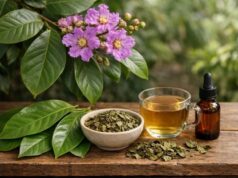
- Leaves (primary medicinal part): commonly dried and used in decoctions, powders, or extracts. Leaves tend to contain the most consistently studied mix of flavonoids, phenylpropanoids, and polysaccharides.
- Young stems (sometimes included): used in some preparations as part of the aerial portion, depending on tradition and regional sourcing.
- Berries (mostly ornamental): visually striking but not the main focus for medicinal use, and not interchangeable with leaf preparations.
This distinction is important because people often assume the berries carry the “active” value. For C. formosana, most documented medicinal traditions and quality studies prioritize the leaf.
Traditional use themes
Across Callicarpa traditions, a few themes show up repeatedly:
- Hemostatic support: used when bleeding is present or when tissues feel fragile. In practical terms, this may include blood in sputum or vomit, heavy bleeding patterns, or bleeding associated with irritation.
- Swelling and pain: used for discomfort that feels inflammatory—red, hot, swollen, or tender.
- Skin and soft tissue recovery: washes and compresses are used for irritated skin, minor wounds, and localized inflammation.
A useful way to read these themes is to treat C. formosana as a “tissue-calming” plant: it is often chosen when the surface layers (skin, mucosa) feel irritated, and when bleeding or inflammation is part of the picture.
Quality and identity matter more than usual
Because “beautyberry” is a common name applied to multiple species, mislabeling is a real risk. If you are using it medicinally, look for products that state Callicarpa formosana explicitly and specify the plant part (leaf). If you are buying bulk herb, aroma and appearance help, but they are not sufficient on their own; reputable suppliers should provide identity testing.
If you are mainly interested in topical strategies for irritated, reactive skin, witch hazel topical uses offers a helpful comparison for how astringent plants are used safely on the surface without overdoing irritation.
Key ingredients and medicinal properties
Beautyberry’s medicinal profile comes from a multi-layered chemistry. Rather than one “signature” molecule, Callicarpa formosana leaf contains several compound families that work in overlapping ways—supporting antioxidant defenses, moderating inflammatory signaling, and influencing vascular and tissue tone. The most important categories are flavonoids, phenylpropanoids, terpenoids (including diterpenoids), and polysaccharides.
Flavonoids: antioxidant and vessel-supportive compounds
Flavonoids are often central to plants used for bleeding and inflammation because they can support capillary resilience and help regulate oxidative stress. In Callicarpa leaf research, flavonoids and related polyphenols frequently appear as key quality markers. Practically, flavonoid-rich plants are often used for:
- Tissue fragility patterns (easy irritation, mild bleeding tendencies)
- Inflammation with redness and heat
- Recovery after minor tissue stress
The main “feel” of flavonoid-rich herbs is usually not dramatic stimulation; it is a steadier calming effect that becomes more noticeable when you match it to the right situation.
Phenylpropanoids: inflammation and oxidative balance
Phenylpropanoids are another broad family found in many herbs used for wound support and inflammatory discomfort. They often interact with oxidative pathways and may influence how tissues respond to irritation. In practice, phenylpropanoid-rich extracts can feel most relevant when symptoms have a “hot and irritated” quality rather than a “cold and weak” quality.
Terpenoids and diterpenoids: bioactive, often potent
Terpenoids are a large class of plant compounds with diverse effects. In C. formosana, diterpenoids have been isolated and screened for anti-inflammatory activity in modern studies. Diterpenoids are not automatically “better,” but they are often biologically active at relatively low concentrations, which can help explain why some Callicarpa preparations are used in smaller doses than simple culinary herbs.
This category also helps explain why people should avoid assuming that “natural equals gentle.” Terpenoid-rich plants can be helpful, but they can also cause sensitivity in some individuals.
Polysaccharides: supportive, immune-adjacent effects
Polysaccharides in medicinal plants are often discussed in the context of immune tone and mucosal support. They tend to be less “acute-feeling” than terpenoids, and more associated with steady support for tissue recovery and barrier function. When a plant is used for both bleeding patterns and mucosal irritation, polysaccharides are a plausible part of that story.
How these properties translate into real-world use
A practical way to connect the chemistry to decisions is to think in three action lanes:
- Hemostatic lane: compounds that support vascular tone and tissue resilience.
- Anti-inflammatory lane: compounds that calm inflammatory signaling and reduce “heat and swelling.”
- Recovery lane: compounds that support barrier repair and oxidative balance during healing.
If you are choosing between plants for bleeding-related patterns, yarrow support and applications provides a helpful contrast because yarrow is commonly approached as a classic hemostatic herb with a different phytochemical emphasis and a different safety profile.
Beautyberry health benefits
The benefits people seek from Callicarpa formosana cluster around three core goals: supporting hemostatic function, calming inflammation, and promoting tissue recovery—especially when irritation and fragility overlap. The most responsible way to describe these benefits is “may support,” because much of the evidence comes from phytochemistry, quality research, and experimental models rather than large human clinical trials.
1) Hemostatic support for bleeding patterns
In Chinese medicine practice, Callicarpa formosana leaf is often described as supporting bleeding control. This can include traditional use for blood-related symptoms such as hematemesis (vomiting blood) and other bleeding presentations that are treated as urgent or semi-urgent concerns. In modern terms, it is more accurate to say the herb is used as adjunct support rather than as a substitute for emergency evaluation.
In practical, lower-stakes scenarios, people sometimes use hemostatic herbs when they notice:
- Easy gum bleeding with irritation
- Minor nosebleeds in dry environments
- Mild spotting tendencies where a clinician has already ruled out serious causes
If bleeding is heavy, recurrent, or unexplained, self-treatment is not appropriate.
2) Anti-inflammatory comfort for swelling and pain
Callicarpa species are widely associated with anti-inflammatory activity in experimental research, and C. formosana has specific diterpenoids screened for anti-inflammatory effects. In real life, people reach for herbs in this category when discomfort has an inflammatory character:
- Swelling, warmth, tenderness
- “Hot” pain that feels aggravated by friction or overuse
- Recovery after minor soft tissue strain
The realistic outcome is often improved comfort and reduced “tight heat,” not instant elimination of pain.
3) Antioxidant support for tissue recovery
When tissues are irritated, oxidative stress tends to rise locally. Antioxidant-rich plants can support the recovery environment, especially when combined with practical care (hydration, protein intake, sleep, and gentle movement). This is a subtle benefit that often feels most meaningful over repeated short courses rather than a single dose.
4) Skin and surface-level soothing
While C. formosana is not as globally famous for skincare as some herbs, Callicarpa traditions commonly include topical use—washes, compresses, and poultice-style applications—for irritated skin and minor wounds. Topical use can be a safer starting point because it reduces systemic exposure.
5) Metabolic support signals (early-stage)
Some studies across Callicarpa species explore cardiometabolic and uric-acid-related models. For C. formosana, the safest interpretation is that it has promising biochemical signals rather than confirmed clinical benefit. If your primary goal is gout or uric acid management, treat beautyberry as supportive at most, not a primary solution.
If you want a more established anti-inflammatory supplement comparison for joint comfort, boswellia benefits and research can help you calibrate what stronger human evidence tends to look like and how dosing and safety guidance are typically structured.
Uses and best forms
The best form of beautyberry depends on your goal and your tolerance for concentrated products. For Callicarpa formosana, leaf-based preparations dominate traditional practice and modern quality research. Choosing the right form matters because different preparations emphasize different compound families—polysaccharides in water decoctions, smaller polyphenols in teas, and terpenoids in some alcohol extracts.
1) Decoction (simmered leaf preparation)
A decoction is the most tradition-aligned method when the intent is systemic support (bleeding patterns, inflammation support, recovery). It extracts a broad mix of water-soluble compounds and some larger polysaccharides.
A practical preparation approach:
- Rinse dried leaf lightly to remove dust.
- Simmer gently in water for 20–30 minutes.
- Strain and consume in divided doses.
Decoctions are often used as short courses. If you find yourself wanting to take it daily for months, it is a signal to reassess the underlying issue and consult a clinician.
2) Infusion (tea)
A tea (steeped leaf) is milder than a decoction and can be useful for people who want gentle support for inflammation and antioxidant balance without a heavy preparation process. Teas tend to extract less polysaccharide content than decoctions and may feel “lighter” in effect.
3) Powdered leaf and capsules
Powders and capsules can be convenient, but they also make it easier to overuse herbs because there is less sensory feedback (taste, aroma, and “heaviness” that can signal dose). If you use capsules, choose products that specify the plant part (leaf) and provide a conservative dosing range.
4) Standardized extracts
Extracts vary widely: some emphasize polyphenols, others capture more terpenoid content. Extracts can be useful when you need consistent dosing, but they also raise interaction risk—especially if you are taking medications that affect clotting.
When evaluating extracts, look for:
- Clear botanical identification (Callicarpa formosana)
- Plant part listed (leaf)
- Extraction ratio or marker compounds
- Batch testing and contaminant screening
5) Topical use: washes and compresses
For irritated skin or localized swelling, topical use can be a sensible first step. It is also easier to stop quickly if irritation occurs. A cooled decoction used as a compress is one of the simplest approaches.
If you are unsure which form fits you, choose the least concentrated method that matches your goal, test for tolerance for a few days, and only then consider moving up in concentration. This conservative progression tends to reduce side effects and helps you learn what “effective for you” actually means.
How much beautyberry per day?
There is no universally standardized clinical dose for Callicarpa formosana, so dosing is guided by traditional ranges, product labeling, and safety-first principles—especially because this herb is commonly associated with hemostatic intent, which can intersect with medication risk. The ranges below are adult-oriented and assume leaf-based products unless stated otherwise.
Common adult dosage ranges by form
- Dried leaf (decoction): 6–15 g per day, typically divided into 2–3 servings. This is a commonly referenced traditional range for hemostatic and inflammation-related use.
- Dried leaf (tea/infusion): 2–4 g per cup, up to 2 cups per day as a milder approach.
- Powdered leaf capsules: 1,000–3,000 mg per day total, split into 1–2 doses, depending on product concentration and tolerance.
- Extract capsules/tablets: 300–600 mg, 1–2 times per day, but only if the label clearly specifies extract strength and intended use.
Because extracts vary dramatically, “milligrams” only matter when you know whether that is 10:1 extract, 5:1 extract, or simple dried leaf powder.
Timing: when to take it
- With food: many people tolerate leaf powders and extracts better with meals, especially if they have a sensitive stomach.
- Divided dosing: if the goal is ongoing support during a short course, splitting doses can feel steadier and reduce GI upset.
- Avoid late-night dosing if stimulating: some people feel alert from certain herbal extracts; if that happens, take earlier in the day.
Duration: how long is reasonable?
A conservative framework:
- Short-term course: 3–10 days when addressing an acute, time-limited issue (irritation, recovery support).
- Two-week trial: up to 14 days for chronic-but-stable issues, then pause and reassess.
- Avoid indefinite use: if you want to use it longer than 2–4 weeks, it is wise to involve a clinician—especially if the goal is hemostatic support.
Variables that should change your dose
Instead of pushing the dose higher, adjust based on real-world variables:
- Medication use: any anticoagulant, antiplatelet, or NSAID stacking should push you toward lower dosing or avoidance.
- Bleeding pattern severity: heavy or unexplained bleeding is not a DIY dosing problem; it is a medical evaluation problem.
- Body size and sensitivity: smaller, older, or more reactive individuals often do best at the low end.
- Form concentration: extracts and powders can be much stronger than they look.
A conservative starting plan
If you are new to beautyberry leaf products, many adults start with either 6 g/day as a decoction or 300 mg/day of a clearly labeled extract, evaluate tolerance for 3 days, then adjust modestly if needed.
The safest “dose strategy” is not maximizing milligrams. It is matching the lowest effective dose to a specific, time-limited goal and stopping early if warning signs appear.
Side effects, interactions, and who should avoid
Beautyberry (Callicarpa formosana) is widely used in traditional contexts, but modern safety requires extra care because the herb is often used for bleeding-related intentions and may overlap with medications that affect coagulation. The most important safety step is not memorizing every possible side effect; it is recognizing your risk category and choosing whether self-use is appropriate at all.
Common side effects
Most side effects reported with leaf-based herbal products are nonspecific and dose-related:
- Stomach upset, nausea, or loose stool
- Mild dizziness or headache
- Skin irritation with topical use (especially if used too concentrated or too long)
- Allergic reactions (rare, but possible with any plant)
If you experience escalating GI symptoms or new bruising, stop and reassess.
High-priority interaction concerns
- Anticoagulants and antiplatelet drugs: warfarin, direct oral anticoagulants, aspirin, clopidogrel, and related medications should trigger a “do not self-prescribe” rule. Even if the herb is used traditionally for bleeding control, combining it with clotting-related drugs can create unpredictable outcomes.
- NSAIDs and heavy supplement stacking: high-dose fish oil, vitamin E, garlic extracts, and NSAIDs can all influence bleeding risk. Layering multiple agents increases uncertainty.
- Before surgery or dental procedures: discontinue nonessential herbs in advance and disclose all supplements to your care team.
Who should avoid beautyberry unless supervised
- Pregnant or breastfeeding people
- Children (unless guided by a qualified clinician)
- People with diagnosed bleeding disorders (hemophilia, von Willebrand disease)
- Anyone with unexplained bleeding, black stools, coughing blood, or vomiting blood
- People taking anticoagulant, antiplatelet, or multiple “blood-thinning” supplements
- Those with severe liver disease (conservative approach due to limited safety mapping)
Topical safety notes
Topical use can reduce systemic risk, but it still requires caution:
- Patch test a small area for 24 hours.
- Avoid eyes, mucous membranes, and broken skin unless instructed by a clinician.
- Keep contact time modest at first (10–15 minutes).
- Stop if redness, burning, or itching increases rather than decreases.
When to seek medical care instead of self-treating
Use absolute “red flag” rules:
- Heavy bleeding, fainting, shortness of breath, chest pain
- Vomiting blood, coughing blood, black or tarry stools
- Rapidly worsening swelling, high fever, or severe pain
- New, unexplained bruising or bleeding while on medications
Beautyberry is best used as a short-course supportive herb for carefully selected situations, not as a way to manage serious bleeding or substitute for evaluation.
What the evidence actually says
The evidence landscape for Callicarpa formosana is best described as “strong in chemistry and experimental models, thinner in direct human clinical proof.” That does not make it useless; it simply changes how confidently you should expect outcomes and how conservative you should be with dosing and claims.
What research supports most strongly
1) Detailed phytochemical identification and quality evaluation
Recent studies focus on characterizing the chemical profile of C. formosana leaf and comparing it with other Callicarpa species used medicinally. This is valuable because it supports authenticity and consistency—two factors that often determine whether real-world herbal use is predictable. Quality-focused research also helps clarify which compound families dominate: flavonoids, phenylpropanoids, terpenoids, and polysaccharides are repeatedly highlighted in C. formosana leaf profiling.
2) Anti-inflammatory signals from isolated compounds
Specific diterpenoids isolated from C. formosana leaves have shown anti-inflammatory activity in experimental screening. This supports a plausible mechanism for traditional “swelling and pain” use patterns. Still, an isolated compound’s activity does not guarantee the whole herb behaves the same way in humans at typical doses.
3) Broader Callicarpa genus patterns
Across the genus, Callicarpa species are frequently positioned as anti-inflammatory and hemostatic in traditional medical systems. Modern research often aligns with these categories in broad strokes: antioxidant assays, inflammation models, and microbial screening show consistent signals. For C. formosana, being listed among recognized medicinal Callicarpa sources supports the idea that it shares these core activities, though each species can differ in strength and dominant compounds.
Where evidence is limited
1) Human clinical trials for specific outcomes
There is limited publicly available evidence of large randomized controlled trials using C. formosana alone for outcomes like nosebleeds, gastritis-related bleeding, or arthritis pain. Many clinical-style studies in traditional medicine use multi-herb formulas or proprietary preparations, making it hard to isolate what C. formosana contributes.
2) Long-term safety mapping
The biggest safety uncertainty is not a short, conservative course. It is repeated high-dose use, especially in people with medication complexity or bleeding-related vulnerabilities. Without strong long-term data, the safest approach is short courses and clear stop rules.
How to interpret the evidence as a reader
A responsible, useful conclusion looks like this:
- C. formosana is a plausible, tradition-aligned herb for bleeding and inflammation-related patterns, supported by modern phytochemistry and experimental bioactivity signals.
- It is not a proven replacement for medical care in serious bleeding, and it should not be self-prescribed in high-risk medication situations.
- The best “evidence-aligned” use is a conservative, time-limited trial using leaf-based preparations from reputable sources, with careful attention to safety signals.
If you keep claims realistic and safety central, beautyberry can be approached as a targeted supportive tool—especially for irritation-plus-fragility patterns—rather than as an all-purpose cure.
References
- Holistic quality evaluation of Callicarpae Formosanae Folium by multi-chromatography-based qualitative and quantitative analysis of polysaccharides and small molecules 2023 (Research Article)
- Phytochemical analysis of different Callicarpa species based on widely targeted metabolomics 2025 (Research Article)
- Bioactive diterpenoids from the leaves of Callicarpa formosana Rolfe 2025 (Research Article)
- Systematic characterisation of the effective components of five Callicarpa species with UPLC-Q-TOF-MS and evaluation of their anti-hyperuricaemic activity 2023 (Research Article)
- BIOLOGICALLY ACTIVE NATURAL PRODUCTS OF THE GENUS Callicarpa 2008 (Review)
Disclaimer
This article is for educational purposes only and does not provide medical advice, diagnosis, or treatment. Beautyberry (Callicarpa formosana) products can vary widely in identity, potency, and purity. Because this herb is traditionally used in bleeding-related contexts, it may pose risks for people with bleeding disorders or those taking anticoagulant or antiplatelet medications. Do not use this herb to self-treat heavy, recurrent, or unexplained bleeding, and seek urgent medical care for symptoms such as vomiting blood, coughing blood, black stools, fainting, or rapidly worsening pain or swelling. If you are pregnant or breastfeeding, have a chronic medical condition, or take prescription medications, consult a qualified healthcare professional before using beautyberry internally or topically.
If you found this guide helpful, consider sharing it on Facebook, X (formerly Twitter), or your preferred platform so others can read it too.