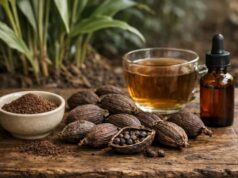
Bergamot (Mentha citrata)—often called bergamot mint, eau de cologne mint, or lemon mint—is a fragrant mint grown for its soft citrus-lavender aroma and its unusually “smooth” essential oil profile. It is easy to confuse with bergamot orange (Citrus bergamia), the citrus whose peel oil flavors Earl Grey tea. Mentha citrata is different: it is a mint, and its character is shaped by linalool and linalyl acetate rather than menthol-heavy compounds typical of peppermint.
As an herb, bergamot mint is used most often as a gentle digestive and calming tea, and as a botanical that can support a relaxed mood without feeling sedating in a heavy way. As an essential oil, it is primarily valued for aroma, skincare-friendly scent, and a “fresh-but-soft” profile—yet it still requires careful dilution and sensible boundaries, especially around children and pets. This guide explains what Mentha citrata is, what’s in it, what it may help with, how to use it wisely, typical dosage ranges, and the most important safety considerations.
Core Points for Bergamot Mint
- May ease mild bloating and digestive discomfort, especially when used as a warm infusion after meals.
- Often used for gentle stress support and a calmer mood through tea or aromatherapy.
- Typical range: 1.5–3 g dried leaf per cup, up to 1–3 cups/day; essential oil topical dilution usually 0.5–2%.
- Avoid ingesting essential oil, and avoid applying undiluted oil to skin.
- Avoid if pregnant or breastfeeding unless clinician-approved, and use extra caution with infants and young children.
Table of Contents
- What is bergamot mint?
- Key ingredients and what they do
- Bergamot mint health benefits
- Best ways to use it
- How much bergamot mint per day?
- Side effects and who should avoid
- What the evidence actually says
What is bergamot mint?
Bergamot (Mentha citrata) is a cultivated mint best recognized by its perfume-like aroma—somewhere between sweet citrus and soft lavender. In gardens and herb catalogs it may also appear as eau de cologne mint, orange mint, or lemon mint. Botanically, naming can be complicated because mints hybridize easily, and different authorities have treated “Mentha citrata” as a distinct species, a variety of water mint, or a form associated with peppermint-related hybrids. For everyday herbal use, the most practical approach is to treat bergamot mint as a linalool and linalyl acetate–rich mint and to choose products that clearly identify the plant and plant part.
How it differs from bergamot orange
If you came here thinking of “bergamot” as the citrus used in Earl Grey tea, this distinction matters:
- Bergamot orange (Citrus bergamia): citrus peel oil; often discussed for fragrance and flavor; citrus oils can have specific sun-sensitivity concerns depending on composition.
- Bergamot mint (Mentha citrata): mint leaf and mint essential oil; typically a softer, less menthol-heavy profile than peppermint.
They are not interchangeable in form, dose, or safety profile.
What parts are used?
Bergamot mint can be used in two main ways, and the “part” determines both the effect and the safety considerations:
- Leaf (fresh or dried): used as a tea, culinary herb, or gentle household infusion. This is the most approachable form and usually the best starting point.
- Essential oil (distilled from aerial parts): used mainly for aroma and topical applications when properly diluted. This is far more concentrated than tea and should be treated like a potent botanical extract.
Why the aroma is a clue
Peppermint and spearmint smell “sharp” because they are dominated by compounds like menthol, menthone, or carvone. Bergamot mint smells “rounder” because its chemistry tends to emphasize floral-citrus notes. In practice, that often translates to a mint that feels less “cold and intense” and more “calm and aromatic.”
If you’re comparing bergamot mint with more familiar culinary mints, it helps to understand the broader mint family patterns first. A useful overview is mint health benefits and practical uses, which clarifies why different mints can feel so different even when they share a genus.
Key ingredients and what they do
Bergamot mint’s effects are best understood as a blend of volatile aromatics (from essential oil) and non-volatile polyphenols (from the leaf). This two-layer chemistry explains why tea can feel gently supportive while the essential oil has a stronger sensory impact and requires more caution.
Linalool and linalyl acetate
These are the signature compounds most often associated with bergamot mint’s characteristic scent. They are widely found across aromatic plants and are frequently studied for:
- Relaxation-oriented aroma effects (mood and perceived calm)
- Antimicrobial activity in lab settings (often context-specific and concentration-dependent)
- Skin-scent compatibility when diluted properly
A practical takeaway is that bergamot mint tends to feel less “stimulating” than peppermint and less “sleepy” than strongly sedating herbs. Many people experience it as a subtle shift toward calm focus.
Other terpenes and oxygenated monoterpenes
Depending on cultivar and growing conditions, bergamot mint may also contain smaller amounts of compounds such as:
- 1,8-cineole (eucalyptol) in modest amounts
- Geraniol, citronellol, or related floral terpenes
- Trace components that shape aroma and bioactivity
This variability is normal for mints. It’s also why two bottles of “bergamot mint oil” can smell slightly different and why dosing should be conservative when you switch brands.
Polyphenols in the leaf
Like many mints, bergamot mint leaf can contain polyphenols such as:
- Rosmarinic acid (commonly abundant across Mentha species)
- Flavonoids (often linked with antioxidant activity)
- Phenolic acids that support oxidative balance
These compounds are less about immediate “aroma effects” and more about gentle support for digestion and recovery from everyday stressors. In tea form, polyphenols can complement the volatile fraction by supporting a calmer gut-brain experience—especially when the tea is used after meals.
Why this matters for real-world choices
When readers ask, “Is the tea the same as the essential oil?” the answer is no:
- Tea delivers mild aromatics plus polyphenols in a diluted form.
- Essential oil delivers a highly concentrated aromatic fraction, with different risk and use rules.
If you like bergamot mint partly because it resembles lavender’s soft floral calm, it can be helpful to understand how aroma-active compounds behave across plants. A good companion read is lavender active ingredients and uses, which provides context for linalool-leaning botanicals and how to approach them safely.
Bergamot mint health benefits
Bergamot mint is best viewed as a gentle, daily-life herb rather than a heavy-hitting clinical tool. Most benefits people seek fall into three buckets: digestion, calm, and light antimicrobial or freshness support. The most realistic outcomes come from consistent, moderate use—especially in tea form—rather than high doses.
1) Digestive comfort after meals
Many people use bergamot mint tea the way they use other mints: to support comfortable digestion. It may be especially appealing when peppermint feels too intense or when you want something aromatic but not sharply cooling.
Common use cases include:
- Mild bloating or a “heavy” feeling after eating
- Occasional gas discomfort
- A desire for a soothing, warm ritual that supports appetite regulation
A practical tip: bergamot mint often shines when paired with behavioral support—slower eating, smaller late meals, and a short walk after dinner.
2) Gentle stress and mood support
Because bergamot mint is rich in aroma-active compounds that many people perceive as relaxing, it is often used for “nervous system support” in a light-touch way:
- A cup of tea during a busy afternoon to soften tension
- Aromatic steam from a hot infusion to create a calmer breathing rhythm
- Diffusion (with safe practices) to support a comfortable, settled atmosphere
It’s important to keep expectations grounded: bergamot mint is not a substitute for therapy, sleep hygiene, or treatment for anxiety disorders. It is better described as a supportive sensory tool.
3) Head tension and “stuffy day” support
Some people reach for aromatic mints when they feel head tension or when seasonal discomfort makes breathing feel less pleasant. Bergamot mint is not as menthol-forward as peppermint, so it may feel gentler for those who find menthol irritating.
If you’re using it for this purpose, a steaming cup can be enough—no essential oil needed.
4) Oral freshness and culinary uses
Bergamot mint can be used like other mints in:
- Light teas and infused waters
- Fruit salads, yogurt, or simple syrups
- Herb blends where you want citrus-lavender notes without actual citrus peel
Culinary use is one of the safest ways to benefit from the plant’s aroma and phytochemicals.
5) Skin-comfort potential (topical, diluted)
Essential oils and aromatic herbs are sometimes used in skincare routines for scent and perceived soothing. If you explore this, the key is proper dilution and a patch test (details in the safety section). Bergamot mint oil may be more skin-friendly than harsher oils, but “gentle” still does not mean “undiluted.”
For readers who primarily want a calming tea experience, bergamot mint is often compared with lemon balm because both are aromatic, friendly, and commonly used for winding down. A helpful comparison is lemon balm health benefits and uses, especially if your main goal is relaxed mood and evening comfort.
Best ways to use it
Bergamot mint can fit into daily routines in several forms. The best choice depends on your goal, your sensitivity, and how comfortable you are with concentrated botanicals. For most people, leaf tea is the best entry point because it offers a wide margin of safety and still captures the plant’s signature aroma.
1) Leaf tea (infusion)
This is the classic method: steep the leaves and enjoy the aroma as much as the flavor.
A practical approach:
- Use fresh leaves (a small handful) or dried leaf (measured—see dosage section).
- Pour hot water over the herb, cover, and steep 7–10 minutes.
- Drink slowly, especially after meals or during a stressful part of the day.
Covering the cup while steeping matters: it helps retain the volatile aromatics that give bergamot mint its signature effect.
2) Culinary use
If you enjoy the flavor, culinary use is both effective and low-risk. Try it:
- Chopped into fruit or melon
- Mixed into yogurt or soft cheese
- Added to herbal teas with other gentle herbs
- Used as a garnish for chilled drinks
Culinary use tends to be more forgiving than “medicinal dosing,” especially if you are sensitive.
3) Aromatic steam (no essential oil required)
For people who want an aromatic reset without using essential oils, steam from a hot infusion can be a middle path:
- Make a strong cup of tea.
- Sit comfortably and inhale the rising aroma naturally (no forced deep breaths).
- Keep it simple—this is about comfort, not intensity.
This can be a good option for those who want an aromatherapy-like experience but prefer to avoid concentrated oils.
4) Essential oil: diffusion and topical use
If you use bergamot mint essential oil, treat it as a concentrated botanical.
- Diffusion: use the smallest amount that achieves the effect you want, keep the room ventilated, and avoid continuous diffusion for hours.
- Topical: always dilute, and choose a carrier oil you tolerate well.
One of the most common mistakes is assuming that because the oil smells soft, it can be used casually. Concentration is what changes the risk.
5) Troubleshooting common issues
- “It doesn’t feel like peppermint.” That is normal; bergamot mint is typically less menthol-driven.
- “The aroma fades quickly.” Cover the cup during steeping, and use fresher herb.
- “It irritates my skin.” Reduce dilution strength or stop; sensitivity varies, especially with oxidized oils.
- “I bought ‘bergamot’ and it smells citrusy.” Double-check whether you bought citrus bergamot instead of bergamot mint.
A good rule is to choose the least concentrated method that still meets your goal. Tea and culinary use often deliver the most benefit for the least complexity.
How much bergamot mint per day?
Dosing bergamot mint is straightforward for tea and more nuanced for essential oil. The safest strategy is to start low, keep use time-limited when you’re addressing a specific issue, and avoid turning a concentrated product into a daily habit without a clear reason.
Tea dosing (most common)
Typical adult ranges:
- Dried leaf: 1.5–3 g per cup, up to 1–3 cups per day
- Fresh leaf: a small handful per cup (roughly equivalent in feel to the above range, though fresh leaf varies in moisture)
If you are new to bergamot mint, start with one cup daily for 3–4 days, then adjust. Many people find that 1–2 cups/day is plenty.
Timing and duration
- After meals: often the best fit if your goal is bloating or digestive comfort.
- Mid-afternoon: can be useful when stress rises and you want a calmer tone without heavy sedation.
- Evening: acceptable if it feels relaxing for you, but some people find aromatic mints mildly uplifting.
Duration suggestions:
- Occasional use: ideal for most people—use when needed.
- Short course: 7–14 days if you’re using it to support a specific phase (travel digestion, a stressful week, seasonal discomfort).
- Long-term daily use: generally safe as tea for many adults, but still worth pausing periodically to confirm you’re using it intentionally rather than automatically.
Essential oil dosing (use caution)
Because essential oil is concentrated, dosing is not about “more is better.”
- Topical dilution: commonly 0.5–2% (for example, 1–4 drops per 10 mL carrier oil depending on drop size and sensitivity).
- Diffusion: start minimal; many people use just a few drops in a diffuser, for short sessions rather than continuous exposure.
Avoid internal use of essential oil unless you are under professional supervision with a product specifically intended and tested for that purpose. Accidental ingestion risk is one reason essential oils are treated cautiously in medical guidance.
Adjustments that matter more than strict numbers
Consider lowering dose or avoiding altogether if:
- You have very sensitive skin or a history of fragrance reactions
- You are taking sedatives or have strong sensitivity to calming botanicals
- You are using multiple essential oils or fragranced products daily (stacking increases irritation risk)
For most readers, the “right dose” is the smallest amount that produces the desired comfort, with no lingering side effects like headache, nausea, or skin irritation. If you find yourself needing bigger and bigger doses to get the same effect, that’s a sign to step back and reassess the underlying goal.
Side effects and who should avoid
Bergamot mint is generally well tolerated as a tea, but the safety picture changes when you move into essential oil use. Many adverse experiences come from preventable mistakes: undiluted topical use, over-diffusion in closed rooms, or accidental ingestion.
Possible side effects
With tea or culinary use, side effects are usually mild and dose-related:
- Stomach upset or nausea (more likely with very strong tea)
- Headache in fragrance-sensitive individuals
- Mild heartburn in some people (mint family responses can vary)
With essential oil, risks include:
- Skin irritation or contact dermatitis
- Eye irritation (even vapor exposure can be uncomfortable)
- Headache, nausea, or “overstimulated” feeling from strong diffusion
- Breathing discomfort in sensitive individuals
Who should avoid or use only with clinician guidance
- Pregnant or breastfeeding people: avoid essential oil use unless professionally guided; tea is often approached more gently, but medical guidance is still wise.
- Infants and young children: avoid direct essential oil exposure; do not apply oils to a child’s face or chest, and do not diffuse continuously in a small enclosed room.
- People with asthma or reactive airways: diffusion can trigger symptoms; proceed cautiously or skip.
- Fragrance-allergic or eczema-prone individuals: patch test is essential, and tea may be a better choice than topical oil.
Critical safety rules for essential oil use
- Do not ingest the essential oil as a DIY practice.
- Never apply undiluted oil to skin.
- Patch test any topical blend on a small area for 24 hours.
- Avoid eyes and mucous membranes.
- Store oils securely away from children and pets.
If your primary interest is “mint oil benefits,” it helps to remember that peppermint oil and menthol-rich products carry their own child-safety cautions and can be irritating in certain contexts. For broader context, peppermint digestive and respiratory benefits offers a useful comparison point for how mint oils are discussed in terms of benefits and precautions.
When to seek medical help
Get medical help promptly if:
- A child may have swallowed any essential oil
- Someone develops confusion, marked sleepiness, vomiting, or breathing difficulty after exposure
- A skin reaction rapidly worsens (blistering, spreading rash, facial swelling)
A calm rule of thumb: bergamot mint leaf tea is usually a gentle daily herb; bergamot mint essential oil is a concentrated product that deserves the same respect you would give any potent substance.
What the evidence actually says
The scientific picture for bergamot mint is strongest in chemistry and mechanism, moderate in preclinical bioactivity, and more limited in direct human clinical trials specifically using Mentha citrata as the intervention. That doesn’t make the herb unhelpful—it simply frames how confidently we should talk about outcomes.
What is well supported
1) Composition and chemotypes in Mentha
Modern research consistently shows that Mentha species can vary dramatically based on chemotype, cultivation conditions, harvest timing, and extraction method. Bergamot mint is best understood as a linalool and linalyl acetate–leaning profile within that broader mint diversity. This supports the practical advice to expect variation between products and to dose cautiously when switching sources.
2) Polyphenols and antioxidant activity across mints
Across Mentha species, polyphenols—especially rosmarinic acid and related phenolics—are repeatedly linked with antioxidant activity in experimental models. This aligns with why many people experience mints as “supportive” rather than “drug-like”: the effects often complement lifestyle habits rather than overriding them.
3) Essential oil bioactivity in lab models
Mint essential oils frequently demonstrate antimicrobial or anti-inflammatory activity in lab settings. For bergamot mint, composition-focused studies help clarify why it may feel gentler than menthol-heavy oils while still being biologically active. The key caution is that lab antimicrobial effects often require concentrations that are not realistic—or not safe—for routine human use.
Where evidence is thinner
1) Clinical outcomes specifically for Mentha citrata
For symptoms like stress, digestion, or sleep, many human trials focus on peppermint or spearmint rather than bergamot mint. That means bergamot mint is often used based on traditional patterns, chemical plausibility, and user experience rather than large, direct RCT evidence.
2) Standardized dosing rules
Because products differ (leaf tea vs essential oil vs extracts), there is no single “clinical dose” that applies universally. This supports a conservative approach: start low, use short courses when targeting a goal, and prioritize tea for routine use.
How to interpret the evidence as a practical user
A responsible takeaway looks like this:
- Bergamot mint is a reasonable, low-intensity herb for digestion and calm routines when used as tea or culinary herb.
- Essential oil use is best approached as aromatic and topical support, not as internal medicine.
- The most reliable benefits come from matching the form to the goal: tea for digestion and daily calm, properly diluted oil for scent and topical use when appropriate.
If you approach bergamot mint as a “supportive tool” rather than a cure, you are more likely to get benefits you can actually feel—and less likely to run into preventable problems.
References
- Mentha Essential Oils: Unraveling Chemotype-Dependent Biosynthesis and Assessing Evidence for Health-Promoting Activities 2025 (Review)
- Mentha: Nutritional and Health Attributes to Treat Various Ailments Including Cardiovascular Diseases 2022 (Review)
- Phenolic Compounds and Biological Activity of Selected Mentha Species 2021 (Research Article)
- Chemical composition and biological activity of Mentha citrata Ehrh., essential oils growing in southern Algeria 2019 (Research Article)
- Clinical Practice Guidelines : Essential Oil Poisoning 2021 (Guideline)
Disclaimer
This article is for educational purposes only and does not provide medical advice, diagnosis, or treatment. Herbal products can vary widely in identity, strength, purity, and suitability for individual health conditions. Bergamot (Mentha citrata) essential oil is highly concentrated and may cause skin irritation, breathing discomfort, or serious harm if accidentally ingested—especially in children. Do not ingest essential oils unless directed by a qualified clinician using a product intended and tested for internal use. If you are pregnant or breastfeeding, have asthma or fragrance sensitivity, take prescription medications, or are considering use for a child, consult a qualified healthcare professional first. Seek urgent medical care if a child may have swallowed any essential oil or if severe symptoms occur after exposure.
If you found this guide helpful, consider sharing it on Facebook, X (formerly Twitter), or your preferred platform.