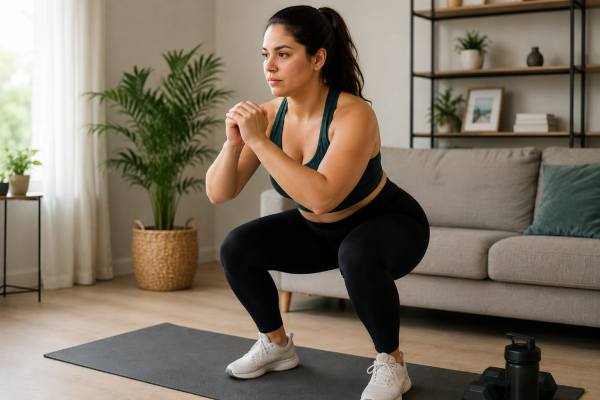
Exercise can support weight loss with PCOS, but the most useful plan is not the most punishing one. PCOS often involves insulin resistance, higher risk of central weight gain, irregular cycles, fatigue, cravings, sleep disruption, and stress around body changes. A good exercise plan has to work with those realities, not ignore them.
The strongest approach is usually a combination of steady aerobic exercise, strength training, and more daily movement. That combination helps improve fitness, insulin sensitivity, body composition, appetite regulation, and long-term weight maintenance. It also gives you options, so your routine can flex around energy levels, symptoms, work, family, and cycle changes.
Table of Contents
- What Exercise Works Best for PCOS?
- Why Exercise Helps PCOS Weight Loss
- How Much Exercise to Aim For
- Best Cardio for PCOS
- Strength Training for PCOS Weight Loss
- HIIT, Yoga, and Low-Impact Options
- Weekly PCOS Workout Plan
- Safety, Recovery, and Medical Support
What Exercise Works Best for PCOS?
The best exercise for PCOS weight loss is a balanced routine that combines moderate-intensity cardio, strength training, and regular daily movement. No single workout style is clearly best for every person with PCOS, but aerobic exercise plus resistance training is the most practical and evidence-aligned starting point.
For weight loss, moderate aerobic exercise has especially useful evidence for reducing BMI in people with PCOS. That does not mean strength training, walking, yoga, or intervals are useless. It means the most reliable plan is usually built around exercises you can repeat consistently, recover from well, and progress over time.
A strong PCOS exercise plan usually includes:
- Aerobic exercise such as brisk walking, cycling, swimming, elliptical training, rowing, hiking, dancing, or jogging.
- Strength training two or more days per week to preserve or build muscle during weight loss.
- Daily movement such as steps, household activity, short walks, stairs, and movement breaks.
- Optional higher-intensity work such as intervals, if your joints, recovery, sleep, and stress levels tolerate it.
- Mobility or mind-body work such as yoga or stretching when it helps with stress, pain, or consistency.
The goal is not to “burn off” PCOS. Exercise works best when it becomes a stable part of a broader plan that also includes nutrition, sleep, medication when appropriate, and medical care for symptoms such as irregular periods, acne, excess hair growth, insulin resistance, or fertility concerns. For a wider look at nutrition alongside movement, a PCOS weight-loss diet can help put exercise into a more complete routine.
A useful rule: choose the least extreme plan that still moves you forward. If you can only keep up a routine for two weeks before crashing, it is probably too aggressive. A plan that feels almost too manageable at first is often the one that creates real results over months.
Why Exercise Helps PCOS Weight Loss
Exercise helps PCOS weight loss partly by increasing energy expenditure, but its deeper value is metabolic. Regular movement can improve how your body handles glucose, stores fat, uses muscle, regulates appetite, and responds to insulin.
Insulin resistance is common in PCOS. When cells are less responsive to insulin, the body may produce more insulin to keep blood sugar controlled. Higher insulin levels can make weight management harder for some people, especially around the abdomen. Exercise helps because working muscles can use glucose more effectively, both during activity and after repeated training over time. That is one reason movement is so often emphasized in PCOS and insulin resistance management.
Exercise may also help with:
- Central adiposity: Waist size and abdominal fat are often more meaningful than scale weight alone.
- Lean mass retention: Strength training helps protect muscle while you lose weight.
- Cardiorespiratory fitness: Better fitness improves stamina and may lower long-term cardiometabolic risk.
- Mood and stress: PCOS is linked with higher rates of anxiety, depression symptoms, and body-image distress, and movement can be part of mental health support.
- Sleep quality: Exercise can support better sleep, which matters for hunger, cravings, and energy.
- Weight maintenance: People often need more activity to maintain weight loss than to start losing weight.
Exercise is not a punishment for eating, and it should not be treated as proof of discipline. With PCOS, it is more helpful to see movement as a signal you send to your muscles, hormones, heart, brain, and metabolism. Some benefits may happen even if the scale is slow to respond.
That matters because PCOS weight loss can be uneven. You may notice better energy, smaller waist measurements, improved strength, more stable hunger, or better blood sugar before you see major weight change. Those signs still count. A broader plan for losing weight with PCOS should track more than pounds alone.
How Much Exercise to Aim For
For adults with PCOS, a practical target is 150 to 300 minutes of moderate aerobic activity per week plus muscle-strengthening exercise on two non-consecutive days. For greater health benefits and modest weight loss, many guidelines point toward at least 250 minutes per week of moderate activity, or 150 minutes of vigorous activity, along with strength training.
That may sound like a lot if you are starting from very little. You do not need to begin there. In fact, jumping straight into high volume can backfire if it causes pain, exhaustion, intense hunger, poor sleep, or missed workouts.
A better progression is:
- Start with your current baseline. If you average 2,000 steps per day and no workouts, your first goal might be 10-minute walks after meals or three short cardio sessions per week.
- Build frequency before intensity. It is usually easier to create a habit with shorter, repeated sessions than with occasional long workouts.
- Add minutes gradually. Increase total weekly exercise by about 10% to 20% at a time when recovery is good.
- Add strength training early. Even two short sessions per week can support body composition.
- Use intensity carefully. Harder is not always better, especially when stress, poor sleep, joint pain, or fatigue are already high.
Moderate intensity usually means you can talk in short sentences but would not want to sing. Brisk walking, cycling at a steady pace, elliptical training, swimming laps, and low-impact aerobics can all fit. Vigorous intensity means talking is difficult and breathing is heavier, such as running, fast cycling, stair climbing, or hard intervals.
For many people with PCOS, the best long-term target is not a perfect weekly number. It is a repeatable rhythm: most days include some movement, most weeks include cardio, and every week includes strength training. A general guide to exercise for weight loss can help you adjust volume without turning activity into an all-or-nothing project.
Best Cardio for PCOS
The best cardio for PCOS is the kind you can do consistently at a moderate effort without flaring pain, exhaustion, or cravings. Brisk walking is often underrated, but cycling, swimming, elliptical training, rowing, hiking, dancing, and jogging can all work.
Moderate-intensity aerobic exercise is especially useful because it is effective, accessible, and easier to recover from than repeated high-intensity sessions. It also scales well. You can increase time, pace, incline, resistance, or frequency as your fitness improves.
Good cardio options include:
- Brisk walking: Joint-friendly, low-cost, and easy to split into shorter sessions.
- Incline treadmill walking: Adds intensity without needing to run.
- Cycling or stationary bike: Useful if walking bothers your feet, knees, or hips.
- Swimming or water aerobics: Helpful for higher body weight, joint pain, or heat intolerance.
- Elliptical training: Low-impact and easy to adjust.
- Rowing: Full-body cardio, but technique matters.
- Dance, Zumba, or fitness classes: Good for people who enjoy music, rhythm, and social support.
- Jogging or running: Effective if you enjoy it and can progress without injury.
Walking deserves special attention because it is easier to recover from and can be used throughout the day. A 10- to 20-minute walk after meals may help with blood sugar control, routine, and appetite awareness. If you want a simple starting point, walking for weight loss is often one of the most sustainable options.
Zone 2 cardio can also be useful. This is a steady, conversational pace that feels purposeful but not draining. It is not magical, but it can build aerobic fitness while keeping stress on the body manageable. For people who tend to overdo intense workouts and then quit, Zone 2 cardio can be a more sustainable middle ground.
The main mistake is choosing cardio based only on calorie estimates. Calorie-burn numbers on watches and machines are often imprecise, and harder workouts can sometimes increase hunger or reduce movement later in the day. Choose cardio based on what helps you feel capable, consistent, and recovered.
Strength Training for PCOS Weight Loss
Strength training is one of the most important parts of a PCOS weight-loss plan because it helps preserve muscle while body weight changes. Muscle tissue supports movement, strength, function, glucose storage, and long-term weight maintenance.
You do not need to train like a bodybuilder. A simple full-body routine two or three times per week is enough for most beginners. The goal is to challenge major muscle groups, practice good form, and gradually increase difficulty over time.
A balanced strength session should include:
- A squat or leg press pattern
- A hip hinge, such as a Romanian deadlift or hip thrust
- A push, such as a push-up, chest press, or overhead press
- A pull, such as a row or pulldown
- A carry or core exercise
- Optional glute, calf, shoulder, or arm work
| Movement pattern | Beginner examples | Progression idea |
|---|---|---|
| Squat | Chair squat, goblet squat, leg press | Add reps, then add weight |
| Hip hinge | Glute bridge, hip thrust, Romanian deadlift | Increase range of motion or resistance |
| Push | Wall push-up, incline push-up, dumbbell press | Lower the incline or increase load |
| Pull | Band row, cable row, lat pulldown | Use a stronger band or heavier weight |
| Core | Dead bug, plank, suitcase carry | Add time, load, or control |
For most exercises, aim for 2 to 4 sets of 6 to 15 repetitions. The final few reps should feel challenging but controlled. You should not need to train to failure, especially when you are also in a calorie deficit.
Progressive overload matters, but it does not have to be dramatic. You can progress by adding one rep, using slightly more weight, improving form, slowing the lowering phase, or adding a set. A beginner-friendly 3-day strength plan can make this easier if you prefer a structured routine.
Strength training may not cause fast scale drops at first. Sometimes the scale moves slowly because training increases muscle glycogen and water storage, especially in the first few weeks. That is not fat gain. Pay attention to waist measurements, strength, energy, how clothes fit, and workout performance. If you are losing fat while gaining or preserving muscle, the scale may understate your progress. Learning progressive overload while losing weight can help you train hard enough without turning every session into a test.
HIIT, Yoga, and Low-Impact Options
HIIT, yoga, Pilates, and low-impact cardio can all fit into a PCOS plan, but they serve different purposes. They are best used as tools, not as mandatory workouts.
High-intensity interval training can improve fitness efficiently and may support insulin sensitivity. It can also be time-saving for people who enjoy hard efforts. But HIIT is not required for PCOS weight loss, and more is not always better. Too much high-intensity work can increase soreness, fatigue, hunger, and stress, especially if sleep is poor or calories are very low.
A reasonable HIIT starting point is once per week, such as:
- 5-minute warm-up
- 6 rounds of 30 seconds hard effort and 90 seconds easy recovery
- 5-minute cool-down
This can be done on a bike, rower, elliptical, hill, treadmill, or with low-impact bodyweight movements. Avoid jumping-based HIIT if it causes pelvic heaviness, knee pain, back pain, foot pain, or leaking urine.
Yoga can help some people with PCOS through stress reduction, mobility, body awareness, and gentle strength. Some research suggests benefits for insulin resistance or androgen-related markers, but yoga should not be framed as a stand-alone fat-loss solution. It is most useful when it helps you stay active, recover, breathe, and reduce all-or-nothing thinking around exercise.
Pilates can improve core strength, posture, and muscular endurance. It may not burn as many calories as longer aerobic sessions, but it can build confidence and help people who dislike traditional gym workouts.
Low-impact options are especially valuable if you have joint pain, higher body weight, fatigue, or a history of injury. Good choices include cycling, swimming, walking, elliptical training, rowing with good form, water aerobics, and low-impact dance. If your knees hurt, a guide to low-impact cardio for bad knees can help you stay active while reducing irritation.
The best mix depends on your body’s response. If HIIT makes you feel energized and you recover well, keep it modest. If it leaves you ravenous, sore, or dreading workouts, use steady cardio instead. PCOS does not require extreme exercise; it rewards repeatable exercise.
Weekly PCOS Workout Plan
A good weekly PCOS workout plan includes two strength days, three or more cardio days, and daily movement you can maintain. The plan should feel realistic enough that you can repeat it for months, not just complete it once.
Here is a practical beginner-to-intermediate template:
| Day | Workout | Purpose |
|---|---|---|
| Monday | Full-body strength, 35–45 minutes | Build or preserve muscle |
| Tuesday | Brisk walk or bike, 30–45 minutes | Moderate aerobic work |
| Wednesday | Yoga, mobility, or easy walk, 20–40 minutes | Recovery and stress support |
| Thursday | Full-body strength, 35–45 minutes | Second muscle-strengthening day |
| Friday | Moderate cardio, 30–45 minutes | Fitness and energy expenditure |
| Saturday | Longer walk, hike, swim, class, or optional intervals | Enjoyment and weekly volume |
| Sunday | Rest or gentle movement | Recovery and consistency |
If this feels like too much, shrink it. Start with two walks and one strength session per week. If it feels too easy after several weeks, add time before adding intensity.
For daily movement, set a step goal that is slightly above your current average. If you average 4,000 steps, jumping to 12,000 may be unnecessary and discouraging. Try 5,000 to 6,000, then build. Small additions count: parking farther away, walking during phone calls, taking stairs, doing a 10-minute after-dinner walk, or using short movement breaks during work.
Nutrition still matters. Exercise can improve health even without weight loss, but fat loss usually requires an energy deficit. That deficit does not have to be severe. For PCOS, a sustainable diet often emphasizes protein, fiber-rich carbohydrates, healthy fats, regular meals, and less reliance on ultra-processed snacks. If exercise is increasing hunger sharply, the answer is not always more willpower. You may need more protein, more fiber, better meal timing, or a smaller training jump.
If you feel you are exercising consistently but your weight is not changing, review the full picture before cutting more calories or adding more cardio. Water retention, menstrual cycle changes, increased hunger, reduced daily movement, and overestimated exercise calories can all hide progress. A careful look at exercising without losing weight can help you troubleshoot without assuming you have failed.
Safety, Recovery, and Medical Support
The safest PCOS exercise plan is one that matches your current fitness, medical history, symptoms, and recovery capacity. Exercise should challenge you, but it should not repeatedly leave you depleted, injured, dizzy, or afraid to move.
Talk with a clinician before starting a demanding program if you have diabetes, prediabetes with symptoms, high blood pressure, chest pain, fainting episodes, severe obesity with mobility limits, an eating disorder history, pregnancy, recent birth, significant pelvic pain, uncontrolled asthma, or a known heart condition. Medical support is also important if your periods are absent for months, bleeding is very heavy, or symptoms such as rapid weight gain, new excess hair growth, severe acne, or fatigue are worsening.
Seek urgent medical care if exercise is followed by chest pain, fainting, severe shortness of breath that does not settle, sudden weakness or confusion, one-sided leg swelling, severe calf pain, or severe pelvic or abdominal pain. Those symptoms are not normal workout discomfort.
Recovery is part of the plan, not a break from it. PCOS can overlap with poor sleep, anxiety, fatigue, joint pain, and weight stigma, so a harsh program may be harder to sustain. Watch for signs that your routine needs adjusting:
- Soreness that does not improve between sessions
- Declining performance for more than a week
- New or worsening joint pain
- Strong cravings after every hard workout
- Sleep getting worse after evening high-intensity training
- Dreading every session
- Feeling guilty when you rest
- Missed periods or worsening cycle irregularity after aggressive dieting and training
A better plan may mean lowering intensity, keeping strength sessions shorter, adding rest days, walking more instead of doing extra HIIT, or eating enough around workouts. For some people, professional support from a registered dietitian, exercise physiologist, physical therapist, endocrinologist, OB-GYN, or mental health professional is the difference between another failed plan and a routine that finally feels livable.
PCOS weight loss is not only a motivation problem. Hormones, insulin resistance, medication effects, sleep, stress, appetite, and reproductive health can all matter. If weight gain is rapid, symptoms are changing, or your efforts are not matching your results, it may be worth reviewing when to see a doctor for weight gain and asking for a thorough assessment.
The best exercise plan for PCOS weight loss is not the one that burns the most calories in one session. It is the one that improves your health, protects your muscle, supports your metabolism, fits your life, and can keep going after the first burst of motivation fades.
References
- Recommendations From the 2023 International Evidence-based Guideline for the Assessment and Management of Polycystic Ovary Syndrome 2023 (Guideline)
- Exercise in the management of polycystic ovary syndrome: A position statement from Exercise and Sports Science Australia 2024 (Position Statement)
- The effects of different exercises on weight loss and hormonal changes in women with polycystic ovarian syndrome: a network meta-analysis study 2024 (Network Meta-analysis)
- The Effects of Different Exercises on Insulin Resistance and Testosterone Changes in Women with Polycystic Ovarian Syndrome: A Network Meta-Analysis Study 2025 (Network Meta-analysis)
- World Health Organization 2020 guidelines on physical activity and sedentary behaviour 2020 (Guideline)
Disclaimer
This article is for general educational purposes only and is not a substitute for professional medical advice, diagnosis, or treatment. If you have PCOS, irregular periods, diabetes risk, pregnancy concerns, pain, dizziness, chest symptoms, or a history of disordered eating, ask a qualified healthcare professional for guidance before changing your exercise or weight-loss plan.
Share this article on Facebook, X, or your preferred platform to help others find practical, evidence-informed guidance on exercise and PCOS weight loss.