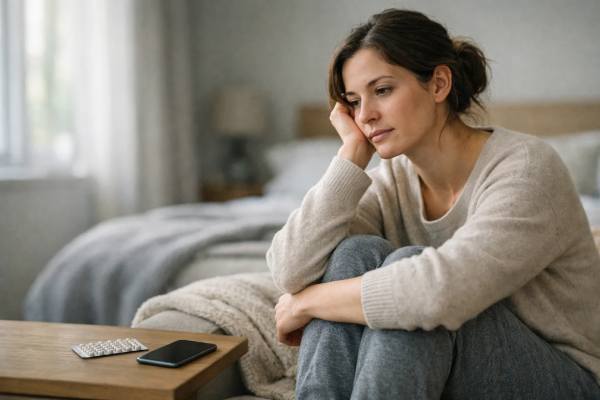
Mood changes are one of the most personal and least predictable parts of hormonal birth control. Some people feel steadier, with fewer mood dips tied to their cycle, less premenstrual distress, and less anxiety about pregnancy. Others feel unlike themselves within weeks: flatter, more irritable, more anxious, or unusually tearful. Both experiences are real, and that is part of what makes this topic difficult. The average effect seen in research does not always match what an individual body and brain will do.
That tension has shaped the science. Randomized trials in adult users often do not show major worsening of depressive symptoms on average, yet observational studies suggest that some groups may be more vulnerable, especially near the start of use. The most helpful question is not whether birth control is “good” or “bad” for mood. It is whether your symptoms changed after starting, switching, or stopping a method, and whether the pattern fits a temporary adjustment, a poor match, or something more serious that needs attention.
Core Points
- Many people do not develop depression or anxiety on birth control, and some feel better because cycle-related mood swings, pain, or pregnancy anxiety improve.
- Mood side effects appear to be more individual than universal, with higher concern in some first-time users, adolescents, and people with prior mood sensitivity.
- A new method can be reasonable to try, but persistent sadness, panic, emotional blunting, or suicidal thoughts should never be dismissed as “just hormones.”
- The first few weeks to few months after starting or switching are the most important time to track mood changes carefully.
- Use one clear baseline, one method change at a time, and one follow-up point so you can tell whether a pattern is real.
Table of Contents
- Why Mood Concerns Come Up So Often
- What the Research Actually Says
- Which Methods May Feel Different
- Who Should Watch More Closely
- What to Track After Starting or Switching
- What to Do If Mood Worsens
Why Mood Concerns Come Up So Often
Birth control and mood is one of those topics where lived experience and published research often seem to disagree. A friend may say the pill made her cry every day. Another may say it was the first time her mind felt calm all month. Both stories can be true without canceling each other out.
Part of the reason is that hormonal contraception does more than prevent ovulation or pregnancy. It changes hormone signaling, bleeding patterns, and the hormonal variability of the cycle itself. For some people, that creates relief. Fewer hormonal swings can mean less irritability, less dread before a period, less pain, and less exhaustion from cycle disruption. That is one reason some combined pills are used as part of treatment plans for PMDD treatment options or severe premenstrual symptoms.
For others, the same hormonal shift feels wrong rather than stabilizing. Mood symptoms may show up as sadness, anxiety, irritability, emotional numbness, poorer stress tolerance, or a sense of feeling disconnected from normal motivation and pleasure. Not everyone describes this as “depression.” Some describe it as not feeling like themselves. That phrase matters, because clinically important mood change does not always arrive as textbook major depression.
Another reason this topic is so charged is that timing is messy. Mood symptoms often begin during stressful seasons of life: a new relationship, school pressure, postpartum months, acne treatment, pain, or the general stress that led someone to seek more reliable contraception in the first place. This makes it hard to know whether the method caused the mood change, unmasked a pre-existing vulnerability, or simply arrived at the same time as something else.
The mind-body overlap adds another layer. Anxiety and depression do not exist in isolation. Sleep, appetite, pain, iron status, thyroid function, life stress, trauma history, and relationship safety can all shape how someone feels on a method. A person may blame birth control for symptoms that were building already. Another may be told the symptoms are “just stress” when the timing strongly suggests a method mismatch.
That is why simplistic reassurance does not help much. “Birth control does not affect mood” is too broad. “Birth control always causes depression” is also too broad. A better frame is this: many people tolerate hormonal contraception well, some clearly benefit, and a smaller but important group appears to experience meaningful mood side effects. The real work is identifying which situation is yours, rather than arguing over a single rule that fits everyone.
What the Research Actually Says
The research on birth control and mood is not useless, but it is genuinely mixed. That is not because scientists have ignored the issue. It is because different study designs answer different questions, and mood is influenced by far more than a pill or device alone.
Randomized trials in adult users often look more reassuring. On average, these studies have not shown a clear worsening of depressive symptoms compared with placebo or nonhormonal comparison groups. That matters because randomized designs are better at reducing some forms of bias. But they also have important limits. Many trials are short. Many do not focus on first-time users. Some exclude people with current depression or strong prior mood sensitivity. In other words, the women most likely to have a difficult experience may be underrepresented in the very studies that make a method look neutral on average.
Observational studies tell a different part of the story. Large cohort studies suggest that some users, especially near initiation, may have a higher risk of depression diagnoses, antidepressant use, or significant depressive symptoms. The increase is not enormous for most adults, but it is large enough to matter clinically, especially when the person sitting in front of you is the one who feels worse. Some of these studies also suggest that risk may be higher in adolescents and during the first months to two years after starting, which fits what many clinicians hear in practice.
This does not mean the observational studies prove that birth control directly causes depression in every case. They can be affected by confounding. People who choose hormonal contraception may differ from people who do not in ways that matter for mood. Some users start a method because of painful cycles, acne, or premenstrual distress, all of which can already affect mental health. On the other hand, observational studies may capture something randomized trials miss: real-world new users who stop quickly because they feel awful.
That is one reason the most honest summary is not “the research says yes” or “the research says no.” It is this:
- On average, adult randomized trial data do not show major depressive worsening.
- Real-world observational data suggest a subgroup may experience meaningful mood side effects.
- Early use, adolescence, and method type may matter.
- Pre-existing mental health history changes the picture.
The data on anxiety are even less tidy than the data on depression. Some users report more anxiety, panic-like symptoms, or emotional activation. Others feel less anxious, especially if contraception reduces cycle unpredictability, pregnancy fear, or severe premenstrual symptoms. When you look at the whole picture, it becomes clear why a broader view of hormones and anxiety connections is often useful before blaming one factor alone.
One more practical point matters. The CDC’s 2024 medical eligibility guidance does not treat depressive disorders alone as a restriction for any major contraceptive method. That is important, but it should not be misunderstood. “Not a contraindication” is not the same as “no one ever feels worse.” It means depression by itself usually does not make a method medically unsafe. It does not erase the need for individual monitoring.
Which Methods May Feel Different
People often ask which birth control method is worst for mood, but the evidence does not support one universal villain. What it supports is variation. Different methods use different hormones, doses, delivery routes, and patterns of exposure, and that may matter for people who are sensitive to mood changes.
Combined hormonal methods, including many pills, the patch, and the ring, contain both estrogen and a progestin. Progestin-only methods include the mini-pill, implant, injection, and hormonal IUDs. That distinction matters because many clinicians and reviews suspect that progestin-dominant methods may be more likely to cause mood problems in some users, though the evidence is not strong enough to reduce this to a simple rule. Some people do poorly on a progestin-only method and much better on a combined pill. Others have the opposite experience.
The type of progestin may also matter, though this is not fully settled. Older formulations and some higher-dose or more androgenic profiles are often discussed as potentially harder for mood-sensitive users, while newer formulations may be better tolerated by some people. But real life resists neat ranking. Two methods that look similar on paper can feel very different in practice.
Hormonal IUDs deserve special mention because they are often marketed as “mostly local.” That is partly true in terms of their primary contraceptive effect, but it does not mean they are mood-inert. Some recent observational studies have suggested a dose-related association between levonorgestrel IUDs and depression risk, especially among first-time users. That does not prove causation for every user, and many people feel completely fine on a hormonal IUD. Still, it is enough to justify taking mood complaints seriously rather than assuming the device could not be involved.
A practical way to think about methods is this:
- Combined pill: may help some users with cycle-linked mood symptoms, but may worsen mood in others
- Progestin-only pill: a reasonable option for many, but sometimes reported as less mood-friendly in sensitive users
- Implant and injection: worth watching closely if mood changed noticeably on prior progestin methods
- Hormonal IUD: often well tolerated, but not exempt from mood complaints
- Copper IUD: no hormone exposure, which can help if hormonal mood sensitivity is strongly suspected, though bleeding and cramping tradeoffs matter
It is also important not to confuse route with risk certainty. A vaginal ring is not automatically worse because it is not a pill. A pill is not automatically safer because it can be stopped quickly. What matters most is the individual response and the broader context in which the method is used.
This is especially true if mood symptoms are not the only issue. A method that reduces pain, bleeding, acne, or PMDD may improve overall well-being even if it slightly changes mood in other ways. Another may protect against pregnancy effectively but still feel emotionally intolerable. Birth control choice is not just about efficacy. It is about whether the method fits the person who has to live inside it every day.
Who Should Watch More Closely
Some users do not need to be alarmed, but they do need to be more observant. The research and clinical pattern both suggest that certain groups may be more likely to notice mood changes, or more likely to be harmed if those changes are brushed aside.
Adolescents are one of the clearest groups to watch carefully. Several observational studies suggest that younger users may have a higher relative risk of depression after starting oral contraceptives than older users. That does not mean teens should avoid birth control altogether. It means follow-up matters more, especially during the first few months.
People with a past history of depression, anxiety, PMDD, postpartum depression, panic, or strong mood shifts with prior hormonal changes also deserve more thoughtful counseling. A prior bad reaction does not guarantee a second one, but it absolutely raises the odds that a new method should be started with closer attention. The same is true for people who once stopped a method because they felt emotionally flat, unusually agitated, or persistently low.
Another group to watch is first-time users. Someone who has never used hormonal contraception before does not yet know whether they are sensitive to it. This is where journaling symptoms can be surprisingly helpful. A person who already expects mood change may otherwise struggle to tell whether the pattern is real or just feared.
People with clear cycle-linked mood symptoms need nuance, not fear. Some do better on hormonal contraception because it reduces hormonal fluctuation and premenstrual worsening. Others feel worse because the chosen method does not match their biology well. If cycle-related mood symptoms are severe, it is worth understanding the difference between ordinary PMS and PMS vs PMDD before assuming any bad month on contraception means the method is universally wrong.
A few more situations deserve extra care:
- Recent postpartum months, when mood symptoms may have many overlapping causes
- Active eating disorders or severe body-image distress
- Chronic pain, migraines, or sleep loss, which can amplify mental health symptoms
- ADHD, trauma history, or severe stress, where subtle emotional blunting may be easy to miss
- Use of multiple medications, especially psychiatric medications that already require close symptom tracking
It is also worth being careful with language. “You are just sensitive” is not helpful. Sensitivity is not weakness. It is clinically relevant information. If someone has a clear history of worsening mood on a certain formulation, that is a data point worth respecting.
The reassuring side of this is that increased watchfulness is not the same as prohibition. Many people with anxiety or depression use hormonal contraception successfully. Some even improve because pregnancy anxiety drops, bleeding gets lighter, pain decreases, and cycle chaos becomes more manageable. The key is not to assume that a psychiatric history makes birth control impossible. It is to avoid acting as though mood history is irrelevant when choosing, starting, and following up on a method.
What to Track After Starting or Switching
The period right after starting or switching birth control is where the most useful information appears, and also where people often second-guess themselves. A structured check-in is more helpful than vague worry.
Start with a baseline before the new method, even if it is simple. For one or two weeks, note your average mood, anxiety level, sleep quality, irritability, appetite, libido, and energy. You do not need a complex app. A few numbers from 1 to 10 and a short daily note can be enough. Without a baseline, everything afterward becomes a blur of impressions.
Then, after starting the method, watch for change in pattern rather than isolated bad days. Useful questions include:
- Did mood shift in the first few weeks after starting or switching?
- Is the change steady, worsening, or already settling?
- Does it feel like sadness, anxiety, irritability, emotional blunting, or panic?
- Are sleep, appetite, and stress tolerance changing too?
- Do the symptoms appear only around bleeding or all month long?
Timing matters. Some adjustment symptoms may ease over the first two to երեք cycles. But there is a difference between “a bit off” and “progressively not myself.” If someone becomes more withdrawn, more hopeless, more panicky, or less able to function, it is not helpful to keep repeating that it has only been a few weeks.
It is also important to separate mood change from other endocrine problems that can mimic it. New anxiety, shakiness, palpitations, sweating, and insomnia can sometimes reflect thyroid or stimulant issues rather than a contraceptive effect alone. If the symptom cluster seems physical as much as emotional, it may be worth reviewing other causes of panic-like symptoms, including thyroid-related anxiety patterns.
A few practical markers often matter more than raw mood ratings:
- Are you missing work or school?
- Are relationships becoming harder to manage?
- Are you crying more often than usual?
- Do you feel flat and detached rather than sad?
- Are you having new panic symptoms?
- Are you thinking more negatively about yourself or the future?
One more point deserves emphasis: do not change five things at once. Starting a new contraceptive, doubling caffeine, sleeping four hours a night, and beginning a stressful semester is a perfect recipe for confusion. When possible, keep the rest of the routine stable long enough to learn something real.
Mood tracking is not meant to make people obsessive. It is meant to protect them from gaslighting themselves. The goal is to know whether a method deserves more time, a formulation change, or a full stop. That is much easier when you can say, “I was averaging a 3 out of 10 for anxiety before, and now I am at a 7 for three straight weeks,” instead of, “I think maybe I feel different.”
What to Do If Mood Worsens
If your mood worsens after starting birth control, the first step is not panic. It is pattern recognition and a timely response. Mild, short-lived adjustment symptoms may settle. Persistent or escalating symptoms deserve action.
Start by naming what is happening. Is this lower mood, anxiety, agitation, emotional blunting, panic, rage, or hopelessness? Those are not all the same problem, and the language can help guide the next step. Then contact the prescribing clinician or another trusted clinician and describe the timing clearly: when the method started, when symptoms changed, whether you have had similar reactions before, and whether you are taking any psychiatric medication or other hormone-related treatment.
For many people, the most realistic options are:
- Continue briefly with close monitoring if symptoms are mild and improving
- Switch to a different hormonal formulation
- Change to a lower-dose or different progestin profile
- Move to a nonhormonal option, such as a copper IUD or barrier method, if hormonal sensitivity seems likely
- Treat the mental health symptoms directly if the method is helping in other important ways
What you should not do is minimize severe symptoms because the method is convenient. New suicidal thoughts, self-harm urges, inability to function, panic attacks, or intense hopelessness are not “normal adjustment.” They are reasons for urgent help.
A second practical point is contraception planning. If you stop a method, pregnancy protection may change quickly. So the mood conversation and the pregnancy-prevention conversation need to happen together. The goal is not to trap someone on a method they hate, but it is also not to leave them unprotected by accident.
This is also the point where differential diagnosis matters. If the timing is not clear, or if symptoms are accompanied by big physical shifts such as weight change, temperature intolerance, marked fatigue, new acne, hair loss, or irregular bleeding, another hormone issue may be worth considering. In those more complicated cases, a broader look at common hormone-related symptom patterns can help frame the next steps, even if birth control still seems part of the story.
Get urgent help right away for:
- Suicidal thoughts
- Self-harm urges
- Severe panic with chest pain or fainting
- Not sleeping for days with escalating agitation
- Feeling unsafe with yourself or others
Finally, trust response over theory. A method does not need to be “proven bad” in the literature for it to be a poor match for you. The aim of evidence is to guide decisions, not to overrule a clear clinical pattern. The right birth control method is not just the one with good contraceptive efficacy. It is the one you can live with physically, mentally, and emotionally without losing yourself along the way.
References
- U.S. Medical Eligibility Criteria for Contraceptive Use, 2024 2024 (Guideline)
- Hormonal contraceptive use and depressive symptoms: systematic review and network meta-analysis of randomised trials 2021 (Systematic Review and Network Meta-Analysis)
- Symptoms of mental disorders and oral contraception use: A systematic review and meta-analysis 2024 (Systematic Review and Meta-Analysis)
- Assessing the impact of contraceptive use on mental health among women of reproductive age – a systematic review 2024 (Systematic Review)
- Population-based cohort study of oral contraceptive use and risk of depression 2023 (Cohort Study)
Disclaimer
This article is for educational purposes only and is not a substitute for medical advice, diagnosis, or treatment. Mood changes after starting birth control can have more than one cause, and severe depression, panic, suicidal thoughts, or feeling unsafe require prompt professional help. Do not stop or switch a contraceptive method without considering pregnancy risk, other medical reasons for use, and the need for backup contraception. If symptoms are significant, worsening, or hard to interpret, seek care from a qualified clinician.
If this article helped you, please share it on Facebook, X, or another platform where it may help someone make a more informed and compassionate decision about contraception and mental health.