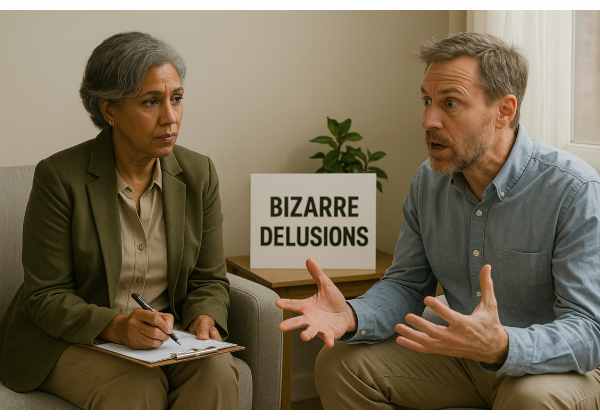
Bizarre delusions are fixed beliefs that are clearly implausible, not shared by the person’s culture or community, and not explained by ordinary misunderstandings or unusual opinions. In clinical language, “bizarre” does not mean ridiculous or laughable. It describes a belief that appears impossible or highly disconnected from how reality normally works, such as believing that outside forces have removed one’s thoughts, replaced internal organs without surgery, or are controlling one’s body from a distance.
These experiences can be frightening, confusing, and isolating. They may appear in several psychiatric and medical contexts, including schizophrenia-spectrum disorders, mood disorders with psychotic features, substance-related states, delirium, and some neurological conditions. Understanding the symptom clearly matters because bizarre delusions are not a personality trait, a moral failing, or simply “odd thinking.” They are a sign that a person’s grip on reality may be impaired and that professional evaluation may be important, especially when the symptoms are new, worsening, or linked with danger.
Table of Contents
- What Bizarre Delusions Mean
- Symptoms and Common Themes
- Signs Others May Notice
- Causes and Risk Factors
- Conditions Linked to Bizarre Delusions
- Diagnostic Context and Workup
- Effects, Complications, and Urgent Warning Signs
What Bizarre Delusions Mean
A bizarre delusion is a firmly held false belief that is not just unlikely, but highly implausible or impossible within ordinary reality. The person may remain convinced even when others present clear evidence against the belief, and the belief usually cannot be explained by cultural, religious, educational, or community norms.
The word “delusion” has a specific clinical meaning. It is not the same as being mistaken, misinformed, imaginative, spiritual, eccentric, suspicious, or stubborn. A delusion is usually fixed, personally meaningful, and resistant to correction. The person may organize decisions, emotions, relationships, and daily behavior around it.
“Bizarre” adds another layer. A non-bizarre delusion could involve something that is possible but untrue, such as believing a neighbor is spying without evidence. A bizarre delusion involves content that does not fit ordinary physical, biological, or social reality, such as believing that one’s thoughts are being inserted by a machine operated from another planet.
| Experience | What it means | Example |
|---|---|---|
| Bizarre delusion | A fixed false belief that is clearly implausible or impossible | “My organs were replaced overnight by invisible technology.” |
| Non-bizarre delusion | A fixed false belief about something possible but unsupported | “A coworker has hired people to follow me everywhere.” |
| Hallucination | A perception without an external source | Hearing a voice when no one is speaking |
| Obsession | An intrusive, unwanted thought that the person may recognize as excessive | Repeated fear of contamination despite knowing the fear may be unreasonable |
| Overvalued idea | A strongly held belief that may dominate thinking but is not fully delusional | An extreme health or body concern held with partial doubt |
Bizarre delusions can be especially difficult for families to understand because the person’s speech may be otherwise organized, and their emotions may seem sincere and intense. From the outside, the belief may seem impossible. From the person’s point of view, it may feel certain, urgent, and personally significant.
Clinicians also consider context. A belief that seems unusual to one observer may be ordinary within a particular culture, spiritual tradition, or community. For that reason, a careful evaluation does not label a belief delusional simply because it is unfamiliar. The key question is whether the belief is fixed, false, personally impairing, and outside the person’s cultural or subcultural framework.
The clinical importance of bizarre delusions has also changed over time. Earlier diagnostic systems gave special weight to bizarre delusions in schizophrenia. More recent diagnostic approaches place greater emphasis on the full pattern of symptoms, duration, functional change, and whether other explanations are present. In practice, that means a bizarre delusion is a serious sign, but it is not enough by itself to determine a diagnosis.
Symptoms and Common Themes
The core symptom is a fixed, implausible belief that the person experiences as real. Bizarre delusions often involve control, bodily transformation, thought interference, identity changes, or impossible explanations for ordinary events.
Several themes are especially common in psychotic symptoms, although the exact content varies widely from person to person. A person may have one dominant delusion or several connected beliefs that form a larger explanation for what they are experiencing.
Common bizarre delusion themes include:
- Thought insertion: believing thoughts have been placed into the mind by another person, organization, machine, spirit, or force.
- Thought withdrawal: believing thoughts have been removed or stolen from the mind.
- Thought broadcasting: believing one’s private thoughts are being transmitted so others can hear them.
- External control: believing one’s movements, speech, emotions, or decisions are being controlled from outside the body.
- Bodily transformation: believing body parts, organs, blood, or identity have been replaced or altered in impossible ways.
- Impossible surveillance or influence: believing that hidden forces, satellites, implants, or supernatural systems are controlling events without evidence.
- Misidentification: believing a familiar person has been replaced by an identical double, or that strangers are actually known people in disguise.
- Grandiose impossible identity: believing one is an immortal being, a world-controlling figure, or uniquely selected through impossible mechanisms.
The content may sound unusual, but the emotional tone is often very real. Someone who believes their thoughts are being stolen may feel violated, frightened, angry, or ashamed. Someone who believes their body is controlled may feel unsafe even in familiar places. These emotions can drive avoidance, confrontation, secrecy, or desperate attempts to “prove” the belief.
Bizarre delusions may occur with other psychotic symptoms. Hallucinations, especially voices, may appear alongside the delusion. Disorganized speech may make the belief harder to follow. Negative symptoms, such as reduced emotional expression or social withdrawal, may appear in some schizophrenia-spectrum conditions. Mood symptoms may also be present, including depression, mania, irritability, agitation, or severe anxiety.
A delusion can also be partial or fluctuating early on. Some people move between doubt and conviction. They may say, “I know this sounds impossible, but it feels true,” or they may test the belief by checking, asking for reassurance, or looking for hidden signs. As conviction increases, the person may become less able to consider alternative explanations.
Bizarre delusions are not always dramatic in conversation. Some people hide them because they fear being judged, hospitalized, or harmed. Others mention them indirectly, using phrases such as “something is controlling me,” “my mind is not private,” “my body is not mine,” or “people know things they could not possibly know.” These statements should be taken seriously, especially when they are new or accompanied by distress, sleeplessness, intoxication, confusion, or unsafe behavior.
Signs Others May Notice
Others may first notice changes in behavior rather than hearing the full delusional belief. A person may seem frightened, guarded, unusually suspicious, withdrawn, preoccupied, or convinced that ordinary events have hidden meanings.
The signs can be subtle at first. Someone may stop using a phone because they believe it is transmitting thoughts. They may cover mirrors, unplug devices, avoid certain rooms, refuse food, or accuse loved ones of participating in a plot. They may spend long periods searching online, writing notes, recording “evidence,” or trying to decode messages from television, social media, music, license plates, or casual conversations.
Possible observable signs include:
- Sudden or increasing social withdrawal
- Strong fear of being watched, controlled, poisoned, tracked, or manipulated
- Unusual explanations for ordinary events
- Repeated checking, blocking, covering, or dismantling devices
- Sleeping much less than usual, especially with increased energy or agitation
- Talking about hidden messages, impossible bodily changes, or outside control
- Anger or panic when others question the belief
- Declining school, work, or self-care
- Avoiding food, medication, medical care, or family contact because of the belief
- Talking to unseen others or appearing to respond to voices
These signs overlap with many conditions, so they should not be used to label someone casually. Anxiety, trauma, obsessive-compulsive symptoms, substance use, sleep deprivation, depression, neurological illness, and intense stress can all change behavior. A clinical psychosis evaluation looks at the full picture rather than one statement or one unusual act.
The person’s level of insight matters. Some people can discuss the possibility that the belief may be wrong. Others are completely certain. Some are frightened by their own thoughts and want help understanding them. Others may see questions as proof that others are involved in the threat.
Family members often struggle with how to respond because arguing usually fails. Directly challenging the belief may increase fear or mistrust, while agreeing with the belief may strengthen it. From a diagnostic standpoint, what matters most is the pattern: how fixed the belief is, how long it has been present, whether it is linked with hallucinations or mood changes, and how much it is affecting functioning.
In children and adolescents, evaluation requires special care. Imagination, fantasy play, unusual interests, online influence, sleep loss, developmental differences, and trauma reactions can complicate interpretation. At the same time, new fixed false beliefs, hallucinations, severe withdrawal, or major functional decline in a young person should not be dismissed as attention-seeking or a phase. Early assessment is especially important when symptoms interfere with school, safety, relationships, or basic daily routines.
Causes and Risk Factors
Bizarre delusions usually arise from a combination of vulnerability and stress rather than one simple cause. Genetics, brain development, sleep disruption, substance exposure, trauma, medical illness, and social stress can all contribute, depending on the person and the condition involved.
In schizophrenia-spectrum disorders, delusions are thought to involve disruptions in how the brain assigns meaning, predicts threat, filters sensory information, and updates beliefs when new evidence appears. A neutral event may feel intensely significant. Coincidences may seem connected. Internal thoughts may feel as if they come from outside the self. Once the belief forms, fear and confirmation-seeking can make it more resistant to correction.
Risk factors that may raise the likelihood of psychotic symptoms include:
- Family history of schizophrenia-spectrum or bipolar disorders
- Prior episodes of psychosis or unusual perceptual experiences
- Heavy or early cannabis use, especially high-potency products
- Use of stimulants, hallucinogens, or other substances that can trigger psychosis
- Severe sleep deprivation
- Major stress, trauma, social isolation, or migration-related stress
- Neurological illness, seizures, brain injury, dementia, or delirium
- Medical problems that affect the brain, metabolism, hormones, infection, or inflammation
- Manic or severe depressive episodes with psychotic features
- Younger age during the typical risk period for first-episode psychosis, often late adolescence through early adulthood
Risk does not mean certainty. Many people with risk factors never develop delusions, and some people with bizarre delusions have no obvious family history or substance exposure. The value of identifying risk factors is not to blame the person but to understand what may be contributing to the symptom.
Substances are a particularly important part of the picture. Cannabis, amphetamines, cocaine, hallucinogens, some medication effects, withdrawal states, and intoxication can all be relevant. Substance-related psychosis can look very similar to primary psychiatric psychosis during an acute episode. Timing matters: clinicians look at when the belief began, whether it appeared during intoxication or withdrawal, whether it persists after the substance has cleared, and whether similar symptoms occurred before.
Sleep can also play a powerful role. Several nights of little or no sleep can worsen suspiciousness, perceptual distortions, emotional intensity, and confusion. In someone already vulnerable to psychosis or mania, sleep loss can be part of a larger pattern of worsening symptoms.
Medical and neurological causes must also be considered, especially when delusions appear suddenly, start later in life, occur with confusion, or come with new physical symptoms. Delirium, dementia, seizures, endocrine problems, infections, autoimmune conditions, medication effects, and brain injury can sometimes present with delusional beliefs. This is one reason a first episode of bizarre delusions often calls for a broad evaluation rather than a quick assumption about the diagnosis.
Conditions Linked to Bizarre Delusions
Bizarre delusions are a symptom, not a diagnosis by themselves. They can appear in several psychiatric, neurological, substance-related, and medical conditions, and the surrounding symptom pattern helps determine what diagnosis is most likely.
In schizophrenia, delusions may occur with hallucinations, disorganized speech, disorganized or catatonic behavior, negative symptoms, and functional decline. The delusion may be bizarre or non-bizarre. A person may also show reduced motivation, flattened emotional expression, difficulty organizing daily life, or changes in work, school, and relationships.
In delusional disorder, the main feature is one or more delusions lasting at least a significant period of time, with functioning often less broadly disrupted than in schizophrenia. Traditionally, delusional disorder was associated with non-bizarre delusions, but modern diagnostic framing recognizes that bizarre content can occur. The distinction depends on the broader pattern, not only the content of the belief.
Mood disorders can also include psychosis. In bipolar disorder, delusions may appear during mania or severe depression. During mania, a person may have decreased need for sleep, racing thoughts, pressured speech, impulsive behavior, grandiosity, agitation, or risky decisions. Delusions in this context may be grandiose, persecutory, religious, or bizarre. A broader discussion of mood-state clues appears in bipolar disorder symptoms, but the key diagnostic issue is whether psychotic symptoms occur only during mood episodes or also outside them.
Major depression with psychotic features can include delusions of guilt, ruin, disease, punishment, or nihilistic beliefs. Some may be bizarre, such as believing one’s body has stopped functioning despite being alive. These symptoms often occur with severe low mood, loss of pleasure, changes in sleep and appetite, slowed thinking, hopelessness, or suicidal thoughts.
Delirium can cause sudden delusions, hallucinations, agitation, fear, and misinterpretation of the environment, especially in older adults or medically ill people. Unlike many primary psychiatric disorders, delirium often involves fluctuating attention and awareness. A person may be clearer at one time of day and very confused at another. Because delirium can signal a serious medical problem, sudden confusion deserves prompt attention; delirium screening focuses on these rapid changes in attention and awareness.
Neurocognitive disorders, including dementia, can also involve delusions, especially suspicious or misidentification beliefs. Some people with dementia may believe items are being stolen, a spouse is an impostor, or their home is not really their home. The presence of memory loss, language problems, visual hallucinations, fluctuating alertness, or movement symptoms can help clinicians consider specific neurological causes.
Substance-induced psychosis and medication-related psychosis are also important possibilities. Stimulants, cannabis, hallucinogens, intoxication, withdrawal, and certain medical medications can all contribute. A careful timeline is essential because the same symptom can mean different things depending on when it began and what else was happening.
Diagnostic Context and Workup
A professional evaluation focuses on the full pattern: the belief itself, how fixed it is, when it started, whether other symptoms are present, and whether medical or substance-related causes could explain it. The goal is not simply to decide whether a belief sounds bizarre, but to understand what is happening clinically.
A typical assessment may include a detailed interview, a mental status examination, collateral history from family or other trusted sources when appropriate, substance-use history, medical review, and screening for mood, trauma, anxiety, cognitive, and neurological symptoms. For new or unclear symptoms, the workup may also include laboratory tests, toxicology testing, brain imaging, or neurological evaluation when the clinical picture suggests it.
Clinicians commonly ask about:
- The exact content of the belief
- How certain the person feels about it
- Whether the belief changes with discussion or evidence
- When it began and whether onset was sudden or gradual
- Whether there are hallucinations, disorganized thoughts, or unusual behavior
- Whether mood symptoms, sleep loss, trauma symptoms, or anxiety are present
- Whether substances, medications, or withdrawal could be involved
- Whether there is confusion, memory loss, seizures, headache, fever, or other physical symptoms
- Whether the belief is affecting safety, food intake, relationships, work, school, or self-care
Assessment is especially important after a first episode. A first-episode psychosis evaluation often considers psychiatric symptoms and medical contributors together, because early psychosis can resemble mood disorders, substance effects, trauma-related symptoms, delirium, or neurological illness. A general mental health evaluation may also help clarify how symptoms fit together across time.
The medical workup is individualized. There is no single blood test or scan that proves a bizarre delusion is psychiatric. However, tests may help identify or rule out contributing factors. For example, clinicians may consider thyroid problems, vitamin deficiencies, infections, metabolic abnormalities, autoimmune concerns, seizure disorders, intoxication, withdrawal, or medication effects based on the person’s age, symptoms, medical history, and examination.
Toxicology is sometimes part of the evaluation when substance exposure is possible, unclear, or clinically relevant. A toxicology screen in a mental health workup does not explain every case, but it can provide important context when symptoms are sudden, severe, or linked with intoxication or withdrawal.
Brain imaging may be considered when there are neurological signs, late-life onset, head injury, seizures, cancer history, abnormal examination findings, or unusual sudden changes. A scan cannot diagnose most mental illnesses by itself. The limits of imaging are important: MRI and mental illness diagnosis are related only in selected situations, mainly when clinicians are looking for structural or neurological contributors.
Cultural context is also part of good diagnostic practice. Clinicians should ask about spiritual background, community beliefs, language, migration history, trauma, discrimination, and the person’s own meaning-making framework. A belief is not delusional just because it is uncommon. It becomes clinically concerning when it is fixed, false, impairing, and not understandable within the person’s cultural or personal context.
Effects, Complications, and Urgent Warning Signs
Bizarre delusions can affect nearly every part of life when they are intense, persistent, or untreated. The most serious complications involve safety, self-care, relationships, work or school functioning, legal problems, and delayed evaluation of medical or psychiatric illness.
The emotional burden can be severe. A person who believes their thoughts are being controlled or their body has been altered may feel terrified, humiliated, angry, or trapped. They may stop trusting loved ones. They may avoid doctors, refuse food, leave home unexpectedly, or try to protect themselves from an imagined threat. Even when the belief is not outwardly dangerous, it can create constant distress.
Common effects and complications include:
- Social withdrawal and isolation
- Conflict with family, partners, neighbors, coworkers, or authorities
- Decline in school or work performance
- Difficulty sleeping, eating, bathing, or managing daily tasks
- Financial or legal problems related to the belief
- Depression, shame, fear, or hopelessness
- Increased risk of substance use as a way to cope
- Risk of self-harm or suicide, especially with severe distress or command hallucinations
- Risk of aggression if the person believes they must defend themselves
- Delayed diagnosis of medical, neurological, or psychiatric conditions
Bizarre delusions can also affect physical health. Someone may avoid medical care because they believe clinicians are part of a plot. Another person may refuse food or water because they believe it has been transformed or contaminated. Someone with a bodily delusion may seek repeated medical tests or procedures, while another may avoid necessary care entirely.
The level of urgency depends on the whole situation, not just the strange content of the belief. Immediate professional evaluation is especially important when bizarre delusions are new, rapidly worsening, or accompanied by confusion, fever, severe headache, seizures, intoxication, withdrawal, extreme agitation, inability to sleep for days, or major changes in consciousness.
Urgent evaluation is also important if the person:
- Talks about suicide, self-harm, or not wanting to live
- Threatens to harm someone else
- Believes they must act to protect themselves from an imagined threat
- Is hearing commands to hurt themselves or others
- Cannot eat, drink, sleep, or care for basic needs
- Is wandering, missing, reckless, or severely disoriented
- Has sudden symptoms after head injury, substance use, medication changes, or illness
- Is experiencing psychosis during pregnancy or after childbirth
- Has access to weapons and feels threatened or controlled
In these situations, safety should take priority over proving whether the belief is true. A person in crisis may not be able to reason through evidence, and intense confrontation can worsen fear. Emergency services, crisis lines, urgent psychiatric assessment, or emergency medical evaluation may be needed depending on the risk and local resources. Guidance on emergency evaluation for mental health or neurological symptoms can help clarify when symptoms should not wait.
Bizarre delusions can be frightening for everyone involved, but they are clinically recognizable symptoms. The most useful response is to take the experience seriously, avoid ridicule, and seek an appropriate evaluation when symptoms are persistent, impairing, new, or unsafe.
References
- Delusions 2022 (Review)
- Delusional Disorder 2023 (Review)
- Identification of Psychosis Risk and Diagnosis of First-Episode Psychosis: Advice for Clinicians 2024 (Review)
- Clinical and Structural Differences in Delusions Across Diagnoses: A Systematic Review 2022 (Systematic Review)
- Delusional Themes are More Varied Than Previously Assumed: A Comprehensive Systematic Review and Meta-Analysis 2025 (Systematic Review and Meta-Analysis)
- Schizophrenia 2025 (Fact Sheet)
Disclaimer
This content is for general educational purposes only and is not a substitute for professional medical advice, diagnosis, or treatment. Bizarre delusions, especially when new, severe, or linked with safety concerns, should be evaluated by a qualified health professional.
Thank you for taking time with a sensitive topic; sharing this article may help someone recognize concerning symptoms with more clarity and less stigma.