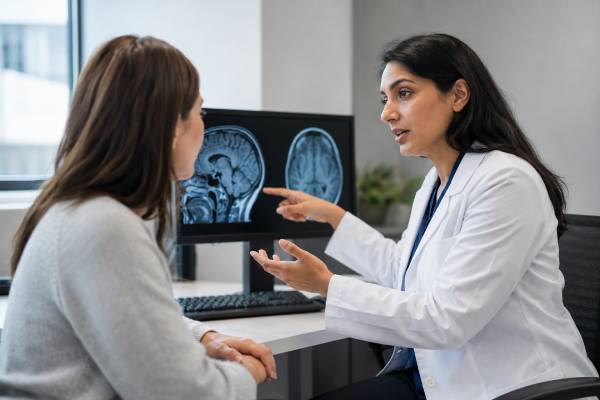
MRI can be reassuring, confusing, or both when mental health symptoms are involved. A person may have depression, anxiety, psychosis, memory changes, mood swings, attention problems, or personality changes and wonder whether a brain scan can “prove” what is happening. The answer is nuanced: MRI can show many structural problems in the brain, but it usually cannot diagnose a mental illness by itself.
Most mental health diagnoses are made through clinical evaluation: symptoms, timing, medical history, family history, medications, substance use, sleep, functioning, safety risks, and sometimes psychological or cognitive testing. Brain imaging may still matter, especially when symptoms are new, unusual, rapidly worsening, or accompanied by neurological signs. The key is knowing what MRI is designed to detect, what it is not designed to confirm, and how scan results fit into a careful diagnostic workup.
Table of Contents
- Quick Answer: Can MRI Diagnose Mental Illness?
- What Brain MRI Can Show
- Why MRI Cannot Diagnose Mental Illness
- When Doctors Order Brain MRI
- What Other Brain Scans Add
- What to Expect From Brain MRI
- How MRI Results Fit the Evaluation
- When Symptoms Need Urgent Care
Quick Answer: Can MRI Diagnose Mental Illness?
MRI usually cannot diagnose depression, anxiety, bipolar disorder, ADHD, PTSD, OCD, schizophrenia, or autism on its own. It can help doctors look for brain injuries, tumors, strokes, inflammation, dementia patterns, or other neurological conditions that may cause or worsen psychiatric symptoms.
That distinction matters. A normal MRI does not mean symptoms are “not real,” and an abnormal MRI does not automatically explain mood, anxiety, behavior, or thinking changes. Mental health conditions are real medical conditions, but many are diagnosed by patterns of symptoms and impairment rather than by one visible lesion on a scan.
In practical terms, MRI may be helpful in three broad situations:
- To rule out a structural brain problem when symptoms are unusual, sudden, or medically concerning.
- To support a neurological diagnosis, such as dementia, multiple sclerosis, stroke, traumatic brain injury, brain tumor, hydrocephalus, or certain inflammatory disorders.
- To provide additional context when cognitive, behavioral, or psychiatric changes do not fit a typical pattern.
MRI is not the same as a mental health screening questionnaire, clinical interview, neuropsychological evaluation, or diagnostic assessment. A scan can show anatomy; it cannot reliably measure a person’s sadness, fear, trauma response, attention regulation, compulsions, delusions, emotional control, or lived distress in a way that translates into a stand-alone psychiatric diagnosis. For a deeper distinction between early screening tools and full diagnostic decisions, see screening versus diagnosis in mental health.
The most useful way to think about MRI is this: it can answer some brain-structure questions very well, but most mental health diagnoses require a broader clinical picture.
What Brain MRI Can Show
Brain MRI is best at showing structure: the size, shape, tissue characteristics, and visible abnormalities of the brain and surrounding spaces. It is more detailed than a standard CT scan for many non-emergency brain findings, especially subtle changes in white matter, inflammation, scarring, tumors, or patterns of shrinkage.
MRI can help identify or evaluate conditions that may present with mood, thinking, personality, or behavior changes. Examples include:
- Stroke or evidence of prior small strokes
- Brain tumors or masses
- Multiple sclerosis or other demyelinating disease
- Traumatic brain injury changes, depending on severity and timing
- Brain inflammation or infection
- Hydrocephalus, including normal pressure hydrocephalus
- Structural abnormalities present from development
- Some patterns of brain atrophy seen in neurodegenerative disorders
- Vascular changes that may contribute to cognitive symptoms
A standard MRI report may describe findings such as white matter hyperintensities, volume loss, old infarcts, cysts, sinus disease, or “incidental” abnormalities. Some findings are important. Others are common and may not explain symptoms. This is why MRI results need interpretation in context rather than in isolation. A small incidental cyst, for example, may sound alarming but may have no clinical relevance. On the other hand, a pattern of strokes or progressive atrophy may change the diagnostic direction.
MRI is especially relevant in cognitive and neurological workups. In memory loss, for example, imaging may help rule out tumors, bleeding, hydrocephalus, or vascular injury, and it may support—but not single-handedly prove—some dementia diagnoses. People being evaluated for cognitive decline may also have blood tests, cognitive screening, detailed history from family, medication review, sleep assessment, and sometimes PET imaging or spinal fluid testing. For related context, see brain imaging for memory loss.
| Question | What MRI may show | What MRI usually cannot show |
|---|---|---|
| Could there be a structural brain problem? | Tumor, stroke, bleeding history, inflammation, hydrocephalus, atrophy, some injury patterns | Whether the person has depression, anxiety, bipolar disorder, OCD, PTSD, ADHD, or autism |
| Are symptoms neurological rather than psychiatric? | Findings that point toward neurological disease when symptoms and exam match | A complete explanation for behavior, mood, or attention changes without clinical context |
| Is the brain “normal”? | No visible structural abnormality on the sequences performed | Proof that symptoms are mild, psychological, exaggerated, or not medical |
| Can MRI guide treatment? | Sometimes, if it reveals a treatable brain condition or informs dementia or neurological care | Which antidepressant, therapy, ADHD treatment, or mood stabilizer will work for a specific person |
A useful companion question is not “Can the MRI see mental illness?” but “Is there a brain disease, injury, or structural change that needs to be found because it would change care?” For a broader explanation of scan findings, see what a brain MRI shows.
Why MRI Cannot Diagnose Mental Illness
MRI cannot diagnose most mental illnesses because psychiatric conditions rarely map to one visible, specific brain abnormality that can be read like a fracture on an X-ray. Research has found average brain differences across groups of people with certain diagnoses, but those group-level patterns are not accurate enough to classify most individual patients in routine care.
This is one of the most common misunderstandings about brain scans. Studies may report that, on average, people with major depression, schizophrenia, bipolar disorder, ADHD, autism, OCD, or PTSD show differences in certain brain regions, networks, or connectivity measures. These findings are scientifically important. They help researchers understand biology, risk, development, and possible future treatments.
But “group difference” does not mean “diagnostic test.” A person with depression may have an MRI that looks normal. A person without depression may have brain measurements that overlap with averages reported in depression research. Many findings are small, variable, affected by age and sex, influenced by medication or substance use, and shared across multiple diagnoses. The same brain network may be relevant to attention, mood, threat processing, sleep, trauma, and cognition.
Mental health diagnoses also depend on time course and meaning. For example:
- Low mood after a loss is not the same as major depressive disorder.
- A panic attack is not the same as a seizure, heart rhythm problem, or panic disorder.
- Distractibility may reflect ADHD, anxiety, sleep deprivation, substance use, depression, trauma, or thyroid disease.
- Hallucinations may occur in psychotic disorders, severe mood episodes, delirium, dementia, substance intoxication or withdrawal, epilepsy, or medical illness.
MRI alone cannot sort through those distinctions. It cannot determine whether symptoms are persistent, impairing, episodic, trauma-related, substance-related, medication-related, developmental, or tied to a medical condition. That is why diagnosis depends on clinical interviews, collateral history when appropriate, physical and neurological examination, rating scales, lab work, and sometimes cognitive or neuropsychological testing.
Research tools such as functional MRI, diffusion imaging, machine learning models, and multimodal imaging may eventually help with diagnosis or treatment selection. At present, they are not routine stand-alone clinical tests for most psychiatric diagnoses. Claims that a commercial scan can definitively diagnose depression, anxiety, ADHD, trauma, or bipolar disorder should be treated cautiously. A scan image can look persuasive, but a colorful brain map is not the same as a validated diagnostic standard.
For a closer look at common claims about scans and specific diagnoses, see brain scans for depression, anxiety, ADHD, and autism. Similar caution applies to newer digital and artificial intelligence tools: they may support research and future care, but they do not replace a qualified clinician’s evaluation. The limits are similar to those discussed in AI in mental health diagnosis.
When Doctors Order Brain MRI
Doctors usually order brain MRI for mental health symptoms when there are clues that something neurological, structural, inflammatory, vascular, or otherwise medical could be contributing. It is not ordered routinely for every person with anxiety, depression, ADHD symptoms, or mood changes because the scan is unlikely to change care when the presentation is typical and the neurological exam is normal.
MRI may be considered when symptoms are new, atypical, or accompanied by warning signs. Examples include:
- First episode of psychosis, especially with confusion, abnormal neurological findings, seizures, or unusual age of onset
- Sudden personality or behavior change
- Rapidly worsening memory, confusion, or cognitive decline
- New neurological symptoms, such as weakness, numbness, vision changes, trouble speaking, or balance problems
- New seizures or episodes that could be seizures
- Severe or unusual headaches with mental status changes
- Symptoms after head injury
- Suspected dementia, brain tumor, stroke, multiple sclerosis, or inflammatory disease
- Late-life onset of psychiatric symptoms without a prior history
- Delirium or fluctuating confusion, especially in older adults
- Symptoms that do not fit the expected pattern or do not improve as expected
In first-episode psychosis, for instance, the clinical evaluation may include substance use assessment, medication review, lab testing, neurological exam, and sometimes brain imaging. The goal is not to “see schizophrenia” on MRI. The goal is to avoid missing a tumor, seizure-related condition, autoimmune disorder, infection, metabolic problem, stroke, or other medical issue that can produce psychosis-like symptoms. For more detail, see first-episode psychosis evaluation.
The choice between MRI and CT depends on urgency and the clinical question. CT is faster and often used first in emergency settings, especially when doctors are worried about bleeding, trauma, or acute stroke. MRI takes longer but can show more detail for many brain tissue changes. For practical comparison, see MRI versus CT for brain symptoms.
A doctor may also decide not to order MRI. That can be appropriate when symptoms fit a common mental health condition, there are no neurological red flags, and the result is unlikely to change management. Not ordering a scan does not mean symptoms are being dismissed. It may mean that the most useful next step is a mental health evaluation, therapy, medication discussion, sleep assessment, lab work, or cognitive testing rather than imaging.
What Other Brain Scans Add
Other brain tests can answer different questions, but none is a universal mental illness detector. CT, PET, SPECT, EEG, and functional MRI each measure different aspects of the brain, and each has limits.
CT is often used in emergency care because it is quick and widely available. It can detect many urgent problems, such as bleeding, skull fracture, large stroke, mass effect, or hydrocephalus. It uses ionizing radiation and is generally less detailed than MRI for many subtle brain findings. CT may be the first scan if a person has sudden confusion, head trauma, severe headache, or stroke-like symptoms.
PET scans measure metabolism or specific molecular targets, depending on the tracer used. In dementia care, certain PET scans can help assess Alzheimer’s disease pathology or patterns of brain metabolism when the diagnosis remains unclear. PET is not routinely used to diagnose depression, anxiety, ADHD, or most psychiatric conditions. For neurological disorders, see PET scans for brain disorders.
SPECT scans show patterns of blood flow. Although some clinics market SPECT for mental health diagnosis, it is not generally accepted as a stand-alone diagnostic test for common psychiatric conditions. Blood-flow patterns can be influenced by many factors and usually do not provide the specificity needed to diagnose an individual person with one mental health disorder.
EEG measures electrical activity through sensors placed on the scalp. It is useful when doctors suspect seizures, certain encephalopathies, or abnormal brain rhythms. EEG does not diagnose depression or anxiety, but it may be important if episodes of panic, dissociation, confusion, staring, unusual sensations, or sudden behavior changes could represent seizures. For the clinical role of EEG, see what an EEG measures.
Functional MRI, or fMRI, measures blood oxygen changes related to brain activity. It is important in research and sometimes used clinically for neurosurgical planning, such as mapping language or movement areas before brain surgery. It is not a routine diagnostic test for mental illness. Resting-state connectivity studies and machine learning models are promising research areas, but they still face challenges in accuracy, reproducibility, standardization, cost, and usefulness for individual care.
The bottom line is that brain tests are most valuable when they are matched to a specific medical question. A scan ordered for the wrong question can produce uncertainty, incidental findings, unnecessary worry, and extra testing without improving treatment.
What to Expect From Brain MRI
A brain MRI is a noninvasive imaging test that uses a strong magnet and radio waves, not X-rays, to create detailed images. The test is painless, but it can be noisy, enclosed, and uncomfortable for people who are claustrophobic or sensitive to sound.
Before the scan, the imaging center will screen for metal and implanted devices. This is important because MRI magnets can affect some pacemakers, cochlear implants, aneurysm clips, neurostimulators, medication pumps, shrapnel, and other metal-containing devices. Many modern implants are MRI-compatible under specific conditions, but the imaging team needs accurate information.
You may be asked about:
- Implanted medical devices or metal fragments
- Prior surgeries
- Pregnancy or possible pregnancy
- Kidney disease, especially if contrast is being considered
- Allergies or prior contrast reactions
- Claustrophobia or difficulty lying still
- Tattoos, permanent makeup, piercings, dental work, or removable metal items
Some brain MRIs are done without contrast. Others use gadolinium-based contrast through an IV to help detect inflammation, tumors, infection, blood-brain barrier changes, or certain vascular problems. Contrast is not needed for every brain MRI. The decision depends on the clinical question.
During the scan, you lie on a table that slides into the MRI machine. The technologist may place a head coil around the head to improve image quality. You will hear loud knocking or thumping sounds, usually with ear protection provided. Movement can blur the images, so staying still is important. A typical brain MRI may take about 20 to 60 minutes, depending on the sequences used and whether contrast is needed.
People with claustrophobia should tell the ordering clinician and imaging center ahead of time. Options may include coaching, music, a mirror, an open or wide-bore MRI if available, a support person nearby when allowed, or medication for anxiety if medically appropriate. If sedation is used, transportation arrangements may be needed.
After the scan, a radiologist reads the images and sends a report to the ordering clinician. The report often includes technical language. It may describe normal structures, incidental findings, age-related changes, or abnormalities that need follow-up. The most important conversation is not just “normal versus abnormal,” but whether the findings match the symptoms and whether they change the next step.
How MRI Results Fit the Evaluation
MRI results are one piece of the diagnostic puzzle, not the whole picture. A normal MRI may be good news because it makes many structural brain problems less likely, but it does not rule out a mental health condition. An abnormal MRI may matter greatly, or it may be unrelated to the symptoms.
If the MRI is normal, the next step is usually to continue the clinical workup. That may include a mental health evaluation, medication review, sleep assessment, substance use assessment, lab testing, trauma-informed history, developmental history, or neuropsychological testing. For example, poor concentration may still need evaluation for ADHD, anxiety, depression, sleep apnea, thyroid disease, iron or B12 deficiency, medication effects, or chronic stress. MRI cannot replace that reasoning process.
If the MRI is abnormal, the next step depends on what was found. Some findings require urgent action, such as a mass with swelling, acute stroke, bleeding, infection, or hydrocephalus. Others may require referral to neurology, neurosurgery, a memory clinic, or another specialist. Some findings require repeat imaging to check stability. Others require no treatment beyond documentation and reassurance.
Common scenarios include:
- Incidental findings: These are findings discovered by chance that may not be causing symptoms. Examples can include small cysts, mild sinus findings, or nonspecific white matter spots.
- Findings that need correlation: The radiologist may describe changes that could mean several things and need interpretation alongside symptoms, exam, age, risk factors, and labs.
- Findings that change the diagnosis: A scan may reveal stroke, tumor, hydrocephalus, demyelination, or atrophy patterns that shift the workup toward neurological care.
- Findings that are uncertain: Some changes are real but not clearly meaningful. Doctors may recommend follow-up imaging, additional tests, or watchful waiting.
This can be emotionally difficult. A person may feel disappointed if the MRI is normal because they wanted visible proof. Another person may feel frightened by an abnormal phrase that turns out to be common or harmless. Both reactions are understandable. The important step is to review the result with the clinician who knows the reason the scan was ordered. For more on next steps, see what happens after abnormal brain scan results.
A strong evaluation combines the scan with the story. When did symptoms begin? Are they constant or episodic? Did they follow infection, injury, medication change, childbirth, substance use, bereavement, trauma, sleep disruption, or a major life stressor? Are there neurological signs? Is there family history? Are symptoms affecting school, work, relationships, safety, or self-care? These questions often do more diagnostic work than the image itself.
When Symptoms Need Urgent Care
Some symptoms should be treated as urgent even if the person believes they are “just mental health” symptoms. Sudden or severe changes can reflect neurological, medical, substance-related, or psychiatric emergencies, and timely evaluation can be lifesaving.
Seek emergency care now for:
- Thoughts of suicide, intent to self-harm, or inability to stay safe
- Thoughts of harming someone else
- New confusion, delirium, extreme disorientation, or inability to recognize familiar people
- Stroke-like symptoms, such as facial drooping, arm weakness, speech trouble, sudden vision loss, or sudden severe dizziness
- A first seizure or repeated seizure-like episodes
- Sudden severe headache, especially “worst headache” or headache with fever, stiff neck, weakness, fainting, or confusion
- New hallucinations, paranoia, mania, or severe agitation with unsafe behavior
- Psychosis with command hallucinations, weapons, inability to sleep for days, or inability to care for basic needs
- Mental status changes after head injury
- Severe withdrawal symptoms from alcohol, benzodiazepines, or other substances
- High fever, rigidity, severe restlessness, or confusion after starting or changing psychiatric medication
Urgent evaluation does not always mean MRI will be the first test. In emergency settings, clinicians may start with vital signs, glucose, neurological exam, toxicology testing, blood work, ECG, CT, or other rapid assessments. The immediate goal is safety: identifying stroke, bleeding, infection, intoxication, withdrawal, medication reactions, metabolic problems, severe mood episodes, psychosis, or suicide risk.
For non-emergency symptoms, it is still worth seeking care when changes are persistent, worsening, impairing daily life, or concerning to family or friends. MRI may or may not be part of that process. What matters most is a careful evaluation that takes both brain health and mental health seriously.
References
- Altered Mental Status, Coma, Delirium, and Psychosis. 2024 (Guideline)
- Bringing Imaging Biomarkers Into Clinical Reality in Psychiatry. 2024 (Special Communication)
- Human Brain Magnetic Resonance Imaging Studies for Psychiatric Disorders: The Current Progress and Future Directions. 2024 (Review)
- Machine Learning and Brain Imaging for Psychiatric Disorders: New Perspectives. 2023 (Book Chapter)
- Building diagnostic neuroimaging biomarkers for psychiatric disorders using reverse inference approaches: A viable route?. 2024 (Editorial)
Disclaimer
This article is for general educational purposes only and is not a substitute for professional medical advice, diagnosis, or treatment. Brain MRI decisions and mental health diagnoses should be made with a qualified clinician who can consider symptoms, medical history, examination findings, safety concerns, and test results together.
Please share this article on Facebook, X, or your preferred platform to help others understand what brain scans can and cannot show.