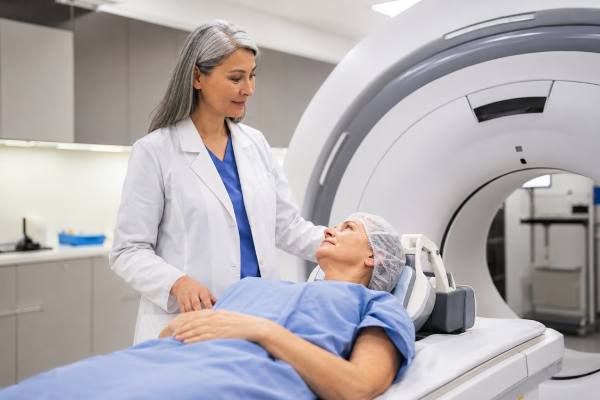
A PET scan is a brain imaging test that looks at activity inside the brain, not just its shape. Instead of showing only anatomy, it can show patterns of metabolism, blood flow, protein buildup, or certain chemical signals, depending on the tracer used.
That distinction matters because many brain disorders change how brain cells function before obvious structural changes appear on MRI or CT. A PET scan is not a first test for every memory, mood, seizure, or movement concern, and it does not diagnose most conditions by itself. When used in the right setting, however, it can add important information to a clinical exam, cognitive testing, lab work, MRI, EEG, and other parts of a neurological workup.
Table of Contents
- What a Brain PET Scan Shows
- How PET Compares With Other Brain Tests
- When Doctors Order a Brain PET Scan
- PET Scans for Dementia and Memory Loss
- PET Scans for Seizures, Tumors, and Movement Disorders
- What to Expect During the Test
- Risks, Limitations, and Results
What a Brain PET Scan Shows
A brain PET scan shows how certain biological processes are working in the brain. The exact information depends on the radioactive tracer injected before the scan.
PET stands for positron emission tomography. A small amount of a radioactive substance is attached to a molecule that travels through the bloodstream and collects in brain tissue in a predictable way. The scanner detects signals from that tracer and creates images that show where activity is higher, lower, or distributed in a particular pattern.
The most familiar brain PET tracer is FDG, a form of glucose. Because brain cells rely heavily on glucose for energy, FDG PET can show areas of relatively increased or decreased brain metabolism. In some neurodegenerative disorders, certain brain networks become less metabolically active in patterns that can support one diagnosis over another.
Other PET tracers look for different targets. Amyloid PET shows whether there is significant beta-amyloid plaque buildup, one of the hallmark biological features associated with Alzheimer’s disease. Tau PET can show abnormal tau protein deposition, which often has a closer relationship to the location and severity of Alzheimer-type neurodegeneration. Some PET tracers are used in movement disorders, brain tumors, inflammation, or research settings.
| PET type | Main target | Common clinical use | Important limitation |
|---|---|---|---|
| FDG PET | Glucose metabolism | Dementia patterns, epilepsy surgery evaluation, some tumor questions | Patterns support diagnosis but are not interpreted alone |
| Amyloid PET | Beta-amyloid plaques | Clarifying whether Alzheimer’s biology is likely present | A positive scan does not prove symptoms are caused by Alzheimer’s disease |
| Tau PET | Abnormal tau protein | Selected dementia evaluations, especially Alzheimer-type patterns | Availability, coverage, and interpretation may vary |
| Amino acid PET | Amino acid transport and tumor activity | Selected brain tumor and post-treatment questions | Not used for all tumor types or in all imaging centers |
| Dopaminergic PET | Dopamine-related nerve pathways | Selected movement disorder evaluations | In many settings, related SPECT tests are more commonly used |
The key idea is that PET is functional and molecular imaging. It can show changes in brain activity or disease-related biology that may not be visible as a mass, bleed, stroke, or shrinkage pattern on a structural scan.
That does not mean PET is “better” than other brain tests. It answers a different question. For example, an MRI may show whether there has been a stroke, tumor, inflammation, or brain shrinkage, while a PET scan may help show whether a pattern of reduced metabolism fits Alzheimer’s disease, frontotemporal dementia, dementia with Lewy bodies, or another process.
How PET Compares With Other Brain Tests
PET is most useful when the question is about brain function, metabolism, or molecular disease markers. MRI, CT, EEG, and cognitive tests often come first because they answer different and sometimes more urgent questions.
A brain MRI gives detailed structural images. It can show tumors, strokes, bleeding, inflammation, multiple sclerosis-type lesions, hydrocephalus, patterns of atrophy, and many other anatomical changes. MRI is usually preferred when doctors need a detailed look at brain structure.
A brain CT scan is faster and more widely available. It is often used in emergency settings, especially when there is concern for bleeding, major injury, sudden severe headache, acute neurological deficits, or a rapid change in mental status. CT is less detailed than MRI for many subtle brain conditions, but it can be lifesaving when speed matters.
An EEG test records electrical activity from the brain. It is especially important when seizures, unusual spells, or altered awareness are part of the concern. PET may sometimes support epilepsy surgery planning, but EEG remains central to seizure diagnosis because it directly measures electrical patterns.
Cognitive and neuropsychological testing measure how a person is functioning in real life: memory, attention, language, processing speed, visuospatial skills, problem-solving, and executive function. These tests can show the pattern and severity of cognitive changes, while imaging helps explain possible causes. In memory evaluations, PET is often interpreted alongside cognitive testing rather than as a replacement for it.
PET also differs from SPECT, another nuclear medicine test. Both use radioactive tracers, but PET generally has higher image resolution and different tracer options. SPECT is still widely used for certain questions, including dopamine transporter imaging in parkinsonian syndromes and some seizure-related evaluations. A related article on SPECT scans for brain disorders can help clarify how the two tests overlap and differ.
For mental health conditions, PET is usually not a routine diagnostic test. Research has found brain differences associated with depression, anxiety, ADHD, autism, psychosis, and other conditions, but those findings usually do not translate into a scan that can diagnose an individual person in everyday clinical care. For that reason, a PET scan is generally not used to “prove” depression, anxiety, ADHD, or autism. Clinical assessment remains the foundation for those diagnoses.
When Doctors Order a Brain PET Scan
Doctors usually order a brain PET scan when the result could change diagnosis, treatment planning, prognosis, or the next step in care. It is not a broad screening test for vague symptoms.
A PET scan may be considered when symptoms are significant, the diagnosis remains uncertain after standard evaluation, and the PET result would help resolve a specific question. In practical terms, that means the order usually comes from a neurologist, dementia specialist, epileptologist, neuro-oncologist, movement disorder specialist, or another clinician with a focused reason for requesting the test.
Common reasons include:
- Clarifying the cause of progressive memory loss or cognitive decline when the clinical picture is uncertain.
- Helping distinguish among Alzheimer’s disease, frontotemporal dementia, dementia with Lewy bodies, vascular cognitive impairment, and other causes when symptoms overlap.
- Determining whether amyloid or tau pathology is likely present in selected patients with cognitive impairment.
- Supporting presurgical evaluation in some people with drug-resistant focal epilepsy.
- Helping evaluate whether a treated brain tumor or brain metastasis represents active tumor recurrence or treatment-related change.
- Answering selected questions in movement disorders when dopaminergic imaging is appropriate and available.
PET is generally less helpful when symptoms are mild, temporary, or better explained by sleep loss, medication effects, depression, anxiety, substance use, thyroid disease, vitamin deficiency, infection, or other medical causes that have not yet been evaluated. For example, a person with recent brain fog may need a medical review, medication check, sleep assessment, and lab testing before advanced imaging is considered. A broader discussion of blood tests for brain fog may be more relevant in that situation.
The test is also not usually ordered just because someone has a family history of dementia. A PET scan can reveal biological changes before dementia is clear, but using that information in people without symptoms is complex. It can create anxiety, may not change management, and may have insurance or eligibility limits. When dementia risk is the concern, clinicians often start with history, cognitive screening, risk factor review, and sometimes genetic counseling or biomarker testing depending on the situation.
Urgent symptoms are different. Sudden weakness, facial drooping, severe headache, new seizure, confusion that appears rapidly, head injury, fainting with neurological symptoms, or thoughts of self-harm require urgent medical evaluation rather than waiting for an outpatient PET scan. PET is rarely the first-line test in emergencies.
PET Scans for Dementia and Memory Loss
In dementia and memory loss evaluations, PET can help identify biological patterns that support one cause of cognitive decline over another. It is most useful when the diagnosis is uncertain after the initial workup.
A typical memory evaluation starts with a careful history, medication review, physical and neurological exam, cognitive screening, lab work, and often MRI or CT. The clinician looks for reversible contributors, safety concerns, and the pattern of cognitive change. PET may be added when the symptoms, cognitive test results, and structural imaging do not fully answer the question.
FDG PET can show patterns of reduced metabolism. For example, Alzheimer-type dementia often affects temporoparietal and posterior cingulate regions, while frontotemporal dementia more often affects frontal and anterior temporal networks. Dementia with Lewy bodies may show different posterior patterns, sometimes with occipital involvement. These are patterns, not simple yes-or-no findings, so interpretation requires expertise and clinical context.
Amyloid PET answers a more specific question: is there significant amyloid plaque deposition? A negative amyloid PET scan makes Alzheimer’s disease less likely as the main cause of current cognitive impairment. A positive amyloid PET scan supports the presence of Alzheimer’s biology, but it does not automatically prove that Alzheimer’s disease is the only cause of symptoms. Some older adults have amyloid buildup without dementia, and mixed causes of cognitive decline are common.
Tau PET can provide additional information about Alzheimer-type tau pathology and its distribution. Tau patterns may more closely track symptom stage and affected brain networks than amyloid alone, but tau PET is not needed for every patient. Availability, local expertise, insurance coverage, and the clinical question all matter.
PET may be especially relevant when considering Alzheimer’s disease treatments that require evidence of amyloid pathology. In those cases, amyloid PET may be one way to confirm biological eligibility, though cerebrospinal fluid tests or blood biomarkers may also be considered depending on the health system and the patient’s situation. For related context, see amyloid PET in Alzheimer’s diagnosis and tau PET in dementia testing.
PET is not the only biomarker option. Some patients may have cerebrospinal fluid testing, blood biomarker testing, or both. These tests are changing how clinicians evaluate Alzheimer’s disease and related disorders, but they still need careful interpretation. A result that is technically “positive” or “negative” may mean different things depending on age, symptoms, cognitive testing, MRI findings, and the person’s overall health.
PET can be emotionally difficult because it may point toward a neurodegenerative disease. Before testing, it is reasonable to ask what each possible result would mean, whether it would change treatment, whether it could affect medication eligibility, and how results will be explained. A scan should not be treated as a stand-alone verdict on someone’s future.
PET Scans for Seizures, Tumors, and Movement Disorders
Outside dementia care, PET is used selectively for epilepsy, brain tumors, and certain movement disorder questions. In these settings, the scan is usually part of a specialized workup rather than a general diagnostic screen.
In epilepsy, FDG PET may help locate a seizure focus, especially in people with drug-resistant focal epilepsy being evaluated for surgery. The scan is often done between seizures, when the seizure-generating region may show lower metabolism. PET results are interpreted alongside seizure history, MRI, scalp or intracranial EEG, neuropsychological testing, and sometimes other imaging. It is not used to diagnose every person with a first seizure, and it does not replace EEG. For people going through more complex seizure assessment, video EEG monitoring may be another key part of the evaluation.
In brain tumor care, PET may help answer questions that MRI alone cannot always resolve. After radiation, surgery, chemotherapy, or immunotherapy, MRI changes can sometimes represent active tumor, treatment effect, inflammation, or radiation necrosis. Certain PET tracers, including amino acid tracers where available, may help distinguish tumor activity from treatment-related changes. This is more common in neuro-oncology centers and is not the same as using PET to screen the general population for brain tumors.
In movement disorders, PET or related nuclear medicine imaging may be used to evaluate dopamine system function in selected cases. This can sometimes help distinguish parkinsonian syndromes from conditions that mimic them. However, the diagnosis of Parkinson’s disease and related disorders is still largely clinical, based on symptoms, exam findings, medication response, and progression over time. In many places, dopamine transporter SPECT is more commonly used than PET for this purpose.
PET is sometimes discussed in psychiatric conditions, traumatic brain injury, chronic symptoms, or “brain mapping.” Routine clinical diagnosis of depression, anxiety, bipolar disorder, ADHD, autism, PTSD, or personality disorders does not usually rely on PET. A scan may show group-level patterns in research, but individual diagnosis requires a clinical evaluation. For a clearer explanation of this issue, see what brain scans can and cannot show for mental health conditions.
The more specialized the question, the more important it is that the scan be ordered and interpreted by the right team. A PET result can be misleading if it is separated from the clinical story, medication history, timing of symptoms, prior imaging, and the specific tracer used.
What to Expect During the Test
A brain PET scan is usually an outpatient test. The appointment often takes longer than the scan itself because the tracer needs time to circulate before imaging begins.
Before the scan, the imaging center will give instructions based on the tracer and the reason for testing. For FDG PET, fasting is often required because blood sugar can affect tracer uptake. People with diabetes may need special scheduling or medication instructions. For some scans, patients are asked to rest quietly in a dim room before imaging so brain activity is not influenced by talking, reading, phone use, or stimulation.
The general process usually looks like this:
- A technologist reviews the order, confirms identity, and asks about pregnancy, breastfeeding, diabetes, medications, allergies, recent tests, and relevant medical history.
- An IV line is placed, usually in the arm or hand.
- The radioactive tracer is injected through the IV.
- There is a waiting period while the tracer distributes in the body and brain.
- The person lies on the scanner table with the head positioned carefully to reduce movement.
- The scan is performed while the person remains as still as possible.
- After the scan, most people can leave and resume usual activities unless the care team gives different instructions.
The scan itself is not painful, though lying still can be uncomfortable for some people. The scanner is quieter than an MRI, and the opening is often less tunnel-like, but people with claustrophobia should tell the ordering clinician and imaging center ahead of time. Movement can blur the images, so comfort and positioning matter.
Some PET scans are combined with CT or MRI. PET/CT uses CT images to help localize PET findings and correct the images. PET/MRI combines metabolic or molecular information with detailed MRI anatomy. The combined test may take longer and may have additional screening questions, especially if MRI is involved.
After the test, drinking fluids may help the body clear the tracer. The radioactivity decreases naturally over time and leaves the body mainly through urine. Imaging centers often provide practical instructions about hydration, bathroom use, breastfeeding, or close contact with infants or pregnant people if any precautions are needed.
Results are not usually available immediately. A nuclear medicine physician or radiologist reviews the images, compares them with prior studies when available, and sends a report to the ordering clinician. The most useful discussion usually happens with the clinician who knows why the test was ordered and how the result fits with the rest of the workup.
Risks, Limitations, and Results
Brain PET is generally considered safe when medically appropriate, but it involves radiation, cost, and the possibility of uncertain or misleading results. The decision to test should be based on a clear clinical question.
The radiation dose from a brain PET scan is usually in the range used for diagnostic nuclear medicine tests. The dose varies by tracer, protocol, scanner, and whether CT is included. For most adults, the risk from a single medically necessary PET scan is considered low, but unnecessary imaging should still be avoided. Pregnancy, possible pregnancy, and breastfeeding should always be discussed before the scan.
Side effects from the tracer are uncommon. The injection may cause brief discomfort, bruising, or irritation at the IV site. Allergic reactions are rare but possible. The larger practical issues are often not physical side effects, but interpretation, access, cost, and what the result may mean for future care.
PET has several important limitations:
- A normal PET scan does not rule out every brain disorder.
- An abnormal PET scan does not automatically provide a complete diagnosis.
- Patterns can overlap among conditions, especially in older adults or people with more than one medical problem.
- Medications, blood sugar, movement, timing, and technical factors can affect image quality.
- Availability and insurance coverage vary widely by tracer and indication.
- Some PET uses are well established, while others are mainly research-based or limited to specialized centers.
Results may be described as normal, abnormal, positive, negative, indeterminate, or showing a pattern consistent with a particular condition. For amyloid PET, “positive” generally means significant amyloid plaque burden is present; “negative” means it is not seen at a level consistent with Alzheimer’s disease. For FDG PET, reports often describe regional metabolism patterns rather than a simple positive or negative result.
The next step depends on the reason for testing. A PET result may lead to a more confident diagnosis, additional biomarker testing, medication discussions, referral to a specialist, epilepsy surgery conference review, tumor board review, or continued monitoring. Sometimes the result does not settle the question, and the doctor may need to revisit other explanations.
It is reasonable to ask the ordering clinician:
- What specific question is this PET scan meant to answer?
- Which tracer will be used, and why?
- How would a positive, negative, or unclear result change care?
- Are MRI, CT, EEG, lab tests, cognitive testing, or other biomarkers needed first?
- What are the cost and coverage considerations?
- Who will explain the result in the context of symptoms and prior testing?
If a PET scan or cognitive test comes back abnormal, the next step should be a structured discussion rather than panic. The report needs to be matched with symptoms, exam findings, other tests, and the person’s goals for care. A practical next-step resource is what happens after abnormal brain scan or cognitive test results.
PET can be powerful when it is used for the right reason. Its greatest value is not in replacing clinical judgment, but in adding biological evidence when the diagnosis or treatment path remains uncertain.
References
- SNMMI Procedure Standard/EANM Practice Guideline for Brain [18F]FDG PET Imaging, Version 2.0 2025 (Guideline)
- Updated Appropriate Use Criteria for Amyloid and Tau PET: A Report from the Alzheimer’s Association and Society for Nuclear Medicine and Molecular Imaging Workgroup 2025 (Appropriate Use Criteria)
- The Usefulness of 18F-FDG PET to Differentiate Subtypes of Dementia: The Systematic Review and Meta-Analysis 2024 (Systematic Review and Meta-Analysis)
- EANM practice guidelines for an appropriate use of PET and SPECT for patients with epilepsy 2024 (Guideline)
- EANM procedure guidelines for brain PET imaging using [18F]FDG, version 3 2022 (Guideline)
- Joint EANM/EANO/RANO/SNMMI practice guideline/procedure standard for PET imaging of brain metastases: version 1.0 2025 (Guideline)
Disclaimer
This information is for general educational purposes only and is not a substitute for medical advice, diagnosis, or treatment. Decisions about PET imaging should be made with a qualified clinician who can interpret symptoms, exam findings, prior tests, and scan results together.
Please share this article on Facebook, X, or your preferred platform if it may help someone better understand brain PET scans and diagnostic testing.