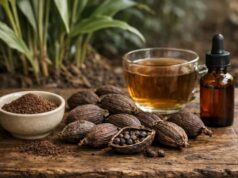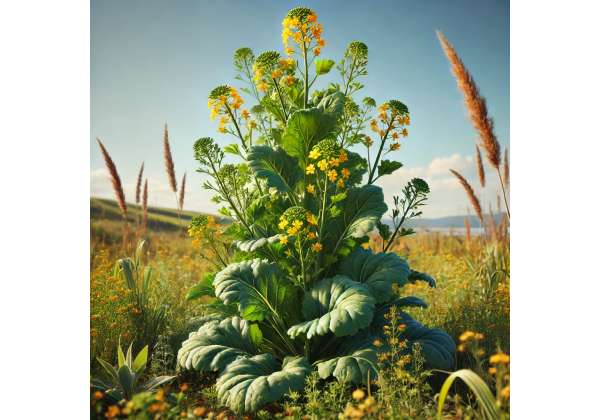
Black mustard (Brassica nigra) is a pungent, heat-building spice seed best known for the sharp “mustard bite” it brings to foods—and for traditional warming remedies that have been used for generations. While it shares a family with other Brassica plants, black mustard stands out for its naturally high levels of sinigrin, a compound that can transform into allyl isothiocyanate when the seed is crushed and mixed with moisture. That chemistry helps explain both its culinary power and its tingling, warming sensation on the skin.
Today, black mustard is most often used in three ways: as a kitchen spice (whole or ground), as a condiment base, and in folk-style topical applications aimed at muscle stiffness and congestion comfort. It is also being studied for broader wellness themes such as antioxidant activity, metabolic balance, and microbial defense—though the strongest, most reliable benefits remain tied to food use and short-term traditional applications.
Because black mustard can irritate sensitive tissues and can trigger serious allergy in susceptible people, safe use depends on form, dose, and context.
Key Takeaways
- May support digestion and circulation comfort when used regularly as a culinary spice.
- Traditional topical use can feel warming for sore muscles, but it can burn skin if too strong or left on too long.
- Typical daily intake is about 1–3 g ground seed, or 1/4–1/2 teaspoon, taken with meals.
- Avoid if you have a known mustard allergy or a history of severe food reactions.
- Use extra caution with blood thinners, thyroid conditions, pregnancy, and very sensitive skin.
Table of Contents
- What is black mustard
- Active compounds and properties
- Health benefits and outcomes
- How to use black mustard
- How much black mustard per day
- Side effects and interactions
- What the evidence says
What is black mustard
Black mustard is the small, dark brown-to-black seed of Brassica nigra, a plant in the Brassicaceae family. In cooking, it is prized for its ability to deliver deep pungency that rises into the nose and lingers on the palate. If you have ever noticed that mustard “heat” builds after a few seconds, you have experienced black mustard’s signature chemistry at work.
It helps to separate black mustard from look-alikes and name confusion:
- Not the same as cumin: Despite occasional naming mix-ups in casual speech, mustard and cumin are different plants with different flavor compounds and different safety considerations.
- Not the same as black sesame: Black sesame is richer, nuttier, and oily; black mustard is sharper and can be irritating in high amounts.
- Different from other mustard species: Yellow mustard (Sinapis alba) and brown mustard (Brassica juncea) are widely used in condiments and may be milder or differently pungent. Black mustard can be more intense and is often described as “hotter” in traditional cooking.
In the kitchen, black mustard is commonly used in two styles. First, the whole seeds are heated briefly in oil until they pop, releasing aroma and softening their bite into a warm, nutty edge. Second, the seeds are ground and mixed with liquid—this is the path to strong pungency. Once ground, black mustard becomes far more reactive, and that matters for both flavor and safety.
Historically, black mustard has also been used externally in warming compresses and footbaths. These applications are not simply “old wives’ tales”—they reflect the fact that mustard compounds can stimulate the skin’s sensory receptors, creating a feeling of heat and local circulation. However, the same effect can irritate or burn if the application is too strong or too long.
A practical way to think about black mustard is as a high-signal spice: small culinary amounts can be useful and enjoyable, but concentrated or prolonged exposure is where problems tend to appear.
Active compounds and properties
Black mustard’s most important “active” story is not a single vitamin or mineral—it is a conversion process. The seeds contain glucosinolates, especially sinigrin, stored separately from an enzyme called myrosinase. When seeds are crushed and exposed to water, myrosinase breaks sinigrin down into several products, including allyl isothiocyanate (AITC). AITC is responsible for the sharp mustard aroma and much of the warming, tingling sensation that people associate with mustard.
This matters because preparation changes the outcome:
- Whole seeds heated in oil: Heat can reduce enzyme activity and shift the final profile toward a milder, rounder flavor. You get aroma and pleasant warmth, usually with lower irritation risk.
- Freshly ground seed mixed with liquid: This encourages enzymatic conversion and can create strong pungency rapidly. It is powerful in condiments, but easier to overdo.
- Cooked or long-simmered mustard: Prolonged heat can dull pungency and reduce the “nose heat,” which is why mustard dishes can taste gentler after cooking.
Beyond sinigrin and AITC, black mustard seeds include:
- Phenolic compounds and flavonoids: These are often discussed for antioxidant behavior and may contribute to broader “cell-protective” activity in the context of diet.
- Fatty acids and plant sterols: Mustard seeds contain oil, though black mustard is typically used in small culinary amounts rather than as a primary fat source.
- Protein fractions that can act as allergens: This is a major safety point—mustard is a well-known food allergen in many regions.
In traditional use language, black mustard is often described as warming, stimulating, and dispersing—especially for “stagnant” feelings like heaviness after meals or tension in muscles. In modern language, those effects may relate to sensory receptor activation, local blood flow changes, and mild antimicrobial activity of volatile compounds. Still, it is important not to overinterpret lab mechanisms as guaranteed human outcomes.
If you are interested in how mustard’s isothiocyanate chemistry compares with other Brassica-derived compounds, a helpful parallel is sulforaphane and its role in cellular stress response, which comes from a different glucosinolate and is often discussed in the context of cruciferous vegetables and supplements. The main takeaway is the same: preparation, dose, and individual tolerance determine whether these compounds feel supportive or irritating.
Health benefits and outcomes
People use black mustard for a range of wellness goals, but the most realistic benefits are those that fit its traditional strengths: digestive support, sensory stimulation, and culinary-driven dietary variety. Claims that it “detoxes everything” or “treats disease” run far ahead of what human evidence can support.
Digestive comfort and appetite
As a pungent spice, black mustard can support a feeling of digestive “wakefulness,” especially when meals are heavy or oily. In practical terms, that may look like improved appetite regulation, less meal sluggishness, or better satisfaction with smaller portions because flavor is more vivid. Many cultures use mustard seeds in tempering (briefly heating seeds in oil) specifically because it adds aroma that makes meals easier to enjoy and digest.
If you are using black mustard for digestive comfort, the most effective approach is often small and consistent: a pinch of ground seed in a dressing, or popped seeds in cooked dishes several times per week. This is also where black mustard pairs naturally with other culinary digestives, such as ginger for nausea and post-meal comfort. Together, they can make meals feel lighter without relying on large doses of any one ingredient.
Circulation and “warming” effects
Black mustard’s warming sensation is not only a flavor experience; it can also create a subjective sense of circulation support. Some people describe feeling warmer in the body after mustard-rich meals, especially in colder seasons. While this does not necessarily translate into measurable cardiovascular outcomes, it can be meaningful as a comfort effect.
Antioxidant and microbial themes
Mustard seeds contain antioxidant-like compounds, and AITC is often discussed for antimicrobial behavior in lab settings. In real life, this can be reframed as a food-safety and culinary advantage: pungent spices can help keep flavors bright and may contribute to traditional food preservation practices. However, this is not a substitute for safe food handling or medical treatment for infections.
Metabolic support
Some people use mustard within broader “metabolic” routines. Here, expectations should stay modest: black mustard is a spice, not a medication. If it helps, it is usually by making whole-food meals more enjoyable, supporting consistent eating patterns, and complementing dietary habits—not by directly “lowering numbers” on its own.
Overall, black mustard’s strongest benefit profile is as a small-dose, high-impact culinary tool that can support comfort and adherence to healthy eating.
How to use black mustard
Black mustard can be used in ways that range from gentle (culinary) to intense (freshly ground pastes and topical applications). The safest and most sustainable use is food-first, with topical methods approached carefully and briefly.
Culinary use
These are reliable, low-risk ways to use black mustard:
- Temper whole seeds in oil: Heat a small amount of oil, add seeds, and cover briefly as they pop. Then add onions, lentils, vegetables, or greens. This reduces harshness and spreads flavor evenly.
- Add ground seed to dressings: A small pinch in vinaigrettes adds bite without overwhelming heat.
- Use in pickles and brines: Mustard’s pungency can balance sour and salty flavors.
If you want maximum pungency (for homemade mustard-style condiments), mix freshly ground seed with cool or room-temperature liquid and let it sit briefly before adjusting. Hot water and long heating can reduce bite, so choose the method that matches your preference and tolerance.
Traditional topical use (use caution)
Mustard has been used in warming applications such as compresses or footbaths. If you try topical use, safety is the entire point:
- Always dilute: Do not apply ground mustard directly to skin.
- Limit time: Short exposure is safer than “leave it on.”
- Test first: Use a small patch test and stop at the first sign of burning pain.
- Avoid sensitive areas: Keep away from face, genitals, and broken skin.
A common mistake is assuming “warming” is always good. With mustard, warmth can turn into irritation quickly, especially for children, older adults with thin skin, or anyone with eczema-prone skin.
If your goal is a warming sensation for muscles, some people compare mustard-based traditions with other heat-forward approaches like cayenne pepper topical and culinary uses. The safety lesson is similar: stimulation can help, but only in controlled, diluted, time-limited applications.
Best practices for choosing and storing
- Buy whole seeds for better freshness.
- Grind in small batches to preserve aroma and control intensity.
- Store seeds airtight, away from heat and light.
- Discard oils or spice blends that smell rancid or musty.
Used thoughtfully, black mustard can be an everyday spice rather than an occasional “shock” ingredient.
How much black mustard per day
There is no single official dose for black mustard because it is most commonly used as a food spice, and research often focuses on broader mustard species or isolated compounds. A practical dosing approach should match your goal and your tolerance, with an emphasis on small, consistent amounts.
Culinary amounts (most common)
For general dietary use, typical ranges are:
- Ground black mustard seed: about 1–3 g per day (roughly 1/4 to 1/2 teaspoon), taken with meals.
- Whole seeds: often 1/2 to 1 teaspoon per day used in cooking, depending on how many dishes you season.
If you are new to black mustard, start at the low end for a week. This is especially important if you are sensitive to spicy foods, prone to reflux, or unsure about tolerance.
Timing
- With meals is usually best. It reduces stomach irritation and makes the spice easier to tolerate.
- If you are using black mustard for post-meal heaviness, include it in the meal itself rather than taking it separately.
Duration and “cycling”
Because black mustard is a food, many people use it long-term in small amounts. If you are using it more intentionally (for example, daily for several weeks), it can be helpful to take a short break after 4–8 weeks to reassess: Is it improving comfort, or is it adding irritation? With spices, benefits often come from consistency—but irritation also builds with repetition if the dose is too high.
Topical timing (if used)
Topical mustard use should be short and occasional, not daily. If you notice redness that lasts beyond a brief flush, stinging, blistering, or increased sensitivity afterward, stop. The goal is a mild warming sensation, not pain.
If your main reason for using black mustard is pain relief, remember that culinary spices are supportive tools, not primary analgesics. For some people, learning about gentler options with clearer dosing norms—such as willow bark for pain-relief routines—can help you compare approaches while keeping safety in focus.
Side effects and interactions
Black mustard is generally safe in culinary amounts for most people, but it can cause problems when used in concentrated forms, in large quantities, or topically without dilution. The main risks fall into three categories: irritation, allergy, and interaction with certain health conditions.
Common side effects
- Digestive irritation: heartburn, stomach burning, nausea, or loose stools—more likely with large doses or on an empty stomach
- Mouth and throat irritation: especially from strong, freshly ground preparations
- Skin irritation: redness, burning, blistering, or rash from topical use or prolonged exposure
Allergy risk (can be serious)
Mustard is a recognized food allergen, and reactions can range from mild hives to severe anaphylaxis. If you have any history of seed allergy, unexplained anaphylaxis, or strong reactions to condiments, do not experiment with mustard supplements or topical applications. Seek clinical guidance. Cross-reactivity can also occur with other plant foods, so a “small taste test” is not a reliable safety method for high-risk individuals.
Who should avoid black mustard or use only with clinician guidance
- People with a known mustard allergy or unexplained severe food reactions
- Individuals with active gastritis, ulcers, or severe reflux
- Those with eczema-prone or highly reactive skin, especially for topical use
- Pregnant individuals, if considering non-food or high-dose use
- Children, for topical applications (higher burn risk and harder-to-interpret symptoms)
Medication and condition cautions
Black mustard is not best known for major drug interactions at culinary doses, but caution makes sense in a few situations:
- Blood thinners and antiplatelet drugs: If you plan concentrated or supplemental-style use, discuss with a clinician.
- Thyroid conditions: Brassica-family foods are often discussed in relation to goitrogenic potential. Culinary use is typically compatible with a balanced diet, but avoid high-dose self-prescribing if you have thyroid disease unless your clinician agrees.
- Before surgery: If you use any concentrated herbal products, it is prudent to stop well ahead of procedures unless your care team advises otherwise.
The safety rule with black mustard is straightforward: treat it as a potent spice, respect your body’s signals early, and avoid “testing limits,” especially on the skin.
What the evidence says
The evidence for black mustard depends on which “black mustard” you mean: the whole seed used in cooking, isolated compounds such as allyl isothiocyanate, or broader mustard-family research that includes multiple species. These categories often get blended online, which is why claims can sound stronger than what the data truly supports.
What is reasonably supported
- Chemistry and mechanisms are well described. The sinigrin-to-isothiocyanate conversion process is clear and helps explain pungency, sensory stimulation, and why preparation method matters.
- Food-level benefits are plausible and low-risk. Culinary use can support dietary adherence (more flavorful meals), digestive satisfaction, and seasonal comfort routines. These are meaningful outcomes even if they do not show up as dramatic lab changes.
- Topical warming effects are real but not “treatments.” The sensory stimulation of mustard compounds can create a warming sensation and temporary comfort. That aligns with traditional use, but the boundary between “comfort” and “burn” is narrow.
Where evidence is limited or mixed
- Metabolic claims: Mustard-family and Brassica-derived compounds are studied for metabolic health, but black mustard as a stand-alone intervention has less direct human evidence than people assume. The most honest framing is that black mustard may be supportive as part of a food pattern, not as a replacement for medical care.
- Antimicrobial and preservation claims: Lab findings can be impressive, yet translating them into human health claims is not straightforward. In practice, mustard’s best “antimicrobial” role may be culinary and food-system related rather than acting like an internal antiseptic.
- Long-term safety at high doses: Most traditional use is food-level, and concentrated long-term dosing is less well defined.
How to use evidence to make a good decision
If your goal is general wellness, treat black mustard as a spice: small amounts, frequent use, and attention to tolerance. If your goal is pain relief or congestion comfort, the safest path is short-duration, carefully diluted topical use—or choosing other approaches with clearer dosing and safety norms. If your goal is to improve lab values, focus first on the fundamentals (diet pattern, activity, sleep, medical management), then consider black mustard as a flavor tool that can help you stay consistent.
The most evidence-aligned conclusion is simple: black mustard is useful, but it works best when it stays in its lane—as a potent culinary spice and occasional traditional comfort tool used with respect for its irritant and allergen potential.
References
- Biologically Active Compounds in Mustard Seeds: A Toxicological Perspective – PubMed 2021 (Review) ([PubMed][1])
- Brassicaceae Mustards: Phytochemical Constituents, Pharmacological Effects, and Mechanisms of Action against Human Disease – PMC 2024 (Review) ([PMC][2])
- Systematic Review on the Metabolic Interest of Glucosinolates and Their Bioactive Derivatives for Human Health – PMC 2023 (Systematic Review) ([PMC][3])
- Anti-Inflammatory Therapeutic Mechanisms of Isothiocyanates: Insights from Sulforaphane – PMC 2024 (Review) ([PMC][4])
Disclaimer
This article is for educational purposes only and does not provide medical advice, diagnosis, or treatment. Black mustard (Brassica nigra) can irritate the digestive tract and skin and is a recognized food allergen that may cause severe allergic reactions in susceptible individuals. Avoid topical use on broken skin, avoid prolonged skin exposure, and do not use black mustard supplements without professional guidance if you are pregnant, have thyroid disease, take blood thinners, or manage chronic conditions with prescription medication. Seek urgent medical care for signs of anaphylaxis, severe skin burns, or breathing difficulty.
If you found this guide helpful, please share it on Facebook, X (formerly Twitter), or your preferred platform.