Black root (Veronicastrum virginicum) is a tall, elegant North American wildflower whose medicinal use centers on its dark rhizome and rootlets. In traditional Western herbal practice it is best known as a bitter, bile-moving remedy that can “wake up” sluggish digestion and ease constipation when the pattern involves poor fat tolerance, heaviness after meals, and a sense of congestion rather than simple dryness. Herbalists also describe black root as gently antispasmodic, which is why it sometimes appears in formulas for cramping and tense, reactive digestion.
What makes black root unusual is its narrow sweet spot: when properly prepared and dosed, it is used as a toning bitter and cholagogue; when too fresh or taken too aggressively, it can behave like a strong purgative and provoke diarrhea or even vomiting. That dose-dependent swing is why black root is typically approached as a short-term tool, not an everyday “cleanse.” This guide walks you through what black root is, what is in it, what it may realistically help with, how to use it in common forms, how to dose it conservatively, and how to avoid the most common safety pitfalls.
Core Points
- Black root is most often used for sluggish digestion with constipation and poor bile flow patterns.
- It may help ease gut spasm when cramping accompanies “stuck” digestion.
- Typical range: 5–10 g dried rhizome as a decoction, up to 3 times daily, starting lower to assess tolerance.
- Fresh or high doses can be strongly purgative and may trigger diarrhea or vomiting.
- Avoid during pregnancy, lactation, and childhood, and avoid self-treatment if you have severe abdominal pain or suspected bile duct obstruction.
Table of Contents
- What is black root?
- Key ingredients and medicinal actions
- What does black root help?
- How to use black root
- How much black root per day?
- Side effects and interactions
- What the evidence says
What is black root?
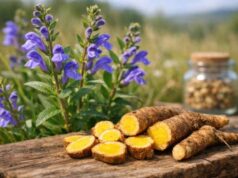
Black root is the common name for Veronicastrum virginicum, also widely known as Culver’s root. Botanically, it belongs to the Plantaginaceae family and grows as a tall perennial with whorled, toothed leaves and slender flower spikes that bloom in summer. Medicinally, the focus is not the aerial parts but the underground rhizome and fine rootlets—dark, wiry material that dries into a distinctly bitter herb.
Common names and naming confusion
The phrase “black root” can cause mix-ups in herb shopping. Some products may list the older synonym Leptandra virginica, while others use Culver’s root, Culver’s physic, or tall speedwell. These names may refer to the same plant, but “black root” can also be used casually for unrelated botanicals in different regions. When buying, prioritize the Latin name (Veronicastrum virginicum) and the plant part (rhizome with rootlets) so you know what you are getting.
It is also easy to confuse black root with other “black” herbs used for very different purposes. Black cohosh, black walnut, and black cumin do not share the same actions or safety profile. If your goal is hormone symptoms, parasite support, or immune support, black root is not the right match.
Traditional role in digestive herbalism
Black root’s classic role is digestive: it has been described as a bitter tonic and cholagogue, meaning it supports the movement of bile into the small intestine. In traditional language, that bile-moving action “clears congestion,” improves fat handling, and gently encourages bowel activity. The same traditional sources also note a crucial detail: fresh or overly strong preparations can push past “toning” into purging. That is why many traditions emphasize dried material, conservative dosing, and short-term use.
What the taste and feel can tell you
Black root is intensely bitter. In practice, bitterness often pairs best with patterns that include low appetite, heaviness after meals, nausea that improves with digestive stimulation, or constipation that feels linked to sluggish digestion rather than lack of fiber alone. People who already feel “wired,” inflamed, or prone to loose stools often do better with gentler bitters—or none at all.
Key ingredients and medicinal actions
Black root is not typically marketed around one celebrity compound. Instead, its traditional effects come from a blend of bitter constituents, resinous fractions, and supporting polyphenols that together shape how the herb feels in the gut and biliary system.
Bitter and resinous fractions
Many traditional descriptions emphasize a bitter principle (often discussed historically as “leptandrin” in older literature) alongside resinous components. Bitters activate taste receptors that can prime digestion—saliva, stomach secretions, and bile signaling. This is one reason black root is framed as more than a laxative: in its intended range it is used to improve digestive flow, not just to force a bowel movement.
Resinous fractions can also make an herb feel more “grippy” or strongly acting. That helps explain black root’s reputation: it can be helpful when the pattern fits, but it is not forgiving when the dose overshoots.
Polyphenols and aromatic traces
Traditional constituent lists also include tannins and small amounts of volatile oils. Tannins can contribute astringency—sometimes useful when irritation and spasm coexist, because astringency can feel settling for some people. Volatile components, even in small amounts, may shape how a formula feels: less like a blunt cathartic and more like a digestive remedy that can be paired with carminatives.
Iridoids and phenylethanoids in the wider plant family
Across Plantaginaceae and closely related groups, researchers frequently report iridoid glycosides and caffeoyl phenylethanoid glycosides. These classes are studied for antioxidant and inflammation-modulating behavior in lab settings, and they may be part of why “bile-moving” herbs are sometimes discussed in broader liver and gut comfort formulas. The practical takeaway is to treat these as supportive background chemistry, not a guarantee of dramatic clinical effects.
What these actions mean in real life
Black root’s traditional action profile is often summarized as:
- Bitter tonic support for appetite and digestive readiness
- Cholagogue influence for bile flow patterns
- Laxative activity that becomes stronger with higher doses
- Mild antispasmodic tendency when cramping is part of the picture
If you think of black root as a “dose-sensitive digestive regulator” rather than a daily detox product, its strengths and limits become much clearer.
What does black root help?
Black root is most often chosen for a specific cluster of complaints: sluggish digestion, bile-flow patterns, and constipation that seems tied to poor digestive movement rather than simple dietary lack. When people use it successfully, they usually describe a change in how meals sit in the body—less heaviness, better tolerance of fats, and more reliable bowel rhythm.
Sluggish digestion and “liverish” patterns
In older herbal language, “liverish” does not mean diagnosed liver disease. It often describes a functional pattern: coated tongue, low appetite, nausea after rich foods, headaches after heavy meals, and constipation with a sense of stagnation. Black root is traditionally aimed at that pattern because it is bitter and cholagogue-leaning.
If your goal is gentle, everyday digestive and bile support, many people consider milder options first. For a broader comparison, see dandelion root and leaf benefits, uses, dosage, and side effects. Dandelion is not identical to black root, but it illustrates the “bitter hepatic” category with a generally gentler reputation.
Constipation when the stool feels “stuck”
Black root is not usually framed as a quick rescue for acute constipation. It is more often used when constipation is chronic or recurring and seems linked to poor digestive movement. In that context, black root may be used for a short course to re-establish momentum, then stopped once the pattern improves.
A realistic outcome is a gradual return of regular bowel activity over several days. An unrealistic goal is “take it once and everything resets.” When people push dose to force a result, side effects rise quickly.
Cramping and digestive spasm
Some users experience constipation and cramping together—tightness, spasms, and a reactive gut. Traditional sources describe black root as antispasmodic, which may help when spasm is part of the stagnation picture. This does not mean it is the best cramp herb for everyone; rather, it can be one piece in a spasm-plus-sluggishness pattern.
Skin and musculoskeletal “elimination” traditions
Black root sometimes appears in older protocols for chronic skin issues or joint discomfort, based on the idea that improving digestion and bile flow supports overall elimination. Modern readers should treat this as a traditional framework rather than proof of direct skin or joint benefits. If it helps, it is more likely through digestion patterns than through a targeted skin mechanism.
How to use black root
Black root is used in a handful of practical forms, but the most traditional is a decoction of the dried rhizome. Because the herb can shift from toning to purging, preparation style and dosing rhythm matter as much as the ingredient itself.
Decoction: the classic preparation
Roots and rhizomes are often decocted rather than simply steeped. A typical approach is:
- Measure the dried rhizome carefully rather than guessing.
- Simmer gently (not a hard boil) in water for 15 to 25 minutes.
- Strain, let it cool slightly, and take in divided servings.
Decoctions can be strong and bitter. If bitterness triggers nausea, start with a smaller amount of herb, a larger volume of water, or shorter simmer time while you assess tolerance.
Tinctures and liquid extracts
Liquid preparations are convenient and often easier for people who cannot manage the taste of a full-strength decoction. They also make small incremental dosing simpler, which is helpful with a dose-sensitive herb. If you choose a liquid, look for labels that clearly state the plant part, solvent, and concentration ratio so you can compare products responsibly.
Capsules and powders
Capsules remove the taste but can make it easier to overshoot without noticing. With black root, “no taste” is not always a benefit. If you use capsules, start low and avoid stacking them with other laxative or strongly bitter products.
Smart pairing: carminatives and bitters
In traditional practice, black root is sometimes paired with gentler digestive allies to reduce cramping and improve comfort. If you are exploring bile and digestion support more broadly, see artichoke health benefits, properties, uses, and culinary traditions. Artichoke is a different herb with its own dosing and evidence profile, but it sits in a similar “bitter digestion” conversation and helps illustrate how formulas are often built: one driver herb, plus supporting herbs for comfort.
Fresh versus dried material
A key safety insight in traditional writing is that fresh root can be much more aggressively purgative than properly dried material. In practical terms, choose products made from dried rhizome, and favor cautious dosing even then.
How much black root per day?
Black root dosing varies by tradition, preparation, and individual sensitivity. The safest approach is to treat the label or monograph dose as an upper boundary, then build slowly from below. With black root, the goal is not to “feel it working” through urgency. The goal is to restore digestive flow without pushing into diarrhea.
Typical decoction range
A commonly cited adult range is:
- 5 to 10 g dried rhizome as a decoction, up to three times daily
This is a wide and potentially intense range for a sensitive person, which is why many practitioners advise starting low. A conservative way to begin is to prepare the decoction at the low end, then take smaller servings (for example, half a cup) and assess the effect over 24 hours before increasing.
Timing and pattern-based use
How you time black root depends on why you are using it:
- For heaviness after meals or fat intolerance: many people take it before meals or between meals to prime digestion.
- For constipation patterns: it is often taken earlier in the day so the bowel response does not disrupt sleep.
- For spasm-plus-sluggishness: smaller, divided doses may feel steadier than one large dose.
How long to use it
Black root is typically used short-term. A practical self-care window is several days up to two weeks, then a pause to reassess. If you feel you “need” it continuously, that is a sign to step back and look for root causes: low fiber, dehydration, low movement, medication side effects, thyroid issues, gallbladder problems, or chronic stress patterns.
When to reduce or stop
Reduce the dose or stop if you notice:
- Loose stools, urgency, or cramping that worsens
- Nausea or vomiting
- Lightheadedness, weakness, or signs of dehydration
If your goal is constipation support and the herb causes diarrhea, that is not successful treatment—it is overcorrection. With black root, the best dose is the smallest dose that improves comfort and regularity.
Side effects and interactions
Black root’s main risks come from its purgative potential and from using it when serious underlying conditions are present. Many of the most important safety decisions are about who should avoid the herb entirely and when self-treatment is not appropriate.
Common side effects
Side effects are typically dose-related and may include:
- Diarrhea or loose stools
- Abdominal cramping
- Nausea, especially with stronger preparations
- Vomiting at higher doses or with fresher material
- Dehydration symptoms if fluid loss is significant
Because the herb can be strongly cathartic in the wrong context, it is not a good candidate for “more is better” thinking.
Who should avoid black root
Avoid medicinal use if you are:
- Pregnant or trying to conceive, because strong purgatives are traditionally cautioned and the risk-benefit is unfavorable
- Breastfeeding, due to limited safety data and potential GI effects
- A child or young teen, unless guided by a qualified clinician
- Prone to chronic diarrhea, active inflammatory bowel disease flares, or significant GI irritation
Also avoid self-treatment if you have severe abdominal pain, fever, persistent vomiting, blood in stool, unexplained weight loss, or signs of dehydration. These are not situations for experimenting with cathartic herbs.
Bile flow cautions and gallbladder considerations
Because black root is used as a cholagogue, caution is warranted if you suspect gallstones, bile duct obstruction, or have a history of acute gallbladder attacks. In those situations, increasing bile movement can worsen pain or delay appropriate care.
Interaction considerations
Black root may interact indirectly by compounding fluid loss or GI stimulation. Use caution if you are taking:
- Prescription laxatives or stimulant bowel agents
- Diuretics, because combined dehydration risk rises
- Multiple “cleansing” products at once
If you are comparing black root with a better-studied stimulant laxative category, see senna health benefits, natural laxative properties, key ingredients, and digestive uses. The comparison is useful because it highlights a shared reality: bowel-stimulating herbs can be helpful, but they require boundaries and are not meant to become daily dependencies.
What the evidence says
Black root sits in a common herbal gap: strong historical use, clear pharmacological plausibility, and limited modern human trials. That does not make it ineffective, but it does change how confidently we can talk about outcomes and how carefully we should frame expectations.
What is reasonably supported
- Traditional use for constipation and sluggish digestion is consistent and pattern-specific.
- Chemical investigations across the broader Veronicastrum group document multiple bioactive classes, including iridoids, phenolics, and terpenoids, which aligns with the bitter, digestion-directed tradition.
- Older phytochemical work within related Plantaginaceae groups helps explain why iridoids and phenylethanoid glycosides are frequently discussed when researchers explore inflammation and antioxidant pathways.
These points support a practical conclusion: black root is not a random folk remedy; it belongs to a plant group with meaningful chemistry, and its traditional use fits what we know about bitter digestive signaling.
Where evidence is thin
High-quality clinical trials for black root itself are scarce. Claims about broad “detox,” disease treatment, or dramatic liver repair should be treated as marketing rather than evidence. Even the traditional claim of supporting bile flow should be understood as functional support, not treatment for gallbladder disease, hepatitis, or gallstones.
How to use evidence to make safer choices
A helpful decision framework is:
- Use black root only if your symptom pattern matches (sluggish digestion with constipation and heaviness, not dryness-only constipation or diarrhea-prone digestion).
- Keep the course short and the dose conservative.
- Stop at the first sign you are moving into purgative effects rather than digestive support.
- If you need ongoing “liver support,” shift toward options with a deeper modern evidence base and better long-term tolerability.
If you are looking for a more research-heavy liver-support conversation, see milk thistle benefits, bioactive constituents, and liver detox strategies. Milk thistle is not a substitute for black root’s pattern-specific bitter-laxative role, but it illustrates what “better studied” can look like in the herbal world.
The most honest takeaway
Black root is best approached as a specialized digestive herb with a narrow therapeutic window. The strongest modern conclusion is not “it cures liver problems,” but “it may help certain sluggish digestion patterns when used carefully.” That framing protects both safety and credibility.
References
- Black Root (Veronicastrum virginicum): Benefits, Safety, Uses | Herbal Reality 2021 (Monograph)
- A review on the traditional uses, phytochemistry, and pharmacology of the genus Veronicastrum (Plantaginaceae) 2023 (Review)
- Chemotaxonomy of Veroniceae and its allies in the Plantaginaceae 2006 (Phytochemical Study)
- Multifaceted Biological Properties of Verbascoside/Acteoside: Antimicrobial, Cytotoxic, Anti-Inflammatory, and Immunomodulatory Effects 2025 (Review)
- Catalpol: An Iridoid Glycoside With Potential in Combating Cancer Development and Progression—A Comprehensive Review 2025 (Review)
Disclaimer
This article is for educational purposes and does not replace medical advice, diagnosis, or treatment. Black root can cause significant gastrointestinal effects, including diarrhea and vomiting, especially at higher doses or with inappropriate preparations. Do not use black root during pregnancy or breastfeeding, and avoid using it for children unless guided by a licensed clinician. Seek prompt medical care for severe or persistent abdominal pain, fever, dehydration, blood in stool, persistent vomiting, or suspected gallbladder or bile duct problems. If you take prescription medications or have chronic health conditions, consult a qualified healthcare professional before using herbal laxatives or cholagogue herbs.
If this guide was useful, consider sharing it on Facebook, X (formerly Twitter), or your preferred platform to help others use herbal remedies more safely and responsibly.