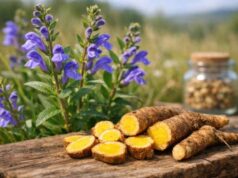
Blue flag (Iris versicolor) is a wetland iris native to North America whose rhizome (underground stem) has a long history in Western herbal practice. It is best known as a strongly bitter, resin-containing botanical that traditional herbalists used to influence digestion, bile flow, and lymphatic sluggishness, and to support certain inflammatory skin patterns linked to “congestion.” Those historical uses are part of why blue flag sometimes appears in formulas aimed at the liver, gallbladder, and glands.
At the same time, blue flag has a narrow comfort zone: the same acrid constituents associated with its traditional “stimulating” actions can also irritate the gastrointestinal tract and trigger nausea, vomiting, and diarrhea when the dose is too high or the preparation is inappropriate. Modern evidence for specific health outcomes in humans is limited, so blue flag is best approached as a specialist herb: useful to understand, but not one to self-prescribe casually. This guide covers what it contains, what it may help with, how it is used, typical dosing ranges, and how to use it more safely if a qualified clinician recommends it.
Key Insights for Blue Flag Iris
- Traditional use centers on supporting bile flow and lymph movement, but human evidence is limited.
- The rhizome can be irritating and potentially toxic; avoid fresh root internally and stop if nausea or cramping occurs.
- If supervised, common dried-rhizome tincture dosing is about 1–3 mL up to 3 times daily.
- Avoid during pregnancy and breastfeeding, in children, and with active gastrointestinal inflammation.
Table of Contents
- What is blue flag iris
- Key ingredients and actions
- Does blue flag help with anything
- How to use blue flag
- How much blue flag per day
- Side effects and who should avoid it
- What research actually shows
What is blue flag iris
Blue flag is a perennial iris that thrives in marshes, pond edges, and other consistently moist soils. In herbal contexts, the “blue flag” name refers to Iris versicolor specifically, though common names can be messy: “flag” is sometimes used for other irises as well. For safety, it helps to remember two practical points: the medicinal part is the rhizome, and accurate identification matters. Several Iris species contain irritating resins, and look-alikes can be mistaken for one another when plants are not in flower.
The rhizome is harvested, cleaned, and typically dried before internal use. Traditional sources often warn against ingesting the fresh rhizome because it is more acrid and more likely to cause gastrointestinal distress. Historically, small doses were used in targeted situations, while larger doses were used as a forceful cathartic or emetic in older medical systems. Modern self-care rarely requires that intensity, which is one reason many clinicians now treat blue flag as an herb that should be used only with clear rationale.
Another common point of confusion is between blue flag and “orris root.” Orris is usually made from different iris species (often Iris germanica or Iris pallida) and is best known for fragrance and flavor applications. If you are trying to learn the difference, the orris root overview can help you separate perfumery uses from blue flag’s traditional medicinal positioning.
In practice, blue flag is most often discussed as a bitter, “alterative” herb in Western tradition, meaning it was used to support elimination pathways over time (especially when skin, digestion, and lymphatic symptoms seemed connected). Whether that framing fits your needs is a separate question, but understanding its identity, plant part, and preparation sets the foundation for safer decisions later in this article.
Key ingredients and actions
Blue flag’s reputation comes from a combination of bitter, resinous, and phenolic constituents concentrated in the rhizome. Herbal texts commonly describe an acrid “oleoresin” fraction that can be strongly irritating, alongside plant polyphenols that may contribute antioxidant activity in laboratory settings. The exact profile can vary by harvest time, growing conditions, processing, and extraction method, which is one reason different preparations can feel dramatically different in the body.
A few constituent categories show up repeatedly in modern discussions:
- Isoflavones and isoflavone glycosides: Blue flag is often associated with the isoflavone glycoside iridin (a name that appears in multiple Iris species). Isoflavones are widely studied plant compounds that can interact with inflammatory and oxidative pathways in cell and animal models. That does not guarantee a specific clinical effect in humans, but it helps explain why researchers examine Iris extracts for bioactivity.
- Triterpenoids and related resin constituents: Older herbal literature often treats these as the “pungent engine” behind blue flag’s stimulating actions. These constituents are also the reason blue flag can cross the line from “bitter tonic” to “irritant” if the dose or preparation is wrong.
- Tannins and other phenolics: Tannins can have an astringent mouthfeel and may contribute to topical tightening or soothing effects in some contexts. Internally, tannin-rich plants can be either helpful or aggravating depending on the person and the amount.
- Volatile compounds in trace amounts: Iris species can contain volatile aromatics, but blue flag is not typically used as an aromatic herb. Volatiles may matter more in fragrance-focused iris products than in classic blue flag preparations.
From a “how it might feel” standpoint, blue flag is usually categorized as a strong bitter that can stimulate digestive secretions and bile flow in traditional models. Herbalists also describe it as influencing lymph movement and glandular congestion, which is why it appears in older formulas aimed at chronic skin patterns and sluggish elimination. Those ideas are best treated as traditional frameworks rather than proven mechanisms, but they guide the modern use of blue flag when a clinician chooses it: careful dosing, clear goals, and close attention to tolerance.
Does blue flag help with anything
Most interest in blue flag falls into three overlapping “intent clusters”: digestive support, skin and lymph patterns, and headache or migraine patterns linked to digestion. The key word is “linked.” Blue flag is rarely a first-line herb for a single symptom; it is traditionally used when a practitioner sees a broader pattern involving sluggish bile flow, thick secretions, heaviness after rich foods, constipation that seems tied to poor digestion, or skin flares that track with digestive stagnation.
1) Digestive and bile-related support (traditional use)
Blue flag has been used as a bitter, cholagogue-style herb in Western tradition. In plain language, that means it was chosen to “nudge” digestive secretions and bile flow when appetite is low, meals sit heavily, or bowel regularity is tied to poor fat digestion. Some traditions also describe a paradoxical use for nausea: very small doses were sometimes used when nausea was thought to come from hepatic or gastric sluggishness, while larger doses could provoke vomiting. That narrow line is a core reason the herb requires respect.
2) Lymph and inflammatory skin patterns (traditional use)
Blue flag is often grouped with “alteratives” used for chronic, inflammatory skin issues when a clinician suspects lymphatic sluggishness or poor elimination is part of the picture. In that context, the goal is not a quick cosmetic change, but gradual support of elimination and inflammatory tone over weeks. Many modern clinicians prefer gentler options first, such as bitter tonics and well-tolerated “food-like” herbs. For example, people exploring a milder liver and digestion approach may do better starting with dandelion safety and use basics before considering stronger, more irritating botanicals.
3) Headache patterns tied to digestion (traditional use)
Older systems sometimes linked certain headaches and “sour stomach” patterns to digestive secretions and bile flow. Blue flag appears in that historical conversation, but modern migraine care is complex and individualized. If headaches are frequent, severe, or changing, it is safer to treat blue flag as a clinician-guided option rather than an experiment.
Overall, blue flag is best understood as an herb with strong traditional theory and limited direct human evidence. Its potential value is less about a guaranteed outcome and more about its targeted fit for certain patterns, balanced against its higher risk of intolerance.
How to use blue flag
Blue flag is used primarily in liquid preparations made from dried rhizome, and less commonly as a tea-like decoction or in capsule form. Because the plant can be irritating, the “how” matters as much as the “what.” A preparation that is appropriate for one person can be too harsh for another, especially if they already have reflux, gastritis, irritable bowel symptoms, or inflammatory bowel disease.
Common preparation forms include:
- Tincture (alcohol and water extract): This is the most typical modern form because it allows precise, small dosing. Many clinicians prefer tinctures for blue flag since you can start very low and increase slowly only if tolerated.
- Decoction (simmered root tea): Traditionally, dried rhizome could be simmered to make a stronger tea. This can be harder to dose precisely, and some people find it more irritating than a tincture.
- Capsules or powdered root: These are less flexible for micro-dosing. They may also increase the chance of GI irritation because the powder contacts the stomach lining directly, depending on the person.
- Topical use: Historical accounts include poultice-style applications. Even externally, blue flag can irritate sensitive skin, so patch-testing and conservative use are important.
A crucial safety distinction is fresh vs dried rhizome. Many traditional sources advise against taking the fresh rhizome internally due to stronger acridity and a higher likelihood of vomiting or diarrhea. If someone is using blue flag internally under guidance, it is typically the dried rhizome in a measured extract.
For practical decision-making, blue flag often sits on the “stronger end” of the spectrum. If the goal is skin support or soothing inflammation, a clinician may consider gentler topical strategies first, such as calendula uses for skin comfort, while working on diet, trigger identification, and foundational gut support.
Quality matters with blue flag because misidentification and inconsistent extraction can change both effects and risk. Look for labeling that includes Iris versicolor, the plant part (rhizome), extraction ratio (such as 1:5), and alcohol percentage when relevant. When in doubt, this is one of the herbs where professional oversight is a strength, not a luxury.
How much blue flag per day
Because blue flag can irritate the gastrointestinal tract, dosing should be framed as “the minimum effective amount” rather than “more is better.” If a qualified clinician recommends it, the first goal is tolerance: no burning sensation, cramping, significant nausea, or loose stools. If those appear, the dose is likely too high or the preparation is not a good fit.
Typical adult dosing ranges depend on the form:
- Tincture (common clinical form): Many traditional-style monographs list dosing in the range of 1–3 mL, up to 3 times daily, for a dried-rhizome tincture around 1:5 in mid-range alcohol. Some sources list higher “maximum” amounts, but tolerance varies widely, so conservative dosing is wiser.
- Decoction (simmered preparation): Traditional guidance may use roughly 0.5–2 g of dried rhizome per day, sometimes divided across servings, or a stronger “per-cup” approach used multiple times daily. This form is harder to titrate, so it is usually not ideal for first-time users.
- Capsules or powdered rhizome: If used, clinicians often keep totals conservative and stop early if irritation develops. People with sensitive digestion are more likely to react to powders.
Timing can influence comfort. Many people tolerate strong bitters better with food or shortly after eating, rather than on an empty stomach. Duration also matters: blue flag is traditionally used in short courses (for example, a couple of weeks) with reassessment, rather than as a casual long-term daily supplement. Longer use is best reserved for clinician-supervised plans where the benefit is clear and side effects are monitored.
Variables that can change the “right” dose include body size, baseline digestive inflammation, other bitters or laxatives in the plan, hydration status, and medication use. If the goal is simply to support appetite or bile flow, a gentler bitter is often a safer first trial; for instance, gentian root digestive support is commonly discussed as a classic bitter that many people tolerate well in small amounts.
If you are unsure whether blue flag is appropriate, that uncertainty is a signal to pause. With this herb, thoughtful restraint is part of safe use.
Side effects and who should avoid it
Blue flag’s primary risk is irritation, especially in the mouth, stomach, and intestines. The most common “too much” signals are not subtle: nausea, vomiting, abdominal cramping, and diarrhea can appear when the dose is excessive, the rhizome is too fresh, or the person is simply sensitive to the plant’s resinous constituents. Skin irritation can also occur with handling or topical use, particularly in people prone to contact dermatitis.
Potential side effects and warning signs include:
- Nausea, burning sensation in the stomach, cramping, diarrhea
- Excess salivation or throat irritation
- Headache or lightheadedness if significant fluid loss occurs from vomiting or diarrhea
- Rash or redness after topical exposure
- Worsening reflux or gastritis symptoms
Who should avoid blue flag unless specifically directed by a qualified clinician:
- Pregnant or breastfeeding individuals: Traditional sources disagree at times, but given the irritant potential and lack of strong human safety data, avoidance is the cautious choice.
- Children and adolescents: Their risk-to-benefit ratio is unfavorable for a strong irritant herb.
- People with inflammatory gastrointestinal conditions: This includes gastritis, ulcers, inflammatory bowel disease, and flare-prone IBS patterns with significant irritation.
- Those with dehydration risk: Anyone prone to electrolyte imbalance, low blood pressure, or dehydration should be cautious, especially because vomiting or diarrhea can develop quickly if dosing is wrong.
Interactions are not as well established as with many common supplements, but there are sensible, safety-first cautions. Because blue flag can affect digestion and elimination and can be irritating, it may amplify the effects or side effects of laxatives, diuretics, or other strong bitters. Some herbal sources also caution against combining it with cardiac glycosides (for example, digoxin) due to theoretical concerns and the risk of compounding adverse effects. If you take prescription medications, clinician input matters.
If someone ingests blue flag and develops persistent vomiting, severe diarrhea, fainting, blood in stool, or signs of allergic reaction, that becomes a medical issue, not an herbal one. Stop immediately and seek urgent care guidance.
Many people find it helpful to compare blue flag’s safety profile to other botanicals that are best reserved for topical use or professional supervision. For example, comfrey use and safety is often discussed in the context of choosing external applications over casual internal use. Blue flag deserves a similar level of respect.
What research actually shows
The evidence picture for blue flag is a study in contrasts. On one hand, Iris species have attracted serious scientific interest for their phytochemistry and for bioactivities observed in cell and animal models, including antioxidant, antimicrobial, and anti-inflammatory signaling effects. On the other hand, blue flag itself has limited direct clinical research in humans, and the jump from “extract shows activity in a lab” to “herb reliably helps a person” is large.
A useful way to interpret the research is to separate three layers:
1) Genus-level research (Iris as a group)
Reviews of Iris species highlight diverse polyphenols (including flavonoids and isoflavones) that can plausibly influence oxidative and inflammatory pathways. This supports the idea that irises are chemically active plants, but it does not prove that blue flag rhizome, taken orally, produces consistent clinical benefits.
2) Species-level research (Iris versicolor and specific extracts)
Some studies evaluate particular extracts for composition or biological activity. The challenge is that extraction methods differ widely: ethanol extracts, water extracts, and fractionated isolates can behave differently, including in toxicity testing. An extract that appears well tolerated in an animal model does not automatically make the whole herb safe for self-dosing, especially when traditional warnings emphasize GI irritation from fresh or high-dose preparations.
3) Clinical outcome research (humans)
This is the thinnest layer for blue flag. Where human evidence is sparse, the most honest conclusion is not “it does nothing,” but “we do not know enough to promise outcomes.” That matters for decision-making: if the expected benefit is modest or uncertain, even moderate side-effect risk may not be worth it.
So where does that leave a practical reader? Blue flag is best approached as an herb that may have legitimate pharmacological activity, yet remains clinically under-proven for modern health claims. If a clinician chooses it, they typically do so for a specific pattern, using a measured preparation, conservative dosing, and clear stop-rules if irritation appears.
If you are looking for predictable results for digestion, skin comfort, or headaches, it is often smarter to start with better-studied lifestyle approaches and gentler herbs, and to reserve blue flag for cases where professional guidance makes the risk-to-benefit tradeoff reasonable.
References
- Exploring the Use of Iris Species: Antioxidant Properties, Phytochemistry, Medicinal and Industrial Applications – PMC 2022 (Review)
- The Genus Iris Tourn. ex L.: Updates on Botany, Cultivation, Novel Niches and Impactful Applications 2025 (Review)
- Iris (Iris versicolor): Benefits, Safety, Uses | Herbal Reality 2024 (Monograph)
- Iris versicolor – Southern Cross University 2008 (Monograph)
Disclaimer
This article is for educational purposes only and does not replace medical advice, diagnosis, or treatment. Blue flag (Iris versicolor) can cause significant gastrointestinal irritation and may be unsafe for certain people and situations. Always consult a qualified healthcare professional before using any herbal product, especially if you are pregnant or breastfeeding, have a medical condition, take prescription medications, or are considering use for a child. Stop use and seek urgent medical guidance if severe symptoms occur.
If you found this guide helpful, consider sharing it on Facebook, X (formerly Twitter), or your favorite platform so others can make safer, more informed decisions.