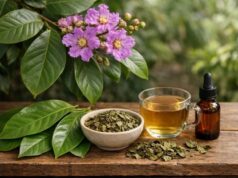
Blue skullcap (Scutellaria lateriflora) is a North American herb traditionally used as a calming “nervine” for restlessness, nervousness, and the kind of tension that can make sleep feel out of reach. People often reach for it when they feel keyed up, mentally overactive, or physically tight from stress. Unlike stronger sedatives, blue skullcap is typically described as steadying rather than “knocking you out,” which is why it is commonly used in the evening and sometimes in small daytime amounts.
Its medicinal properties are linked to plant compounds such as flavonoids and related polyphenols that may influence the body’s stress response, support relaxation pathways in the nervous system, and provide antioxidant activity. In practice, skullcap is used as a tea, tincture, or capsule—either as a short-term support during high-stress stretches or as part of a longer routine that includes sleep hygiene and other calming habits. Because herbal products vary widely, choosing the right form, dose, and timing matters for both results and safety.
Quick Overview for Blue Skullcap
- May support relaxation during restlessness and mild stress.
- Often used to ease “wired but tired” evenings and support sleep routines.
- Start low; common adult ranges are roughly 0.25–12 g/day dried herb equivalent (form-dependent).
- Can cause drowsiness; avoid alcohol or sedatives unless your clinician says otherwise.
- Avoid if pregnant or breastfeeding, or if you have liver disease or unexplained elevated liver enzymes.
Table of Contents
- What is blue skullcap?
- Key ingredients and medicinal properties
- Does blue skullcap help with anxiety?
- Blue skullcap for sleep and nervous tension
- How to use blue skullcap
- How much blue skullcap per day?
- Safety, interactions, and evidence
What is blue skullcap?
Blue skullcap is the common name most often used for Scutellaria lateriflora, a member of the mint family (Lamiaceae). It grows in moist habitats and produces small blue to violet flowers—one reason it earned its color-based nickname. You may also see it labeled as American skullcap, mad-dog skullcap, or simply skullcap. In herbal practice, the above-ground parts (the aerial herb) are typically used rather than the root.
Historically, skullcap was valued as a “calmative” herb—something used when the nervous system feels overstimulated. People still choose it for patterns like these:
- A restless body at bedtime (tossing, tight muscles, “can’t settle” feeling)
- A busy mind that loops through worries or plans
- Stress-related irritability or feeling easily startled
- Occasional tension headaches linked to stress and jaw or shoulder tightness
One important point for modern buyers: “skullcap” can refer to different Scutellaria species. The best-known look-alike in supplements is Chinese skullcap (Scutellaria baicalensis), which is traditionally used in different ways and uses different plant parts. Confusion can also happen with unrelated herbs that were historically mixed up with skullcap in commerce. This matters because safety profiles can differ by species, plant part, and product quality.
If you are using skullcap for relaxation, product labeling should clearly state Scutellaria lateriflora and the plant part (often “herb” or “aerial parts”). That clarity is more than a technical detail—it is the foundation for consistent effects and for reducing the risk of accidental substitution.
In terms of what it feels like, blue skullcap is usually described as gentle and smoothing. Some people notice an effect within an hour (especially with tea or tincture), while others need several days of consistent use to feel a difference. It is not typically used as a single “emergency calm-down” on its own, but it can be part of a broader plan for managing stress peaks.
Key ingredients and medicinal properties
Blue skullcap’s effects are commonly linked to a mix of flavonoids and other polyphenols—plant compounds that can interact with signaling pathways in the body. Herbalists often describe skullcap as a nervine and mild antispasmodic, which aligns with how it is used for tension, restlessness, and stress-related “tightness.”
Key compounds you will see discussed
While the exact profile varies by growing conditions and extraction method, skullcap preparations may contain flavones and their glycosides (sugar-bound forms). Names that appear frequently in the research and quality testing discussions include:
- Scutellarin and related scutellarein compounds
- Baicalin and baicalein
- Wogonin and wogonoside
- Other flavonoid and phenolic constituents, including phenylethanoid glycosides (such as acteoside/verbascoside in some Scutellaria species)
These compounds are studied for several properties that are relevant to how people use the herb:
- Nervous system calming potential: Some flavones appear to influence relaxation pathways that involve GABA signaling. This is one reason skullcap is often positioned as a “settling” herb rather than a stimulant.
- Antioxidant activity: Many polyphenols can help balance oxidative stress, which is one way researchers connect botanical compounds to inflammatory and stress-response processes.
- Antispasmodic and muscle-tension support: Traditional use includes stress-related tightness and spasms. Practically, this maps to situations like clenched shoulders, jaw tension, or general “wired” body feelings.
- Mood support mechanisms: Beyond relaxation, plant flavones are studied for broader neuromodulatory effects, though translating these mechanisms into predictable, real-world outcomes is not always straightforward.
Why product chemistry matters
With skullcap, form and manufacturing details can change the experience. A hot-water infusion (tea) tends to emphasize water-soluble constituents and offers a ritual component that can reinforce relaxation. Alcohol tinctures can extract a different spectrum of compounds and often feel “stronger” per dose. Capsules and tablets vary the most because they may contain powdered herb, a concentrated extract, or a blend—sometimes without clear standardization.
If a label states the extract is “chemically characterized” or provides a specific extract ratio, it may signal tighter quality control. That does not guarantee better results for every person, but it can reduce the guesswork when you are trying to find a repeatable dose that works for you.
Overall, skullcap’s medicinal properties are best understood as a multi-compound effect: mild calming, nervous-system steadying, and tension support—rather than a single “active ingredient” acting like a prescription drug.
Does blue skullcap help with anxiety?
Many people search for blue skullcap because they want help with anxiety—especially the everyday form that shows up as tension, worry loops, irritability, or stress sensitivity. In traditional use, skullcap is often chosen for “nervousness” and restlessness, which overlaps with mild anxiety patterns. Modern research is limited, but it does include small controlled studies and observational signals that point toward potential benefits for mood and stress resilience.
A practical way to think about skullcap is that it may help with the texture of anxiety: the bodily agitation, the inability to unwind, and the sense that your nervous system is “stuck on.” People commonly describe benefits such as:
- Feeling less keyed up during the evening wind-down
- Reduced physical tension (tight chest, clenched jaw, restless legs)
- Easier transition from busy mind to “good enough” calm
- Improved tolerance for minor stressors
That said, outcomes are not uniform, and skullcap is not a substitute for evidence-based care when anxiety is severe, persistent, or impairing. It is best viewed as a supportive tool—most appropriate when:
- Symptoms are mild to moderate and strongly linked to stress
- You want a non-habit-forming option to pair with sleep hygiene, therapy skills, or lifestyle changes
- You can start low, track effects, and adjust carefully
How to test it without fooling yourself
Herbs can be subtle, and expectation effects are real. If you want a clear read on whether skullcap helps you, try a simple approach:
- Pick one target outcome (for example: “fall asleep without rumination” or “less evening agitation”).
- Choose one form and keep it consistent for 10–14 days.
- Track a small metric daily (sleep onset time, number of awakenings, or a 1–10 tension score).
- Keep caffeine, alcohol, and bedtime timing as stable as possible.
If you want a daytime calming option that is less likely to cause drowsiness, you might compare skullcap with L-theanine for calm focus, which many people find easier to use during work hours.
The main takeaway: skullcap may help some people feel steadier and less tense, but it is not a guaranteed “anxiety cure,” and it works best when you match the form and timing to your specific pattern.
Blue skullcap for sleep and nervous tension
Sleep is one of the most common reasons people try blue skullcap—particularly when the problem is not sleepiness, but settling down. This is the classic “wired but tired” pattern: your body is exhausted, yet your nervous system keeps scanning, thinking, and tightening.
Skullcap is often used for two overlapping sleep situations:
- Sleep onset difficulty: you get into bed and your mind starts running, or your body feels restless.
- Stress-related light sleep: you fall asleep, but wake easily and feel “on alert.”
Some controlled human research suggests skullcap-based supplements may improve sleep quality measures in adults with mild to moderate insomnia symptoms, with good tolerability reported in that setting. That is encouraging, but it does not mean every skullcap product will deliver the same result. The details—extract type, dose, and study population—matter, and they may not match what is sold at a local shop.
How it is typically used for sleep
For sleep support, skullcap is usually taken:
- 30–90 minutes before bed as a tea, tincture, or capsule
- Earlier in the evening if it tends to make you drowsy sooner than expected
- As part of a routine, not only on the worst nights (consistency often makes effects easier to notice)
Skullcap also pairs naturally with behavioral sleep supports: dimming lights after dinner, reducing late-night scrolling, keeping a predictable wake time, and using a brief wind-down ritual. Because it is often mild, those basics can make the difference between “I think it helped” and “I can tell it helped.”
Some people combine skullcap with other calming herbs. If you do, keep it simple and avoid stacking multiple sedatives at full strength on the first night. A common comparison point is valerian-based sleep support, which may feel more strongly sedating for some users. If you mix herbs, start with lower doses and pay attention to next-day grogginess.
If your insomnia includes loud snoring, gasping, severe daytime sleepiness, or persistent early-morning awakening with low mood, it is worth ruling out underlying drivers (sleep apnea, depression, medication effects, thyroid issues, reflux, alcohol use). In those cases, an herb alone is unlikely to be enough—and delaying evaluation can prolong the problem.
How to use blue skullcap
Blue skullcap is flexible: it can be taken as a tea for gentle nightly support, as a tincture for quicker dosing, or as capsules for convenience and repeatability. The “best” form depends on your goal, your sensitivity to sedating herbs, and how much you value ritual versus precision.
Common forms and when they make sense
- Tea (infusion): Best for evening wind-down, people who like a calming routine, and those who want a gentler effect. Tea can be easier to titrate because you can vary steep time and strength.
- Tincture (alcohol or glycerin extract): Useful if you want faster onset than capsules or you prefer to fine-tune dose by drops. Alcohol tinctures can feel stronger per small dose for some people.
- Capsules or tablets: Best for consistency. They are often the easiest way to repeat the same dose daily, which helps if you are tracking results.
- Blends: Convenient, but harder to evaluate. If a blend contains multiple calming herbs, you may not know what is helping (or causing next-day grogginess).
A practical tea method
A simple approach that works well for many people is:
- Use 1–2 teaspoons of dried aerial parts per cup of hot water.
- Cover and steep 10–15 minutes (covering helps retain volatile components).
- Drink 30–60 minutes before bed.
- If you feel no effect after several nights, adjust strength gradually rather than doubling suddenly.
Skullcap is sometimes blended with other gentle “evening herbs.” If you want a softer-tasting, relaxing blend, pairing with lemon balm calming tea is a common strategy.
Quality and labeling checkpoints
Because skullcap is a name shared across species and products, labeling matters. Look for:
- The full botanical name: Scutellaria lateriflora
- Plant part (often “aerial parts” or “herb”)
- A reputable manufacturer with batch testing or clear sourcing
- A supplement facts panel that states whether it is powdered herb or an extract
If you have a history of supplement sensitivity, consider testing a very small amount on a low-demand day. For many people, skullcap is subtle and supportive. For a smaller subset, it can be more sedating than expected—especially when combined with alcohol, sleep medications, or other sedating herbs.
How much blue skullcap per day?
Skullcap dosing varies widely because products vary widely. One capsule might contain powdered herb, while another contains a concentrated extract. Teas, tinctures, and capsules also differ in how quickly they take effect and how long they last. The safest approach is to begin with a low dose, use one form at a time, and follow the label unless you are working with a qualified clinician.
Typical adult ranges by form
Adult ranges are often expressed as dried herb equivalents per day. Broadly, commonly used label-guided ranges fall roughly within:
- About 0.25–12 g/day dried herb equivalent for dried herb, powdered herb, and many ethanolic preparations (including some tincture-style extracts)
- About 3–12 g/day dried herb equivalent when using aqueous preparations (infusions and some water-based extracts)
These wide ranges do not mean everyone should take high doses. They reflect different goals, different product strengths, and different tolerances.
A simple “start low” framework
If you are new to skullcap, try one of these conservative approaches:
- For evening relaxation: Start with a mild tea once nightly for 3–4 nights. If helpful but not quite enough, increase strength slightly (more herb or longer steep) rather than adding multiple products at once.
- For daytime tension: Consider a smaller amount earlier in the day on a non-driving day first, because drowsiness can surprise you.
- For consistent sleep support: Use the same dose nightly for 10–14 days and track sleep onset, awakenings, and next-day grogginess.
Timing, duration, and when to stop
- Timing: Many people do best with skullcap 30–90 minutes before bed. If you take it too late and wake groggy, move it earlier.
- Duration: For short-term stress spikes, skullcap may be used for days to a few weeks. For longer routines, it is reasonable to reassess every 4–8 weeks to confirm it is still providing value.
- Stop or reassess if: you feel persistently sedated, notice worsening mood, develop unusual symptoms, or need to keep increasing the dose to get the same effect.
If you are using skullcap to manage frequent anxiety or insomnia, consider it a support—not the whole plan. Sleep habits, stress skills, and medical evaluation (when appropriate) often determine whether an herbal approach succeeds or plateaus.
Safety, interactions, and evidence
Most people tolerate blue skullcap well when it is used at reasonable doses and sourced from reputable products. The most common downsides are related to its calming effect: drowsiness, slowed reaction time, and next-day grogginess if the dose is too high or taken too late. Some people also report mild digestive upset, headache, or vivid dreams.
Who should avoid skullcap
Avoid blue skullcap (or use only with clinician oversight) if you are in any of these groups:
- Pregnant or breastfeeding
- Children and teens (unless specifically guided by a clinician trained in pediatrics and herbal medicine)
- People with known liver disease, unexplained elevated liver enzymes, or a history of herb-related liver reactions
- Anyone who needs unimpaired alertness for driving, operating machinery, or safety-sensitive work
Interactions to take seriously
The main interaction concern is additive sedation. Use extra caution (and get professional guidance) if you take:
- Alcohol
- Sleep medications
- Benzodiazepines or other anti-anxiety sedatives
- Opioid pain medicines
- Sedating antihistamines
- Other strongly calming herbs or supplements (stacking can increase grogginess)
If you want to combine skullcap with other calming botanicals, keep doses conservative and introduce only one new ingredient at a time. For example, passionflower for stress and sleep is often used in similar contexts; combining them may be too sedating for some people, especially at the start.
Liver safety and product quality
Rare cases of liver injury have been reported in people using products labeled as skullcap, sometimes in multi-ingredient blends and sometimes with concerns about mislabeling or adulteration. While the overall risk appears low, it is not something to ignore. Stop use and seek medical evaluation promptly if you develop symptoms such as jaundice (yellowing of skin or eyes), dark urine, unusual fatigue, severe nausea, or right-upper abdominal pain.
Choosing a product that clearly identifies Scutellaria lateriflora, uses reputable manufacturing practices, and avoids unclear “proprietary blends” can reduce avoidable risk.
What the evidence actually supports
The evidence base for blue skullcap is promising but not robust. Human studies are limited in number and often small, and products differ across trials. The best-supported uses are mild nervousness, stress-related restlessness, and sleep quality support in some adults. Strong claims—such as treating clinical anxiety disorders on its own—go beyond what current evidence can reliably support.
A good rule is this: if skullcap helps you feel calmer and sleep better without side effects, it can be a useful part of your routine. If you are not noticing meaningful benefits after a fair trial (about two weeks for sleep, or two to four weeks for stress patterns), it is reasonable to stop and consider other options.
References
- Efficacy and Tolerability of a Chemically Characterized Scutellaria lateriflora L. Extract-Based Food Supplement for Sleep Management: A Single-Center, Controlled, Randomized, Crossover, Double-Blind Clinical Trial 2025 (RCT)
- NATURAL HEALTH PRODUCT SKULLCAP – SCUTELLARIA LATERIFLORA 2024 (Monograph)
- Insights into skullcap herb-induced liver injury 2024 (Safety Review)
- Phytochemical Profiling and Bio-Potentiality of Genus Scutellaria: Biomedical Approach 2022 (Review)
- An investigation into the efficacy of Scutellaria lateriflora in healthy volunteers 2003 (RCT)
Disclaimer
This article is for educational purposes only and does not provide medical advice, diagnosis, or treatment. Herbal products can vary in strength, purity, and labeling accuracy, and individual responses can differ. If you are pregnant or breastfeeding, have a liver condition, take prescription medications (especially sedatives or sleep medicines), or have ongoing anxiety or insomnia, consult a licensed health professional before using blue skullcap. Stop use and seek urgent medical care if you develop signs of an allergic reaction or possible liver injury (such as jaundice, dark urine, severe nausea, or unusual fatigue). For persistent sleep or anxiety symptoms, professional evaluation can help identify underlying causes and ensure you receive appropriate care.
If you found this guide helpful, consider sharing it on Facebook, X (formerly Twitter), or your favorite community group so others can make safer, more informed choices.