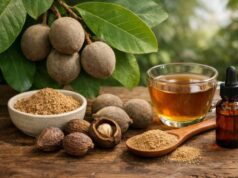
Boswellia serrata—often called Indian frankincense—is a resin-producing tree traditionally used to support comfort in joints, breathing, and digestion. Today, it’s best known as a botanical option for everyday inflammation patterns that show up as knee stiffness, post-exercise aches, or a sense of “creaky” movement with aging. The part used in supplements is the aromatic gum resin, which is processed into extracts rich in boswellic acids—compounds studied for their ability to influence inflammatory signaling, especially pathways linked to leukotrienes.
Boswellia is not an instant numbing agent, and it’s not a substitute for diagnosis when pain, swelling, or gut symptoms are persistent. But when used in a standardized form and paired with basics like strength training, weight management, and sleep, many people use boswellia as a steadier, gentler tool for day-to-day comfort. Like any active herb, it also comes with important guardrails around product quality, dosing, interactions, and who should avoid it.
Quick Overview
- Standardized boswellia extracts may reduce osteoarthritis pain and stiffness and support daily mobility.
- Look for products standardized to boswellic acids (often with AKBA or AKBBA listed), not incense-grade resin.
- Typical adult dose is 250–500 mg extract, 2–3 times daily, or 300–600 mg/day for certain standardized extracts.
- Stop before surgery and use caution with blood thinners due to potential bleeding-risk concerns.
- Avoid during pregnancy and breastfeeding, and use extra caution if you have asthma that is unstable or complex medical conditions.
Table of Contents
- Boswellia basics and key compounds
- What boswellia helps with
- How boswellia works
- How to use boswellia
- How much boswellia per day
- Safety, interactions, and who should avoid
- What the evidence really says
Boswellia basics and key compounds
Boswellia serrata belongs to the Burseraceae family, a group known for fragrant resins. When the bark is carefully tapped, a sticky oleo-gum resin seeps out and hardens into pale “tears.” That resin is the raw material for most supplements marketed for joint comfort or inflammation balance. You may also see the term Salai guggul in Ayurvedic contexts, or “Indian frankincense” in Western labeling.
The most important practical point is that boswellia products are not all the same. Incense-grade resin is chosen for aroma and burn quality, while supplement-grade resin is processed and often standardized to specific compounds. If your goal is measurable symptom support, standardization matters because the active fraction can vary widely by species, harvest conditions, and extraction method.
Key ingredients and what they do
Boswellia’s chemistry is complex, but a few groups of compounds show up repeatedly in research and quality standards:
- Boswellic acids: A family of pentacyclic triterpenes often discussed as the main bioactive fraction. Labels may list “total boswellic acids” as a percentage.
- AKBA (also written AKBBA): Short for 3-acetyl-11-keto-β-boswellic acid, a boswellic acid associated with leukotriene-related pathways. Some clinical products standardize to a specific AKBA/AKBBA percentage.
- Essential oil components (volatile aromatics): These contribute to frankincense aroma but are not the primary target for internal anti-inflammatory effects. Concentrated essential oils are a different category from resin extracts.
What “standardized extract” usually means
A standardized boswellia extract typically specifies:
- A percentage of total boswellic acids (for example, a mid-range to higher percentage)
- Sometimes a percentage of AKBA/AKBBA
- A defined capsule or tablet dose (mg)
This matters because your 300 mg capsule could be mostly inactive gum in one product and a concentrated boswellic-acid fraction in another.
How to think about quality
Choose products with transparent labeling and conservative manufacturing cues: a clear extract description, consistent dosing, and third-party testing where available. Avoid products that feel vague (“proprietary resin blend”) if you’re trying to make a results-based decision.
What boswellia helps with
Boswellia is most popular for joint and mobility support, but people also explore it for breathing comfort and gut inflammation patterns. The best way to set expectations is to match boswellia to the type of problem it is most likely to influence: low-to-moderate, persistent inflammation-related symptoms, not acute injuries or severe flares that require medical treatment.
Joint pain, stiffness, and mobility
The strongest consumer interest—and the most consistent clinical focus—is knee osteoarthritis. In studies of standardized extracts, many participants report improvements in:
- Pain during walking or stairs
- Morning stiffness duration
- Ease of movement and functional scores
- The need for rescue pain medication in some cases
A useful expectation is gradual improvement. Some people notice changes within 1–2 weeks, but a fair trial is typically 4–12 weeks. Boswellia is often used alongside strength training and physical therapy because stronger muscles reduce joint load and make any supplement effect more noticeable.
If you’re building a broader joint-support plan, you may also want to compare it with options like glucosamine dosing and joint support basics, which tends to be slower-acting and more variable between individuals but is widely used.
Exercise-related soreness and “inflammation load”
Some people use boswellia for post-workout soreness or persistent aches after increased activity. It’s not a stimulant and doesn’t “push” performance. Instead, it’s used when recovery feels slowed by inflammatory discomfort—especially in older adults returning to training.
Breathing comfort in inflammation-prone airways
Boswellia is sometimes discussed in the context of airway inflammation because leukotrienes can play a role in bronchial reactivity. That said, asthma and other breathing conditions can be high-stakes. Boswellia should never replace inhalers, action plans, or clinician-guided care. If someone tries it, it should be as an add-on with careful monitoring and a low threshold to stop if symptoms change.
Digestive and gut inflammation patterns
Interest in boswellia for gut support often centers on inflammatory bowel patterns and intestinal irritation. While there is research interest, results are mixed and product-specific. The safest, most realistic framing is symptom support for select people—not a primary treatment for active disease.
How boswellia works
Boswellia’s value is often described with one word—“anti-inflammatory”—but that’s too broad to be helpful. A better way to understand it is as a pathway-leaning herb: it is frequently studied for effects on leukotriene signaling and related inflammatory cascades, which differ from the main targets of common over-the-counter pain medicines.
Leukotrienes and 5-LOX signaling
Many discussions of boswellia focus on 5-lipoxygenase (5-LOX), an enzyme involved in the production of leukotrienes. Leukotrienes are signaling molecules that can influence:
- Airway tone and inflammatory reactivity
- Vascular permeability and swelling tendencies
- Certain pain and inflammatory patterns in joints and soft tissue
Boswellic acids—especially AKBA/AKBBA in some models—are often highlighted in this context. In plain language: boswellia is frequently positioned as a botanical that may help calm a slice of inflammation that isn’t always the main focus of standard pain relievers.
NF-kB, cytokines, and “inflammation volume”
Inflammation isn’t a single switch. It’s more like a mixing board: multiple sliders affect how loud the signal becomes. Boswellia is studied for potential influence on broader inflammatory mediators such as cytokines and transcription factors (often discussed in research settings as NF-kB-related signaling). For users, this translates into a practical possibility: reduced stiffness and improved comfort when inflammation is a major driver.
Oxidative stress and tissue irritation
In chronic discomfort, oxidative stress can amplify irritation and slow recovery. Boswellia extracts contain compounds with antioxidant behavior, which may contribute to overall tissue comfort—especially when combined with foundational habits like sleep, protein intake, and manageable training volume.
How boswellia compares to common strategies
Boswellia is not a direct substitute for NSAIDs, and it won’t work identically. Many people choose it because they:
- Want a gentler long-term approach
- Are trying to reduce frequent NSAID use
- Prefer botanical options that can be paired with lifestyle interventions
A helpful comparison is dietary anti-inflammatory strategies such as omega-3 fatty acids and inflammation support, which work through different mechanisms and can complement a joint-focused plan.
How to use boswellia
Most people use boswellia as capsules or tablets, but the “how” matters as much as the “what.” Your results depend on extract type, dosing consistency, and whether you’re using it for the right target.
Common forms
- Standardized resin extract (capsules or tablets): The most practical option for joint support because dosing is consistent and extracts can be standardized to boswellic acids.
- Powdered resin: Sometimes sold as whole-resin capsules. This can be less predictable because resin composition varies, and doses may be larger to reach a meaningful boswellic-acid intake.
- Topical preparations: Creams or oils that include boswellia extracts may help localized comfort for some users. Topicals are highly variable and should be patch-tested.
- Incense and aromatics: Useful for scent and ritual, not for systemic anti-inflammatory effects.
Avoid ingesting frankincense essential oil unless specifically formulated and guided by a qualified professional. Essential oils are concentrated and do not behave like standardized resin extracts.
Timing and consistency
Boswellia is usually taken with food to improve tolerance. Many protocols split doses (morning and evening) to keep exposure steady. Consistency matters more than perfect timing—daily use is what allows you to judge whether it’s helping.
Pairing boswellia with lifestyle
Boswellia tends to “show up” best when the baseline plan is solid:
- Strength training for joint stability (even light, consistent work counts)
- Walking or cycling to keep joints nourished through movement
- Sleep routines that reduce pain sensitivity and improve recovery
- A nutrition plan that supports body composition and inflammation control
If stomach sensitivity is part of your picture—either from supplements or from frequent pain reliever use—consider supportive habits like taking doses with meals and using simple digestive tools. Some people find it helpful to pair anti-inflammatory routines with ginger’s digestive and anti-nausea support profile, especially if supplements tend to feel heavy on the stomach.
How to run a clean personal trial
To avoid confusion:
- Choose one boswellia product and keep it consistent.
- Track 2–3 outcomes (morning stiffness minutes, walking tolerance, pain 0–10).
- Commit to 6–8 weeks before deciding, unless side effects appear.
- Change only one variable at a time (dose or product, not both).
How much boswellia per day
Boswellia dosing is best treated as product-specific, because extracts differ in boswellic-acid content. Still, there are practical ranges that show up repeatedly in labeling and clinical use, and you can use them to choose a reasonable starting plan.
Typical dosing ranges (adults)
Common extract dosing patterns include:
- 250–500 mg extract, 2–3 times daily (often used as a general supplement range)
- 300–600 mg/day for certain standardized extracts used in joint-focused protocols, commonly split into two daily doses
If your label lists a high percentage of boswellic acids, you may not need the highest mg dose. If it’s a whole-resin powder with no standardization, people often end up taking more capsules to reach a comparable active fraction—one reason standardized extracts are usually preferred for clarity.
What to look for on the label
Helpful label details include:
- “Standardized to X% boswellic acids”
- Optional: “Standardized to AKBA/AKBBA” (useful, but not the only marker of quality)
- Clear daily serving size and capsule count
Be cautious with products that list only “frankincense resin” without any standardization, especially if your goal is predictable symptom changes.
When to take it
- With meals is the most common approach for tolerance.
- Split dosing (morning and evening) is often easier on digestion and keeps exposure steadier.
- If you take multiple medications, separate boswellia by 2 hours unless your clinician advises otherwise, to reduce the chance of absorption timing issues.
How long to use boswellia
A practical timeline:
- Trial window: 6–8 weeks for meaningful judgment
- Decision point: 8–12 weeks if you’re seeing gradual progress
- Longer use: reasonable for some people if tolerated, but re-check every 3–4 months to confirm it’s still worth it
If you need escalating doses to keep the same effect, that’s a sign to reassess your plan (training load, body weight changes, footwear, sleep debt, or a medical evaluation for worsening joint disease).
Safety, interactions, and who should avoid
Boswellia is often well tolerated, but “usually safe” is not the same as “risk-free.” The most important safety factors are medical context, bleeding risk, and product choice.
Common side effects
The most typical side effects are digestive and usually dose-related:
- Nausea, reflux, or stomach discomfort
- Diarrhea or constipation
- Mild headache in some users
- Occasional skin rash or itching (more common in sensitive individuals)
Taking boswellia with food and lowering the dose often resolves mild issues. If symptoms persist, stop and reassess.
Interactions to take seriously
Use extra caution and speak with a clinician if you take:
- Anticoagulants or antiplatelet drugs (blood thinners), due to potential bleeding-risk concerns
- Anti-inflammatory prescription medicines, especially if you’re already prone to stomach irritation
- Multiple supplements that affect clotting (for example, high-dose fish oil plus other botanicals), because stacking can create uncertainty
Also be cautious before procedures. A conservative approach is to stop non-essential supplements 1–2 weeks before surgery, then restart only after your surgical team says it’s appropriate.
Who should avoid boswellia
Avoid or use only with clinician guidance if you are:
- Pregnant or breastfeeding (insufficient safety data for supplement-level dosing)
- Managing complex or unstable asthma (do not substitute for standard care)
- Scheduled for surgery or have a bleeding disorder
- Allergic to resinous botanicals or have a history of strong supplement reactions
When to seek medical care instead of self-treating
Do not rely on supplements if you have:
- Severe joint swelling, redness, or warmth
- Unexplained weight loss, fever, or night pain
- Blood in stool, persistent diarrhea, or significant abdominal pain
- Breathing symptoms that are worsening or unpredictable
These situations deserve evaluation. Supplements can be supportive tools, but they should not delay diagnosis.
What the evidence really says
Boswellia has a stronger research profile than many herbs used for inflammation, but the evidence still has a few predictable limits: product variability, short study durations, and outcomes that differ depending on the extract.
Where evidence is most encouraging
- Knee osteoarthritis: Multiple clinical trials and pooled analyses suggest that certain standardized boswellia extracts can improve pain scores and function compared with placebo. Improvements are often clinically noticeable when the extract is standardized and taken consistently.
- Inflammation markers and symptom clusters: Some studies track inflammatory markers alongside symptom scores. While biomarkers don’t always move in lockstep with how people feel, they can support the idea that boswellia is doing more than masking discomfort.
- Safety in controlled studies: Across many trials, adverse effects are typically mild and gastrointestinal, with serious events uncommon—though real-world risk still depends on medications and individual sensitivity.
What evidence does not prove
- Boswellia is not proven to regenerate cartilage or reverse osteoarthritis. At best, it may support comfort and function while you address mechanics and lifestyle.
- For asthma or inflammatory bowel conditions, the evidence is more mixed and less definitive, and outcomes are highly dependent on disease severity, standard care, and product choice.
- “Frankincense” as a generic term is not specific enough. Evidence generally applies to standardized Boswellia serrata extracts, not all resin products.
Why results vary so much between people
Three factors explain most mixed experiences:
- Extract differences: Two products with the same mg dose can deliver very different boswellic-acid exposure.
- Baseline inflammation and biomechanics: If joint pain is mainly structural (alignment, muscle weakness, meniscus injury), a supplement alone may do little.
- Trial design in real life: People often change several variables at once—new workouts, new shoes, new supplements—making it hard to know what helped.
How to make evidence-based use practical
If boswellia fits your goals, treat it like a structured experiment: pick a standardized product, use a sensible dose for 8 weeks, track outcomes, and keep your core plan steady. If you want to compare botanical options for inflammation support, it can help to understand other well-studied compounds like curcumin dosing and safety considerations, which also has a substantial research footprint but different absorption and interaction issues.
References
- A standardized Boswellia serrata extract shows improvements in knee osteoarthritis within five days-a double-blind, randomized, three-arm, parallel-group, multi-center, placebo-controlled trial – PMC 2024 (RCT)
- Efficacy evaluation of standardized Boswellia serrata extract (AflapinⓇ) in osteoarthritis: A systematic review and sub-group meta-analysis study – PubMed 2024 (Systematic Review and Meta-Analysis)
- From bench to bedside, boswellic acids in anti-inflammatory therapy — mechanistic insights, bioavailability challenges, and optimization approaches – PMC 2025 (Review)
- Boswellia Serrata – LiverTox – NCBI Bookshelf 2020 (Safety Review)
Disclaimer
This article is for educational purposes only and does not provide medical advice, diagnosis, or treatment. Supplements can cause side effects and may interact with medications or health conditions. If you are pregnant, breastfeeding, have a bleeding disorder, take blood thinners, have upcoming surgery, or manage a chronic medical condition (including asthma or inflammatory bowel disease), consult a qualified healthcare professional before using boswellia. Stop use and seek medical care promptly if you develop allergic symptoms, unusual bleeding or bruising, severe abdominal pain, or worsening breathing symptoms.
If you found this guide helpful, consider sharing it on Facebook, X (formerly Twitter), or any platform where people look for practical, evidence-informed wellness information.