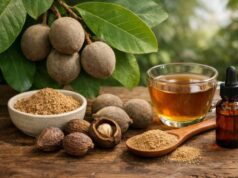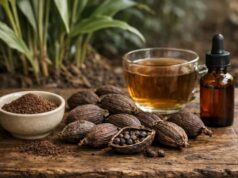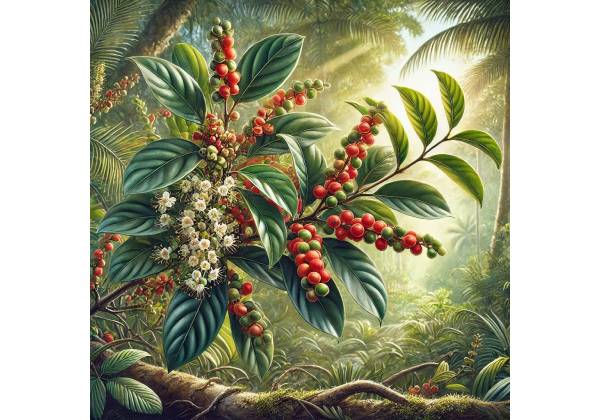
Brazilian pepper (Schinus terebinthifolius) is a South American tree whose bright red berries are often sold as “pink peppercorns,” and whose bark and leaves have a long tradition in folk medicine—especially in Brazil—where it may be called aroeira or pimenta-rosa. Its reputation centers on topical and short-term uses: supporting irritated skin, helping keep minor wounds clean, and easing discomfort linked to microbial overgrowth in localized areas. In modern research, the plant’s essential oils, polyphenols, and other bioactive compounds have shown antimicrobial and inflammation-modulating activity in lab settings, and a small body of clinical work has explored vaginal formulations.
At the same time, Brazilian pepper is not a simple “natural antibiotic.” It belongs to the same plant family as poison ivy and cashew, which means allergy risk is real—especially for sensitive individuals. Safety also depends on the part used (berry vs. bark vs. leaf), the form (spice vs. extract vs. essential oil), and the duration. This guide walks through what Brazilian pepper is, what it contains, how it is used, how to dose it cautiously, and when to avoid it.
Essential Insights for Brazilian Pepper
- Topical preparations may support skin comfort and microbial balance in short-term use.
- Laboratory studies suggest antimicrobial and anti-inflammatory potential, but human evidence is limited and condition-specific.
- Typical topical range: 0.5–1% essential oil dilution or 1–5% extract creams, used up to 14 days.
- Allergy risk is significant; stop immediately for rash, swelling, wheeze, or burning.
- Avoid if pregnant or breastfeeding, and for people with cashew or pistachio allergy or severe plant-contact dermatitis history.
Table of Contents
- What is Brazilian pepper?
- Key compounds and medicinal properties
- Does it help fight microbes?
- Anti-inflammatory and skin support
- How to use Brazilian pepper
- Dosage, timing, and duration
- Side effects, interactions, and evidence
What is Brazilian pepper?
Brazilian pepper (Schinus terebinthifolius) is an evergreen tree native to parts of South America. Outside its native range it is widely planted as an ornamental—and in some regions it behaves invasively—so you may see it in parks, along roadsides, and in coastal areas. The plant produces clusters of small, pink-to-red berries that are dried and sold as “pink peppercorns.” Those berries are not the same as black pepper (Piper nigrum). They share a spicy aroma and a peppery bite, but botanically they are unrelated and can behave differently in the body.
That name confusion matters for two reasons:
- Culinary vs. medicinal intent: Pink peppercorns are mainly a spice. Medicinal preparations more often use bark, leaf, resinous extracts, or essential oil—forms that concentrate bioactive compounds and raise the stakes for safety.
- Allergy profile: Brazilian pepper belongs to the Anacardiaceae family (often called the cashew family). This family includes plants known for causing contact dermatitis in sensitive people. If you have had strong reactions to poison ivy-like plants or certain resins, Brazilian pepper deserves extra caution.
In traditional practice, Brazilian pepper is commonly discussed in topical contexts. Examples include washes or compresses for irritated skin, formulations intended to support tissue comfort, and preparations used in intimate-care traditions. These uses reflect the plant’s astringent, aromatic, and resinous qualities. Internally, it has been used in folk traditions as teas or decoctions, but modern safety-minded use tends to be more conservative, favoring culinary amounts or clinician-guided protocols rather than self-prescribed high-dose ingestion.
A practical way to think about Brazilian pepper is as a plant with strong “surface-level” potential (skin and mucosa) and more complicated internal-use questions. If your goal is everyday wellness, it is rarely the first place to start. If your goal is targeted, short-term topical support—and you can manage the allergy risks—it may be worth understanding in more detail.
Key compounds and medicinal properties
Brazilian pepper’s activity comes from a mix of volatile and non-volatile compounds that vary by plant part (leaf vs. berry vs. twig vs. bark), harvest timing, and extraction method. This variability is one reason products can feel inconsistent: two “Brazilian pepper” items may not be chemically similar, even if they share a name.
Major compound families
Commonly discussed constituents include:
- Essential oil terpenes (aromatic compounds) such as monoterpenes and sesquiterpenes. These are often responsible for the spicy, resinous smell and are frequently studied for antimicrobial effects in vitro.
- Polyphenols (including flavonoids and related phenolic compounds). Polyphenols are often explored for antioxidant and inflammation-modulating activity.
- Tannins (astringent compounds) that can tighten and tone tissues—one reason the plant is traditionally associated with “drying” or “firming” topical effects.
- Resin-like fractions and triterpene-type compounds that may contribute to barrier support and local soothing, depending on the preparation.
How those properties translate into real-world use
When people talk about Brazilian pepper’s “medicinal properties,” they usually mean a few practical actions:
- Astringent and tissue-toning: Astringency can be useful when you want a sense of tightening or reduced weepiness in superficial irritation. This is most relevant for topical use, not as a blanket internal “detox” claim.
- Antimicrobial signaling: Aromatic terpenes and polyphenols can inhibit microbes in lab settings. In the body, that does not automatically mean “treats infections,” but it helps explain why the plant is studied for localized microbial balance.
- Inflammation-modulating support: Some constituents are studied for effects on inflammatory pathways. In practice, that may show up as reduced redness or discomfort—again, mostly in topical contexts.
- Synergy potential: Some research explores whether Brazilian pepper constituents can work alongside other approaches (for example, as an adjunct rather than a replacement). This is an emerging idea, not a proven clinical guarantee.
If you are comparing Brazilian pepper to other topical botanicals, it can help to contrast its resinous-astringent profile with gentler, more universally tolerated plants. For example, witch hazel for topical astringent support tends to be a more familiar first-line option for many people, with a broader history of consumer use.
Does it help fight microbes?
Brazilian pepper is widely described as “antimicrobial,” but it is important to separate three different questions:
- Can it inhibit microbes in lab tests?
- Can it support microbial balance on skin or mucosa in real-life use?
- Can it replace standard treatment for a diagnosed infection?
The first answer is often yes, depending on the extract and the organism tested. The second answer is plausible for short-term topical use, but still depends on formulation quality and individual tolerance. The third answer is usually no—at least not based on current evidence.
What studies and patterns suggest
Research on Brazilian pepper essential oil and extracts frequently reports antimicrobial activity in vitro. Some studies also explore how the oil behaves in combination with conventional antibiotics, suggesting that certain constituents may influence bacterial susceptibility under experimental conditions. This line of research is interesting, but it does not translate directly into a recommendation to self-treat infections at home.
There is also clinical interest in vaginal formulations. A randomized clinical trial compared a vaginal extract preparation of Brazilian pepper with a standard antimicrobial gel for bacterial vaginosis, using a short treatment course. Results favored standard therapy, and the botanical preparation did not perform as a reliable substitute. In other words, Brazilian pepper may be studied as a complementary or alternative approach in certain contexts, but it should not be treated as a proven replacement for evidence-based care.
Where topical use may be reasonable
People most often consider Brazilian pepper for:
- Minor skin irritation where keeping the area clean and comfortable is the goal
- Localized odor or discomfort where gentle antimicrobial support is desired
- Adjunct support alongside clinician-guided care (not instead of it)
If you are looking for an accessible comparison point, tea tree for topical antimicrobial support is often discussed in similar “surface-level” contexts—though it also carries irritation risk and must be diluted appropriately.
When to seek medical care instead
Do not attempt to self-manage with Brazilian pepper if you have:
- Fever, rapidly spreading redness, pus, severe pain, or systemic symptoms
- Recurrent vaginal symptoms, bleeding, pregnancy, or pelvic pain
- A suspected sexually transmitted infection
- Diabetes-related wounds or reduced circulation
Brazilian pepper’s most responsible role is supportive and short-term. When symptoms are significant, persistent, or worsening, diagnosis and standard treatment matter more than experimentation.
Anti-inflammatory and skin support
Beyond microbes, Brazilian pepper is often used for local discomfort—redness, tenderness, or a “hot” feeling in irritated tissues. This aligns with research interest in its antioxidant and inflammation-modulating constituents, and with traditional use as a plant that “tones” and supports surface tissues.
Skin and wound-context support
A useful modern lens is to think of Brazilian pepper as potentially influencing three layers of the skin-repair process:
- Microbial load: keeping surface microbes from dominating an already irritated area
- Inflammatory signaling: supporting a more balanced inflammatory response so tissue can move from “reactive” to “repair”
- Barrier comfort: helping the area feel less raw, especially when astringency is appropriate
Preclinical and early translational research has explored specific Brazilian pepper-derived components (including protein-like fractions from leaves) in models of infected wounds, showing effects on bacterial burden and healing markers. These are promising signals, but they are not the same as over-the-counter readiness. They do, however, reinforce the practical idea that Brazilian pepper’s strongest “fit” may be topical, not internal.
Soothing is not the same as curing
A common mistake in herbal use is confusing symptom relief with disease resolution. A topical botanical can reduce discomfort while an infection, allergy, or irritant exposure continues underneath. The safest approach is to use Brazilian pepper in a way that is:
- Time-limited: reassess quickly (for example, within 48–72 hours)
- Spot-tested: especially if you have sensitive skin
- Paired with basics: gentle cleansing, moisture balance, and avoidance of the triggering irritant
If your goal is broadly “supporting healing skin,” a gentler botanical is sometimes a better first step. calendula for skin comfort and minor wound care is often chosen for its soothing profile, while Brazilian pepper may be considered when astringency and antimicrobial tone are desired and tolerated.
Practical expectations
In real use, a reasonable expectation is modest improvement in comfort—less irritation, less weepiness, less odor—rather than dramatic overnight change. If you notice burning, increased redness, blistering, or itching, treat that as a warning sign of irritation or allergy and discontinue immediately.
How to use Brazilian pepper
Brazilian pepper can appear as a culinary spice, a tea ingredient, a topical extract, or an essential oil. The safest way to approach it is to match the form to the goal and start with the lowest-risk option.
1) Culinary use (pink peppercorns)
As a spice, the dried berries are typically used in small amounts for flavor. Culinary exposure is not the same as therapeutic dosing, and it should not be treated as a medical intervention. If you have a history of cashew or pistachio allergy, approach pink peppercorns cautiously, because cross-reactivity has been reported in sensitized individuals.
2) Water-based preparations (wash or compress)
Traditional preparations often involve steeping crushed berries, leaves, or bark in hot water, then using the cooled liquid externally. This can be a lower-intensity way to explore tolerance because it avoids concentrated oils. Practical uses include:
- A compress for localized skin irritation
- A rinse for areas prone to odor or sweat-related discomfort
- A short-term wash when you want a mild astringent effect
Avoid using homemade preparations on broken skin if you are prone to strong reactions, and never use them as a substitute for treating a significant infection.
3) Topical creams, gels, and ointments
Commercial products may standardize concentration better than homemade methods. For most people, this is the most practical route if you are using Brazilian pepper for skin comfort. Because irritation and allergy are possible, spot-test on a small area for 24 hours before wider use.
4) Essential oil
Brazilian pepper essential oil is concentrated and should be treated with respect:
- Do not ingest it.
- Dilute it carefully (many people stay in the low single-digit percentage range or lower).
- Avoid eyes, mucous membranes, and sensitive skin.
If you want a plant-based topical approach with a clearer consumer safety playbook, many people start with simpler options like tea tree or other well-documented topicals, then move toward Brazilian pepper only if they tolerate botanicals well.
Dosage, timing, and duration
Brazilian pepper dosing is best approached with a “least necessary dose” mindset. Because products vary widely—and because sensitivity reactions can be significant—there is no single universal dose that fits all people or all forms. The most defensible dosing guidance comes from specific studied preparations (for specific conditions) and from conservative topical practice.
Topical extract products
Many topical botanical products fall into a broad concentration range:
- 1–5% extract creams or gels, applied 1–2 times daily
- Typical duration: up to 7–14 days, then reassess
This is a conservative, consumer-style range meant for localized comfort support. If irritation develops, stop immediately.
Vaginal-use preparations
Vaginal use deserves extra caution. Clinical research has evaluated a vaginal extract preparation used once daily for a short course in bacterial vaginosis, but results did not support it as a reliable replacement for standard therapy. Because vaginal symptoms can overlap with conditions that require medical diagnosis, self-treatment is not a safe default. If a clinician recommends a specific product, follow that exact labeling rather than improvising.
Essential oil dilution
For essential oils, conservative topical dilution is key:
- 0.5–1% dilution in a carrier oil for limited-area use
- Apply once daily at first; increase only if clearly tolerated
Avoid use on mucosa, near eyes, or on large surface areas.
Culinary amounts
If you use pink peppercorns as a spice, keep them in normal culinary amounts. Do not escalate culinary use into “medicinal dosing,” especially if you have any allergy history.
Timing tips that reduce problems
- Use topicals after cleansing and on dry skin to reduce trapping irritants.
- Avoid layering with multiple strong actives (acids, retinoids, strong antiseptics) on the same area.
- Reassess quickly: if there is no improvement in 48–72 hours for a minor issue, choose a different strategy or seek advice.
The safest Brazilian pepper plan is short, targeted, and reversible—easy to stop the moment your skin says “no.”
Side effects, interactions, and evidence
Brazilian pepper sits in a category of herbs that can look “gentle” because they are plant-based, yet cause outsized reactions in sensitive individuals. Safety is not just about dose; it is also about immune reactivity, skin barrier status, and the form used.
Common side effects
Reported issues are usually local:
- Burning, stinging, or redness with topical use
- Itching or rash consistent with contact irritation
- Swelling or hives in allergic individuals
Stop immediately if symptoms worsen after application. Seek urgent care for wheezing, facial swelling, throat tightness, or faintness.
Allergy and cross-reactivity risk
Because Brazilian pepper is in the cashew family, cross-reactivity is a real concern. Pink peppercorn exposure has been associated with sensitization patterns in people who are already allergic to cashew or pistachio. If you fall into that group, the safest approach is avoidance unless an allergy specialist has advised otherwise.
Who should avoid Brazilian pepper
Avoid use if you are:
- Pregnant or breastfeeding (insufficient safety data and unnecessary risk)
- Cashew- or pistachio-allergic, or highly reactive to poison ivy-like plants
- Managing chronic dermatitis, severe eczema flares, or highly compromised skin barrier
- Considering essential oil ingestion (not recommended)
Medication interactions
Hard interaction data are limited. The most relevant “interaction” in practice is additive irritation—for example, combining a strong botanical topical with medicated acne products, antiseptics, or steroid creams without guidance. If you use prescription topicals, it is wise to keep routines simple and introduce only one new product at a time.
What the evidence actually supports
- Strongest evidence: laboratory and preclinical signals for antimicrobial and inflammation-related activity, plus targeted clinical exploration in vaginal formulations and topical models.
- Most realistic consumer use case: short-term, localized topical support—when tolerated and when the situation is mild.
- Biggest limitation: the leap from promising lab activity to reliable human outcomes is not complete, and product variability makes self-experimentation unpredictable.
If you want an antimicrobial culinary herb with a more established everyday ingestion profile, oregano may be a more appropriate food-first option than attempting medicinal oral dosing with Brazilian pepper.
References
- Randomized clinical trial comparing the efficacy of the vaginal use of metronidazole with a Brazilian pepper tree (Schinus) extract for the treatment of bacterial vaginosis 2011 (RCT). ([PubMed][1])
- Cross-reactivity of pink peppercorn in cashew and pistachio allergic individuals 2019 (Clinical Study). ([PMC][2])
- Schinus terebinthifolius Leaf Lectin (SteLL) Reduces the Bacterial and Inflammatory Burden of Wounds Infected by Staphylococcus aureus Promoting Skin Repair 2022 (Preclinical Study). ([PubMed][3])
- Antibiotic-Potentiating Activity of the Schinus terebinthifolius Raddi Essential Oil against MDR Bacterial Strains 2023 (Preclinical Study). ([PubMed][4])
- Essential Oil from the Leaves, Fruits and Twigs of Schinus terebinthifolius: Chemical Composition, Antioxidant and Antibacterial Potential 2024 (Research Article). ([PubMed][5])
Disclaimer
This article is for educational purposes only and does not provide medical advice. Brazilian pepper can cause skin irritation and allergic reactions, and it may cross-react in people with cashew or pistachio allergy. Do not use it to self-treat suspected infections, and do not ingest essential oil. If you are pregnant or breastfeeding, have chronic skin disease, take prescription medications, or have persistent or severe symptoms (fever, spreading redness, pelvic pain, abnormal bleeding, shortness of breath, facial swelling), consult a qualified healthcare professional promptly.
If this guide was helpful, consider sharing it on Facebook, X (formerly Twitter), or any platform you prefer so others can make safer, better-informed choices.