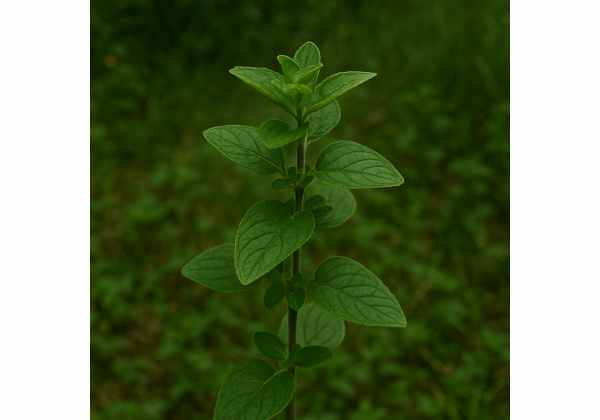
Oregano, or Origanum vulgare, is one of those herbs that people think they already know because it is so familiar in the kitchen. Yet medicinal oregano is more than a pizza seasoning. It is a traditional European and Mediterranean herb with a long history of use for digestion, colds, coughs, and general protection against spoilage and infection. Its leaves contain aromatic oils and polyphenols that give the plant its sharp scent, warm bitterness, and much of its biological activity.
Modern interest in oregano focuses on compounds such as carvacrol, thymol, rosmarinic acid, and related antioxidants. These help explain why oregano is often discussed for antimicrobial, antioxidant, digestive, and soothing respiratory effects. At the same time, the form matters enormously. Dried oregano leaf in food, oregano tea, oregano extract, and oregano essential oil are not equivalent in strength or safety.
That distinction shapes everything that follows. Oregano can be a valuable culinary herb and a useful traditional remedy, but its benefits are most reliable when the preparation is chosen carefully and its concentrated forms are treated with respect.
Quick Overview
- Oregano may support digestive comfort and provide meaningful antioxidant compounds as part of regular meals.
- Properly selected oregano preparations may offer mild antimicrobial and upper-respiratory support in traditional use.
- A common tea range is about 1 to 3 g dried oregano leaf per cup, up to 2 or 3 times daily.
- Pregnant people, breastfeeding mothers, and anyone considering oral essential oil use should be especially cautious.
- People with mint-family allergies or those taking blood thinners or diabetes medicines should avoid casual high-dose use.
Table of Contents
- What oregano is and why the form matters
- Key ingredients in Origanum vulgare
- Potential health benefits and what the evidence actually supports
- Traditional medicinal properties and common uses
- How to use oregano as food, tea, extract, and essential oil
- Dosage, timing, and common mistakes
- Safety, side effects, interactions, and who should avoid it
What oregano is and why the form matters
Oregano is a perennial aromatic herb in the mint family, Lamiaceae. Botanically, Origanum vulgare includes several subspecies and chemotypes, which helps explain why one oregano product may smell sweet and floral while another smells hot, sharp, and almost medicinal. The plant grows naturally across Europe, the Mediterranean, and western Asia, and it has spread widely through cultivation because it works so well as both a culinary and medicinal herb.
The familiar kitchen form is the dried leaf. This is what most people sprinkle over sauces, roasted vegetables, beans, and meat dishes. In that form, oregano behaves mainly as a food herb. It contributes aroma, flavor, and a modest intake of plant compounds, but it is not especially aggressive or risky. Medicinal discussions become more serious when oregano is prepared as a tea, tincture, standardized extract, or essential oil.
That difference is central. Oregano leaf contains volatile oils, but oregano essential oil is a concentrated distillation of those volatile compounds. A few drops of essential oil can equal a large amount of plant material. This is why people sometimes make the mistake of treating oil as if it were simply “strong tea.” It is not. It is much more potent, more irritating, and more likely to cause problems if taken casually or used undiluted.
Another reason form matters is that oregano is not just one thing chemically. Some preparations emphasize volatile oils like carvacrol and thymol. Others preserve more water-soluble and alcohol-soluble phenolics such as rosmarinic acid and flavonoids. A tea, for example, gives you a different profile than a distilled essential oil. A leaf extract differs again.
Oregano also sits in a family of herbs with overlapping chemistry and uses. That is why people often compare it with marjoram and its gentler culinary profile. Both are aromatic Mediterranean herbs, yet oregano usually tastes more forceful and tends to attract more interest for concentrated oil use.
For practical decision-making, it helps to divide oregano into four levels:
- Culinary leaf, used routinely in food
- Tea or infusion, used more intentionally
- Extracts or tinctures, used medicinally
- Essential oil, used most cautiously
Once that framework is clear, oregano becomes easier to understand. It is not a mysterious miracle herb. It is a familiar plant with a long traditional record, a meaningful but uneven evidence base, and a safety profile that changes sharply depending on concentration. Most misinformation about oregano begins when that last point is ignored.
Key ingredients in Origanum vulgare
The phrase “key ingredients” is especially useful with oregano because its health reputation comes from a recognizable chemical pattern. The best-known constituents are carvacrol and thymol, two phenolic monoterpenes that give oregano much of its warm, penetrating aroma and much of the antimicrobial attention it receives. These compounds are present in varying amounts depending on species, subspecies, origin, growing conditions, and harvest stage.
Carvacrol is often the dominant compound in oregano essential oil, especially in stronger chemotypes. It is frequently discussed in relation to antibacterial, antifungal, antioxidant, and membrane-active effects in laboratory studies. Thymol is closely related and shares some of those actions. Together, they help explain why oregano has long been used in both food preservation and traditional remedies for infections and digestive upset.
Beyond these headline compounds, oregano contains a wider phytochemical network:
- Rosmarinic acid
- Caffeic acid and related phenolic acids
- Flavonoids such as luteolin, apigenin, quercetin, and their glycosides
- Terpenes such as p-cymene and gamma-terpinene
- Tannins and other polyphenols
- Small amounts of vitamins and minerals when used as a food herb
Rosmarinic acid deserves special attention because it connects oregano to the broader Lamiaceae family’s antioxidant identity. It contributes to free-radical scavenging and may help explain some of oregano’s soothing and anti-inflammatory reputation. Readers who know thyme’s thymol and carvacrol-rich profile will notice clear overlap here. The same family resemblance shows up in aroma, flavor, and many traditional uses.
Chemistry also changes with preparation. An essential oil captures volatile compounds but leaves behind many water-soluble constituents. A tea pulls a more balanced but milder profile. Alcohol extracts can recover a broader range of compounds than plain water. This means the “active” oregano in one product is not always the same oregano in another.
The practical takeaway is that oregano does not have one single active molecule that defines it. It works more like a compound ensemble. The essential oil fraction contributes pungency and antimicrobial intensity. The nonvolatile polyphenols contribute antioxidant and broader phytochemical depth. The leaf as a food provides the mildest version of the whole picture.
That complexity is one reason oregano remains relevant. It is potent enough to matter, but chemically diverse enough that it can function as food, tea, extract, topical preparation, and aromatic oil. It also explains why strong claims need context. A lab study on isolated carvacrol is interesting, but it is not the same as eating dried oregano on vegetables or drinking oregano tea for a cold. The chemistry overlaps, but the real-world exposure does not.
Potential health benefits and what the evidence actually supports
Oregano has a strong reputation, but the evidence is not equally strong for every claimed benefit. The most responsible way to look at it is by separating traditional plausibility, laboratory evidence, and human clinical evidence.
The most convincing area is antimicrobial potential. Oregano essential oil and oregano-rich extracts show broad activity in laboratory studies against bacteria, fungi, and some biofilms. That is a real and recurring finding. It helps explain oregano’s historical use in food preservation, oral care, wound support, and infection-focused folk medicine. But laboratory activity does not automatically mean the same effect will occur safely in the human body after casual oral use. Concentration, delivery, tissue exposure, and tolerability all matter.
A second plausible benefit is antioxidant support. Oregano contains polyphenols and aromatic compounds that can help neutralize oxidative stress in test systems. As a food herb, this likely contributes modestly to the overall antioxidant value of meals. In that sense, oregano resembles rosemary’s broader antioxidant culinary role: small amounts used regularly may matter more than occasional large doses.
A third area is digestive comfort. Traditional oregano tea has been used for gas, heaviness after meals, and mild digestive sluggishness. Its bitterness, warming aroma, and volatile oils make this easy to understand from a traditional herbal perspective. Human trials are limited, but this is one of the most practical uses because it matches how people actually consume the herb.
Respiratory support is another common claim. Oregano tea, steam inhalation traditions, and aromatic preparations have been used for coughs, colds, and sinus discomfort. Modern human evidence is still limited, but oregano does appear in some rhinosinusitis literature, where it has shown promise in selected settings with low-certainty evidence. That supports cautious interest, not overstatement.
There is also modest human evidence for topical wound-related use. A small randomized trial using oregano extract ointment found reduced bacterial contamination and some improvements in scar-related features after minor surgical wounds. That does not prove that oregano is a universal wound therapy, but it does show that topical use is more than pure folklore.
What the evidence does not support is a sweeping claim that oregano cures infections, replaces antibiotics, treats cancer, or should be swallowed as an undiluted essential oil. Those are the kinds of claims that turn a useful herb into a misleading one.
A practical ranking of support looks like this:
- Strongest support for antimicrobial and antioxidant activity in preclinical work
- Reasonable traditional support for digestive and upper-respiratory use
- Limited but interesting human evidence in selected topical and sinus-related settings
- Weak support for broad disease-treatment claims
That ranking matters because it keeps oregano in the right lane. It is a useful medicinal herb and an excellent culinary one, but it works best as supportive care, not as a substitute for professional treatment when symptoms are serious.
Traditional medicinal properties and common uses
Traditional oregano use is broad, but it is not random. Across Mediterranean and European folk practice, the herb was repeatedly associated with digestion, warmth, preservation, cleansing, and respiratory relief. Those themes make sense when you consider its chemistry and flavor: oregano is aromatic, slightly bitter, drying, warming, and penetrating.
In household medicine, oregano was commonly used as:
- A tea for colds, coughs, and sore throats
- A warming infusion for indigestion, bloating, or sluggish digestion
- A gargle or rinse for mild mouth and throat discomfort
- A topical ingredient in salves, washes, or compresses
- A preservative herb in foods rich in fat or moisture
This is one of those herbs that sits naturally between kitchen and apothecary. A pot of oregano tea for winter congestion is easy to imagine because it does not require a sharp separation between “food” and “medicine.” That overlap is one reason oregano has endured as a home remedy. It feels familiar enough for self-care, but active enough to seem purposeful.
Its medicinal properties are usually described in the following terms:
- Antimicrobial
- Antioxidant
- Carminative, meaning it may ease gas and digestive discomfort
- Mildly expectorant or respiratory-supportive in traditional use
- Topically cleansing when diluted and properly prepared
At the same time, it is important to avoid projecting modern internet claims back onto older traditions. People historically used oregano for ordinary discomforts, minor infections, and seasonal complaints. They did not treat it as a universal cure-all. The herb’s traditional value came from repeated usefulness in common situations, not from dramatic promises.
Oregano also shares a pattern common to many mint-family herbs: it can be both stimulating and comforting. Its scent lifts the senses, while its tea can feel settling after meals or during a mild cold. This is part of why it is often grouped alongside sage in traditional aromatic tea use, though sage has a more astringent and distinctly bitter personality.
Berry-like fruit or root remedies are not part of oregano’s story. Its medicinal value lives mainly in the leaves, flowering tops, and essential oil. That is another practical point. When people buy “oregano products,” the useful question is not just “what brand?” but also “what plant part and what preparation?”
Traditional use, then, gives us a helpful map. Oregano is best understood as a classic aromatic herb for digestion, minor respiratory discomfort, topical cleansing, and food-based health support. Modern science has validated parts of that map, especially its antimicrobial chemistry, but the old pattern remains surprisingly relevant. Oregano is still most believable when used in the kinds of everyday problems for which traditional herbalists reached for it in the first place.
How to use oregano as food, tea, extract, and essential oil
Using oregano well means matching the form to the purpose. This is where many people go wrong. They hear that oregano is “good for immunity” or “natural antimicrobial,” and they jump straight to essential oil. In reality, the gentler forms are often the more sensible starting point.
As a food herb, oregano is easy to use and generally low risk. Dried leaf can be added to tomato dishes, lentils, chickpeas, roasted vegetables, olive oil dressings, marinades, soups, and egg dishes. This is the best way to get consistent, low-level exposure to oregano’s aromatic compounds while also making meals more flavorful. Food use is especially appropriate if your aim is general wellness, not self-treatment.
Oregano tea is the next step up. A simple infusion can be useful when the goal is digestive comfort, a warming drink during a cold, or mild throat and sinus support. Tea also respects the herb’s tradition. It extracts part of the plant’s chemistry without the intensity of essential oil. People who enjoy aromatic herbal beverages sometimes alternate it with peppermint for digestive and respiratory comfort, depending on whether they want a warmer or cooler flavor profile.
Tinctures and extracts make sense when someone wants a more portable or consistent preparation. These can be useful, but quality varies. Since oregano products differ widely in leaf content, extraction solvent, and oil concentration, label clarity matters.
Essential oil is the most concentrated form and deserves the most caution. It can be used topically only when diluted and only on appropriate skin areas. Some people also use it in steam or aromatherapy settings, though sensitivity varies and strong vapor can irritate some users. Undiluted use on skin, mouth, or mucous membranes is a common mistake.
A practical use guide looks like this:
- Use dried oregano in food for regular, low-risk exposure.
- Use tea when you want short-term digestive or seasonal support.
- Use extracts if you want convenience and a product designed for medicinal use.
- Treat essential oil as a specialized preparation, not as a casual daily supplement.
For tea, steep dried oregano leaf in hot water and drink it warm. For topical use, any essential oil preparation should be diluted first and patch-tested on a small area. For inhalation, lower intensity is usually wiser than aggressive exposure.
The smartest rule is this: use the least concentrated form that fits your goal. That advice sounds simple, but it prevents a great deal of irritation, disappointment, and overuse. Oregano is useful precisely because it works across a range of preparations. There is no reason to start at the strongest end unless there is a clear, specific reason and the safety context is sound.
Dosage, timing, and common mistakes
Oregano dosage depends entirely on the form. There is no single universal number that fits dried herb, tea, tincture, extract, and essential oil. The safest and most realistic approach is to dose the preparation, not the plant name.
For tea, a common traditional range is about 1 to 3 g of dried oregano leaf per cup of hot water, taken up to 2 or 3 times daily for short periods. This is a practical, conservative range that suits mild digestive or seasonal respiratory use. People sensitive to strong herbal teas may prefer to start at the lower end.
For culinary use, dosage is not really medicinal in the formal sense. About 1 to 2 teaspoons of dried oregano in a meal, or the fresh equivalent, is a reasonable food amount. This is best thought of as a daily wellness practice rather than a therapeutic dose.
For tinctures and extracts, labeled dosing varies substantially. That is why following the manufacturer’s directions is more appropriate than inventing a generic number. A quality extract may standardize certain compounds, while another product may simply concentrate dried leaf without meaningful standardization.
Essential oil is where the greatest confusion appears. Oral self-dosing is the most common mistake. Some people assume that a few drops taken by mouth every day is an effective shortcut. In reality, oregano essential oil is concentrated, irritating, and poorly suited to casual unsupervised internal use. It is not the same as swallowing a strong herb tea. Without product-specific guidance and a good reason, oral essential oil use is hard to justify.
Timing is usually straightforward:
- Take oregano tea after meals for digestive use
- Use it warm during colds or throat discomfort
- Use food forms regularly rather than in large bursts
- Use topical preparations only as needed, not automatically every day
The most frequent mistakes include:
- Confusing dried oregano leaf with essential oil
- Taking undiluted oregano oil by mouth
- Applying essential oil directly to skin or mucous membranes
- Using several oregano products at once and losing track of total exposure
- Expecting oregano to work like an antibiotic
- Escalating the dose when results are not immediate
Another subtle mistake is using oregano too intensely for too long when the actual problem needs diagnosis. A week of oregano tea for a simple cold is one thing. Repeated self-treatment of severe reflux, persistent cough, or recurrent sinus pain is another.
The best dosing mindset is modest, form-specific, and goal-specific. Start low, use the mildest effective preparation, and do not chase dramatic effects. Oregano can be quite helpful when used appropriately, but it is rarely improved by excess. With aromatic herbs, thoughtful use almost always outperforms force.
Safety, side effects, interactions, and who should avoid it
Oregano used as a food herb is generally well tolerated. Most people can eat dried or fresh oregano in normal culinary amounts without meaningful safety concerns. Problems become more likely when the herb is concentrated into strong extracts, essential oil capsules, or undiluted topical applications.
The most common side effects are fairly predictable:
- Stomach irritation or nausea
- Burning or discomfort with strong oral products
- Skin irritation or sensitization from essential oil
- Allergic reactions in people sensitive to mint-family plants
- Eye and mucous-membrane irritation from accidental contact with oil
Essential oil is the main safety issue. It can irritate the skin, mouth, throat, and stomach, especially if used undiluted. This is why oregano oil should not be treated like a harmless household shortcut. A concentrated aromatic oil has a very different safety profile from dried leaf or tea.
Who should be especially cautious or avoid medicinal use?
- Pregnant people, because higher-dose medicinal use is not well established as safe
- Breastfeeding mothers, because safety data are limited for amounts above food use
- Infants and young children, especially with essential oil use
- People with known allergies to Lamiaceae herbs such as mint, basil, marjoram, thyme, or sage
- Anyone with active gastritis, reflux sensitivity, or a tendency toward stomach irritation
- People taking medicines with bleeding, blood sugar, or blood pressure implications
The interaction picture is not as firmly defined as it is for some herbs, but caution is still wise. Concentrated oregano products may have additive effects with anticoagulants, antiplatelet drugs, diabetes medicines, or other strong botanicals. This is partly because aromatic herbs and oils can affect multiple systems at once, and partly because high-dose supplement use is less studied than food use. The same caution makes sense for people already combining oregano with garlic and other circulation-active herbs.
Another overlooked point is that “natural antimicrobial” does not equal “microbiome friendly at any dose.” Strong essential oils are biologically active precisely because they can disrupt microbial life. That does not mean they are harmful in every context, but it is another reason not to use them indiscriminately.
A few practical safety rules cover most situations:
- Keep food use and medicinal use separate in your mind.
- Do not ingest essential oil casually.
- Never use undiluted oregano oil on skin or mucous membranes.
- Stop use if rash, wheezing, intense burning, or worsening symptoms appear.
- Seek medical care for high fever, chest pain, severe shortness of breath, spreading infection, or symptoms that persist despite self-care.
Oregano is a worthwhile herb, but it is not a trivial one. In food amounts it is easygoing. In concentrated forms it is pharmacologically active enough to deserve caution. That balance is the key to using it well.
References
- Chemical Composition, Biological Activity, and Potential Uses of Oregano (Origanum vulgare L.) and Oregano Essential Oil 2025 (Review)
- Chemical Composition, and Antioxidant and Antimicrobial Activity of Oregano Essential Oil 2024
- Oregano 2024 (Safety Review)
- Herbal Medicines for Rhinosinusitis: A Systematic Review and Network Meta-analysis 2023 (Systematic Review)
- Oregano extract ointment for wound healing: a randomized, double-blind, petrolatum-controlled study evaluating efficacy 2011 (RCT)
Disclaimer
This article is for educational purposes only and is not a diagnosis, treatment plan, or substitute for medical advice. Oregano in food is usually well tolerated, but concentrated oregano products, especially essential oil, can irritate the skin and digestive tract and may not be appropriate during pregnancy, breastfeeding, childhood, or when prescription medicines are involved. Persistent infection symptoms, severe pain, breathing problems, chest symptoms, or worsening illness should be evaluated by a qualified healthcare professional rather than self-treated with herbs alone.
If this guide was useful, please share it on Facebook, X, or another platform you prefer so more readers can find careful, practical information about oregano.