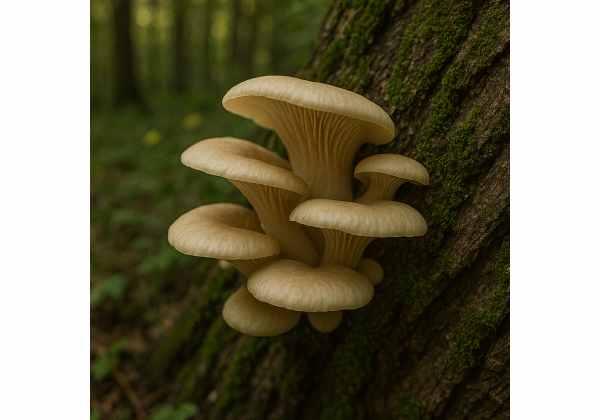
Oyster mushroom, Pleurotus ostreatus, is not an herb in the classic botanical sense but an edible medicinal fungus with an unusually strong bridge between kitchen use and functional nutrition. It is prized for its mild flavor, soft texture, and ability to carry savory dishes, yet its appeal goes well beyond cooking. Oyster mushroom contains beta-glucans, ergothioneine, phenolic compounds, ergosterol, fiber, and a range of minerals and B vitamins that help explain its growing reputation in metabolic, immune, and antioxidant research.
What makes it especially compelling is that it can be used as both food and supplement. Whole mushrooms appear in soups, stir-fries, and roasts, while dried powders and extracts are used in more targeted wellness routines. Research is most promising for cardiometabolic support, especially blood lipids, post-meal metabolism, and glycemic control, though the quality of evidence still varies by outcome.
In practical terms, oyster mushroom is best viewed as a nutrient-dense food with medically interesting compounds, not a miracle cure. Used wisely, it can be a meaningful part of a broader health strategy.
Core Points
- May support healthier triglycerides, cholesterol balance, and post-meal metabolic responses.
- Provides beta-glucans, ergothioneine, fiber, and antioxidant compounds with prebiotic and immune-related potential.
- Studied intakes often range from 150 to 200 g cooked mushroom daily or about 10 to 20 g dried powder daily.
- People with mushroom allergy, prior reaction to oyster mushrooms, or occupational spore exposure should avoid supplemental use.
Table of Contents
- What Oyster Mushroom Is and What It Contains
- Key Compounds and Why They Matter
- Health Benefits and Where the Human Evidence Is Strongest
- Medicinal Properties and How Oyster Mushroom Works
- How Oyster Mushroom Is Used as Food, Powder, and Extract
- Dosage, Preparation, and What to Expect
- Safety, Side Effects, and Who Should Be Cautious
What Oyster Mushroom Is and What It Contains
Oyster mushroom is one of the most widely cultivated edible fungi in the world. It grows in layered, shell-like clusters and is valued for its tender texture, mild umami taste, and ability to grow on agricultural byproducts. That agricultural flexibility partly explains its popularity, but the more interesting story is nutritional. Unlike many trendy “superfoods,” oyster mushroom is not just exotic or visually appealing. It is a practical food with a nutrient pattern that makes sense in everyday diets.
Fresh oyster mushrooms are mostly water, so their calorie load is modest. Once cooked, they contribute fiber, some protein, low fat, and a notable set of bioactive compounds. They are not a protein replacement for legumes or fish gram for gram, but they do add more than just flavor. They also offer B vitamins, trace minerals, and non-nutrient compounds that may influence inflammation, gut ecology, and cardiometabolic function.
A useful way to think about oyster mushroom is as three foods in one:
- A culinary ingredient with excellent texture and low energy density.
- A functional food that supplies fiber and mushroom-derived polysaccharides.
- A raw material for powders and extracts used in supplement form.
That distinction matters because a pan of sautéed mushrooms is not the same thing as a capsule, and neither is the same as a dried powder blended into soup. The form changes concentration, dose, and expectations.
Its nutritional profile also depends on growing and handling conditions. Strain, substrate, drying method, and postharvest processing can all change fiber levels, antioxidant activity, and bioactive concentration. Even vitamin D content can vary. Mushrooms naturally contain ergosterol, which can be converted into vitamin D2 when exposed to ultraviolet light. So when people talk about oyster mushroom as a vitamin D food, the fuller truth is that UV exposure strongly affects that outcome. Readers who want broader context on that nutrient can compare it with vitamin D basics and dosing.
Another important point is that oyster mushroom sits in a different category from most medicinal mushrooms marketed online. It is commonly eaten as food first and “medicinal” second. That gives it a practical advantage. Many people can use it regularly without building an entire supplement routine around it.
The simplest way to summarize the mushroom is this: oyster mushroom is a low-calorie, fiber-containing, compound-rich food that may support health best when treated as part of a pattern. It deserves attention not because it is magical, but because it is unusually useful for something that can also go straight into dinner.
Key Compounds and Why They Matter
The health interest around oyster mushroom is driven less by one star ingredient than by a network of compounds that work in different ways. Some support its value as food, while others explain why researchers keep testing it in cardiometabolic, immune, and oxidative stress models.
The best-known compounds are beta-glucans. These are structural polysaccharides in the mushroom cell wall and one of the main reasons oyster mushroom is discussed as a functional food. In broad terms, beta-glucans can influence gut viscosity, microbiota activity, cholesterol handling, and immune signaling. Mushroom beta-glucans are not identical to oat beta-glucans, but they belong to the same wider family of biologically active fibers. For readers who want the bigger picture, a focused beta-glucan guide helps explain why these molecules matter so much.
Oyster mushroom also contains ergothioneine, a sulfur-containing antioxidant compound found in especially high amounts in mushrooms. Ergothioneine has attracted attention because it appears to accumulate in human tissues that are vulnerable to oxidative stress. That does not mean eating oyster mushrooms guarantees protection from chronic disease, but it does strengthen the case for their inclusion in health-focused diets.
Other important compounds include:
- Ergosterol, a fungal sterol that can convert to vitamin D2 with UV exposure.
- Phenolic acids and flavonoids, which contribute to antioxidant potential.
- Lovastatin-like compounds, sometimes discussed in the literature as one reason lipid effects are plausible.
- Peptides and other small molecules that may influence angiotensin-converting enzyme activity and oxidative balance.
- Fiber and prebiotic substrates that may shape the gut environment.
What is especially useful about this chemistry is that it supports several different lines of action at once. Beta-glucans may help with lipid handling and immune signaling. Ergothioneine may help with oxidative stress balance. Phenolics may support antioxidant activity. Ergosterol contributes nutritional interest. Together, these compounds make oyster mushroom more than just a low-calorie vegetable substitute.
Still, composition is not fixed. A mushroom grown on one substrate, dried one way, and stored carefully may not match another product on the shelf. This is one reason supplement claims often outrun the evidence. A company may advertise “rich in beta-glucans,” but the actual amount can vary unless the product is measured and standardized.
It is also worth resisting the temptation to treat every compound as clinically proven. Oyster mushroom chemistry is impressive, but chemistry is not the same thing as human outcome data. A food can contain intriguing molecules and still have modest real-world effects. That is why the strongest approach is to see the compounds as signals of potential, not automatic proof.
In practical terms, the key ingredients make oyster mushroom especially interesting for people focused on metabolic health, gut support, and nutrient density. They also explain why powders and extracts are now common. But the mushroom’s chemistry is most honest and most useful when paired with realistic expectations.
Health Benefits and Where the Human Evidence Is Strongest
The most credible benefits of oyster mushroom are not evenly distributed across all health claims. Some are supported by human trials, though often small or methodologically limited. Others remain mostly preclinical. That difference matters because oyster mushroom is often marketed in a way that makes all claims sound equally solid.
The strongest human interest is cardiometabolic. Clinical studies summarized in systematic review form suggest that oyster mushroom may help improve fasting glucose, post-meal glucose, triglycerides, total cholesterol, and in some cases blood pressure. The pattern is promising, but the quality of evidence is not yet strong enough to justify sweeping promises. Many studies are small, old, or have design weaknesses. A careful reader should therefore translate the evidence this way: helpful potential, not settled certainty.
A second promising area is post-meal metabolism. In one controlled meal study, oyster mushroom powder improved some short-term markers such as GLP-1 response and non-esterified fatty acid handling, though not every metabolic endpoint moved. That kind of result is useful because it shows the mushroom may influence physiology in measurable ways, even when the effect is not dramatic.
Potential benefits commonly discussed for oyster mushroom include:
- Support for healthier triglycerides and total cholesterol.
- Modest support for fasting or postprandial glucose control.
- Greater satiety or hunger regulation in some contexts.
- Prebiotic and gut-supportive effects tied to fiber and polysaccharides.
- Antioxidant support through ergothioneine and phenolic compounds.
Where evidence gets weaker is immune enhancement in humans. The biology is plausible, especially because mushroom beta-glucans can interact with immune pathways, but direct clinical proof for everyday immune outcomes is still less developed than the marketing suggests. The same is true for cancer-related claims. Oyster mushroom contains compounds with immunomodulatory and antiproliferative promise in laboratory and animal models, but that is very different from proving it prevents or treats cancer in people.
This is where comparison helps. People often place oyster mushroom in the same mental category as concentrated medicinal mushrooms such as shiitake for immune and cardiometabolic support, yet species, study quality, and traditional use are not interchangeable. Oyster mushroom is best supported as a nutritious edible fungus with promising metabolic and functional-food value, not as a clinically established disease treatment.
A practical evidence hierarchy for oyster mushroom looks like this:
- Best supported: nutrient density and food-based cardiometabolic support.
- Moderately supported: post-meal metabolic effects and gut-related benefits.
- Promising but still early: antioxidant, immune-modulating, and anti-inflammatory effects.
- Mostly preclinical: anticancer and disease-specific therapeutic claims.
That is still a meaningful profile. A food does not need to be a drug to be valuable. In fact, one of oyster mushroom’s biggest strengths is that its benefits appear most credible in the context where people can actually use it: as a regular food or measured powder, added consistently to an overall healthy pattern.
Medicinal Properties and How Oyster Mushroom Works
When writers describe oyster mushroom as having “medicinal properties,” they usually mean it shows biologically active effects that could influence pathways tied to health. The most relevant terms are hypolipidemic, glycemia-supportive, prebiotic, antioxidant, and immunomodulatory. Those labels can sound technical, but each corresponds to a practical question people care about.
Hypolipidemic means the mushroom may help improve lipid handling. Researchers think this may happen through more than one route. Beta-glucans can reduce intestinal reabsorption of bile acids and cholesterol. Mushroom fiber may support fecal excretion of lipids. Some studies also point to lovastatin-like compounds and short-chain fatty acid production as possible contributors. That does not mean oyster mushroom acts like a statin prescription, but it helps explain why lipid-related outcomes appear repeatedly in the research.
Glycemia-supportive refers to effects on blood sugar regulation. Several mechanisms have been proposed:
- Slower carbohydrate absorption due to fiber and polysaccharide effects.
- Better insulin sensitivity in experimental models.
- Changes in gut-derived hormonal signaling after mushroom intake.
- Reduced post-meal metabolic stress in some human settings.
Prebiotic is another important term. Oyster mushroom fiber and polysaccharides may help feed beneficial gut microbes. This matters because microbiota balance affects far more than bowel regularity. It is linked with metabolic health, immune signaling, and inflammatory tone. The mushroom may therefore work partly through the gut rather than through direct absorption of a single magic compound.
Its antioxidant properties are also central. Ergothioneine, phenolics, and related molecules help explain why the mushroom is studied in oxidative stress contexts. Oxidative damage is not a disease by itself, but it is involved in many chronic disorders. Foods that help buffer this burden can have cumulative value over time even if their effect feels invisible day to day.
Immunomodulatory is perhaps the most misunderstood term. It does not mean “boosts immunity” in a simple linear way. Rather, it suggests the mushroom may influence how immune cells communicate and respond. That is a more balanced and biologically plausible way to understand mushroom effects. For readers comparing food mushrooms with more extract-centered traditions, reishi’s supplement-focused profile offers a useful contrast. Oyster mushroom is closer to food-first functional support than to a classic tonic extract.
One subtle but important point is that oyster mushroom may work differently depending on form. Whole mushrooms deliver fiber, texture, water, and a food matrix that affects digestion and satiety. Powders concentrate dry matter and can fit research-style dosing. Extracts may highlight particular compounds but can also drift away from how people normally eat the mushroom. So when asking how it works, the better question is often: which preparation are we talking about?
That perspective keeps the medicinal discussion grounded. Oyster mushroom appears to work through multiple small mechanisms that may add up over time. Its effects are likely broader and gentler than a pharmaceutical, yet more meaningful than an ordinary garnish. That is the sweet spot where many functional foods live.
How Oyster Mushroom Is Used as Food, Powder, and Extract
Oyster mushroom is unusually flexible because it works well in the kitchen and also adapts easily to wellness-style preparations. That flexibility is part of its appeal, but it also creates confusion. Many people assume every form offers the same effects, when in reality the experience and likely outcome can be quite different.
As food, oyster mushroom is typically sautéed, roasted, grilled, braised, or added to soups and stir-fries. Its texture is tender but slightly meaty, which makes it useful in mixed dishes and plant-forward meals. In food form, the mushroom’s main strengths are nutrient density, low calorie load, culinary versatility, and repeatable use. This is also the form most consistent with long-term dietary patterns.
Dried powder is more concentrated and often used in soups, broths, smoothies, savory oats, or fortified meals. Powder is especially practical for people who want more predictable intake without eating large volumes of fresh mushrooms every day. It is also the form used in some human studies, which makes it a good bridge between research and daily practice.
Extracts and capsules are the most “medicinal” form, but also the most variable. Some are hot-water extracts designed to emphasize polysaccharides. Others are simple mushroom powders packed into capsules. These are not interchangeable products. A label that says “oyster mushroom” does not automatically tell you whether you are getting food powder, concentrated extract, or a blend with additional ingredients.
Common real-world uses include:
- Adding cooked oyster mushrooms to two or three meals per week for nutrient variety.
- Using dried powder in soups or meal fortification when targeting regular intake.
- Choosing extracts when convenience matters more than culinary use.
- Using UV-exposed mushroom products when vitamin D2 contribution is part of the goal.
One practical advantage of the food form is compliance. People often stick with mushrooms more easily than with a long supplement list. Another is synergy. Oyster mushrooms fit naturally with garlic, herbs, legumes, eggs, grains, and lean proteins, which makes them easier to build into a cardiometabolic-friendly eating pattern.
Still, there are common mistakes. One is assuming a supplement is always stronger or better than food. Another is buying a capsule without knowing whether it is standardized or simply dried mushroom. A third is expecting an extract to replace overall diet quality. Oyster mushroom works best as an addition, not as nutritional camouflage for the rest of a poor routine.
This is also where comparison with other mushrooms becomes useful. Some mushrooms are more commonly used as concentrated supplements for immune-focused routines, such as turkey tail in extract-based immune support. Oyster mushroom often makes more sense when you want a researched food that can also scale into powder or capsules if needed.
In short, oyster mushroom can be used casually or strategically. The best choice depends on whether your goal is taste, regular nutrient intake, a study-like dose, or convenience. Matching the form to the goal is one of the easiest ways to get more value from it.
Dosage, Preparation, and What to Expect
Unlike a prescription drug, oyster mushroom does not have one formally standardized medical dose. The most useful dosage guidance comes from culinary practice, clinical trials, and supplement labeling interpreted together. That means the right dose depends on the form, the goal, and how consistently you plan to use it.
For food use, a normal serving is often around 75 to 150 g cooked. That is realistic in stir-fries, soups, grain bowls, or mushroom-forward side dishes. In clinical settings, however, studied amounts have often been higher. Several small trials used about 150 to 200 g fresh mushrooms daily, while others used dried or lyophilized powder in the 10 to 30 g per day range. A shorter crossover trial used 20 g dried powder in a single meal. Smaller intakes such as 3 g per day of powder have also been studied, but results tend to be less consistent.
A practical way to think about dosage is this:
- General food use: 1 standard serving several times per week.
- More intentional dietary use: 100 to 150 g cooked on most days.
- Study-style powder use: about 10 to 20 g dried powder daily.
- Higher research doses: up to 30 g dried powder daily in selected trials.
Preparation also changes the experience. Fresh mushrooms shrink a great deal during cooking, so a generous raw portion may become a modest cooked serving. Dry powders are far more concentrated by weight. A tablespoon or two can represent a meaningful amount of mushroom solids.
For better tolerability and usefulness:
- Cook fresh mushrooms thoroughly rather than eating them in large raw amounts.
- Start modestly if using powder, especially if you are sensitive to fiber-rich foods.
- Use daily intake for a period of weeks if your goal is metabolic support, since one serving is unlikely to transform lab values overnight.
- Keep expectations appropriate. Improvements, when they happen, are often modest and gradual.
Timing depends on the goal. If you are using oyster mushroom as part of glycemic or satiety support, taking it with meals makes the most sense. If you are using it mainly for general nutrition, timing is less important than regularity. Powders used in breakfast or lunch may be easier to maintain consistently than elaborate evening recipes.
For supplements, caution is needed because labels vary widely. Some products list actual mushroom weight, others list extract ratio, and still others highlight polysaccharide content. That means 500 mg of one product may not resemble 500 mg of another. If you want a whole-food style approach, choose plain mushroom powder. If you want concentrated extracts, read the label as carefully as you would with any supplement.
The best expectation is not a dramatic before-and-after moment. Oyster mushroom is more likely to support a trend than cause a sudden shift. Used consistently, especially in food or powder form, it may help nudge metabolic markers in the right direction. Used once in a while, it is still nutritious, but less likely to feel “medicinal.”
Safety, Side Effects, and Who Should Be Cautious
For most healthy adults, oyster mushroom is safe as a food. That is its biggest advantage over many supplement trends. Still, “safe as food” is not the same as “risk-free in every form and every person.” The main concerns are allergy, gastrointestinal tolerance, concentrated supplement use, and the possibility of additive effects with some medicines.
Allergy is the clearest serious risk, even though it is uncommon. Oyster mushroom can trigger reactions through ingestion and, in occupational settings, through inhalation of spores. That matters especially for growers, processors, and people with a prior mushroom reaction. Rare case reports include anaphylaxis and work-related respiratory allergy, which is enough reason to take symptoms seriously.
Digestive effects are more common and less dramatic. Because oyster mushroom contains fiber, chitin-rich cell walls, and fermentable substrates, some people notice bloating, fullness, or mild stomach upset when they increase intake quickly. Powders may cause this more easily than small portions of cooked mushrooms simply because the dose is denser.
People who should use more caution include:
- Anyone with a known mushroom allergy or prior reaction to oyster mushrooms.
- Workers with repeated spore exposure in indoor cultivation settings.
- People taking glucose-lowering, blood pressure, or lipid-lowering medicines who want to use high supplemental doses.
- Individuals with very sensitive digestion who do not tolerate concentrated fibers well.
- Pregnant or breastfeeding people considering extracts rather than normal food use.
Medication interactions are not as well mapped as many supplement pages imply. There is no strong evidence that ordinary culinary use creates major interaction problems, but concentrated products deserve more thought. Since oyster mushroom may influence glucose, lipids, and blood pressure in some users, it is sensible to monitor if you are already taking medications for those same targets. The concern is not that a serving of mushrooms will replace your prescription. It is that layered effects can sometimes go unnoticed.
Another practical point is preparation quality. Spoiled mushrooms, poorly stored powders, or contaminated products create problems unrelated to the mushroom itself. Fresh oyster mushrooms should smell mild and earthy, not sour or slimy. Powders should come from reputable companies with clear labeling.
One more safety principle is worth stating plainly: oyster mushroom is supportive, not curative. If someone has uncontrolled diabetes, chest pain, marked weight loss, persistent gastrointestinal symptoms, or severe allergic signs, a mushroom supplement is not the appropriate main response. Food-based tools can support health, but they should not distract from proper diagnosis and treatment.
Taken in that realistic frame, oyster mushroom has a good safety profile. Most people do well with it as a food. The main risks emerge when a real allergy is present, when dose becomes concentrated, or when natural-health enthusiasm starts to outrun common sense.
References
- Pleurotus Mushrooms in Nutrition and Health: Clinical and Preclinical Insights for Nutraceutical Development 2025 (Review)
- Effect of the Intake of Oyster Mushrooms (Pleurotus ostreatus) on Cardiometabolic Parameters—A Systematic Review of Clinical Trials 2020 (Systematic Review)
- Fortifying a meal with oyster mushroom powder beneficially affects postprandial glucagon-like peptide-1, non-esterified free fatty acids and hunger sensation in adults with impaired glucose tolerance: a double-blind randomized controlled crossover trial 2021 (RCT)
- Trehalose phosphorylase as a novel potential allergen in a case of allergic reaction due to oyster mushroom (Pleurotus ostreatus) ingestion 2023 (Case Report)
- A case of anaphylactic reaction following oyster mushroom (Pleurotus ostreatus) inhalation 2021 (Case Report)
Disclaimer
This article is for educational purposes only and is not a substitute for medical advice, diagnosis, or treatment. Oyster mushroom is generally safe as a food, but concentrated powders and extracts may not be appropriate for everyone, especially people with mushroom allergy, occupational spore exposure, chronic disease, or prescription medication use. Speak with a qualified healthcare professional before using oyster mushroom supplements for blood sugar, cholesterol, blood pressure, or immune-related goals.
Please share this article on Facebook, X, or any other platform you prefer if you found it helpful.