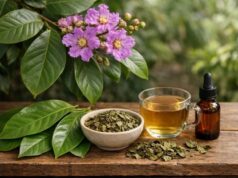
Buchu (Agathosma betulina) is an aromatic South African shrub whose leaves have been used for generations in traditional wellness practices, especially for urinary comfort. The leaves carry a crisp, minty-blackcurrant scent that hints at what makes buchu distinctive: a concentrated blend of volatile oils and bitter plant compounds. Historically, buchu tea and tinctures were taken for “water balance,” bladder irritation, and the general discomfort that can accompany frequent urination. Today it still appears in herbal blends marketed for urinary tract support, and it is also used as a flavor ingredient in foods and fragrances.
Buchu is best understood as a short-term, targeted herb rather than a daily tonic. Its most common benefits are linked to gentle diuretic action, soothing support for urinary tissues, and mild antimicrobial effects shown in laboratory research. Yet the same aromatic oils that make buchu useful can also make it irritating or unsafe at high doses, and concentrated buchu essential oil is not appropriate for internal use. This guide explains what buchu is, what it contains, how people use it, how to dose it cautiously, and who should avoid it.
Core Points for Buchu
- May support urinary comfort and normal urine flow when used short-term.
- Traditionally used for bladder irritation and “water balance,” but not a substitute for antibiotics when needed.
- Typical adult tea range: 1.5–3 g dried leaf per cup, up to 2 cups daily (about 3–6 g/day).
- Avoid concentrated essential oil internally; higher doses can irritate the stomach and may raise liver concerns.
- Avoid if pregnant or breastfeeding, or if you have liver disease, significant kidney disease, or strong sensitivity to aromatic herbs.
Table of Contents
- What is buchu?
- Key ingredients in buchu
- Does buchu help urinary health?
- Benefits beyond the urinary tract
- How to use buchu safely
- Buchu dosage and timing
- Safety, interactions, and evidence
What is buchu?
Buchu is the common name for several closely related plants, but in commerce it most often refers to Agathosma betulina (and sometimes Agathosma crenulata). These shrubs are native to the Western Cape region of South Africa, where they grow in nutrient-poor, acidic soils and sunny, windy conditions. The leaves are small, firm, and oil-gland rich, and when crushed they release a bright, medicinal aroma often described as minty, camphor-like, and blackcurrant-like.
Traditionally, buchu leaves were prepared as a tea (infusion) or as tinctures. In Indigenous and folk traditions, buchu was valued as a practical, everyday plant: used for urinary complaints, digestive discomfort, and as a general “cleansing” herb in the sense of supporting elimination and tissue comfort. In 19th century Western herbalism, buchu became a popular urinary remedy as well, especially before modern antimicrobial therapy was widely available.
It is important to clarify what buchu is not. It is not the same as uva ursi, cranberry, or corn silk—three herbs that often appear in the same category of urinary support. And it is not a “pepper” or culinary spice in the way black pepper is. While buchu can be used as a flavor ingredient, most people encounter it today as dried leaf, capsules, tincture, or in “urinary cleanse” style blends.
You may also see the older name “Barosma,” which appears in some historical texts and labeling. When choosing products, the safest strategy is to look for the exact botanical name (Agathosma betulina) and the plant part (leaf) so you know what you are getting.
A final practical note: with aromatic herbs, quality matters more than many people expect. Poorly stored leaves lose volatile oils and become less active, while overly concentrated extracts can increase side effects without improving outcomes. Buchu works best when it is fresh enough to be aromatic, dosed conservatively, and used for a clear reason rather than as an all-purpose daily habit.
Key ingredients in buchu
Buchu’s effects are largely explained by two overlapping “personalities” in the leaf: a strong aromatic oil fraction and a supportive bitter-polyphenol fraction. The balance between these varies by species, harvest timing, and processing. This variability is why two buchu products can feel quite different, even when both claim to be Agathosma betulina.
Volatile oils
The essential oil fraction is what you smell immediately when you open a bag of dried buchu leaf. These volatile compounds are often discussed in terms of:
- Monoterpenes and related aromatic molecules that contribute to a cooling, penetrating sensation
- Ketone-like aromatic components that can be more irritating at higher exposure
- Minor sulfur-containing aroma notes that contribute to the “blackcurrant-like” character in flavor applications
In practical use, volatile oils are associated with buchu’s “urinary antiseptic” reputation, not because they sterilize the urinary tract in the way an antibiotic does, but because aromatic compounds can influence microbial growth in laboratory settings and may shift local comfort in mild, non-emergency situations.
Flavonoids and phenolic compounds
Beyond aroma, buchu contains polyphenols such as flavonoids and related compounds. Polyphenols are often discussed for antioxidant and inflammation-modulating behavior in many plants. In buchu, these constituents help explain why some users experience more than simple diuretic effects—such as reduced “burny” discomfort or a calmer urinary sensation when irritation is mild and not driven by a serious infection.
Bitters and supportive leaf chemistry
Buchu leaf also has a mild bitter edge. Bitters can support digestion reflexes (salivation and stomach readiness), and they can indirectly support elimination by improving fluid and digestive rhythms. That does not mean buchu is a digestive herb first, but it helps explain why it has historically been used for “stuck” digestion and heaviness alongside urinary complaints.
What these ingredients mean for medicinal properties
When people describe buchu as diuretic, antiseptic, anti-inflammatory, or antispasmodic, they are usually pointing to a blend of effects rather than a single mechanism. A realistic, evidence-aware interpretation is:
- Buchu may encourage urine flow and dilution, which can reduce the intensity of mild irritation.
- Some constituents show antimicrobial activity in lab tests, but this does not guarantee clinical infection cure.
- The combination of aroma and polyphenols may support tissue comfort in a way that feels “cleaner” or less reactive for some people.
If a product is highly concentrated or based on essential oil rather than leaf preparations, the ingredient profile changes dramatically—and so does the safety profile. For most users, the leaf (tea, tincture, or standardized leaf extract) is the most sensible form.
Does buchu help urinary health?
Buchu is most often used for urinary tract comfort in situations that feel irritating but not severe: frequent urination, a “twingy” bladder sensation, or mild discomfort that can follow dehydration, travel, or dietary triggers. Traditionally, buchu was taken when people described the urinary tract as “hot,” “reactive,” or simply uncomfortable. In that context, the goal is supportive: encourage normal urine flow, soothe mild irritation, and help the person return to baseline.
Potential benefits people look for
Common urinary-related reasons people try buchu include:
- Occasional bladder irritation that is not accompanied by fever or severe pain
- Mild urinary urgency, especially when linked to stress, caffeine, or low fluid intake
- A desire for gentle diuretic support during short periods of puffiness or water retention
Some people also try buchu when they suspect an early UTI. This is where clarity matters: supportive herbs may help comfort, but they should not delay appropriate care if infection signs are present.
What realistic outcomes look like
When buchu is a good match, improvements are usually subtle and practical rather than dramatic:
- Urine may feel less concentrated and less irritating due to increased fluid movement
- Mild urgency may calm as the bladder becomes less reactive
- General “urinary awareness” may fade over a few days with hydration and rest
If symptoms are driven by infection, stones, or another medical condition, these supportive changes may be incomplete or temporary.
When buchu is not enough
Seek medical evaluation promptly if any of these apply:
- Fever, chills, nausea, or flank pain
- Blood in urine
- New severe pelvic pain, vomiting, or inability to keep fluids down
- Pregnancy, diabetes, kidney disease, or immunosuppression
- Symptoms that worsen after 24–48 hours or recur frequently
A helpful way to think about herbal urinary support is to separate “soothing and flushing” herbs from “strong antimicrobial” herbs. Buchu sits closer to the soothing and aromatic end for many people. If you are specifically exploring herbal options that are commonly discussed for urinary microbial balance, consider comparing buchu to uva ursi for urinary health support, keeping in mind that stronger antimicrobial-leaning herbs can also come with stricter safety limits.
The safest role for buchu is as a short-term support tool—paired with hydration, avoiding bladder irritants (excess caffeine, alcohol, very spicy foods), and using medical care when red flags appear.
Benefits beyond the urinary tract
Although buchu is best known for urinary support, its traditional use extends into a wider “comfort” category—especially when discomfort blends across systems. Many people notice that urinary irritation often shows up alongside digestive tension, stress, or inflammatory sensitivity. Buchu’s aromatic and polyphenol profile makes it a candidate for mild, short-term support in these overlapping situations, even if urinary comfort remains its primary niche.
Digestive comfort and appetite rhythm
Historically, buchu tea was used for stomach unease, heaviness after meals, and sluggish digestion. A plausible modern interpretation is that the leaf’s mild bitterness can support digestive reflexes, while aromatic compounds may feel calming to the gut when tension is part of the picture. That said, buchu is not typically the first-choice digestive herb because its aromatic oils can irritate sensitive stomachs.
If your main goal is digestive comfort—especially bloating, gas, or cramping—many people prefer gentler aromatics with a stronger digestive tradition, such as peppermint for digestive comfort. Buchu may be more appropriate when digestive unease is paired with urinary irritation and you want a single, simple herb rather than a multi-herb plan.
Water balance and “puffiness”
Buchu is often described as mildly diuretic. In practice, that can mean a temporary increase in urine flow and a subjective reduction in water retention. This is most relevant when puffiness is driven by routine lifestyle factors—high-salt meals, prolonged sitting, travel, or dehydration followed by rehydration.
A key caution: if swelling is persistent, one-sided, painful, or associated with shortness of breath, chest discomfort, or new fatigue, it should be evaluated medically. Diuretic herbs are not an appropriate workaround for serious causes of edema.
Topical and aromatic use
Buchu has also been used externally in traditional settings, often as aromatic washes or in blends intended to refresh skin. Modern topical use is less common, and concentrated essential oil can be irritating. If you experiment with topical use, it should be conservative, diluted, and time-limited—especially if you have eczema or fragrance sensitivity.
What not to expect
Buchu is sometimes marketed with broad claims (detox, kidney cleanse, weight loss). A safer, more realistic approach is to treat buchu as a narrow tool: useful when the pattern matches, but not a general solution for chronic health issues. If you want long-term improvements in water balance, urinary comfort, or digestion, fundamentals like hydration patterns, fiber intake, sleep, and irritant reduction usually outperform any single herb.
How to use buchu safely
Buchu can be used in several forms, but the safest and most practical choices are leaf-based preparations: tea (infusion), tincture, or standardized leaf extracts. The main safety principle is simple: the more concentrated the form, the more carefully you should dose it—and buchu essential oil should not be used internally.
1) Tea (infusion)
Tea is the most traditional form and often the easiest to control. It works well when your goal is gentle urinary comfort and mild diuretic support.
How to prepare:
- Place dried buchu leaf in a cup or teapot.
- Add just-boiled water and cover.
- Steep 10–15 minutes, then strain.
Covering matters because it helps retain aromatic compounds. The taste is herbal, slightly bitter, and strongly aromatic. If the tea tastes flat and lacks aroma, the herb may be old or poorly stored.
2) Tincture
Tinctures are useful when you want smaller doses without drinking multiple cups of tea. They also allow more precise adjustments when you are sensitive to bitter or aromatic herbs. Look for labels that specify:
- Agathosma betulina
- Leaf as the plant part
- Extraction ratio and alcohol percentage
- Clear serving size in mL
3) Capsules or tablets
Capsules are convenient and avoid taste, but product strength varies widely. Some products contain whole powdered leaf, while others use extracts. If you are using capsules, choose brands that provide clear standardization and avoid products that feel “proprietary” or vague about amounts.
4) Essential oil
Buchu essential oil is used in fragrance and flavor industries and appears in some topical products, but internal use is not a safe default. Concentrated essential oils can irritate mucosa and raise toxicity risks. If you see a product recommending internal essential oil use, treat that as a red flag.
Practical best practices
- Use buchu for a clear purpose and a limited time window.
- Start low, especially if you have a sensitive stomach.
- Pair urinary support with hydration; concentrated urine often worsens irritation.
- Avoid stacking multiple strong diuretic herbs at once unless guided by a professional.
Used this way, buchu tends to function as a gentle “supportive nudge” rather than an aggressive intervention—which is exactly how most people tolerate it best.
Buchu dosage and timing
Buchu dosing depends on the form and your goal. Because it is aromatic and can be irritating in higher amounts, conservative dosing is the safest approach. The ranges below are meant for generally healthy adults using buchu leaf products, not essential oil.
Tea dosage (dried leaf)
A common, practical range is:
- 1.5–3 g dried leaf per cup (about 250 mL water)
- Up to 2 cups daily, for a typical daily total of about 3–6 g
Timing options:
- For urinary comfort: 1 cup in the morning and 1 cup mid-afternoon
- For water balance: earlier in the day is usually better to avoid nighttime urination
- For sensitivity: start with a smaller dose once daily for 2–3 days before increasing
If you experience nausea or stomach irritation, reduce the amount, steep less strongly, take with food, or discontinue.
Tincture dosage
Because tinctures vary, follow the label first. A conservative general range many people use is:
- 1–2 mL per dose, 2 times daily
- Increase gradually only if clearly tolerated and within label guidance
If a tincture is strongly aromatic and “hot,” treat it like a higher-strength product and stay at the low end.
Capsules or extracts
For whole-leaf capsules, a common starting point is:
- 300–500 mg once or twice daily
For extracts, dosing can vary dramatically. Stay within label guidance and choose products that clearly state extract ratio or standardization.
How long to use buchu
Buchu is best used short-term:
- 3–7 days for mild urinary irritation or travel-related shifts
- Up to 2 weeks for persistent but mild issues, then reassess
If you find yourself wanting to take it continuously for months, that usually signals a missing piece—hydration habits, pelvic floor tension, recurrent infection risk, bladder irritants, or an underlying condition worth evaluating.
Avoid common dosing mistakes
- Treating “more” as better: higher doses increase irritation risk.
- Combining multiple diuretics without a plan: stacking with herbs like dandelion can increase fluid and electrolyte shifts for some people.
- Ignoring red flags: if symptoms escalate, a supportive herb should not delay care.
Good buchu dosing feels steady and unremarkable: mild support, minimal side effects, and a clear stop point.
Safety, interactions, and evidence
Buchu has a long history of traditional use, but modern evidence is mixed and the safety profile depends heavily on dose and form. Leaf tea and moderate tincture use are generally approached as short-term support in herbal practice, while concentrated oil-based products deserve far more caution.
Common side effects
Most unwanted effects are irritation-related:
- Stomach upset, nausea, or heartburn, especially with strong tea on an empty stomach
- Headache or lightheadedness in sensitive individuals
- Increased urination that becomes inconvenient or dehydrating if fluids are not maintained
If you feel worse after starting buchu, stop and reassess rather than pushing through.
Who should avoid buchu
Avoid buchu (or use only with professional guidance) if you are:
- Pregnant or breastfeeding
- Living with liver disease or previously elevated liver enzymes
- Managing significant kidney disease or reduced kidney function
- Highly sensitive to aromatic herbs or essential oils
- Taking multiple medications where dehydration could increase side effects
Children should not use buchu routinely without clinical guidance because dosing and safety data are limited.
Potential interactions
Buchu’s main interaction risks are indirect: changes in fluid balance and possible effects from concentrated aromatic constituents.
Use extra caution if you take:
- Diuretics or medications that influence electrolytes
- Blood pressure medications, especially if you are prone to dizziness
- Lithium, because changes in hydration and kidney handling can affect lithium levels; if this is relevant to you, review lithium safety considerations and talk with your prescriber before using diuretic herbs
- Medications that stress the liver, because unnecessary extra burden is not helpful
What the evidence actually supports
The strongest modern documentation for buchu is in chemical profiling, traditional-use review, and laboratory research exploring antimicrobial and inflammation-related activity. Human clinical evidence for specific outcomes (such as treating UTIs) is limited, and product variability makes it hard to translate lab findings into reliable consumer results. In practical terms, that means buchu can be reasonable as short-term comfort support, but it should not be relied on as a stand-alone treatment for suspected infection.
A sensible evidence-based stance is:
- Use it when the issue is mild, early, and clearly improving with hydration and rest.
- Do not use it to delay evaluation when symptoms are severe, persistent, recurrent, or high-risk.
- Prefer leaf-based forms over essential oil products for internal use.
When used with that level of respect, buchu can fit well into a cautious self-care approach—narrowly targeted, time-limited, and responsive to your body’s feedback.
References
- Buchu (Agathosma betulina and A. crenulata): Rightfully Forgotten or Underutilized? – PMC 2022 (Review)
- Buchu – LiverTox – NCBI Bookshelf 2023 (Safety Monograph)
- Safety and efficacy of a feed additive consisting of an essential oil from the leaves of Agathosma betulina (P.J. Bergius) Pillans (buchu leaf oil) for use in all animal species (FEFANA asbl) – PMC 2022 (Regulatory Risk Assessment)
- A Review of Plant-Based Therapies for the Treatment of Urinary Tract Infections in Traditional Southern African Medicine – PMC 2021 (Review)
Disclaimer
This article is for educational purposes only and does not provide medical advice. Herbs can cause side effects and may interact with medications or health conditions. Buchu may irritate the stomach in higher doses, and concentrated buchu essential oil is not appropriate for internal use. If you are pregnant or breastfeeding, have liver or kidney disease, take prescription medications (especially diuretics, blood pressure medicines, or lithium), or have urinary symptoms with fever, flank pain, blood in urine, vomiting, or worsening pain, consult a qualified healthcare professional promptly.
If you found this guide helpful, consider sharing it on Facebook, X (formerly Twitter), or your favorite platform so others can make safer, better-informed choices.