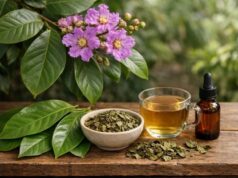
Buckthorn (Rhamnus cathartica), often called common buckthorn or cathartic buckthorn, is a thorny shrub or small tree best known today as an invasive hedgerow plant in many regions. In older European herbal practice, parts of the plant—especially the aged, dried bark—were used as a stimulant laxative for short-term constipation. That traditional role comes from naturally occurring compounds called hydroxyanthracene derivatives, which can stimulate bowel motility and increase water in the colon.
Buckthorn’s story is also a cautionary one. The same constituents that can “move the bowels” can easily overshoot into cramping and diarrhea, and repeated use can contribute to electrolyte loss, dependency, and other complications. The berries are particularly risky and are associated with nausea, vomiting, and gastrointestinal distress if ingested. Modern evidence for broad “health benefits” beyond constipation support is limited, and safety concerns are well established.
This guide focuses on what buckthorn contains, what it has realistically been used for, how preparations differ, what dosing looks like for standardized products, and how to reduce risk—especially for people who should avoid buckthorn entirely.
Quick Overview for Buckthorn Safety
- Aged buckthorn bark can act as a short-term stimulant laxative for occasional constipation.
- Cramping and diarrhea are common when the dose is too high; avoid repeated or long-term use.
- Standardized products are often dosed at 20–30 mg hydroxyanthracene derivatives once nightly for no more than 1–2 weeks.
- Avoid if pregnant or breastfeeding, under 12, or if you have bowel obstruction, inflammatory bowel disease, or unexplained abdominal pain.
Table of Contents
- What is buckthorn and what part is used
- Key ingredients and how they work
- Does buckthorn help with constipation
- How to use buckthorn more safely
- How much buckthorn per day
- Side effects, interactions, and who should avoid
- What the evidence actually says
What is buckthorn and what part is used
Buckthorn (Rhamnus cathartica) is a woody plant in the Rhamnaceae family. It typically forms dense thickets and has small greenish-yellow flowers and dark berries. You may also hear it called European buckthorn, common buckthorn, or cathartic buckthorn. For herbal use, the plant part matters—and so does the species—because “buckthorn” can refer to several related plants with different safety profiles.
Common mix-ups to avoid
- Common buckthorn vs glossy buckthorn: Glossy buckthorn is often labeled as Frangula alnus (older sources may use Rhamnus frangula). It is a different species with overlapping but not identical chemistry and dosing traditions.
- Common buckthorn vs cascara sagrada: Cascara is usually Frangula purshiana (older sources: Rhamnus purshiana). It is more widely represented in herbal products and monographs than R. cathartica.
- Bark vs berries: Traditional laxative use centers on aged, dried bark. The berries are not a safe substitute and are associated with gastrointestinal upset and toxicity risk.
Why “aged bark” shows up in traditional guidance
A recurring theme in stimulant-laxative plants is that fresh bark can be harsher and more irritating. Aging and drying reduce certain reactive constituents and help stabilize the profile, although “aged” does not mean “safe for everyone.” In practical terms, most modern use—when it occurs at all—relies on commercial preparations where the bark has been processed and where the dose can be measured.
How buckthorn fits modern self-care
Even though buckthorn has a long history as a cathartic herb, it is not a gentle “wellness” botanical. Today, constipation is usually approached first with hydration, fiber, movement, and safer laxative options. Buckthorn is better understood as a last-line stimulant laxative that may be considered short-term, with strong guardrails, when other steps fail and when there are no red flags.
If constipation is new, persistent, or paired with pain, fever, vomiting, blood in stool, or unexplained weight loss, treat that as a medical evaluation issue rather than a supplement decision. Buckthorn should never be used to mask a potentially serious cause.
Key ingredients and how they work
Buckthorn’s classic “cathartic” effect comes primarily from hydroxyanthracene derivatives (HADs)—a group that includes anthraquinone and anthrone-type compounds found in several stimulant laxative plants. These compounds are not the same as dietary fibers or gentle “motility supports.” They are pharmacologically active molecules that can change how the colon moves and how much fluid remains in the stool.
Hydroxyanthracene derivatives (the main drivers)
In simplified terms, HAD-containing laxatives tend to work through two complementary actions:
- Stimulation of colonic motility: They encourage the colon to contract more actively, helping move stool forward.
- Reduced water reabsorption: They can increase water content in the colon, softening stool and promoting a bowel movement.
This is why stimulant laxatives are often taken at night: the effect commonly appears several hours later, sometimes the next morning. It is also why cramping can occur—if contractions become too strong or too frequent, discomfort is a predictable outcome.
Other constituents that shape tolerance
Buckthorn bark and other plant parts also contain polyphenols (including flavonoids), tannins, and various secondary metabolites. While these compounds may have antioxidant activity in laboratory testing, they are not the main reason buckthorn “works” as a laxative. Practically, they matter because they can influence taste, astringency, and irritation potential, and they may contribute to variability between products.
Why the berry is riskier than it looks
The dark berries can attract curiosity, but they are not a safe “natural laxative.” Buckthorn fruit can contain irritating constituents that provoke nausea, vomiting, and diarrhea—effects that are not the same as a controlled, predictable bowel movement. People also confuse “a laxative effect” with “detox.” In reality, watery diarrhea is more likely to mean irritation and fluid loss, not cleansing.
How buckthorn compares to other stimulant-laxative plants
Many consumers encounter HADs first through other botanicals. Aloe latex, for example, is frequently discussed as a stimulant laxative with similar risk dynamics, and it highlights the same core lesson: HADs can be effective, but they require restraint and short-term use. If you want a parallel safety framework, the aloe latex safety overview is a useful comparison point.
Overall, buckthorn’s key ingredients support a narrow, specific use—short-term constipation relief—while creating real downside risks when used too often, too long, or by the wrong person.
Does buckthorn help with constipation
Buckthorn’s most defensible traditional “benefit” is straightforward: it can produce a bowel movement when stool is hard, transit is slow, and other strategies have not worked. That said, the most important question is not whether it can work—it is whether it is the right tool for your situation.
Where buckthorn may help (narrowly)
A stimulant laxative can be useful when constipation is occasional and short-lived, such as:
- Travel-related constipation
- Temporary constipation after diet disruption
- Short episodes where stool softeners and fiber have not helped
In these contexts, buckthorn’s expected outcome is not improved “gut health” in a broad sense. The realistic outcome is a bowel movement within hours, sometimes with some degree of cramping.
What buckthorn does not fix
Buckthorn does not address the most common drivers of constipation, such as:
- Low fiber intake and low fluid intake
- Sedentary routine
- Inadequate time for bowel habits
- Medication side effects (for example, some pain medicines or iron supplements)
- Pelvic floor coordination issues
- Underlying thyroid, metabolic, or neurological conditions
If constipation is frequent, the safest long-term improvements usually come from habit and foundational support rather than stimulant laxatives.
Gentler first-line options (often better choices)
If your main intent is regularity and stool comfort, consider starting with approaches that are less likely to cause cramping and dependency:
- Gradual fiber increase (food first when possible)
- Adequate hydration, especially with higher fiber
- Movement after meals
- Bulk-forming fibers that soften stool and normalize transit
For many people, bulk-forming fiber is a safer entry point than stimulant botanicals. A practical example is psyllium, which has a clearer long-term safety profile when used correctly. If you want a structured guide, psyllium dosing and tolerance tips can help you use fiber without triggering bloating or discomfort.
A useful decision filter: “Is this a red-flag constipation?”
Avoid stimulant laxatives and seek medical guidance if constipation is paired with any of the following:
- Severe or worsening abdominal pain
- Fever, vomiting, or inability to pass gas
- Blood in stool or black/tarry stool
- Unexplained weight loss
- New constipation after age 50
- Constipation that persists beyond 2–3 weeks despite basics
Buckthorn may help the symptom of constipation in a short-term, mechanical way, but it is not a safe default. It should be reserved for situations where the cause is likely benign, short-lived, and you have no risk factors that make stimulant laxatives unsafe.
How to use buckthorn more safely
Because buckthorn is a high-leverage laxative herb, “how to use it” is largely about how not to get into trouble. The goal is not aggressive purging. The goal—if buckthorn is used at all—is the smallest amount that produces a comfortable, soft-formed bowel movement.
Preferred forms: standardized and measurable
Buckthorn is sometimes encountered as:
- Standardized tablets or capsules: These may list hydroxyanthracene derivatives on the label. Standardization reduces (but does not eliminate) batch variability.
- Tinctures or liquid extracts: Dosing can be adjusted drop by drop, but quality varies and labeling may be incomplete.
- Teas or decoctions: These are the hardest to dose reliably and can be harsher than expected, especially if the material is not consistently processed.
For most people, if buckthorn is used, a standardized product is safer than a home-prepared tea because you can better control exposure.
Timing: why bedtime is common
Stimulant laxatives are often taken in the evening because effects may appear after a delay. Taking them earlier in the day can lead to urgent bowel movements at inconvenient times. Even with bedtime dosing, urgency is possible, so it helps to plan for the next morning accordingly.
Duration: short course only
Buckthorn is not a daily “regularity supplement.” A practical safety boundary is:
- Use only for occasional constipation
- Use for the shortest time possible
- Stop once bowel movements normalize
If constipation returns immediately after stopping, that’s a sign to reassess the underlying drivers rather than extending stimulant use.
What to do alongside buckthorn (to reduce rebound constipation)
If someone relies on stimulants without rebuilding basics, constipation often returns. To avoid a cycle:
- Increase fluids steadily (especially in the morning)
- Add gentle fiber (food or supplement)
- Build a consistent toileting window after breakfast
- Adjust known triggers (low produce intake, high refined foods, skipping meals)
Comparing buckthorn to other stimulant herbs
People often substitute one stimulant laxative for another, assuming it will be safer. In reality, the risk pattern is similar across many HAD-containing plants: effective short-term, problematic long-term. Senna is a common comparison point because its dosing and side effects are widely discussed. If you want to understand how stimulant laxatives are typically framed for short-term use, see senna benefits, dosing, and safety and apply the same conservative mindset to buckthorn.
The safest “use strategy” for buckthorn is minimal exposure, short duration, and a parallel plan that makes you less likely to need it again.
How much buckthorn per day
Buckthorn dosing is best framed in terms of standardized hydroxyanthracene derivatives, because whole-herb amounts can vary widely. If a product does not provide meaningful standardization or clear labeling, it is difficult to dose safely, and the risk of cramping and diarrhea increases.
Typical dose range (standardized products)
For adult stimulant-laxative products standardized to hydroxyanthracene derivatives, a commonly cited range is:
- 20–30 mg hydroxyanthracene derivatives taken once daily at bedtime, using the lowest effective dose
This is not a license for routine use. It is a ceiling-style range for short-term constipation relief where stimulant laxatives are considered appropriate.
Start low and adjust once
A practical approach when using a standardized product is:
- Start at the lowest labeled dose.
- Wait a full cycle (often overnight into the next morning).
- If there is no effect, increase only once within the product’s instructions.
- If cramping or diarrhea occurs, reduce the dose or stop.
If you find yourself escalating repeatedly, that is a sign buckthorn is not the right solution.
How long is too long
A conservative boundary for stimulant laxatives is:
- No longer than 1 week without clinician input
- Never longer than 1–2 weeks as a self-directed plan
If constipation persists beyond that, focus shifts to diagnosing causes and choosing safer long-term strategies.
How fast it works and what to expect
Effects can appear after several hours, often the next morning. Expected effects include:
- A bowel movement that is softer and easier to pass
- Possible mild cramping
Not expected—and not acceptable as “normal”—are repeated watery stools, severe pain, dizziness, or weakness.
When to choose a different tool
If you need rapid evacuation (for example, after several days without stool) and you have no red-flag symptoms, some clinicians prefer a non-stimulant approach first, such as an osmotic laxative, because it may cause less cramping in some people. Magnesium citrate is one commonly discussed option, but it also has important cautions (kidney disease, electrolyte risk, medication interactions). For a careful overview, see magnesium citrate dosing and precautions.
The key takeaway: buckthorn dosing should be conservative, standardized when possible, and limited in time. If you need frequent laxatives, the safer plan is to stop chasing short-term relief and build a structured, root-cause approach.
Side effects, interactions, and who should avoid
Buckthorn’s risks are not theoretical. The most common problems—cramping, diarrhea, dehydration—follow directly from how stimulant laxatives work. The more aggressively the colon is stimulated, the more likely you are to experience discomfort and fluid loss.
Common side effects
- Abdominal cramping
- Loose stools or diarrhea
- Nausea, especially with higher doses
- Dehydration symptoms (thirst, dizziness, headache)
- Weakness from electrolyte loss when diarrhea is significant
If diarrhea occurs, it is easy to slip into a cycle: diarrhea leads to dehydration, dehydration worsens constipation later, and then the person takes more stimulant laxative. Avoiding that loop is one reason buckthorn should remain a short-term option.
Longer-term risks with repeated use
When stimulant laxatives are used frequently or over long periods, concerns include:
- Electrolyte imbalance, especially low potassium
- Dependence (needing larger doses for the same effect)
- Worsening constipation after stopping
- Melanosis coli (a pigment change in the colon associated with chronic anthraquinone laxative exposure)
Even if melanosis coli is not considered pre-cancerous by itself, its presence can be a sign of excessive stimulant-laxative use and a reason to change course.
Who should avoid buckthorn
Avoid buckthorn unless specifically directed and monitored by a qualified clinician if you are:
- Pregnant or breastfeeding
- Under age 12
- Experiencing unexplained abdominal pain, nausea, or vomiting
- Diagnosed with bowel obstruction, ileus, inflammatory bowel disease, or severe hemorrhoids with bleeding
- Dehydrated, frail, or prone to electrolyte imbalance
- Managing kidney disease (because fluid and electrolyte shifts are higher risk)
Medication and supplement interactions
The biggest interaction category is anything affected by electrolyte balance or dehydration risk. Use caution (and seek clinician guidance) if you take:
- Diuretics
- Corticosteroids
- Heart rhythm medications
- Digoxin (electrolyte shifts can increase risk)
- Other laxatives (stacking increases diarrhea and dehydration risk)
When to stop and seek care
Stop buckthorn and seek medical guidance promptly if you develop:
- Severe or persistent abdominal pain
- Fainting, severe dizziness, or confusion
- Signs of dehydration that don’t improve with fluids
- Blood in stool or black/tarry stool
- Ongoing vomiting
Buckthorn is a plant where “listening to your body” must mean acting early. Side effects are not a badge of effectiveness—they are a warning that the dose or the herb is not appropriate for you.
What the evidence actually says
Buckthorn sits in a tricky evidence category: its main effect (laxation) is plausible and historically consistent, yet modern research tends to focus more broadly on hydroxyanthracene derivatives as a class than on Rhamnus cathartica as a single herb. That means we can describe likely mechanisms and known risk patterns with reasonable confidence, while still being careful about overstating benefits.
What is reasonably supported
- Short-term constipation relief: Stimulant laxatives can produce bowel movements in the short term. Buckthorn’s traditional use aligns with what is known about hydroxyanthracene derivatives.
- Dose-dependent side effects: Cramping and diarrhea are predictable with stimulant laxatives, especially when dose, product strength, or individual sensitivity is mismatched.
- Risk increases with chronic use: The concerns most clinicians emphasize—dependency, electrolyte imbalance, melanosis coli—are primarily linked to frequent or long-term stimulant laxative exposure.
What is not well supported
You may see broad claims that buckthorn “detoxifies,” “supports the liver,” “cleanses parasites,” or “reduces inflammation.” While plant extracts can show interesting activity in lab settings, those findings are not the same as clinically meaningful outcomes from typical human dosing. For most people, buckthorn is not a multi-benefit herb—it is a narrow-purpose laxative with meaningful downsides.
How to interpret safety discussions about hydroxyanthracenes
Regulatory and research discussions around hydroxyanthracene derivatives often include genotoxicity and carcinogenicity concerns, especially for certain compounds (notably aloe-emodin and emodin) in specific contexts. A practical takeaway for consumers is not panic—it is restraint:
- Choose short-term, occasional use only
- Avoid high-dose and long-duration use
- Avoid combining multiple hydroxyanthracene-containing products
Better long-term “regularity” strategies
If your intent is predictable bowel habits rather than emergency relief, evidence-informed options usually focus on stool form and routine:
- A steady fiber target from whole foods
- A tolerable supplemental fiber when needed
- Regular movement, especially after meals
- Addressing medication side effects and stress patterns
Prebiotic fibers can help some people build more regular transit over time, but they can also cause gas if increased too quickly. If you want a gentle, stepwise approach, inulin dosing and tolerance guidance can help you increase fermentable fiber without unnecessary discomfort.
The bottom line: buckthorn is better framed as a short-term tool with a safety cost, not a daily wellness herb. The strongest “evidence-based” move for most people is to reserve it for rare situations, and build a plan that makes it unnecessary.
References
- INVESTIGATION OF BIOCHEMICAL PROPERTIES, ANTIMICROBIAL, ANTIOXIDANT AND ANTIPROLIFERATIVE ACTIVITY OF THE RHAMNUS CATHARTICA L. EXTRACTS COLLECTED FROM KAZAKHSTAN 2025
- Review on melanosis coli and anthraquinone-containing traditional Chinese herbs that cause melanosis coli – PMC 2023 (Review)
- Anthraquinone laxatives use and colorectal cancer: A systematic review and meta‐analysis of observational studies – PMC 2022 (Systematic Review)
- Safety of hydroxyanthracene derivatives for use in food – PMC 2018 (Scientific Opinion)
Disclaimer
This article is for educational purposes only and does not provide medical advice, diagnosis, or treatment. Buckthorn (Rhamnus cathartica) contains stimulant laxative compounds that can cause cramping, diarrhea, dehydration, and electrolyte imbalance, and it may be unsafe for many people. Do not use buckthorn if you are pregnant or breastfeeding, under age 12, have inflammatory bowel disease, bowel obstruction, unexplained abdominal pain, or significant medical conditions. Consult a qualified healthcare professional before using any laxative herb—especially if you take prescription medications or have ongoing constipation. Seek urgent medical care for severe abdominal pain, fainting, persistent vomiting, or blood in stool.
If you found this article helpful, consider sharing it on Facebook, X (formerly Twitter), or your preferred platform so others can make safer, better-informed choices.