Bull thistle (Cirsium vulgare) is a prickly biennial plant best known as a pasture weed, yet it has a quieter history as a traditional “field medicine” in parts of Europe and North America. Herbalists have used different parts of the plant—most often the leaves, flowering tops, and roots—for topical comfort, digestive support, and mild fluid balance. Its reputation is tied to astringent and bitter compounds, along with polyphenols that plants use for defense and repair.
Modern interest in bull thistle is less about miracle claims and more about practical questions: what it contains, what effects are plausible, and what is safe. Compared with well-studied herbal staples, bull thistle has limited human research, so responsible use relies on conservative dosing, careful identification, and realistic expectations. Another important theme is confusion: bull thistle is not milk thistle, and it does not share milk thistle’s best-known liver compounds.
This guide walks through bull thistle’s key constituents, common uses, preparation options, dosage ranges used in traditional practice, and the safety considerations that matter most for everyday readers.
Quick Facts
- Traditional use centers on topical comfort and mild digestive support, with evidence strongest for general antioxidant activity in lab studies.
- A typical tea range is 1–3 g dried herb per cup, up to 2–3 cups daily for short periods.
- Handling can irritate skin due to spines and plant hairs; gloves reduce risk.
- Avoid if you have a known allergy to the Asteraceae family or severe seasonal ragweed sensitivity.
- Pregnancy, breastfeeding, and children are better suited to clinician-guided use only.
Table of Contents
- What is bull thistle
- Key compounds and how they work
- Bull thistle potential health benefits
- Bull thistle for skin, wounds, and inflammation
- How to use bull thistle
- How much bull thistle per day
- Safety, interactions, and evidence limits
What is bull thistle
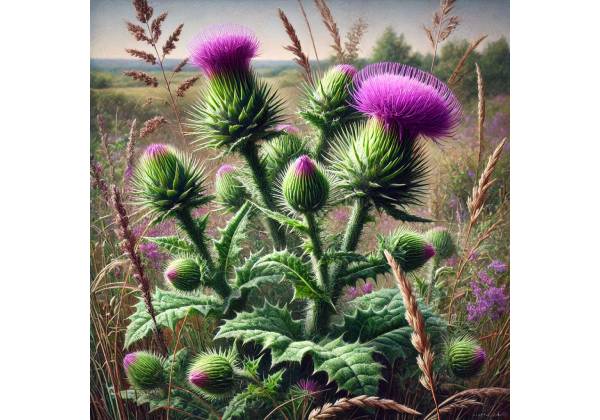
Bull thistle (Cirsium vulgare), sometimes called spear thistle, is a robust, spiny plant in the Asteraceae family. It typically grows as a rosette in its first year and sends up a tall flowering stalk in its second year, producing purple flower heads that are highly attractive to bees and other pollinators. From a medicinal standpoint, bull thistle is best approached as a modest, traditional herb with limited modern clinical study rather than as a “super herb.”
Identification matters more than people expect
Thistles are easy to misidentify because many species share a similar silhouette: spiny leaves, winged stems, and purple blooms. If you harvest wild plants, correct identification is a safety issue, not a hobby detail. Bull thistle leaves are typically deeply lobed and covered in stiff spines, and the stems often have spiny “wings” that run down their length. If you are not confident, do not ingest it—especially because thistles may grow near roadsides, industrial areas, or treated fields where contamination risk is higher.
Which parts are used
Traditional use varies by region, but commonly referenced parts include:
- Leaves and flowering tops: Often prepared as an infusion (tea) or tincture, or used externally in poultice-style applications.
- Roots: Sometimes used as a bitter digestive herb or as a prepared food in survival or traditional contexts, but only after careful cleaning and preparation.
- Fresh plant material: Sometimes used topically, though spines and hairs can irritate skin.
A key practical note: the plant’s defenses (spines and irritating hairs) are part of its identity. Handling is easiest with gloves, and preparation generally involves trimming away spines and using only cleaned plant material.
How bull thistle differs from “thistle” products in stores
Many supplements labeled “thistle” are actually milk thistle or artichoke-related blends, not Cirsium vulgare. Bull thistle is less common as a standardized product, which means most use is either traditional tea/tincture practice or topical folk applications. That lack of standardization is one reason conservative dosing and short-term use are sensible defaults.
Key compounds and how they work
Bull thistle contains a mix of plant defense compounds that can be grouped into a few categories. These constituents do not guarantee a specific health outcome, but they help explain why bull thistle has been used for “tightening,” soothing, and supporting normal tissue response to irritation.
Polyphenols and antioxidant signaling
Like many Asteraceae plants, bull thistle contains phenolic acids and flavonoids. These compounds are often discussed as antioxidants, but their more useful role may be signaling: they can influence how cells respond to oxidative stress. In real-life terms, this is the reason thistles are often used as “support herbs” rather than as single-target remedies. People looking for bull thistle benefits usually want help with everyday inflammation, minor swelling, or general resilience, and polyphenols are one plausible contributor.
Bitter principles and digestive effects
Bull thistle has a distinctly bitter profile, especially in the aerial parts and root. Bitter-tasting compounds can stimulate saliva and digestive secretions and may support appetite and digestion in some people. That does not mean bull thistle is a cure for indigestion, but it explains why it has historically been used before meals or as part of “digestive tonic” traditions.
Astringent compounds for tissue tone
Many thistles contain tannins, which have an astringent effect. Astringency can create a “tightening” sensation on tissues and may help explain traditional topical use for minor weeping, irritation, or discomfort. In a home context, astringent herbs are often used in compresses and rinses, though this should be done carefully and only on intact skin unless a clinician advises otherwise.
Minerals, fiber, and food-like elements
In some traditional contexts, young thistle parts were used as food after removing spines. When prepared this way, the plant contributes small amounts of minerals and fiber. Still, bull thistle is not primarily a nutritional powerhouse in the way leafy greens are. Its value is more about herbal tradition and functional use than macronutrient density.
The big picture is straightforward: bull thistle’s chemistry supports plausible topical comfort and mild digestive roles, while more ambitious claims require stronger evidence than is currently available.
Bull thistle potential health benefits
Bull thistle is most responsibly described as a traditional support herb with emerging laboratory research rather than as a proven therapeutic. The clearest “benefits” readers can act on are the ones that align with traditional patterns and low-risk use: topical comfort, digestive bitterness, and gentle support for fluid balance. Anything beyond that should be treated as exploratory.
1) Support for oxidative balance
Extract studies of Cirsium species, including bull thistle, often find measurable antioxidant activity. This does not automatically translate into clinical benefits, but it suggests the plant contains polyphenols capable of interacting with oxidative pathways. Practically, this supports a cautious “wellness-support” framing: bull thistle may be useful as one piece of a broader routine that also includes sleep, movement, and a plant-forward diet.
2) Mild digestive and appetite support
Traditional use often emphasizes bull thistle as a bitter herb. People who feel “sluggish” digestion after heavy meals sometimes respond well to bitters, especially when the issue is functional rather than structural. A small cup of tea before meals or a low-dose tincture is the typical approach in herbal practice. If you have reflux, ulcers, gallbladder disease, or persistent abdominal pain, self-treating with bitters is not appropriate—those scenarios deserve evaluation.
3) Fluid balance and “puffiness”
Some traditional herb systems use thistles to support urination and fluid movement, particularly when paired with other plants. Evidence for bull thistle specifically is limited, but the historical pattern is similar to the way people use gentler “spring cleansing” herbs. If your interest is primarily diuretic-style support, the best-known comparison is dandelion leaf and root guidance for digestion and fluid balance, which has more widespread modern use and clearer safety norms.
4) Folk use for discomfort and minor aches
Bull thistle has been used externally and sometimes internally for general discomfort in folk traditions. The most realistic interpretation is that astringent and polyphenol-rich herbs can support tissue comfort and normal inflammatory response. This is not the same as pain relief from an analgesic medication, and it should not be used to ignore serious symptoms.
What not to expect
It is common to see thistles described as “liver cleansers” or “detoxifiers.” For bull thistle, those claims are largely extrapolated from the broader thistle category and from laboratory studies. Bull thistle is not a substitute for medical care, and it should not be positioned as a cure for chronic disease.
Bull thistle for skin, wounds, and inflammation
Topical use is often the most practical and conservative way people explore bull thistle. Historically, thistles have been used in compresses and poultices for minor skin discomfort, localized swelling, and general “tissue support.” With bull thistle, the challenge is that the plant itself can irritate skin during handling, so thoughtful preparation matters.
What topical use is most appropriate for
Bull thistle is sometimes used externally for:
- minor skin irritation where an astringent herb feels soothing
- localized puffiness after overuse or minor bumps
- general comfort when tissue feels “hot” or inflamed
These uses are best understood as supportive care. They are not appropriate for deep wounds, infected lesions, burns, or rapidly spreading redness. In those cases, prompt clinical evaluation is the safer choice.
How astringency can help and when it can backfire
Astringent herbs can reduce a weepy sensation and may feel toning on skin. However, astringency can also feel drying or irritating on very sensitive or broken skin. For people with eczema-prone skin, barrier damage, or frequent allergic reactions, topical bull thistle may be too reactive. Patch testing is a reasonable precaution: apply a small amount to a limited area and wait 24 hours before broader use.
Preparation approaches that reduce irritation risk
If you are preparing bull thistle topically, aim for methods that minimize direct contact with spines:
- Wear gloves and trim spines carefully.
- Use a clean tool and avoid harvesting from polluted areas.
- Choose a gentle preparation such as a cooled infusion used as a compress.
Some readers prefer to start with a better-known, skin-focused herb before experimenting with bull thistle. For example, calendula for topical soothing and skin comfort is widely used, generally gentle, and often easier to source in consistent quality.
When “wound healing” claims need caution
You may see claims that bull thistle speeds wound healing. Laboratory or animal work can suggest potential, but real-world wound care depends on hygiene, circulation, infection control, and overall health. If a cut is not improving within a couple of days, if there is pus, increasing pain, fever, or streaking redness, discontinue home remedies and seek medical care.
The most responsible role for bull thistle in skin care is as a cautious, short-term comfort herb for minor issues—never as a replacement for basic wound care or infection management.
How to use bull thistle
Bull thistle use depends on the goal: internal support (such as digestion) usually involves tea or tincture, while topical use usually involves a cooled infusion used as a compress. Because bull thistle is not commonly sold as a standardized supplement, the safest approach is to keep preparations simple, use short timeframes, and prioritize product quality and correct identification.
Common forms
- Tea (infusion): Best for mild digestive support or gentle “whole herb” use. Tea is also the most adaptable form for topical compresses.
- Tincture: More concentrated and convenient, but also easier to overdo. Choose products with clear labeling and dosing instructions.
- Dried herb: Used for tea, blends, or external preparations.
- Fresh plant preparations: Sometimes used in folk practice, but handling is difficult and irritation risk is higher.
Practical tea preparation
A simple infusion is often the safest entry point:
- Use dried aerial parts (leaf and flowering top) when available.
- Pour hot water over the herb, cover, and steep 10–15 minutes.
- Strain carefully to avoid plant hairs.
Flavor matters for consistency. Many people pair bitter herbs with a small amount of lemon or a digestive-friendly blend rather than forcing a strong, unpleasant brew.
Topical compress preparation
For a compress:
- Prepare a mild infusion, then let it cool fully.
- Soak a clean cloth in the tea and apply to intact skin for 10–20 minutes.
- Stop if burning, itching, or redness increases.
Edible use and the “survival food” idea
Some traditions describe thistles as edible when young, after thorough trimming and cooking. This can be true for certain thistles, but it is not an easy or necessary strategy for most people. If you explore this, do it only with correct identification, clean harvesting conditions, and careful preparation. Most readers are better served by using bull thistle, if at all, as a minor herbal ingredient rather than as a staple food.
If your interest is in root-based traditional herbs with clearer culinary overlap, burdock root uses and safety basics may be a more practical and predictable place to start.
How much bull thistle per day
Bull thistle does not have a universally accepted standardized dose, and that is an important safety signal: dosing should be conservative, time-limited, and adjusted for individual tolerance. The ranges below reflect common herbal practice patterns for non-standardized herbs. They are not a substitute for clinician guidance, especially if you are pregnant, breastfeeding, have chronic disease, or use prescription medications.
Tea (infusion) dosing
A typical adult range used in traditional-style practice is:
- 1–3 g dried herb per cup, up to 2–3 cups per day for short periods
Start at the low end for 2–3 days to assess tolerance, especially if you have sensitive digestion. If you develop nausea, cramping, or diarrhea, reduce the dose or stop.
Tincture dosing
Tinctures vary in concentration. A common label range for many non-standardized tinctures is:
- 1–2 mL, up to 2–3 times per day
Because tinctures concentrate constituents, they are not a “more is better” form. If you choose a tincture, follow the product label and avoid combining it with multiple other bitter herbs until you know how you respond.
Topical use dosing
For topical compresses, think in time rather than milligrams:
- Apply a cooled infusion compress once daily initially, then up to 2 times daily if well tolerated, for a few days
Stop if irritation increases.
Timing and duration
- Timing: For digestive support, many people use bitters 10–20 minutes before meals. For general wellness support, any time is acceptable, but evening use may bother sensitive stomachs.
- Duration: Keep self-directed use short, such as 7–14 days, then reassess. If you feel you “need” an herb continuously, it is worth stepping back to address the root issue and checking for medical causes.
Common variables that change the right dose
Dose sensitivity can change with:
- body size and age
- baseline digestion (IBS, reflux, or frequent diarrhea)
- allergy history
- concurrent herbs and supplements
If you want a gentle comparison for infusion-style herbal use with more common modern practice, nettle benefits and typical tea use can provide a reference point for how people structure daily herbal teas without pushing dose intensity.
Safety, interactions, and evidence limits
Bull thistle is not known as a high-risk herb for most adults when used in modest amounts, yet “low risk” is not the same as “risk-free.” The most common problems are allergic reactions, skin irritation from handling, digestive upset from bitter compounds, and overconfidence based on limited evidence.
Who should avoid bull thistle
Avoid bull thistle, or use it only with professional guidance, if you are:
- pregnant or breastfeeding
- a child or teenager (unless a clinician recommends it)
- allergic to Asteraceae plants (ragweed, daisies, marigolds, many thistles)
- prone to severe contact dermatitis or frequent unexplained rashes
- managing a chronic condition where symptoms could be masked by self-treatment
Possible side effects
Potential side effects include:
- itching, hives, or rash (especially in allergy-prone individuals)
- skin irritation from spines and hairs
- nausea, stomach upset, cramping, or loose stools
- headache or lightheadedness in sensitive people
Stop use if side effects appear and seek medical guidance if symptoms are significant or persistent.
Medication interactions
Direct interaction data for bull thistle is limited, so interaction guidance is cautious by necessity. Use extra care if you take:
- blood thinners or antiplatelet medications (because many polyphenol-rich herbs raise theoretical concerns for bleeding risk, even when evidence is sparse)
- diabetes medications (if appetite and intake change due to digestive effects)
- diuretics or blood pressure medications (if you are using bull thistle for fluid balance and notice dizziness)
If you are using multiple herbs at once, introduce only one new product at a time so you can identify what causes a reaction.
Evidence limits and the “thistle confusion” problem
Bull thistle is often grouped with other thistles, especially milk thistle, in online content. That can create misleading expectations. Milk thistle is studied for silymarin-rich extracts, while bull thistle is more often discussed as a traditional bitter and topical herb with much thinner clinical evidence. If your main goal is liver-focused supplementation, it is worth understanding that difference and reviewing milk thistle liver support evidence and dosing basics rather than assuming all thistles act the same.
A balanced conclusion is this: bull thistle has plausible traditional uses and measurable antioxidant activity in laboratory settings, but human evidence remains limited. If you choose to use it, do so conservatively, focus on topical or gentle infusion use, and treat it as supportive care—not as a replacement for diagnosis and treatment.
References
- Effect of the Phenological Stage on the Phenolic Composition, and Antioxidant and Antimicrobial Properties of Cirsium vulgare (Savi) Ten. Extracts – PMC 2024 (Experimental Study)
- Antimicrobial and Antioxidant Efficacy of the Lipophilic Extract of Cirsium vulgare – PMC 2023 (Experimental Study)
- Recent research progress of Cirsium medicinal plants in China – PubMed 2021 (Systematic Review)
- Anticancer properties of Cirsium vulgare (Savi) ten. Dry extracts from different plant parts and phenological stages of Raw material collection – PubMed 2025 (Cell Study)
- Traditional Uses, Phytochemical Composition, Pharmacological Properties, and the Biodiscovery Potential of the Genus Cirsium 2022 (Review)
Disclaimer
This article is for educational purposes only and does not provide medical advice, diagnosis, or treatment. Herbal products can affect people differently, especially when allergies, pregnancy, breastfeeding, chronic conditions, or prescription medications are involved. Bull thistle may cause allergic reactions or digestive upset, and wild harvesting carries risks of misidentification and contamination. If you are pregnant, breastfeeding, giving herbs to a child, have a chronic medical condition, or take medications (especially blood thinners, blood pressure drugs, or diuretics), speak with a qualified clinician or pharmacist before using bull thistle. Seek urgent medical care for symptoms such as facial swelling, trouble breathing, severe rash, fainting, or rapidly worsening pain and swelling.
If you found this guide helpful, consider sharing it on Facebook, X (formerly Twitter), or your preferred platforms so others can make safer, better-informed choices.