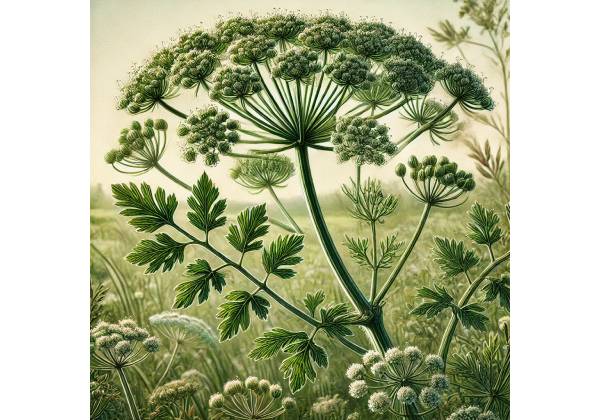
Caraway (Carum carvi) is a fragrant seed-spice from the parsley family that has earned a special place in both traditional herb cabinets and everyday cooking. Its flavor is warm, slightly sweet, and peppery—familiar in rye bread, sauerkraut, and Central European and Middle Eastern dishes. Medicinally, caraway is best known as a carminative: a plant that helps relieve gas, cramping, and the uncomfortable “heavy” feeling that can follow certain meals.
What makes caraway especially interesting today is how its volatile oils—particularly carvone and limonene—appear to influence digestive motility, smooth-muscle tension, and the sensation of bloating. Caraway is also studied in modern products that pair it with peppermint oil for functional dyspepsia and related gut–brain symptoms, where many people want non-sedating, practical relief. Still, the same aromatic potency that makes caraway effective can cause irritation if used too strongly, especially as essential oil. This guide focuses on realistic benefits, smart preparation, appropriate dosage, and the safety boundaries that matter most.
Top Highlights
- Caraway may reduce post-meal bloating, gas, and cramping when used as a tea or culinary spice.
- Some evidence supports standardized peppermint oil and caraway oil capsules for functional dyspepsia symptoms.
- Do not ingest caraway essential oil, and avoid undiluted topical use due to irritation risk.
- Typical adult tea range is 1 to 2 g crushed seeds in 150 to 250 mL hot water, up to 3 times daily.
- Avoid medicinal use in pregnancy and breastfeeding, and avoid if you have Apiaceae allergies or active gallbladder and bile-duct disease.
Table of Contents
- What is caraway and what is in it
- Key ingredients and medicinal properties
- Does caraway help digestion and bloating
- How to use caraway safely
- How much caraway per day
- Side effects interactions and who should avoid
- What the evidence actually says
What is caraway and what is in it
Caraway comes from Carum carvi, a biennial plant in the Apiaceae (parsley) family. What we call “caraway seeds” are technically the dried fruits of the plant, but in practice they function exactly like seeds in the kitchen and in herbal preparations. They are slender, crescent-shaped, and ridged—often darker than cumin and typically more curved. The aroma is the easiest clue: caraway smells bright, warm, and slightly minty-resinous, while cumin tends to smell earthier and heavier.
Caraway is used in a few main forms, and understanding the difference matters for both effects and safety:
- Whole seeds (fruits): best for cooking and for freshly crushed tea. Whole seeds hold aroma longer because the oils are protected until you grind or bruise them.
- Ground caraway: convenient, but the volatile oils dissipate faster. Ground caraway is easiest to overuse in tea (too strong, too spicy), and easiest to understore (it goes flat).
- Caraway tea (infusion): usually made from lightly crushed seeds so the oils release into hot water. This is the classic “after-meal” preparation.
- Caraway essential oil: highly concentrated volatile compounds, used in tiny amounts and usually as part of standardized products. This is not interchangeable with culinary caraway.
- Extracts and capsules: these vary widely; some are seed extracts, while others combine caraway oil with other oils, especially peppermint.
Because caraway is part of the Apiaceae family, it sits in a flavorful neighborhood with anise, fennel, dill, coriander, celery seed, and cumin-like spices. If you are trying to understand why these seeds can feel “digestive,” it helps to compare their shared style of aromatic oils and carminative traditions. A useful culinary and medicinal comparison is coriander culinary and medicinal guide, which explains how a related seed-spice is used in food and for digestive comfort.
In everyday use, caraway shines in two situations: (1) as a food spice that makes heavy dishes easier to tolerate, and (2) as a mild tea that supports comfort after meals. The “what it is” takeaway is simple: caraway is a potent aromatic seed-spice, and the safest way to use it is to start with small amounts, preferably in food or a light infusion, before considering stronger preparations.
Key ingredients and medicinal properties
Caraway’s signature effects come from its volatile oils—aromatic compounds stored in the seed and released when the seed is crushed, warmed, or steeped. While caraway also contains fiber, minerals, and plant polyphenols, these are not the main drivers of its classic “digestive comfort” reputation because typical serving sizes are small. The core story is about chemistry you can smell.
Carvone and limonene
Caraway seed oil is commonly characterized by carvone and limonene. Together, these compounds shape caraway’s bright, warming aroma and help explain why it is traditionally used for bloating and cramping. In practical terms, aromatic oils like these can influence digestion in a few ways:
- Carminative action: they can reduce the sensation of trapped gas and help the gut feel less tense.
- Antispasmodic tendencies: they may encourage smooth muscle to relax, which can ease cramping and “gripping” discomfort.
- Motility and tone effects: caraway is often described as supporting normal movement of the digestive tract, especially when symptoms feel sluggish or heavy.
- Bile and fat digestion support: traditional monographs often describe caraway as choleretic (supporting bile flow). This may be one reason caraway is paired with fatty foods, but it also explains why certain gallbladder or bile-duct conditions require caution.
Why caraway feels different from other seed spices
Many Apiaceae seeds are carminative, but caraway’s profile is distinct. Fennel leans sweet and anise-like; dill is greener; cumin is earthier; coriander is citrusy and floral. Caraway’s carvone-driven “sharp warmth” can feel especially effective when symptoms include a stubborn sense of fullness or pressure.
Antimicrobial and antioxidant potential
Caraway essential oil and extracts show antimicrobial and antioxidant activity in laboratory contexts. For readers, the honest translation is modest: these properties may contribute to why caraway has been used in food preservation traditions and oral-care blends, but they do not make caraway a substitute for medical treatment of infections. Lab results can suggest plausibility, not clinical certainty.
How the form changes the effect
A key safety and effectiveness principle is concentration. A cup of caraway tea contains a gentle amount of volatile compounds extracted into water. Caraway essential oil contains those compounds concentrated many times over. That is why caraway tea can be soothing, while essential oil can be irritating if mishandled.
If you want the medicinal properties caraway is known for, the best approach is to match the form to the goal: culinary caraway for everyday digestion support, crushed-seed tea for targeted post-meal symptoms, and standardized products only when you specifically want evidence-aligned dosing for defined conditions.
Does caraway help digestion and bloating
Caraway’s strongest and most realistic reputation is for digestive comfort, especially when symptoms are familiar, meal-related, and non-emergency: bloating, gas, mild cramping, and the uncomfortable heaviness that can follow rich foods. It is not a “cure” for chronic disease, but it can be a practical, low-commitment tool for symptom management when used correctly.
What caraway is most likely to help
Caraway tends to fit best when symptoms sound like:
- Pressure and fullness after eating
- Burping, gas, or “trapped air” sensations
- Mild cramping that improves with warmth, movement, or passing gas
- Sluggish digestion after heavy or fatty meals
In these situations, people often notice the best effect when caraway is used close to the trigger (for example, after a meal) rather than as a once-a-day habit. A light tea or caraway-seasoned food can provide a noticeable shift within 30 to 60 minutes for some individuals.
Functional dyspepsia and gut–brain symptoms
Many people searching for caraway are really searching for help with symptoms often labeled functional dyspepsia: upper-abdominal discomfort, post-meal fullness, early satiety, and bloating without a clear structural cause. In modern studies, caraway is frequently evaluated as part of a standardized combination with peppermint oil, taken in capsule form for several weeks. This is important because the evidence is stronger for standardized products than for homemade caraway tea alone.
How to set expectations
Caraway is best for symptom relief, not diagnosis. It can help you feel better while you address the basics: meal pacing, portion size, hydration, and identifying trigger foods (very fatty meals, large servings of legumes, certain sugar alcohols, and rapid eating are common triggers for bloating). If symptoms persist, worsen, or include red flags—unexplained weight loss, vomiting, blood in stool, persistent fever, severe pain, or symptoms that do not improve over weeks—self-treatment is not the right lane.
Comparing caraway with similar herbs
If caraway helps, it often helps for the same reason other aromatic seeds help: carminative effects and smooth-muscle comfort. A close comparison is fennel health benefits and uses, which is also commonly used for bloating and gas but tends to taste sweeter and may be better tolerated by people who find caraway too sharp.
A practical way to think about caraway is “use it when you need it.” If you reach for it after the kinds of meals that usually cause trouble, and you keep the dose light, it can be one of the simplest, most repeatable digestive supports in the spice cabinet.
How to use caraway safely
Caraway can be used in several forms, but safety and effectiveness improve when you choose preparations that are easy to measure and hard to overdo. For most people, the best starting point is culinary use, then crushed-seed tea, and only then (if needed) standardized capsules.
1) Culinary use
This is the gentlest and most traditional route. Culinary use is also naturally “dose-limited” by taste.
- Add whole seeds to cooked dishes like cabbage, lentils, roasted root vegetables, and rye-based recipes.
- Lightly toast seeds in a dry pan for 30 to 60 seconds to release aroma, then add to food.
- If you use ground caraway, store it tightly sealed and replace it more often than whole seeds.
Culinary use is ideal if your goal is prevention: making a known trigger meal easier to digest.
2) Caraway tea for post-meal comfort
Tea works best when you crush the seeds right before steeping.
- Lightly crush 1 to 2 teaspoons of seeds with a mortar, spoon, or the flat of a knife.
- Pour hot water over the crushed seeds, cover, and steep 10 minutes.
- Strain and sip slowly after meals.
Covering the cup matters because volatile oils evaporate. A covered steep keeps more aroma (and more effect) in the tea.
3) Standardized capsules and combinations
For functional dyspepsia-style symptoms, many studied products combine peppermint oil and caraway oil in a standardized capsule taken for several weeks. If you are considering this route, choose products with clear labeling and follow the manufacturer’s instructions. This approach can be a good fit for people who want a predictable dose without the strong taste of tea. For a deeper look at peppermint’s digestive role and how it is used responsibly, see peppermint digestive and respiratory benefits.
4) Topical use
Caraway is sometimes used topically as part of warming rubs, but topical essential-oil use is not a beginner-friendly method. If you use topical products, choose prepared formulations or keep dilutions very low and away from eyes and mucous membranes.
5) What to avoid
- Do not ingest caraway essential oil.
- Do not apply essential oil undiluted to skin.
- Do not treat persistent or severe symptoms by simply increasing dose.
Used thoughtfully, caraway can be both a helpful herb and a daily-life spice. The safest pattern is simple: start with food, then tea, then standardized products only when you have a clear reason to do so.
How much caraway per day
Caraway dosing depends on form. A culinary pinch, a measured tea, and a standardized capsule can all be appropriate—but they are not interchangeable. The most useful strategy is to start low, match dosing to the symptom timing, and use caraway in short windows rather than indefinitely.
Culinary ranges
For cooking, most people stay within a safe, practical range naturally:
- Whole seeds: roughly 1/4 to 1 teaspoon in a dish serving several people
- Ground caraway: 1/8 to 1/2 teaspoon in a recipe, depending on intensity
If you are using caraway primarily as food, daily “dosing” is rarely necessary. Use it when your meals call for it.
Tea and infusion dosing (adult use)
A conservative, commonly used adult range is:
- 1 to 2 g crushed seeds in 150 to 250 mL hot water
- Steep 10 minutes, strain
- Use 1 to 3 times daily, typically after meals
If you prefer measuring by kitchen spoons, 1 teaspoon of whole caraway seed often falls roughly in the low-gram range, but weight is more consistent than volume. The tea should taste pleasantly aromatic, not harsh or burning.
Capsules and extracts
Capsules vary widely. For peppermint oil and caraway oil combinations, clinical studies often use twice-daily dosing over several weeks. The correct dose is product-specific, so label directions matter. If you take other digestive supplements, avoid stacking multiple strong aromatics at once until you know how you respond.
Timing and duration
- Best timing for bloating: after meals or at the first sign of pressure and gas.
- Best timing for recurrent symptoms: consistent use for a limited course (for example, a few weeks), then reassessment.
- Duration boundary: if symptoms persist beyond 2 weeks despite self-care, it is wise to seek medical guidance rather than escalating herbal dosing.
Combining caraway with other strategies
Caraway is often most effective when paired with simple habits: slower eating, smaller portions of trigger foods, and adequate hydration. If nausea is part of your symptom pattern, you may do better with a different primary herb, such as ginger benefits and active compounds, while keeping caraway as an occasional add-on for bloating.
The best dose is the smallest one that reliably helps. With caraway, “stronger” is not always “better,” especially if you are prone to reflux or scent sensitivity.
Side effects interactions and who should avoid
Caraway is widely used as a food spice, and culinary amounts are generally well tolerated. Most safety issues arise when people move from culinary use to medicinal dosing—especially concentrated oil preparations—or when they have underlying conditions that make digestive stimulation a poor fit.
Common side effects
These are usually dose-related and improve when the dose is reduced or stopped:
- Heartburn or reflux flare, especially with strong tea or capsules
- Nausea or stomach irritation if taken on an empty stomach
- Belching with a strong “spice” aftertaste
- Skin irritation if essential oil products are applied too strongly
- Rare allergic reactions (rash, itching, swelling), especially in people sensitive to related plants
If you develop hives, facial swelling, wheezing, or severe symptoms, treat that as urgent medical territory.
Who should avoid medicinal use
Caraway is not the right choice for everyone. Avoid medicinal dosing (tea, capsules, essential oil products) if you are in these groups:
- Pregnancy and breastfeeding: safety data for medicinal dosing is insufficient, so avoidance is the cautious approach.
- Children: medicinal use is generally not recommended for younger age groups without clinician guidance.
- Known Apiaceae allergy: this includes allergy patterns involving celery, fennel, anise, coriander, dill, and similar plants.
- Active gallbladder or bile-duct disease: because caraway is traditionally described as supporting bile flow, conditions like gallstones, cholangitis, or other biliary disorders warrant extra caution and professional guidance.
- Significant reflux or gastritis: pungent aromatic spices can aggravate symptoms in sensitive individuals.
Medication and supplement interactions
For caraway seed tea, strong drug interactions are not well documented in traditional monographs. Still, practical caution is sensible if you are taking multiple prescription medications, have chronic liver disease, or are using concentrated extracts. If you are scheduled for a medical procedure or surgery, pause non-essential supplements and discuss them with your clinician.
Essential oil safety
Caraway essential oil is concentrated and should be treated as a high-risk form:
- Do not ingest it.
- Keep it away from children and pets.
- Avoid eye and mucous membrane exposure.
- If used topically, use very low dilutions and discontinue with any irritation.
The most reliable safety strategy is to keep caraway in its gentlest forms—food and mild tea—and to reserve standardized products for clear, evidence-aligned goals rather than vague “more is better” wellness routines.
What the evidence actually says
Caraway has two “evidence tracks,” and mixing them up is a common source of confusion. One track is traditional use and plausibility: caraway as a carminative spice for bloating and cramping. The other track is modern clinical research, where caraway is most often studied as part of a standardized peppermint oil and caraway oil combination for functional dyspepsia and related gut–brain symptoms.
Where evidence is strongest
The most consistent clinical findings involve standardized capsules pairing peppermint oil and caraway oil. Studies and follow-ups report improvements in symptoms such as post-meal fullness, epigastric discomfort, bloating, and abdominal pain patterns, often over several weeks of use. This supports a practical conclusion: if your symptoms resemble functional dyspepsia or overlap gut–brain discomfort, a standardized combination product may be more predictable than homemade tea because the dose and release are controlled.
What we can say about caraway seed tea
Caraway tea is widely used and often helpful for mild bloating and gas, but it is harder to study cleanly. Tea varies by seed freshness, how much the seeds are crushed, steep time, and individual sensitivity. The benefit is still credible for many people, but the evidence standard is not the same as a standardized capsule trial. In everyday terms, tea works best as an “as-needed” approach for meal-triggered symptoms, not as a long-term therapy.
What evidence does not support well
- Big claims that caraway treats infections, cures chronic disease, or replaces medical evaluation
- Heavy reliance on essential oil internally
- Long-term daily dosing without reassessment
Laboratory studies may show antimicrobial or antioxidant activity, but these findings do not automatically translate into effective or safe clinical treatment for real-world infections or chronic inflammatory conditions.
How to use evidence to make decisions
A sensible hierarchy looks like this:
- Start with culinary use if your goal is mild digestive comfort.
- Try mild crushed-seed tea for post-meal bloating or gas.
- Consider standardized combination products if your symptoms fit functional dyspepsia patterns and you want a studied, repeatable approach.
- Stop and reassess if you need escalating doses, symptoms persist beyond weeks, or red flags appear.
The most honest summary is that caraway is a well-matched tool for digestive discomfort, and modern evidence is most compelling when caraway is used in standardized forms for specific symptom clusters. Used with restraint and good boundaries, it can be both practical and reassuring—without drifting into hype.
References
- Menthacarin for long-term treatment of functional dyspepsia – Results from a clinical trial follow-up – PMC 2022 (Clinical Study)
- Treatment of disorders of gut–brain interaction with peppermint oil and caraway oil combination Menthacarin | Wiener Medizinische Wochenschrift | Springer Nature Link 2025 (Clinical Trial)
- Plant-Derived Treatments for IBS: Clinical Outcomes, Mechanistic Insights, and Their Position in International Guidelines – PMC 2026 (Review)
- European Union herbal monograph on Carum carvi L., fructus 2015 (Guideline)
- Safety and efficacy of a feed additive consisting of an essential oil obtained from the fruit of Carum carvi L. (caraway oil) for all animal species (FEFANA asbl) – PMC 2024 (Safety Assessment)
Disclaimer
This article is for educational purposes only and does not provide medical advice, diagnosis, or treatment. Herbs and spices can cause side effects, allergic reactions, and interactions, especially when used in concentrated forms or medicinal doses. Do not ingest caraway essential oil, and avoid undiluted topical use. If you are pregnant, breastfeeding, managing a chronic condition, taking prescription medications, have gallbladder or bile-duct disease, or are considering use for a child, consult a qualified healthcare professional before using caraway medicinally. Seek urgent medical care for severe symptoms, breathing difficulty, facial swelling, or signs of a serious digestive condition.
If this guide helped you, consider sharing it on Facebook, X (formerly Twitter), or your preferred platform so others can make safer, better-informed choices.