
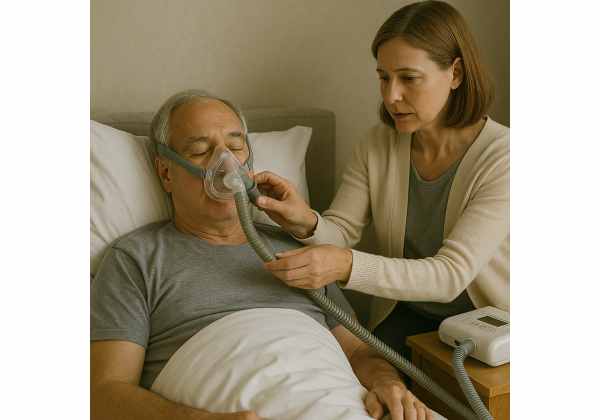
Central sleep apnea is a sleep-related breathing disorder in which breathing repeatedly slows or stops because the brain’s breathing-control system does not send a steady signal to the muscles that drive breathing. Unlike obstructive sleep apnea, where airflow is blocked despite effort to breathe, central sleep apnea involves reduced or absent breathing effort during sleep.
This condition can be confusing because its symptoms often look like ordinary poor sleep, insomnia, fatigue, low mood, anxiety, brain fog, or another form of sleep apnea. It also often appears alongside other medical conditions, especially heart failure, stroke, neurological disease, kidney disease, high-altitude exposure, and certain medications. Understanding the pattern of symptoms, possible causes, and diagnostic context can help clarify why central sleep apnea deserves careful medical evaluation.
Table of Contents
- What central sleep apnea means
- Central vs obstructive sleep apnea
- Symptoms and nighttime signs
- Causes and underlying conditions
- Risk factors for central sleep apnea
- Diagnostic context and sleep study findings
- Mental health and cognitive effects
- Complications and urgent warning signs
What central sleep apnea means
Central sleep apnea means breathing pauses during sleep because the nervous system’s control of breathing becomes unstable or temporarily insufficient. The airway may be open, but the body briefly does not make an adequate breathing effort.
Breathing is partly automatic. During waking hours, many signals help maintain breathing, including conscious control, movement, speech, emotion, and feedback from oxygen and carbon dioxide levels. During sleep, the system relies more heavily on automatic chemical feedback. If carbon dioxide drops below a certain threshold, or if the brainstem’s rhythm of breathing is disrupted, breathing effort can pause until the body’s feedback systems restart it.
A central apnea is usually defined on a sleep study as a period of absent airflow with absent or reduced breathing effort. Central hypopneas are partial reductions in airflow that also reflect reduced respiratory drive rather than blocked airflow. These events may occur in clusters, appear with a waxing-and-waning breathing pattern, or occur in a more irregular pattern depending on the cause.
Central sleep apnea is not a single disease with one cause. It is better understood as a group of sleep-related breathing patterns that can arise from different mechanisms. Some people have idiopathic or primary central sleep apnea, meaning no clear cause is found after evaluation. More often, central sleep apnea appears in association with another condition or exposure, such as heart failure, stroke, high altitude, kidney disease, neurological injury, opioid use, or other medications that affect breathing control.
The word “central” refers to the central nervous system, especially the brainstem networks that regulate breathing. It does not mean the condition is psychological, voluntary, or caused by stress. Anxiety can cause sensations such as air hunger or chest tightness while awake, but central sleep apnea is measured during sleep and involves objective changes in breathing effort, airflow, oxygen levels, carbon dioxide regulation, and sleep continuity.
Central sleep apnea can be mild or severe. Some people have few symptoms and learn about it only because a sleep study was ordered for another reason. Others have repeated awakenings, insomnia, daytime sleepiness, morning headaches, poor concentration, irritability, or a bed partner who notices pauses in breathing. The seriousness depends on the number and type of breathing events, oxygen changes, sleep disruption, underlying medical conditions, and whether other forms of sleep-disordered breathing are present.
Central vs obstructive sleep apnea
The main difference is breathing effort: obstructive sleep apnea involves continued effort against a blocked airway, while central sleep apnea involves reduced or absent effort to breathe. A person can also have both patterns, which is one reason symptoms alone cannot reliably separate them.
In obstructive sleep apnea, the upper airway repeatedly narrows or collapses during sleep. The chest and abdomen may continue trying to move air, but airflow is reduced because the airway is blocked. Snoring, choking sounds, gasping, and witnessed pauses are common, although not everyone has all of these signs.
In central sleep apnea, the problem begins with unstable breathing control. Airflow stops or decreases because the signal to breathe temporarily weakens. Snoring may be absent, mild, or related to a coexisting obstructive component. A bed partner may notice quiet pauses rather than loud obstruction, or may describe a repeating pattern of shallow breathing, deeper breathing, then a pause.
The two conditions can overlap in several ways:
- A person may have mostly obstructive events with a smaller number of central events.
- A person may have mostly central events, especially in the setting of heart failure, stroke, high altitude, kidney disease, or certain medication exposures.
- Some people develop central events during evaluation or after obstructive events are reduced, a pattern often called treatment-emergent central sleep apnea.
- Mixed apneas can begin as central events and end with obstructive features.
Symptoms can look similar because both conditions fragment sleep and may lower oxygen levels. Daytime tiredness, nonrestorative sleep, morning headache, poor concentration, mood changes, and witnessed breathing pauses can occur in either condition. For a broader discussion of how sleep apnea symptoms can affect mood and cognition, see sleep apnea symptoms, brain fog, and mood changes.
Central sleep apnea is generally less common than obstructive sleep apnea, but it is overrepresented in certain medical groups. It is especially important to consider when sleep apnea symptoms appear in someone with heart failure, atrial fibrillation, stroke history, neurological disease, chronic opioid exposure, kidney failure, or unexplained nighttime breathing irregularity.
Because the distinction depends on airflow and respiratory effort, it usually requires objective sleep testing. A questionnaire, symptom checklist, phone recording, smartwatch, or bed partner observation may raise suspicion, but it cannot reliably identify whether events are central, obstructive, mixed, or part of another sleep disorder.
Symptoms and nighttime signs
Central sleep apnea may cause repeated awakenings, unrefreshing sleep, daytime sleepiness, poor concentration, and witnessed pauses in breathing. Some people have subtle symptoms, especially when another medical condition is already causing fatigue or shortness of breath.
Common nighttime symptoms and signs include:
- Pauses in breathing noticed by a bed partner
- Waking suddenly with shortness of breath
- Frequent awakenings without a clear reason
- Restless or fragmented sleep
- Difficulty staying asleep
- Episodes of shallow breathing followed by deeper breathing
- Morning headaches
- Dry mouth or nighttime discomfort, especially when obstructive events also occur
- Nocturnal palpitations or a sensation of the heart racing
Daytime effects may include:
- Excessive sleepiness
- Low energy or fatigue
- Brain fog
- Slower thinking
- Poor attention
- Irritability
- Low mood
- Anxiety about sleep or breathing
- Reduced motivation
- Trouble with work, driving, studying, or conversation
Daytime sleepiness can be difficult to judge because many people normalize tiredness over time. A structured questionnaire such as the Epworth Sleepiness Scale may help clinicians quantify sleepiness, but it does not diagnose central sleep apnea by itself.
Not everyone with central sleep apnea feels sleepy. Some people mainly report insomnia, repeated awakenings, or feeling alert but unrested. Others have no clear sleep complaint but are evaluated because of heart failure, atrial fibrillation, neurological disease, unexplained oxygen drops, or abnormal breathing noticed during hospitalization.
A distinctive pattern sometimes associated with central sleep apnea is Cheyne-Stokes breathing. This is a cyclic pattern in which breathing gradually increases in depth, then gradually decreases, followed by a central pause. It is classically associated with heart failure and some neurological conditions, although not every person with central sleep apnea has this pattern.
Symptoms can also be misleading because anxiety, panic attacks, insomnia, depression, post-viral fatigue, medication effects, thyroid disease, anemia, and other sleep disorders can cause similar daytime complaints. Central sleep apnea should be considered when sleep-related breathing pauses, nighttime shortness of breath, unexplained awakenings, or high-risk medical conditions are part of the picture.
Causes and underlying conditions
Central sleep apnea can occur when the brain’s breathing-control system becomes unstable, when the brainstem is affected by disease or injury, or when medications or environmental conditions change respiratory drive. In many adults, the cause is connected to another medical condition rather than sleep alone.
Important causes and associated conditions include:
- Heart failure, especially when breathing control becomes unstable and Cheyne-Stokes breathing appears
- Stroke or other brain injury, particularly when areas involved in breathing regulation are affected
- Neurological disorders involving the brainstem or autonomic control
- High-altitude exposure, where lower oxygen pressure can trigger periodic breathing
- Chronic opioid use, which can suppress respiratory drive and alter brainstem rhythm
- Other medications that may affect breathing stability in susceptible people
- Kidney failure, which can affect fluid balance, acid-base status, and respiratory control
- Atrial fibrillation and other cardiovascular conditions that often coexist with sleep-disordered breathing
- Spinal cord injury, especially higher cervical injury
- Certain endocrine or metabolic disorders
- Idiopathic central sleep apnea, where no clear cause is identified
Heart failure is one of the most important medical associations. In some people with heart failure, circulation time is prolonged and breathing feedback becomes delayed. The body may overcorrect carbon dioxide levels, leading to cycles of overbreathing, underbreathing, and pauses. This does not mean central sleep apnea is always caused by heart failure, but the association is clinically important.
Medication-related central sleep apnea is also important because it may be missed unless the medication history is carefully reviewed. Opioids are the best-known medication class linked with central sleep apnea, but other centrally acting medications have also been reported in the medical literature. The key point is not that any one medication always causes CSA, but that medication exposure can be part of the diagnostic puzzle.
High altitude can cause periodic breathing even in otherwise healthy people. At altitude, lower oxygen levels stimulate breathing, which can lower carbon dioxide. If carbon dioxide drops below the sleeping brain’s breathing threshold, central pauses may occur. This pattern may be temporary and linked to altitude exposure rather than a chronic sleep disorder.
Neurological causes vary. A prior stroke, neurodegenerative disease, Chiari malformation, tumor, infection, trauma, or other brainstem-related condition can sometimes affect respiratory control. When central sleep apnea appears with new neurological symptoms, doctors may consider neurological examination and selected testing. In some contexts, brain MRI findings may help clarify whether a structural brain or brainstem issue is relevant.
Sometimes no single cause is found. Primary or idiopathic central sleep apnea is less common, and it is generally considered after other explanations have been assessed. Even then, the condition is still defined by objective breathing events during sleep, not by symptoms alone.
Risk factors for central sleep apnea
Risk is higher in people with certain cardiovascular, neurological, medication-related, and environmental exposures. Age and sex also matter, with central sleep apnea more often reported in older adults and in men, although it can occur in women and younger adults.
Major risk factors include:
- Older age
- Male sex
- Heart failure
- Atrial fibrillation
- Prior stroke or transient ischemic attack
- Neurological disease involving breathing control
- Chronic opioid exposure
- High-altitude travel or residence
- Kidney failure or advanced chronic kidney disease
- Spinal cord injury
- Coexisting obstructive sleep apnea
- Use of certain centrally acting medications
- Hospitalization or severe medical illness that disrupts breathing stability
Risk factors do not diagnose the condition. They change the level of suspicion. For example, a tired adult with insomnia and no known medical history may have many possible explanations. The same symptoms in someone with heart failure, a recent stroke, or chronic opioid exposure raise a more specific concern for central sleep apnea or another form of sleep-disordered breathing.
Central sleep apnea can also be underrecognized when symptoms are attributed to depression, anxiety, aging, medication side effects, or a chronic medical condition. Fatigue in heart failure, for instance, may be assumed to come only from the heart condition. Poor concentration after stroke may be attributed only to the stroke itself. Low mood and reduced motivation may be viewed only through a psychiatric lens. In reality, sleep fragmentation and abnormal nighttime breathing can add to these problems.
Risk can change over time. A person may develop central sleep apnea after a new medical event, after moving to or visiting higher altitude, after medication changes, or as cardiovascular or neurological disease evolves. A prior sleep study showing no central sleep apnea does not always rule out future central events if health circumstances change.
There is also a difference between risk factors for central sleep apnea and risk factors for obstructive sleep apnea. Obesity, large neck circumference, and upper-airway anatomy are strongly linked with obstructive sleep apnea, but central sleep apnea is more closely tied to breathing-control instability, heart and brain conditions, medications, and altitude. Many people, however, have overlapping risks for both.
Diagnostic context and sleep study findings
Central sleep apnea is diagnosed through objective sleep testing that can identify breathing pauses, airflow, oxygen changes, arousals, and respiratory effort. Symptoms and risk factors may suggest the condition, but the central versus obstructive distinction depends on measured breathing patterns during sleep.
The most informative test is usually polysomnography, an attended overnight sleep study. Polysomnography can measure brain waves, sleep stages, airflow, breathing effort, oxygen saturation, heart rhythm, limb movements, body position, and arousals from sleep. A detailed sleep study measurement can show whether breathing events are mainly central, obstructive, mixed, or part of a broader sleep pattern.
Sleep reports often include several terms:
- Apnea: a pause or near-pause in airflow.
- Hypopnea: a partial reduction in airflow.
- Central apnea index: the number of central apneas per hour of sleep.
- Apnea-hypopnea index: the total number of apneas and hypopneas per hour.
- Oxygen desaturation: a drop in blood oxygen during or after breathing events.
- Arousal: a brief shift toward wakefulness that may fragment sleep even if the person does not remember waking.
- Cheyne-Stokes breathing: a crescendo-decrescendo breathing pattern with central pauses.
A common diagnostic threshold for central sleep apnea involves at least five central apneas or central hypopneas per hour of sleep, with central events making up more than half of the total respiratory events, along with relevant symptoms or clinical context. Specific criteria vary by subtype and classification system, so interpretation belongs in the hands of qualified clinicians.
Home sleep apnea testing can be useful for some suspected obstructive sleep apnea cases, but it may be less informative when central sleep apnea, complex sleep-disordered breathing, significant cardiopulmonary disease, neuromuscular disease, opioid-related breathing disturbance, or unexplained oxygen changes are concerns. The role and limits of home sleep apnea testing depend on the clinical question and the device used.
Diagnostic context often includes more than a sleep study. Clinicians may review medical history, heart function, neurological history, kidney disease, altitude exposure, current and recent medications, substance use, daytime symptoms, and bed partner observations. Depending on the situation, cardiac testing, neurological evaluation, laboratory tests, or imaging may be considered to clarify why central events are happening.
It is also important to distinguish central sleep apnea from other nighttime events. Nocturnal panic attacks, asthma, chronic obstructive pulmonary disease, seizures, reflux-related choking, periodic limb movements, insomnia, and parasomnias can all disturb sleep. A careful evaluation helps avoid assuming that every awakening with shortness of breath is the same condition.
Mental health and cognitive effects
Central sleep apnea can affect mood, attention, and thinking because it fragments sleep and may repeatedly disturb oxygen and carbon dioxide balance. These effects can resemble depression, anxiety, ADHD-like inattention, burnout, or nonspecific brain fog.
Sleep is closely tied to emotional regulation. Repeated arousals can make the nervous system more reactive, reduce frustration tolerance, and make ordinary stress feel harder to manage. A person may describe feeling “wired but tired,” emotionally flat, unusually irritable, or less resilient than usual. These changes do not mean central sleep apnea is a psychiatric disorder, but sleep disruption can shape mental health symptoms.
Cognitive symptoms may include:
- Trouble concentrating
- Slowed processing
- Forgetfulness
- Reduced mental stamina
- Word-finding difficulty
- Poor task initiation
- Increased mistakes at work or school
- Difficulty driving long distances
- Feeling mentally foggy on waking
These symptoms can overlap with many mental health and neurological concerns. Sleep apnea can sometimes mimic or worsen attention problems, depression symptoms, and brain fog; this overlap is discussed further in sleep apnea patterns that resemble ADHD, depression, and brain fog. When concentration problems are prominent, clinicians may also consider whether sleep loss, anxiety, ADHD, medication effects, or medical causes are contributing, as outlined in testing for trouble concentrating.
Mood symptoms can be especially complicated when central sleep apnea occurs alongside heart failure, chronic pain, stroke recovery, or long-term medication use. Each factor can contribute to fatigue, reduced activity, sleep disruption, and emotional strain. This makes it important not to assume that low mood or anxiety explains all symptoms when nighttime breathing pauses, repeated awakenings, or high-risk medical conditions are present.
Central sleep apnea may also affect relationships. A bed partner may become worried by pauses in breathing, irregular breathing rhythms, or sudden awakenings. The person with CSA may feel embarrassed, defensive, or confused, especially if they do not remember the events. Daytime fatigue and irritability can add tension, even when the underlying issue is physiological.
The practical takeaway is that unexplained changes in mood, attention, and daytime functioning deserve a broad view. Mental health symptoms are real and deserve attention, but sleep-related breathing problems can be one of the medical contributors that should not be overlooked.
Complications and urgent warning signs
Central sleep apnea can contribute to poor sleep quality, daytime impairment, cardiovascular stress, and reduced quality of life, especially when it is frequent or occurs with heart, brain, kidney, or medication-related risk factors. The most important complications often relate to both the breathing disorder and the condition causing it.
Potential complications include:
- Chronic sleep fragmentation
- Excessive daytime sleepiness
- Impaired concentration and memory
- Mood changes, irritability, or anxiety about sleep
- Reduced work, school, or driving performance
- Morning headaches
- Nighttime oxygen drops
- Greater burden on cardiovascular function in vulnerable people
- Worsening overall quality of life
- Increased risk from unrecognized medication-related breathing suppression
- Higher concern in people with heart failure, stroke history, or serious neurological disease
In people with heart failure, Cheyne-Stokes breathing and central sleep apnea can be markers of more complex cardiovascular disease. In people taking opioids or other respiratory-depressing substances, central breathing pauses may raise concern about impaired ventilatory drive. In people with neurological symptoms, central sleep apnea may be one clue among several that the nervous system needs evaluation.
Some symptoms call for urgent medical attention rather than routine follow-up. These include severe or worsening shortness of breath, chest pain, fainting, blue or gray lips, new one-sided weakness, facial drooping, trouble speaking, sudden confusion, seizures, signs of overdose, or breathing that is dangerously slow or difficult to wake from. For broader safety context, see when neurological or mental health symptoms may need emergency care.
Central sleep apnea should not be self-diagnosed from snoring apps, wearable sleep scores, or nighttime audio recordings. These tools may capture clues, but they cannot reliably measure respiratory effort, sleep stage, oxygen patterns, and central versus obstructive event types. A person with concerning symptoms or high-risk medical history needs professional evaluation, especially when breathing pauses are witnessed or daytime impairment is significant.
The condition is also not something to dismiss as “just bad sleep.” Poor sleep can affect nearly every part of daily functioning, but central sleep apnea can also reflect heart, neurological, medication-related, or metabolic issues. Recognizing that connection is often the first step toward understanding why symptoms are happening.
References
- Central Sleep Apnea in Adults: An Interdisciplinary Approach to Diagnosis and Management—A Narrative Review 2025 (Review)
- Medication-induced central sleep apnea: a unifying concept 2024 (Review)
- Central sleep apnea: pathophysiologic classification 2023 (Review)
- Central Sleep Apnea in Adults: Diagnosis and Treatment 2023 (Review)
- Use of polysomnography and home sleep apnea tests for the longitudinal management of obstructive sleep apnea in adults: an American Academy of Sleep Medicine clinical guidance statement 2021 (Clinical Guidance Statement)
Disclaimer
This content is for general educational purposes only and is not a substitute for professional medical advice, diagnosis, or treatment. Central sleep apnea can be linked with serious heart, neurological, medication-related, or breathing conditions, so concerning symptoms should be discussed with a qualified health professional.
Thank you for taking the time to read this resource; sharing it may help someone recognize when disrupted sleep and breathing symptoms deserve closer attention.





