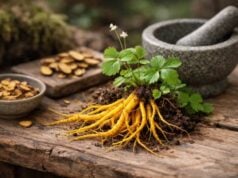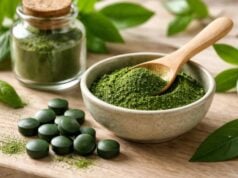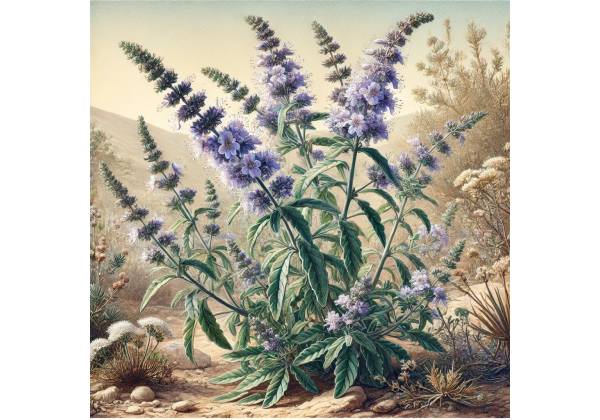
Chaste tree, also called chasteberry (Vitex agnus-castus), is a Mediterranean shrub whose dried berries have a long history of use for menstrual and cycle-related concerns. Today, it is most often used for premenstrual syndrome (PMS), cyclical breast tenderness, and irregular cycles—especially when symptoms seem tied to shifts in prolactin and the luteal phase (the second half of the cycle). Rather than acting like a simple “plant estrogen,” chaste tree appears to influence hormone signaling upstream, particularly through dopamine-related pathways that can affect prolactin release.
If you are considering it, the practical questions are usually the same: what compounds matter, what problems it helps most, how long it takes to notice changes, and who should avoid it. This guide walks through the key ingredients, realistic benefits, best ways to use it, typical dosing ranges, and the safety considerations that matter most when hormones, medications, or pregnancy are part of the picture.
Quick Overview
- May ease PMS symptoms and cyclical breast tenderness for some people after 2–3 cycles of consistent use.
- Common dose range: 20–40 mg/day of a standardized extract or 400–1,000 mg/day dried fruit (product-dependent).
- Avoid during pregnancy and breastfeeding, and use added caution with hormone therapy or dopamine-related medicines.
- People with hormone-sensitive cancers, pituitary disorders, or taking antipsychotics should avoid self-treatment and ask a clinician first.
Table of Contents
- What is chaste tree and what is in it
- How chaste tree may balance hormones
- Does it help PMS and breast pain
- Fertility, PCOS, and perimenopause uses
- Best ways to take it
- How much to take per day
- Safety, side effects, and interactions
- What the evidence says and limits
What is chaste tree and what is in it
Chaste tree (Vitex agnus-castus) is best known for its small, peppery berries, which are dried and used in teas, tinctures, and—most commonly—standardized extracts. In supplements, you will usually see it labeled as chasteberry, vitex, or Vitex agnus-castus fruit extract. The “fruit” is the medicinal part in most modern preparations, although leaves and other parts appear in traditional use.
Key active compounds
Chaste tree is not a single-compound herb. Its effects are thought to come from a blend of plant chemicals that interact with receptors and signaling pathways:
- Iridoid glycosides (often including agnuside and aucubin): frequently used as marker compounds for standardization and quality checks.
- Flavonoids (including casticin): contribute to antioxidant activity and are also used as markers in some products.
- Diterpenes (often discussed in relation to dopamine receptor activity): these are among the compounds believed to matter most for prolactin-related effects.
- Essential oils and phenolic compounds: present in smaller amounts, potentially influencing aroma, taste, and minor supportive actions.
Why “standardized extract” matters
With chaste tree, the label details can change the experience more than people expect. Two capsules can both say “vitex,” yet contain very different concentrations depending on the extraction method, ratio, and marker standardization. In practice, this is why clinical research often relies on specific extract types rather than raw berry powder alone.
If you are comparing products, look for:
- The plant part (usually fruit/berry).
- The extract ratio (often shown as DER or extract strength).
- A standardization marker (such as agnuside or casticin) or at least clear extraction details.
- Transparent dosing (no proprietary blend hiding the amount).
Bottom line: chaste tree’s “key ingredients” are a family of compounds, and products that clarify extract details tend to be easier to dose consistently and evaluate over time.
How chaste tree may balance hormones
Chaste tree is often described as a “hormone-balancing” herb, but the most useful way to think about it is this: it may influence the signals that regulate hormones, rather than supplying hormones itself. For many people, that difference explains both why it can help and why results are not immediate.
The prolactin connection
One of the best-known proposed mechanisms involves dopamine signaling. Dopamine helps regulate prolactin, a hormone best known for its role in lactation but also relevant to menstrual function. When prolactin is mildly elevated, some people experience cycle disruption, luteal phase issues, or breast tenderness. Chaste tree appears to contain compounds that may support dopamine-related activity, which can, in turn, reduce prolactin release in certain contexts.
This mechanism matters most when symptoms cluster like this:
- Cyclical breast tenderness or fullness
- PMS that feels “luteal-heavy” (worse in the second half of the cycle)
- Short luteal phase patterns (in some people, confirmed by tracking or labs)
- Subtle cycle irregularity without a clear structural cause
Potential downstream effects
Because prolactin interacts with the hypothalamic-pituitary-ovarian axis, shifting prolactin signaling can influence other hormones indirectly. Depending on the person and the underlying issue, this may support:
- More stable luteal phase signaling (often discussed in relation to progesterone patterns)
- Improved cycle regularity
- Reduced breast tenderness linked to hormonal fluctuations
- Better tolerance of the “handoff” between ovulation and the premenstrual window
Why timing and consistency matter
Chaste tree is not a fast-acting pain reliever. It is more like a “slow dial” on signaling. Many people who benefit notice changes only after consistent daily use across two to three cycles, with fuller evaluation around three months.
A helpful mindset: you are not trying to feel something immediately after a dose. You are watching for patterns—shorter symptom duration, lower intensity, fewer “bad days,” or improved cycle predictability over time.
Does it help PMS and breast pain
PMS is the most common reason people try chaste tree, and it is also where expectations need to be specific. PMS is not one symptom—it is a bundle that can include mood changes, irritability, bloating, headaches, sleep disruption, food cravings, and breast tenderness. Chaste tree tends to be most relevant when breast symptoms and luteal-phase complaints are prominent.
Symptoms it may help most
In practice, people most often report improvement in:
- Cyclical breast tenderness (mastalgia), heaviness, or swelling
- Irritability and mood swings that track predictably with the luteal phase
- Bloating and fluid-related discomfort
- A general reduction in overall PMS symptom load
If your main concern is acute cramping on day one of bleeding, chaste tree may be less directly targeted than interventions aimed at prostaglandins and smooth muscle spasm. But when the problem is “the whole week before,” it may be a better fit.
PMDD vs PMS
Premenstrual dysphoric disorder (PMDD) is more severe and can involve intense mood symptoms that affect safety and daily functioning. Some people explore chaste tree as an adjunct, but PMDD often requires structured medical care. If you suspect PMDD—especially if you have hopelessness, panic, or intrusive thoughts—treat that as a clinical issue, not a supplement experiment.
Practical ways to judge whether it is working
Instead of a vague “I feel better,” use a simple tracking approach:
- Pick two to four symptoms you most want to improve (for example: breast pain, irritability, bloating, sleep quality).
- Rate them daily for one full cycle before starting.
- Reassess after two cycles, then again at three cycles.
If breast pain is the main issue, some people also compare chaste tree with options like evening primrose for cyclical discomfort; if you want that comparison, see evening primrose benefits and functional uses.
The goal is not perfection. A realistic win is fewer high-severity days, less disruption, and symptoms that resolve sooner.
Fertility, PCOS, and perimenopause uses
Chaste tree often shows up in fertility discussions, PCOS forums, and perimenopause supplement stacks. These uses can make sense in certain situations, but they are more variable than PMS support—and they are easier to get wrong if you do not match the herb to the underlying pattern.
Fertility and luteal phase support
Chaste tree is sometimes used when a clinician suspects luteal phase signaling issues, especially in the context of mild prolactin elevation. The idea is not that it “adds progesterone,” but that it may support upstream regulation in a way that helps luteal phase stability. That said, fertility is complex: thyroid status, stress, body weight, sperm factors, and ovulation timing often matter more than any single herb.
If you are actively trying to conceive, the safest approach is to treat chaste tree as a time-limited trial with clear checkpoints—especially if you are also using fertility medications.
PCOS: where it may and may not fit
PCOS is not one condition; it is a spectrum that can include irregular ovulation, elevated androgens, insulin resistance, or all three. Chaste tree is sometimes used to support cycle regularity, but it is not a primary tool for insulin resistance. For many people with PCOS, foundational support focuses on metabolic drivers first.
If your PCOS picture includes irregular ovulation and you are working on metabolic factors, you might also explore inositol dosing and PCOS support, which is commonly discussed for ovulatory and metabolic outcomes.
Perimenopause and cycle volatility
Perimenopause can involve shortened cycles, skipped ovulation, sleep disruption, heavier or unpredictable bleeding, and mood shifts. Chaste tree may be considered when premenstrual symptoms and breast tenderness intensify during this transition. But if symptoms are dominated by hot flashes or night sweats, other strategies may be more directly relevant.
For menopause-focused symptom strategies, some people compare chaste tree with options like black cohosh for menopause support. The best choice depends on whether the dominant issue is luteal-phase PMS patterns or vasomotor symptoms.
The key is matching the tool to the problem you are actually trying to solve.
Best ways to take it
Most people do best with chaste tree when they choose a consistent form, take it daily, and commit to a long enough trial to see a cycle-level pattern. Switching products weekly or taking it only “when symptoms hit” is a common reason people conclude it does not work.
Forms you will see
- Standardized extract (tablet or capsule): often the easiest for consistent dosing and repeatable results.
- Dried fruit powder capsules: more variable in strength; may require higher milligram doses.
- Tinctures and liquid extracts: useful for people who prefer liquids, but dosing accuracy depends on the product.
- Tea: less common for clinical-style dosing because active compounds can vary with preparation.
If you are aiming for a research-like approach, standardized extracts are usually the most practical starting point.
How to take it for the best odds
- Take it at the same time daily. Morning is common, but consistency matters more than the clock.
- Do not cycle it on and off within a month unless a clinician directs you to.
- Give it a fair trial: usually two to three cycles, then reassess.
- Avoid stacking multiple “hormone” supplements at once when you are trying to evaluate effect. Too many changes at once makes it hard to know what helped or harmed.
Supportive basics that make it work better
Many PMS patterns respond best when chaste tree is combined with fundamentals that stabilize stress and blood sugar:
- Regular sleep and wake time (even on weekends)
- Protein-forward breakfasts to reduce afternoon cravings and irritability
- Light movement in the luteal phase (walking after meals is often enough)
- A simple symptom tracker
Some people also look at nutrients tied to PMS symptom patterns, including vitamin B6; if you want a dosing-oriented overview, see vitamin B6 benefits and dosage.
Think of chaste tree as one lever in a broader system—more effective when the rest of the system is not fighting you.
How much to take per day
Chaste tree dosing depends heavily on the form. A capsule labeled “400 mg” might be dried fruit powder, while a much smaller number (like 20 mg) might be a concentrated extract. This is why the best dose is the one that matches your specific product and provides a consistent daily amount.
Typical dosing ranges
Common real-world ranges include:
- Standardized dry extract: 20–40 mg once daily (often used for PMS-focused protocols)
- Dried fruit powder: 400–1,000 mg daily (sometimes more, depending on the product)
- Tinctures/liquids: follow the label carefully, because concentration varies widely
If your product lists an extract ratio (for example, a drug-extract ratio), use that information to compare apples to apples. If it does not list extraction details at all, it is harder to dose reliably.
When to take it
Many people take chaste tree in the morning, but the most important factor is consistency. Choose a time you can repeat daily. Taking it with food is usually fine if your stomach is sensitive.
How long to use it
For PMS and cyclical symptoms, many protocols recommend:
- Minimum trial: 8–12 weeks (about two to three cycles)
- Reassessment point: around three months
- If no meaningful change by three cycles: consider discontinuing and reassessing the plan
If you do see improvement, some people continue for another three to six months, then re-evaluate whether the benefit persists without it.
Simple titration approach
If you are cautious or prone to side effects:
- Start at the low end of your product’s labeled dose for one week.
- Increase toward the target dose if tolerated.
- Keep the dose stable for at least two cycles before judging results.
This approach reduces “false negatives” caused by inconsistent use and reduces “false positives” caused by changing too many variables at once.
Safety, side effects, and interactions
Chaste tree is often well tolerated, but it is not a universal-fit supplement—especially when hormones, pregnancy, or dopamine-related medications are involved. Safety is less about fear and more about matching the herb to the right person.
Common side effects
When side effects happen, they are usually mild and may include:
- Nausea or stomach discomfort
- Headache
- Dizziness
- Skin changes (such as acne or mild rash)
- Changes in sleep or vivid dreams (less common)
If side effects appear, stopping usually resolves them. Restarting at a lower dose is sometimes tolerated, but persistent symptoms are a reason to discontinue.
Who should avoid chaste tree
Avoid self-treatment (and seek clinical guidance) if you:
- Are pregnant or breastfeeding
- Have a history of hormone-sensitive cancers or are under active oncology care
- Have a known or suspected pituitary disorder (including prolactin-related tumors)
- Are under 18, unless a clinician specifically recommends it
Medication and therapy interactions
Because chaste tree may influence dopamine and hormone signaling, extra caution is warranted with:
- Dopamine agonists and dopamine antagonists (including some Parkinson’s medicines and some antipsychotics)
- Hormone therapies (estrogens, antiestrogens, and some fertility protocols)
- Treatments where a small hormonal shift could matter clinically
If you use hormonal contraception, the safest move is to speak with a clinician or pharmacist before adding chaste tree, because individual products and goals differ.
When to stop and get help
Stop and seek medical care if you develop:
- New, severe headaches, vision changes, or unusual breast discharge
- Heavy or unusual bleeding patterns that are new for you
- Worsening mood symptoms, especially depression or suicidal thoughts
- Signs of an allergic reaction (hives, swelling, trouble breathing)
Used thoughtfully, chaste tree can be reasonable for the right person, but it should never replace evaluation for red-flag symptoms.
What the evidence says and limits
The research on chaste tree is strongest for PMS-related symptom relief and cyclical breast tenderness, with more mixed and indirect evidence for broader “hormone balancing” claims. Understanding those boundaries helps you use it in a way that is both realistic and safer.
Where evidence is most consistent
Across clinical studies, the most repeatable pattern is improvement in PMS symptom clusters—especially breast tenderness, irritability, and overall symptom burden—when chaste tree is taken daily for multiple cycles. The fact that benefits often build over time matches the herb’s signaling-based mechanism rather than an immediate effect.
Where evidence is weaker or mixed
Claims become less reliable when chaste tree is positioned as a solution for:
- General infertility without a defined hormonal pattern
- PCOS as a primary metabolic intervention
- Menopause symptoms dominated by hot flashes and night sweats
- Broad mood disorders outside a clear premenstrual pattern
In these areas, the herb may still be part of a plan, but it should not be the center of the plan.
Why results vary so much
Three factors explain most real-world variability:
- Product differences: extracts, ratios, and marker compounds vary widely.
- Mismatch of use case: it tends to fit best when prolactin-related and luteal-phase symptoms are central.
- Time horizon: judging it after one week is like judging a sleep schedule after one night.
A practical decision framework
Chaste tree is most reasonable when:
- You have predictable luteal-phase symptoms (PMS pattern)
- Breast tenderness is a prominent complaint
- You can commit to consistent dosing for 8–12 weeks
- You are not pregnant, breastfeeding, or using medications where dopamine or hormone shifts are high-stakes
If that sounds like you, it may be worth a structured trial. If not, you will likely get more return from targeted alternatives, clinical evaluation, or a plan aimed at your root driver (metabolic, thyroid, stress physiology, or medication effects).
References
- Use of Vitex agnus-castus in patients with menstrual cycle disorders: a single-center retrospective longitudinal cohort study – PMC 2024 (Observational Study)
- Vitex agnus castus effects on hyperprolactinaemia – PMC 2023 (Review)
- Polycystic ovaries and herbal remedies: A systematic review – PMC 2023 (Systematic Review)
- Comparison of the Effects of Vitagnus, Soy, and Vitagnus-soy Capsules on Premenstrual Syndrome in University Students: A Randomized Clinical Trial – PMC 2025 (RCT)
- European Union herbal monograph on Vitex agnus-castus L., fructus 2018 (Guideline)
Disclaimer
This article is for educational purposes only and does not provide medical advice, diagnosis, or treatment. Chaste tree can affect hormone-related signaling and may interact with certain medications, including therapies that influence dopamine or reproductive hormones. If you are pregnant, breastfeeding, trying to conceive, living with a hormone-sensitive condition, have a pituitary disorder, or take prescription medications for mood, nausea, or Parkinson’s disease, consult a qualified clinician or pharmacist before using chaste tree. Seek prompt medical care for severe mood symptoms, unusual bleeding, new breast discharge, or any signs of an allergic reaction.
If you found this guide helpful, consider sharing it on Facebook, X (formerly Twitter), or your favorite platform so others can make more informed choices.