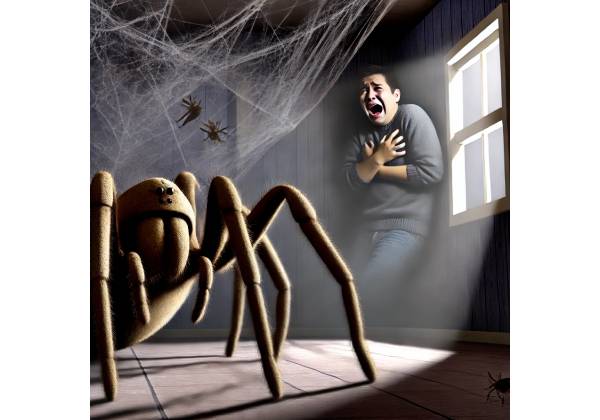
Arachnophobia is one of the most recognized specific phobias, but that familiarity can hide how disruptive it can be. For someone with this fear, the problem is not simple dislike of spiders. A tiny spider in a sink, a web in a corner, or even a photo can trigger a rush of dread that feels immediate and physical. The person may freeze, panic, flee the room, or spend hours checking walls, shoes, and bedding afterward. Over time, the fear can spread beyond spiders themselves to garages, basements, gardens, campsites, storage spaces, and travel. Because the reaction often feels irrational even to the person experiencing it, shame and secrecy are common. Yet arachnophobia is a real, treatable condition. Understanding how it works can make the fear feel less mysterious and can open the door to practical, evidence-based treatment.
Table of Contents
- What Arachnophobia Is
- Symptoms and Common Triggers
- Causes and Risk Factors
- Diagnosis and Related Conditions
- Daily Impact and Complications
- Treatment Options
- Management and When to Seek Help
What Arachnophobia Is
Arachnophobia is an intense, persistent fear of spiders. In clinical practice, it is usually understood as a form of specific phobia, meaning the fear is focused on a particular object or situation rather than spread across many areas of life. The key feature is not preference. Many people dislike spiders, feel startled when one appears, or choose to remove them from the home. Arachnophobia goes further. The fear is stronger, more automatic, and more disruptive than the situation reasonably calls for.
This matters because spiders occupy an unusual place in human experience. They are common, quick-moving, and often unpredictable in where they appear. They also carry strong cultural meaning. People may grow up hearing that spiders are dangerous, dirty, or invasive. For some, that background creates a deep emotional reaction before they ever have a direct bad experience. A spider does not have to bite, jump, or touch the person to trigger fear. Its mere presence may be enough.
The feared element is not always the same. One person may fear being bitten. Another may fear the spider touching the skin, moving suddenly, appearing unexpectedly, or being impossible to locate once it disappears. Some people are especially distressed by webs, by the idea of spiders in bedding or shoes, or by images that highlight legs and movement. Others react not only to spiders but to related cues such as crawl spaces, sheds, garages, outdoor toilets, woodpiles, or dusty storage boxes.
Arachnophobia can appear in childhood, adolescence, or adulthood. It may remain narrow for years, or it may spread into a broader pattern of avoidance. In severe cases, the person starts organizing parts of life around spider prevention, route changes, cleaning rituals, or reliance on other people to inspect spaces first.
It is also important to distinguish arachnophobia from sensible caution. Spiders are not all identical, and in some regions certain species can cause medically important bites. Practical awareness is not the same as a phobia. A phobia becomes more likely when the fear is disproportionate to the situation, persists over time, and leads to avoidance or distress that interferes with daily living.
Common features include:
- intense fear at the sight or thought of a spider
- rapid physical anxiety symptoms
- avoidance of places where spiders might appear
- repeated checking or reassurance seeking
- distress that feels excessive but still hard to control
A useful way to understand arachnophobia is that the brain has learned to treat spiders as a high-level threat. Once that threat response becomes overactive, even low-risk encounters can feel urgent and overwhelming.
Symptoms and Common Triggers
Arachnophobia usually shows up through a mix of physical symptoms, catastrophic thoughts, and avoidance behavior. The reaction can be immediate and intense. A person may notice a spider on a wall and feel their heart race before they have consciously formed a thought. In other cases, the anxiety builds in anticipation, such as when entering a basement, lifting outdoor furniture, or staying in a cabin.
Physical symptoms may include:
- racing heartbeat
- sweating
- trembling
- chest tightness
- dizziness
- nausea
- shaky legs
- dry mouth
- shortness of breath
For some people, the fear escalates into a full panic attack. Others experience a sharp jolt of dread followed by persistent vigilance. Even after the spider is gone, the body may remain on edge. That lingering fear is one reason the condition can become exhausting.
The thought patterns are often vivid and fast. Common reactions include:
- “It will jump on me.”
- “It will bite me.”
- “There must be more nearby.”
- “I cannot relax until I know exactly where it is.”
- “If it disappears, it could come back on me later.”
These thoughts can feel unreasonable even to the person having them. Insight does not always reduce the fear. In fact, many people with arachnophobia feel embarrassed because they know their reaction is stronger than the situation seems to justify.
Triggers vary widely. Common ones include:
- seeing a live spider
- noticing a spider web
- looking at photos or videos of spiders
- entering sheds, attics, basements, garages, or crawl spaces
- handling boxes, shoes, blankets, or gardening tools
- camping, hiking, or staying in older buildings
- feeling something brush the skin unexpectedly
Some people have a narrow trigger profile and react only to large spiders or fast-moving spiders. Others react to even tiny spiders, cartoon drawings, or words and images. A person may also become sensitized to related sensations. A loose thread, a hair on the arm, or a shadow near the ceiling can trigger the same fear response because the brain has become primed to detect spider-like cues.
Behavioral signs are often what others notice first. A person may:
- avoid certain rooms or outdoor areas
- ask others to inspect spaces before entering
- repeatedly shake out clothes or bedding
- refuse to handle storage items
- spend extra time cleaning corners and ceilings
- leave a room immediately after spotting a spider
- have trouble sleeping after an encounter
Children may cry, cling, refuse to enter a room, or insist on sleeping elsewhere after seeing a spider. Adults may mask the fear more carefully, but they often build elaborate routines around it. The core pattern is repeated fear, repeated avoidance, and repeated relief after escape. That cycle is what keeps the phobia strong.
Causes and Risk Factors
Arachnophobia does not come from one single cause. Like other specific phobias, it usually develops through a blend of temperament, learning history, direct experience, and reinforcement. In some people, the starting point is easy to identify. In others, the fear seems to have formed gradually over time.
A direct frightening event can be one pathway. A person may have had a spider crawl on them unexpectedly, found one in bed, been startled by several spiders in one place, or had a bite that became alarming in memory whether or not it was medically serious. Childhood experiences can be especially influential because a sudden fear event may leave a strong imprint.
Indirect learning is also important. Many people inherit their fear socially before they ever have a meaningful spider encounter. A child may watch a parent scream, jump onto a chair, or treat a small spider as a major emergency. Repeated warnings, frightening stories, dramatic media images, and cultural messages can all reinforce the idea that spiders are not merely unpleasant but dangerous.
Several risk factors may increase vulnerability:
- a family history of anxiety disorders or phobias
- high baseline anxiety
- behavioral inhibition in childhood
- strong disgust sensitivity
- heightened sensitivity to movement or unpredictable stimuli
- previous panic attacks
- stressful life periods that lower emotional resilience
Disgust deserves special mention because it often plays a large role in arachnophobia. Some people are afraid primarily of harm, such as a bite or contamination. Others are driven by a strong revulsion response to the spider’s appearance, movement, or the idea of contact. Fear and disgust can work together, making the reaction especially intense and stubborn.
Avoidance then strengthens the cycle. This is one of the most important mechanisms in any phobia. If a person leaves the room, calls someone else to remove the spider, or refuses to enter a garage, anxiety usually drops quickly. That relief feels helpful in the moment, but it teaches the brain that avoidance prevented disaster. The next spider or spider-related cue then feels even more threatening. Over time, the fear can spread into more settings and become harder to challenge.
Real-world context matters too. In areas where people have heard about venomous species or where spider encounters are common, the fear may seem more justified and therefore more difficult to question. Yet even in those settings, arachnophobia is not defined by awareness of real risk. It is defined by a threat response that has become excessive, generalized, and functionally impairing.
For many people, arachnophobia is best understood as a learned alarm response that once may have seemed protective but now overshoots the situation. The treatment goal is not to erase common sense. It is to retrain that alarm system so it no longer dominates everyday life.
Diagnosis and Related Conditions
Diagnosis begins with a clinical assessment rather than a scan or lab test. A clinician will usually ask what exactly is feared, when the fear began, what situations trigger it, what the person does to stay safe, and how much the pattern interferes with normal life. In formal terms, the diagnosis is usually specific phobia, with spiders as the feared object.
A phobia diagnosis becomes more likely when several features are present:
- the person experiences marked fear or anxiety in response to spiders or spider-related cues
- the person avoids those cues or endures them with intense distress
- the reaction is out of proportion to the actual danger in the setting
- the problem is persistent rather than short-lived
- work, school, home life, sleep, or daily functioning is affected
Careful diagnosis matters because spider fear can overlap with other conditions. For example, panic disorder can make any sudden sensation or perceived threat feel catastrophic. Obsessive-compulsive disorder can produce repetitive checking or contamination worries that superficially resemble spider vigilance. Post-traumatic stress may be relevant if the fear began after a highly distressing event and includes intrusive memories or hyperarousal. Autism-related sensory sensitivity can also shape how movement, texture, and unpredictability are experienced.
A good assessment also looks at practical realism. The question is not whether spiders can ever be dangerous. It is whether the person’s response fits the actual context. Someone who exercises caution around a known medically important species in a specific region is behaving differently from someone who panics at a tiny household spider, cannot enter a room for hours, and feels unable to sleep afterward.
Clinicians may ask questions such as:
- What outcome does the person fear most?
- Do they mainly fear bites, sudden movement, contamination, or loss of control?
- How broad is the avoidance pattern?
- Are there compulsive rituals such as repeated checking or cleaning?
- Does the person recognize that the fear is excessive?
- Has the problem spread beyond spiders into many other situations?
In children, diagnosis may depend as much on behavior as on verbal description. A child might not say “I have arachnophobia,” but may scream, refuse to dress in a room where a spider was seen, or demand repeated reassurance at bedtime. In adults, shame can lead to minimization, so direct but respectful questioning is often needed.
Another important part of diagnosis is identifying severity. Some people function well except when directly confronted with a spider. Others begin structuring entire routines around prevention and avoidance. That difference helps shape the treatment plan.
The purpose of diagnosis is not simply to apply a label. It is to understand the pattern well enough to choose the right intervention, rule out important alternatives, and separate reasonable caution from a fear response that has become too powerful for everyday life.
Daily Impact and Complications
Arachnophobia can affect more than a person’s reaction to a spider in the moment. Because spiders can appear in ordinary settings, the fear can quietly reshape routines, relationships, housing choices, hobbies, and travel. Many people adapt so gradually that they do not realize how much the phobia is restricting them until avoidance has become part of daily life.
At home, the condition may alter how rooms are used. A person may avoid garages, basements, laundry rooms, sheds, attics, closets, porches, and window corners. Seasonal chores become more stressful. Storage tasks are delayed. Gardening, yard work, or cleaning outdoor furniture may fall to someone else. The person may feel embarrassed by how much effort goes into prevention, but still feel unable to stop.
Common daily effects include:
- repeated checking of walls, ceilings, shoes, and bedding
- reluctance to open boxes or move stored items
- avoidance of outdoor activities
- trouble relaxing in older buildings or unfamiliar rooms
- sleep disruption after a spider sighting
- dependence on other people to inspect or remove spiders
Travel can become especially difficult. Cabins, campsites, vacation rentals, hotel corners, and bathrooms may all feel risky. Some people avoid certain destinations entirely. Others spend so much time scanning the environment that the trip becomes tiring rather than restorative.
Children with arachnophobia may resist playing outdoors, sleeping alone, or attending camps and sleepovers. Teenagers may feel embarrassed in front of peers and hide the fear until it erupts during an encounter. Adults may avoid mentioning the problem because they worry it sounds childish or dramatic. That secrecy can increase distress and reduce the chance of getting help.
There can also be a safety paradox. Extreme fear sometimes leads to impulsive behavior, such as running suddenly, climbing on furniture, using excessive pesticide sprays, or trying to kill a spider in a way that increases risk of falling or injury. In some cases, people use harsh chemicals indoors more often than needed, which creates a different kind of health concern.
Complications may include:
- chronic anticipatory anxiety
- reduced enjoyment of home and leisure spaces
- relationship strain
- social embarrassment
- avoidance of work or volunteer tasks
- worsening panic and generalized vigilance
- low mood from feeling controlled by fear
One of the hardest parts of arachnophobia is the mismatch between logic and emotion. The person may know that many spider encounters are low-risk, yet still feel genuine terror. That internal conflict often leads to shame and self-criticism. Over time, the person may start describing themselves as weak, irrational, or incapable, which deepens the burden.
When the fear begins to narrow freedom, increase reliance on others, or create conflict at home, it is no longer just a dislike. It has become a condition with real functional weight.
Treatment Options
The main evidence-based treatment for arachnophobia is psychotherapy, especially cognitive behavioral therapy with exposure-based work. The goal is not to persuade someone that every spider is harmless or to force reckless contact. The goal is to bring fear back into proportion, reduce avoidance, and help the person respond with more choice and less panic.
Exposure therapy is usually structured as a graded process. A therapist and patient create a ladder of feared situations, starting with manageable steps and moving toward more difficult ones. This matters because the nervous system learns best through repeated experience, not through reassurance alone.
A typical exposure ladder for arachnophobia might include:
- Saying or reading words related to spiders.
- Looking at simple drawings or cartoon images.
- Viewing photos of spiders for brief periods.
- Watching videos of spiders moving.
- Standing near a contained spider.
- Remaining in the room without escaping.
- Moving closer gradually.
- Practicing calm observation rather than avoidance rituals.
Not every plan looks the same. Some people need to begin with mental imagery because even photos feel overwhelming. Others can move quickly into real-life exposures. The important feature is steady, repeated practice that allows anxiety to rise and then come down without escape or ritual.
Cognitive work often supports the exposure process. This may involve identifying and testing beliefs such as:
- “I will lose control if I see a spider.”
- “If I do not remove it immediately, something terrible will happen.”
- “I cannot handle the feeling of disgust or fear.”
- “If I let myself stay near it, the panic will keep rising.”
The therapist helps the person develop a more realistic understanding of both risk and coping ability. The aim is not false confidence. It is accurate confidence.
Other helpful treatment elements may include:
- breathing and grounding strategies
- work on disgust tolerance
- reducing reassurance seeking
- parent coaching when the patient is a child
- virtual reality or augmented reality exposure when available
- one-session treatment models for selected patients
Spider phobia has been one of the better-studied specific phobias in exposure research, including newer virtual and augmented reality approaches. These methods can be helpful, especially for people who are not ready to begin with a live spider. Still, the core principle remains the same: the person learns through experience that fear can be tolerated and that avoidance is not the only path to relief.
Medication is not usually the primary treatment for an isolated specific phobia. In some cases, medication may be considered if there is severe panic or a coexisting condition such as depression or generalized anxiety. Even then, medication alone usually does not change the avoidance cycle as effectively as targeted therapy.
Treatment works best when it is collaborative, specific, and paced to the person’s actual fear pattern. Arachnophobia can improve substantially, sometimes in less time than people expect, when the therapy directly targets what the fear system has learned.
Management and When to Seek Help
Day-to-day management is important because arachnophobia is often maintained between formal treatment sessions. The aim is not to become indifferent to spiders. It is to shift from fear-driven living to a more balanced, flexible response that leaves room for ordinary life.
A practical self-help approach often includes these steps:
- Identify the exact trigger.
Is the fear mainly about live spiders, sudden movement, webs, hidden spiders, bites, or not knowing where the spider went? - Notice the safety behaviors.
These may include repeated checking, asking for reassurance, avoiding certain rooms, sleeping elsewhere, or refusing to move stored items. - Build a gradual practice ladder.
Start with a step that produces discomfort but still feels possible. - Stay in the situation long enough.
Anxiety often peaks and then falls if the person does not escape too quickly. - Reduce rituals slowly.
Rechecking the room again and again may feel protective, but it usually keeps the fear active. - Track progress concretely.
“I looked at spider photos for five minutes without leaving” is more useful than vague judgments about success or failure.
Families can help, but the type of help matters. Supportive responses include staying calm, praising genuine progress, and avoiding ridicule. Less helpful responses include mocking the fear, forcing sudden exposure, or becoming part of endless reassurance rituals. In children, parent accommodation can unintentionally strengthen the phobia if every request to inspect, remove, or avoid is immediately granted.
It is also useful to separate realistic safety from phobic overreaction. In areas where medically important spiders are known to occur, sensible habits such as checking gloves, shoes, or equipment can remain part of everyday life. Treatment does not require abandoning common sense. It requires reducing the exaggerated response that goes beyond common sense.
Professional help is a good idea when:
- the fear has lasted for months or years
- daily routine is being shaped by avoidance
- panic symptoms are strong
- sleep, work, travel, or family life is affected
- the person feels ashamed but unable to change the pattern
- the fear is spreading to more settings
Urgent support may be needed if the person becomes functionally trapped at home, uses chemicals unsafely, or experiences severe depressive symptoms or self-harm thoughts. Children who stop participating in school or normal activities because of spider fear also deserve timely assessment.
The outlook is generally favorable. Specific phobias often respond well to structured therapy, and spider phobia in particular has been the focus of substantial treatment research. Progress may come in stages: shorter recovery after a sighting, less checking, more willingness to enter avoided rooms, or the ability to stay calm around images or real spiders. Recovery is rarely about loving spiders. It is about reclaiming choice, proportion, and everyday freedom.
References
- Phobias and Phobia-Related Disorders – National Institute of Mental Health (NIMH) 2025 (Fact Sheet)
- Specific Phobia – National Institute of Mental Health (NIMH) 2025 (Statistics)
- Specific Phobia – PubMed 2025 (Clinical Overview)
- The relative efficacy and efficiency of single- and multi-session exposure therapies for specific phobia: A meta-analysis – PubMed 2022 (Systematic Review and Meta-Analysis)
- The efficacy of augmented reality exposure therapy in the treatment of spider phobia-a randomized controlled trial – PubMed 2024 (Randomized Controlled Trial)
Disclaimer
This article is for educational purposes only and is not a diagnosis or a substitute for medical or mental health care. Fear of spiders can overlap with panic disorder, obsessive-compulsive symptoms, trauma-related conditions, sensory sensitivities, and region-specific concerns about medically important spider species. A qualified clinician can help determine whether the problem is a specific phobia, part of another condition, or both. If symptoms are persistent, worsening, or interfering with school, work, sleep, or daily functioning, seek professional care. If there is severe distress, unsafe behavior, or thoughts of self-harm, get urgent help immediately.
If you found this article useful, please consider sharing it on Facebook, X, or your preferred platform.